
Reem’s, Bombera, Pasta Supply Co. and more join a global initiative on Aug. 26.
Aug 25, 2026
Updated 3:01 pm PT
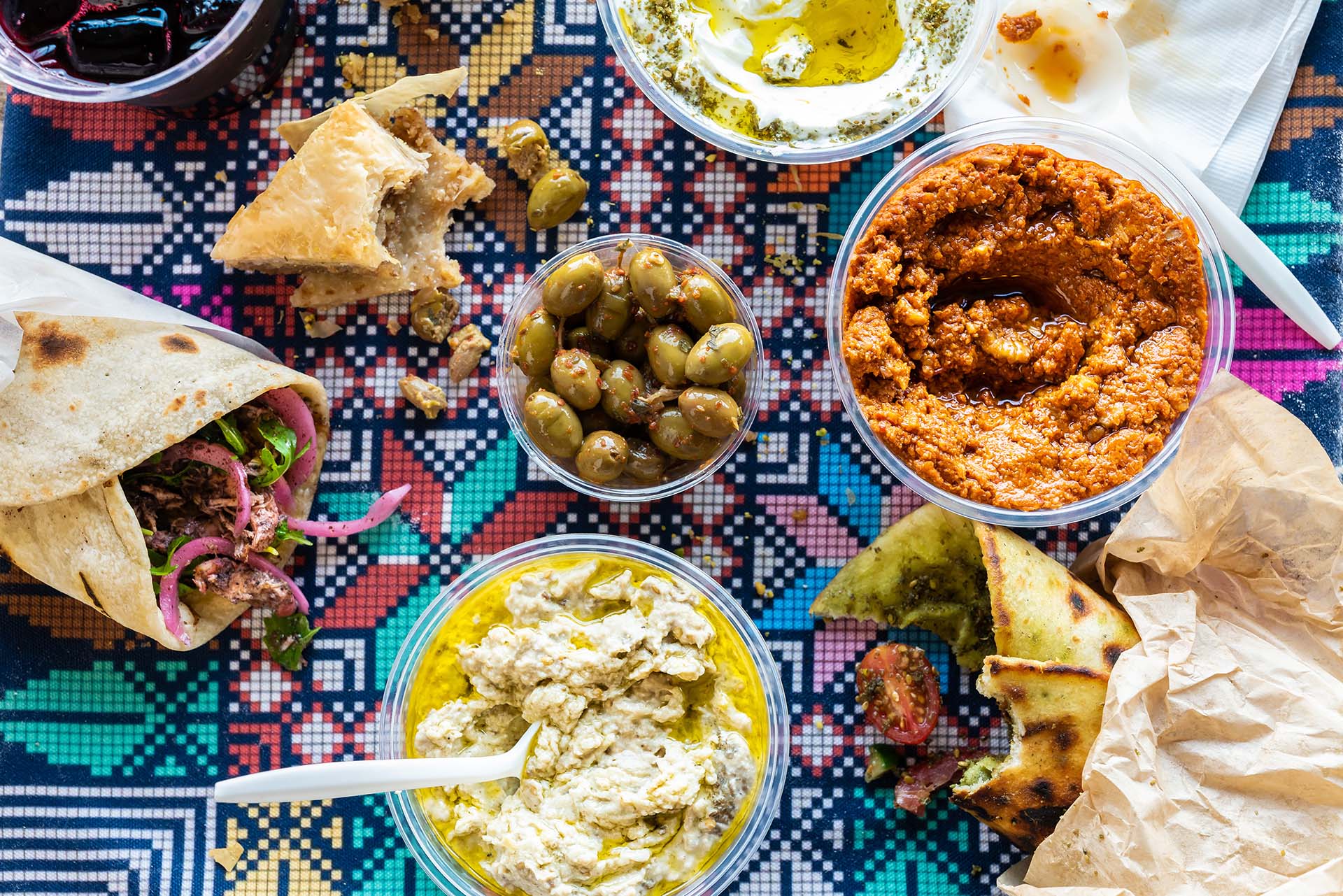
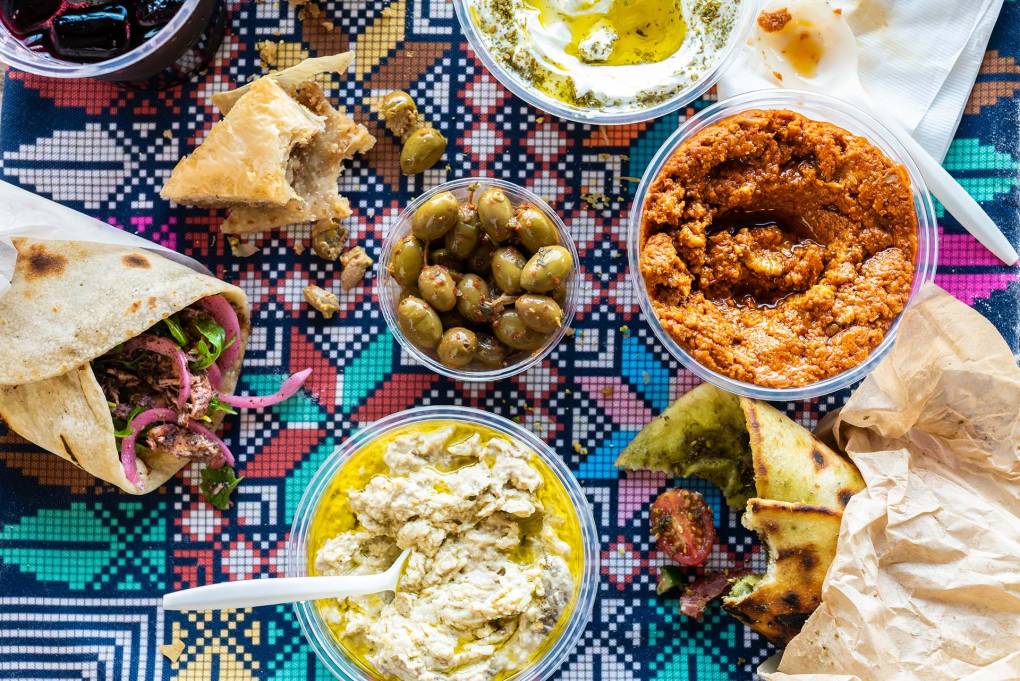
A spread of California-Palestinian mezzes from Reem’s. The Oakland location of the restaurant is one of eight Bay Area dining establishments participating in a global “Pay What You Can” initiative on Wednesday, Aug. 26, 2026. (Jim Sullivan, courtesy of Reem’s)
It started with a simple idea: In this time when dining out is an increasingly unattainable proposition for so many people, what if restaurants took money out of the equation? What if — for one day, at least — diners only had to pay however much they could afford?
This was the vision that Mexico City chefs Norma Listman and Saqib Keval had when they started hosting “Paga Lo Que Puedas” days at their now-Michelin-starred restaurant Masala y Maiz. They weren’t the first restaurant owners to experiment with a Pay What You Can model, but they may be the first to try to turn it into a worldwide movement.
This Wednesday, Aug. 26, will be the first global Paga Lo Que Puedas day, a Masala y Maiz–organized initiative that has prompted more than 100 restaurants worldwide to sign up, including eight in the Bay Area. For this one day, these restaurants will serve their regular menus, and diners who come can order whatever they like and pay whatever amount they choose — nothing, even, if that’s all they can afford. (Drinks will still be full price.)
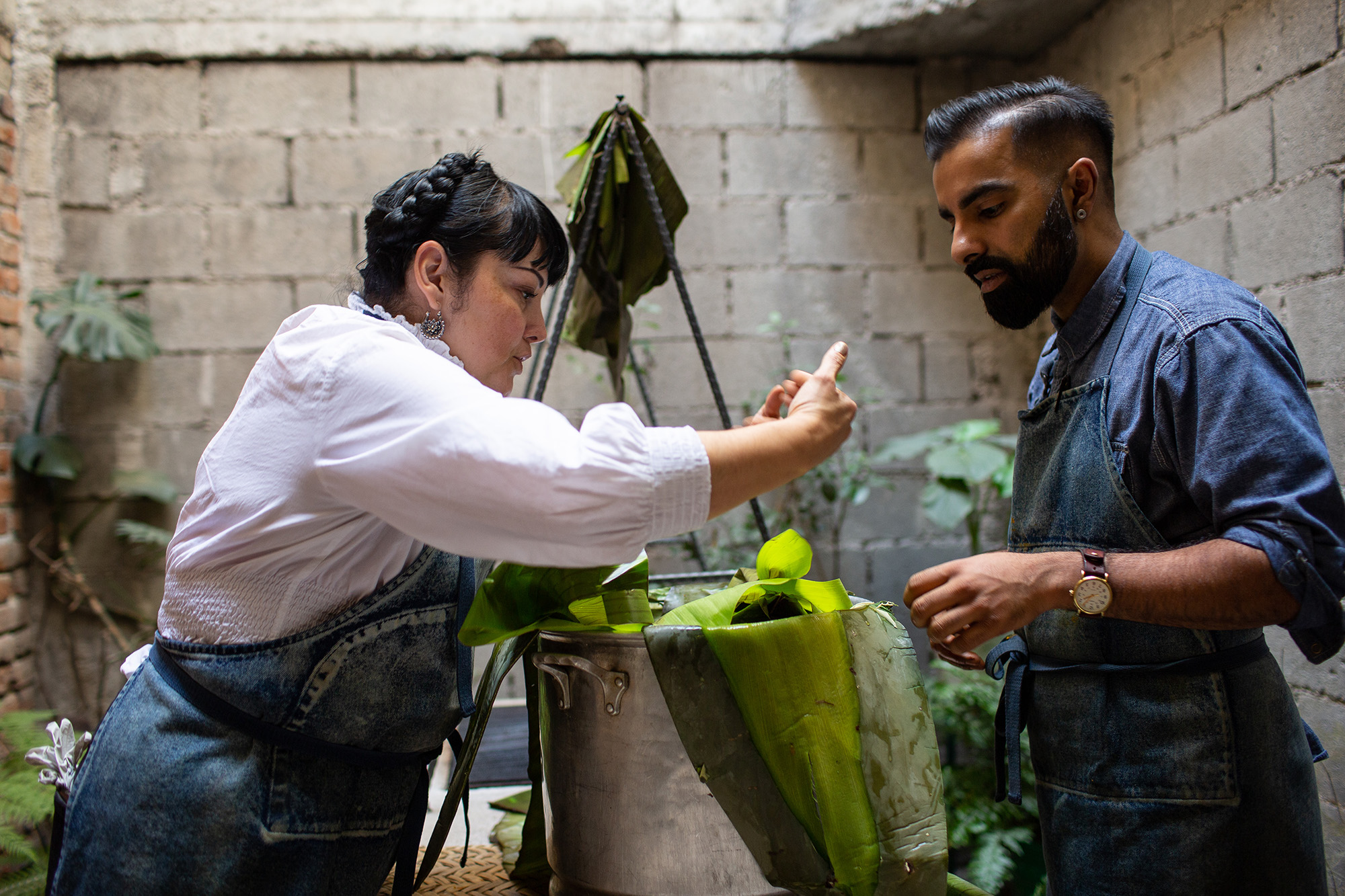 Norma Listman and Saqib Keval cooking at the first iteration of their Mexico City restaurant, Masala y Maiz. The chefs are organizing the first global Paga Lo Que Puedas initiative on Wednesday, Aug. 26, 2026.
“The restaurant industry generally is kind of shitty … and it’s really easy to get caught in that spiral of everything that’s wrong about the industry,” says Keval, who’s probably best known in the Bay Area as one of the co-founders of Oakland-based People’s Kitchen Collective food justice organization.
“But this wave of interest from restaurants all over the world made me feel hopeful,” he says. It made me see that we’re not alone.”
The Bay Area is where Keval and Listman first met and fell in love, and where they began their years-long collaboration in creating community-oriented food spaces. So they’d been hopeful that there would be a strong Bay Area turnout for this initiative. The eight Bay Area participants run the gamut from casual pasta counters (Sfizio in Oakland and Pasta Supply Co. in SF) to upscale Mexican (Bombera in Oakland and Acopio Alta Cocina in San José) and a wine country clam shack (Sonoma’s Valley Swim Club).
If there’s any commonality between the restaurants, Keval says, it’s these are the exact places he would have predicted would sign up for the initiative. These are the restaurants that have an explicit focus on social consciousness and aren’t shy about being outspoken with their activism. That includes places like Reem’s, slinger of the California-influenced Palestinian flatbreads known as man’oushe, which recently shifted to a worker-owned business model for its new Jack London Square storefront in Oakland. Worker collective–owned Understory, meanwhile, is joining the initiative as an extension of its own Pay What You Can program, which it offers daily in the form of a single entree.
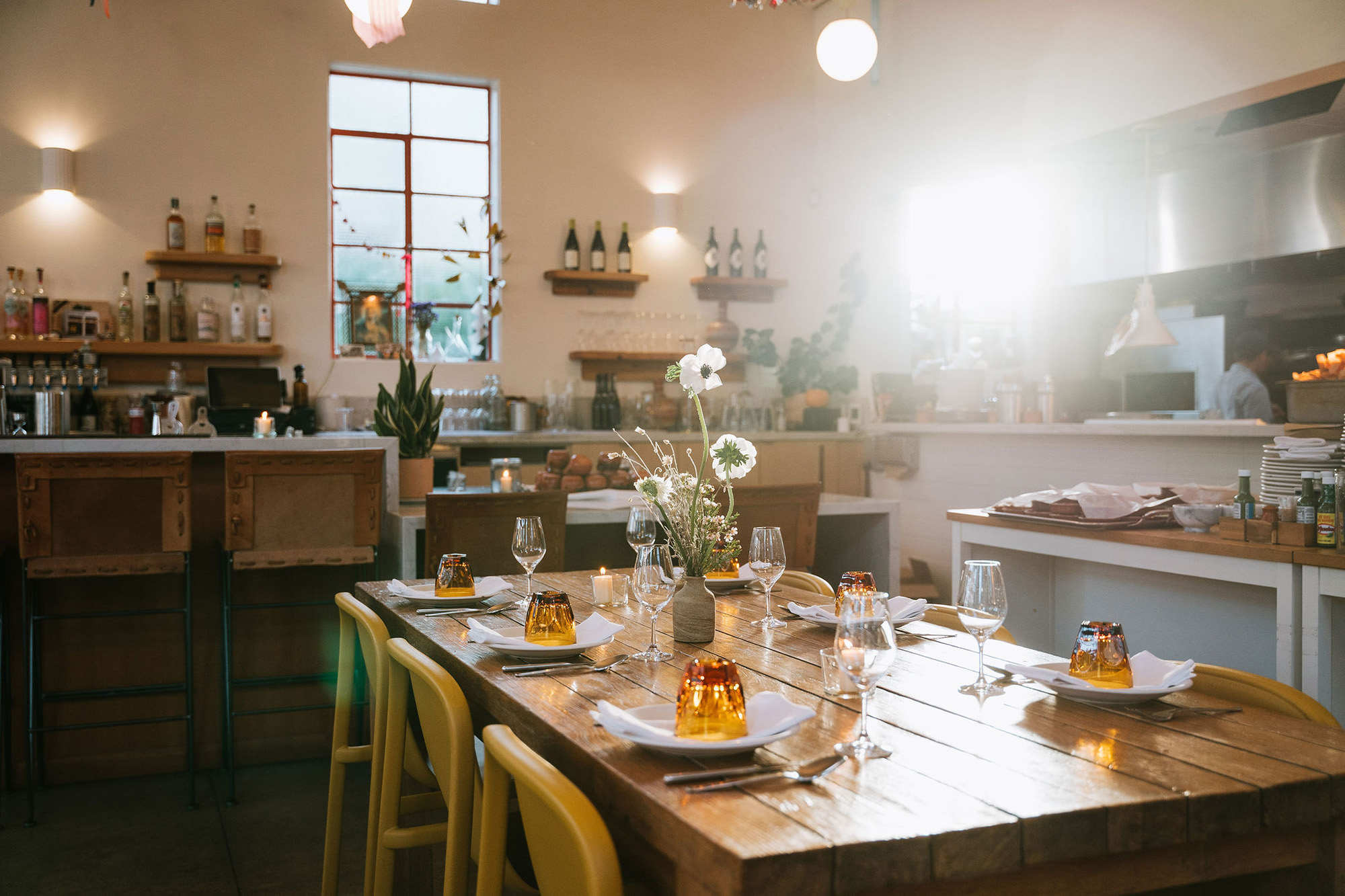 A picturesque table at Bombera in Oakland.
As Keval puts it, “They’re the people who I know I can always count on — that are always the first to step up for community and the first to use their restaurants as tools to create change.”
In truth, Keval admits he wishes that more Bay Area restaurants had signed up, particularly in the fine dining sector. Albi and Oyster Oyster, two participants in Washington, D.C., are both Michelin-starred fine dining restaurants; New York’s Caribbean hotspot Kabawa, which topped several best restaurant lists this year, occupies a similarly rarefied, high-end space. And Masala y Maiz itself has a Michelin star.
In the Bay Area, no restaurants in that tier are participating this year. But Keval believes it would send a powerful message if they did. After all, he says, the cost of operating a restaurant and the cost of dining out have both gone up so much that it’s caused many restaurants to become segregated along lines of race and class.
“In areas like the Bay Area, where this is pushed to the extreme, it makes it feel like the only people who get to experience a certain style of hospitality are the people who can afford to pay for it,” he says. “And that goes against why so many of us joined the [restaurant] industry in the first place.”
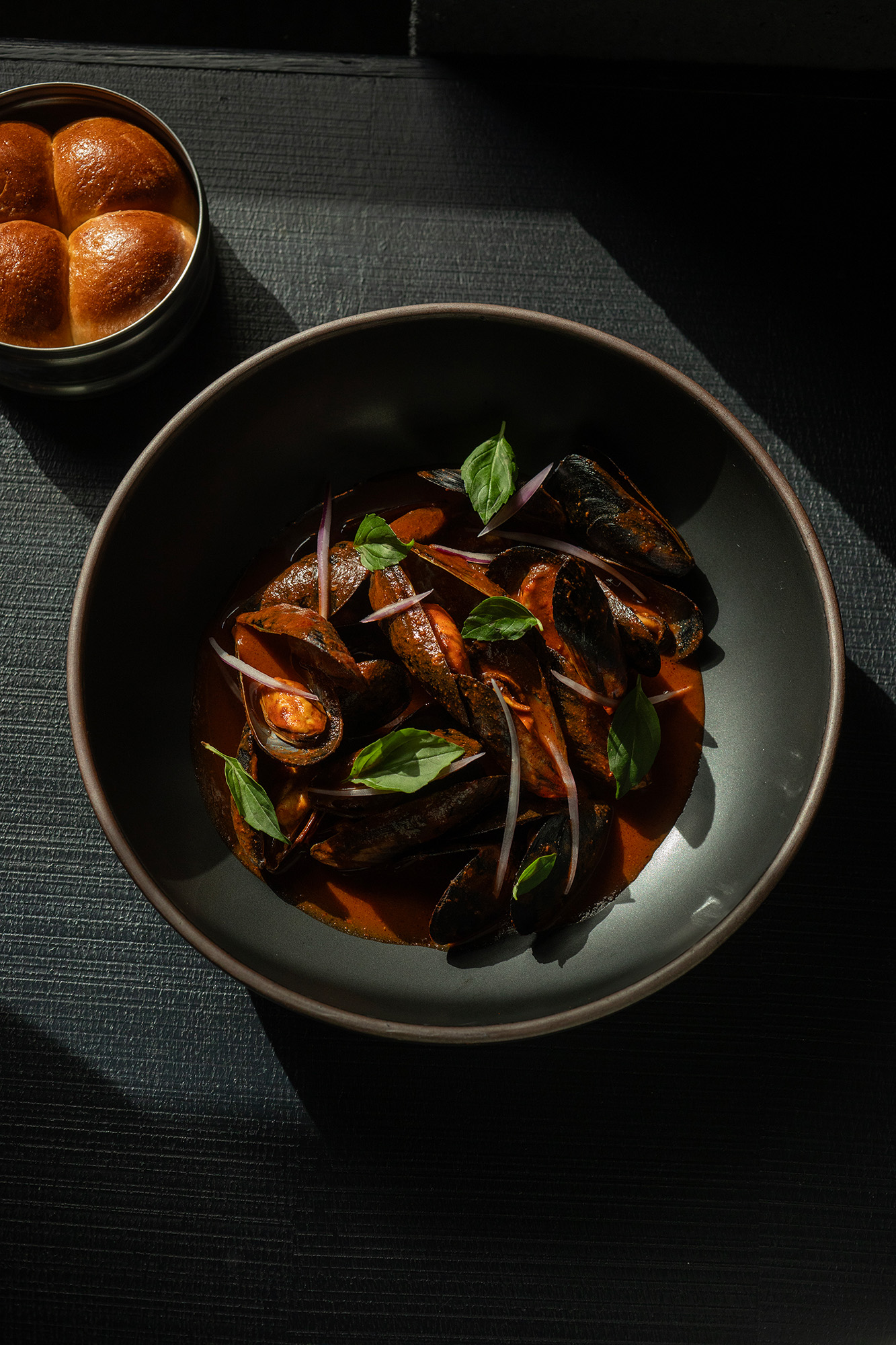 A plate of Balchão-style mussels at Masala y Maiz in Mexico City.
But what if restaurants like, say, The French Laundry or Chez Panisse were accessible to anyone, at least for one day? How would that change people’s perspectives on who and what fine dining is for?
“What’s the point of it if it’s so exclusive,” Keval says.
His hope is that by soliciting feedback from this year’s participants, he’ll get a better sense of how restaurants across different cultures, price points and service styles experienced the Pay What You Can model — and that next year, even more restaurants, including fine dining restaurants, will be inspired to join.