
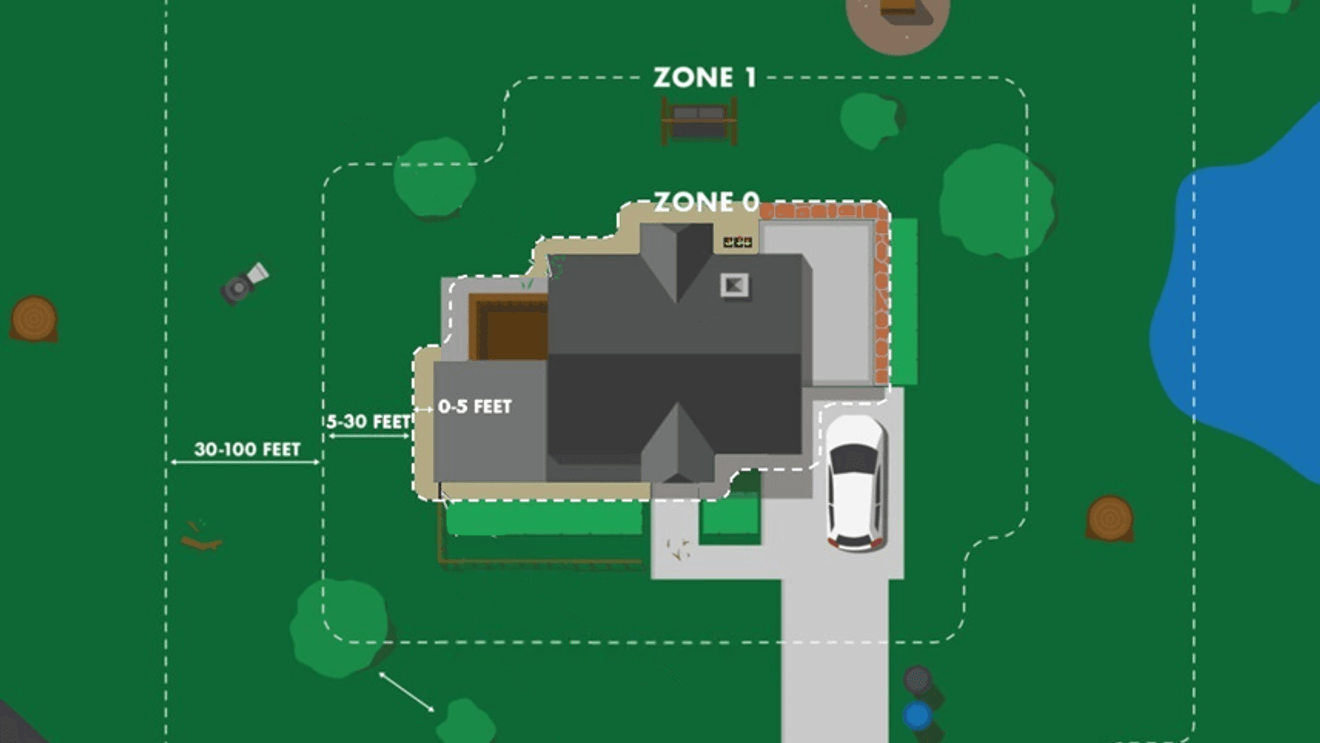
REDDING, Calif. — California is moving toward new wildfire defense rules that would target the five feet closest to homes in high fire risk areas — known as “Zone 0.”
The new zone and its requirements were created by the California Board of Forestry and Board of Fire Protection. Researchers say that this zone is the most critical area for protecting your home and the community around you.
These new rules will apply to all property owners in State Responsibility Areas and Very High Fire Hazard Severity Zones in the Local Responsibility Area. Check out the CAL FIRE Hazard Severity Zone map to see if your home falls in the affected area.
The proposed Zone Zero requirements would be rolled out in two phases over five years. Phase one will be implemented within the first three years. During this phase, homeowners would need to remove combustible materials within five feet of structures, including firewood, dead leaves, branches, mulch, and wood chips, and replace them with noncombustible items like decomposed granite, gravel, or rock.
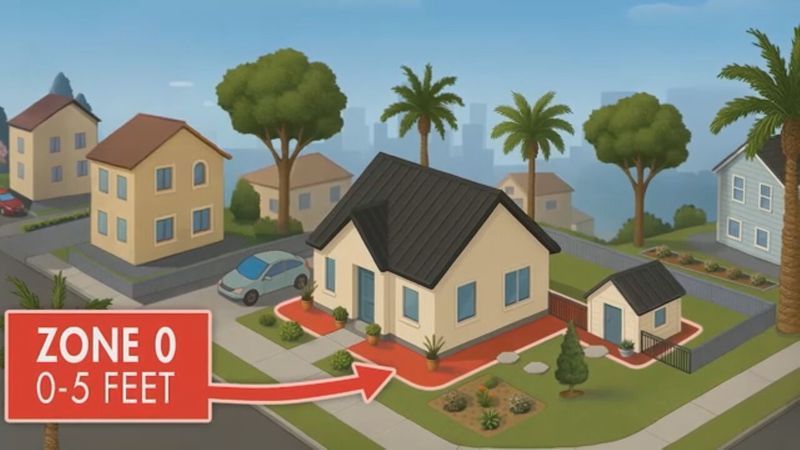
An illustration shows the 5-foot Zone 0 area around homes, intended to reduce the risk of structures igniting from embers during a wildfire. (Board of Forestry and Fire Protection)
Some homeowners have already been implementing this as required by their insurance.
Gale Bowen supported the idea of reducing flammable landscaping near homes.
“As far as bushes and brush up against your house, I think it’s a good idea, and I like the idea of not having bark as a barrier around your flower beds. I had it at one time and it caught on fire. Luckily, I have a fireman that lives close by. He came over and put it out, but I don’t think it’s a good landscape thing,” she said.
During phase one, tree maintenance is also expected. Branches should be ten feet from chimneys, clear of eaves, and should be trimmed five feet above roofs. Dead wood should be removed along with lower branches or limbs from the bottom six feet of large trees and bottom third of small trees.
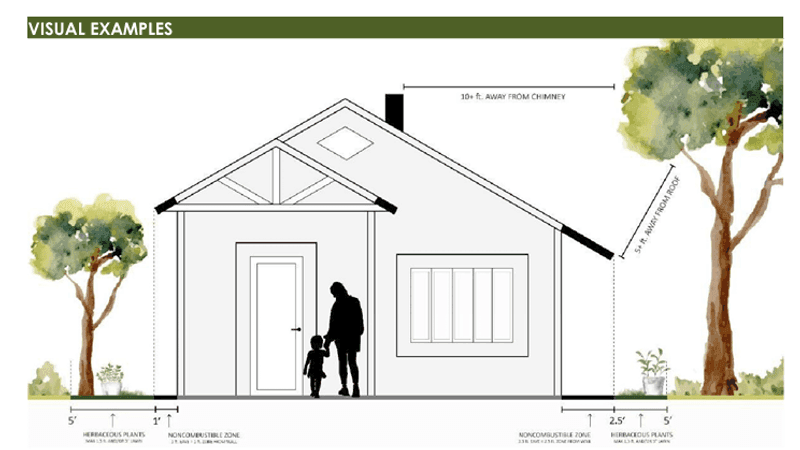
This image shows how Zone 0 can be divided into a non-combustible “safety zone” immediately near the building, surrounded by a low-combustibility zone out to the remaining 5 feet. Aug. 2026 (Board of Forestry and Fire Protection)
In Phase Two — which would be implemented within five years — the rules would move closer to the home. Much of this phase will include enforcing a “safety zone” which is the first foot away from a structure, or to the outer edge of an eave. In this area there should be no small woody plants and no combustible planters. Potted plants should be easily movable and in non-combustible pots.
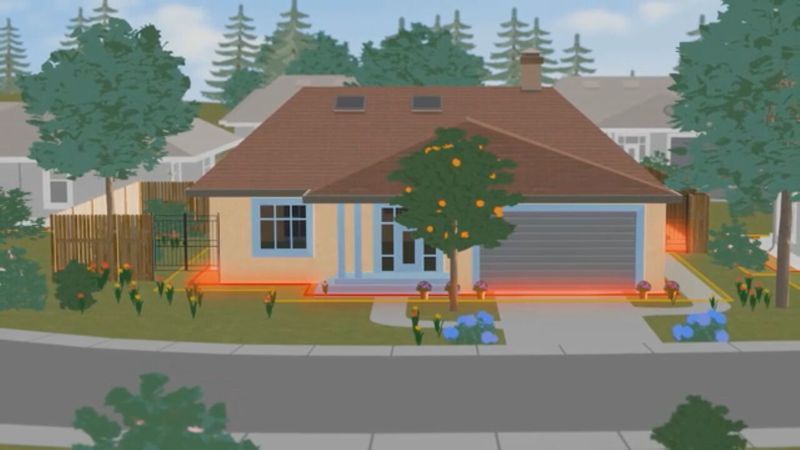
Safety Zone. Aug. 2026 (FILE)
Phase two would also require wooden fences attached to a home to be replaced with a non-combustible metal gate. All wooden sheds and outbuildings within zone zero will also need non-combustible exterior roofs and walls.
Some homeowners question how much all these new requirements will help during a major wildfire.
“I get that a fence can catch on fire and catch the house on fire, and I get that brush and trees can catch on fire and start the house on fire. But if the fire is already that, you know, prominent, it’s going to catch on fire most likely,” Sissy Arey said.
“We can’t stop the wind, and the fire makes its own wind, and so it’s just going to blow it through wherever it wants to blow it through,” she added.
Cal Fire said in a statement that it will prioritize education and outreach over penalties as the rules are implemented.
Insurance companies are also examining Zone 0 as a part of wildfire risk assessment, so properties that fail to meet new standards within the five-year phase may face non-renewal or higher premiums.
Legislative leaders, state and local government officials, local and state nonprofit organizations, fire departments, and community service groups are launching a series of resources, events, information, and funding to help support the implementation of Zone 0.
The rules are not law yet. They are expected to go to the state Office of Administrative Law in early September and could take effect by the end of September.
—