
Team will receive up to $19.3M in funding to transform lifesaving medical interventions with autonomous robotic surgeries
August 25, 2026 by Marni Ellery
A team of researchers from UC Berkeley, UCSF and UC Davis has received a major award from the Advanced Research Projects Agency for Health (ARPA-H) to fund pioneering research into novel lifesaving medical interventions. Their project, an autonomous microbot capable of performing delicate surgeries inside the head, will receive up to $19.3 million from ARPA-H, a federal funding agency that supports transformative biomedical and health breakthroughs.
This award is from the agency’s Autonomous Interventions and Robotics (AIR) program, led by Dr. Ileana Hancu, a program manager at ARPA-H. AIR seeks to expand nationwide access to specialized and time-sensitive procedures by developing autonomous robots to deliver less invasive, more affordable surgical care anywhere in the United States.
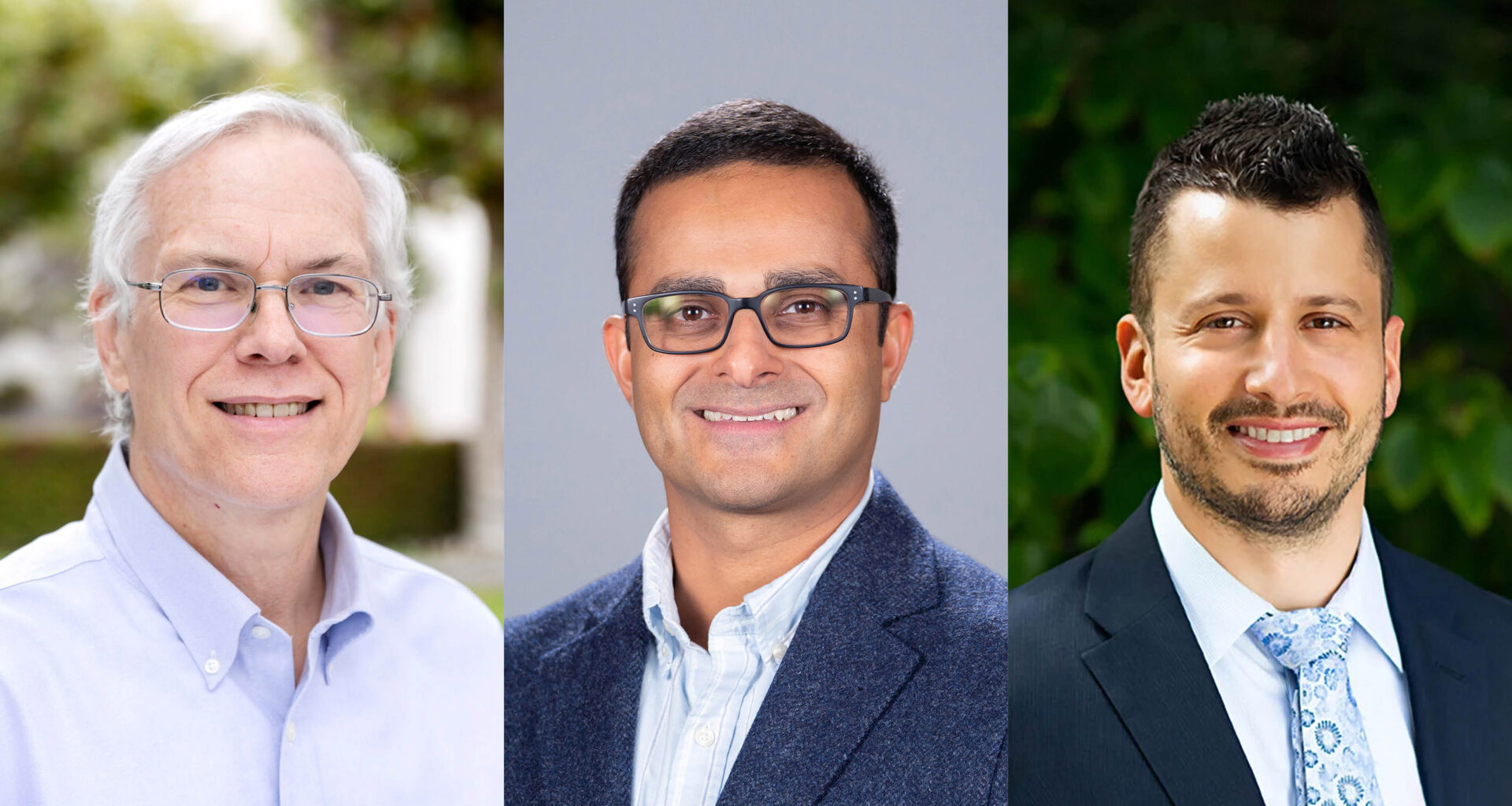
Ronald Fearing, professor emeritus and Professor in the Graduate School at UC Berkeley; Ali Javey, professor of electrical engineering and computer sciences at UC Berkeley; and neurosurgeon Ezequiel Goldschmidt from the Pickup Family Neurosciences Institute will serve as co-principal investigators on the five-year project dubbed FLEX-AIR, short for flexible, low-force, endonasal autonomous intervention robot.
Their team will build a tiny, five-segment crawling robot, about the size of a pencil eraser, that can inch its way through the body to access hard-to-reach places. The middle segments of this caterpillar-like microbot will be powered by a novel magnet-driven pump that controls micro-hydraulic suction cups as feet.
“With FLEX-AIR, we aim to create a really small autonomous robot that can perform surgical tasks in difficult-to-reach places in the head,” said Fearing. “Our goal is increasing surgical accessibility while protecting delicate tissues by making the robot soft and very lightweight.”
Fearing explained that FLEX-AIR is designed for gently maneuvering in tight, labyrinthine spaces and among fragile structures. It could perform biopsies of the sinuses by crawling into the nose and collecting tissue samples. In addition, the microbot could help treat hydrocephalus — swelling of the head and brain due to excess cerebral spinal fluid — by navigating fluid-filled spaces in the brain to connect ventricles and reduce dangerous pressure buildup.
The team has already demonstrated their microbot’s core capabilities and will use the ARPA-H award to miniaturize and automate the technology by developing new and improved actuators, sensors, electronics and AI-backed navigation.