
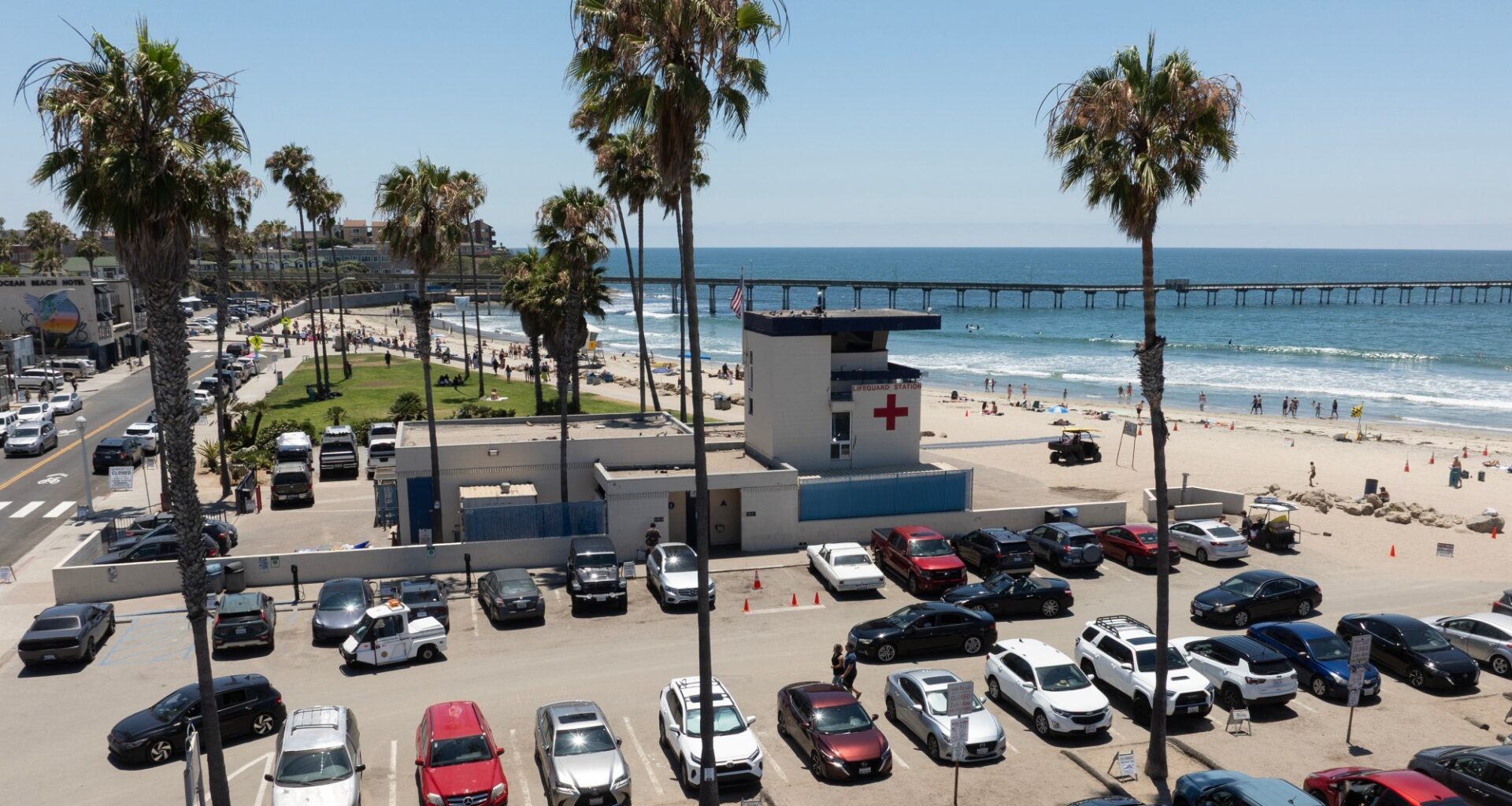
A proposed ban on charging for parking at San Diego beaches and bays would apply only to city residents — not tourists or locals living elsewhere in the county.
That notable retreat from an effort to fully ban paid parking at beaches and bays was approved unanimously Wednesday by the City Council’s Rules Committee after a long and contentious debate.
It’s the second major retreat this summer by supporters of banning paid parking at city beaches and bays.
In late June, supporters agreed to shift from a ballot measure, which couldn’t be overturned without another public vote, to an ordinance, which the City Council could easily reverse at any time.
Wednesday’s retreat opens up the possibility that San Diego could create a paid parking program at Mission Bay Park and city beaches that would exempt city residents.
But city officials said that’s highly unlikely, because the Coastal Commission does not allow varying rates based on residency.
“The Coastal Commission absolutely does not allow charging different classes of beachgoers different rates,” Council President Joe LaCava said during the committee debate. “To me, that was a deal-killer — full stop.”
LaCava and Councilmember Raul Campillo had previously proposed an ordinance that would fully ban paid parking, but Councilmembers Kent Lee and Sean Elo-Rivera persuaded the committee to limit the new law to city residents.
Lee said the intent of most council members is to prevent city residents from having to pay, not to exempt tourists and residents of other local cities should the city somehow find a way to charge only them.
But the entire Rules Committee stressed that no proposal for paid parking currently exists, and that one is unlikely any time soon after the fierce backlash to the city’s experiment with paid parking in Balboa Park.
Campillo said charging for parking at beaches and bays should never happen under any circumstances.
“A day at the beach or Mission Bay shouldn’t depend on whether your family can afford another fee,” he said. “Our coastline is a public resource, and access to it shouldn’t depend on your ZIP code and your ability to pay.”
He said charging county residents who live outside the city could damage many businesses in Mission Bay Park and at city beaches who would suffer if fewer people visit those areas because of a new parking fee.
Elo-Rivera said the city’s budget crisis means everything should be on the table. He suggested most San Diegans would support charging tourists as long as city residents are exempt.
“In alleviating the fear of San Diegans that we will charge them, we are taking off the table options that I think most San Diegans would agree with,” he said. “I have some concerns that we are putting ourselves in a tighter box than we need to.”
Elo-Rivera was able to persuade the rest of the committee to leave that box a bit looser by keeping open the option of charging people who don’t live in the city.
City residents who spoke at Wednesday’s hearing were sharply divided, with many supporting a ban and others criticizing the move for being too car-friendly and unfair to taxpayers who rarely use the beach.
An umbrella group of neighborhood leaders across the city called the Community Planners Committee voted 22-2 Tuesday night in favor of the proposed ban, with only downtown and North Park opposed.
“San Diego’s coastline belongs to the entire city,” said Victoria LaBruzzo, the CPC chair. “Public access shouldn’t depend on whether you happen to live at the beach.”
But Zack DeFazio-Ferrell, an attorney who serves as treasurer of the San Diego YIMBY Democrats, said the ban amounts to taxpayers subsidizing people who get to the beach by car instead of by bike or public transit.
“We should not conflate access to the beach with free storage of automobiles on public land,” said DeFazio-Ferrell, contending the city should recoup the costs for paving and maintaining beach lots. “It’s a public subsidy for storing private vehicles.”
Chris Roberts, a member of a group focused on climate change called San Diego 350, said the city should charge for parking and use some of the revenue to launch beach shuttles from relatively far-away city neighborhoods.
More residents spoke in favor of the ban than against it.
Marcella Bothwell, chair of the Pacific Beach Community Planning Group, said the ban was about social justice.
“Please approve this ordinance to protect equitable coastal access for all San Diegans,” she said.
The proposal, which the Rules Committee approved 5-0, must go to the full nine-member council for final approval. It is an ordinance that would amend the city’s municipal code.
One key difference between an ordinance and a ballot measure is that an ordinance can be changed by a simple vote of the council, but an approved ballot measure can’t be changed without another public vote.
The proposal comes after the city’s highly unpopular effort to charge for parking at Balboa Park. The council voted in early June to eliminate paid parking there at the end of this year.