
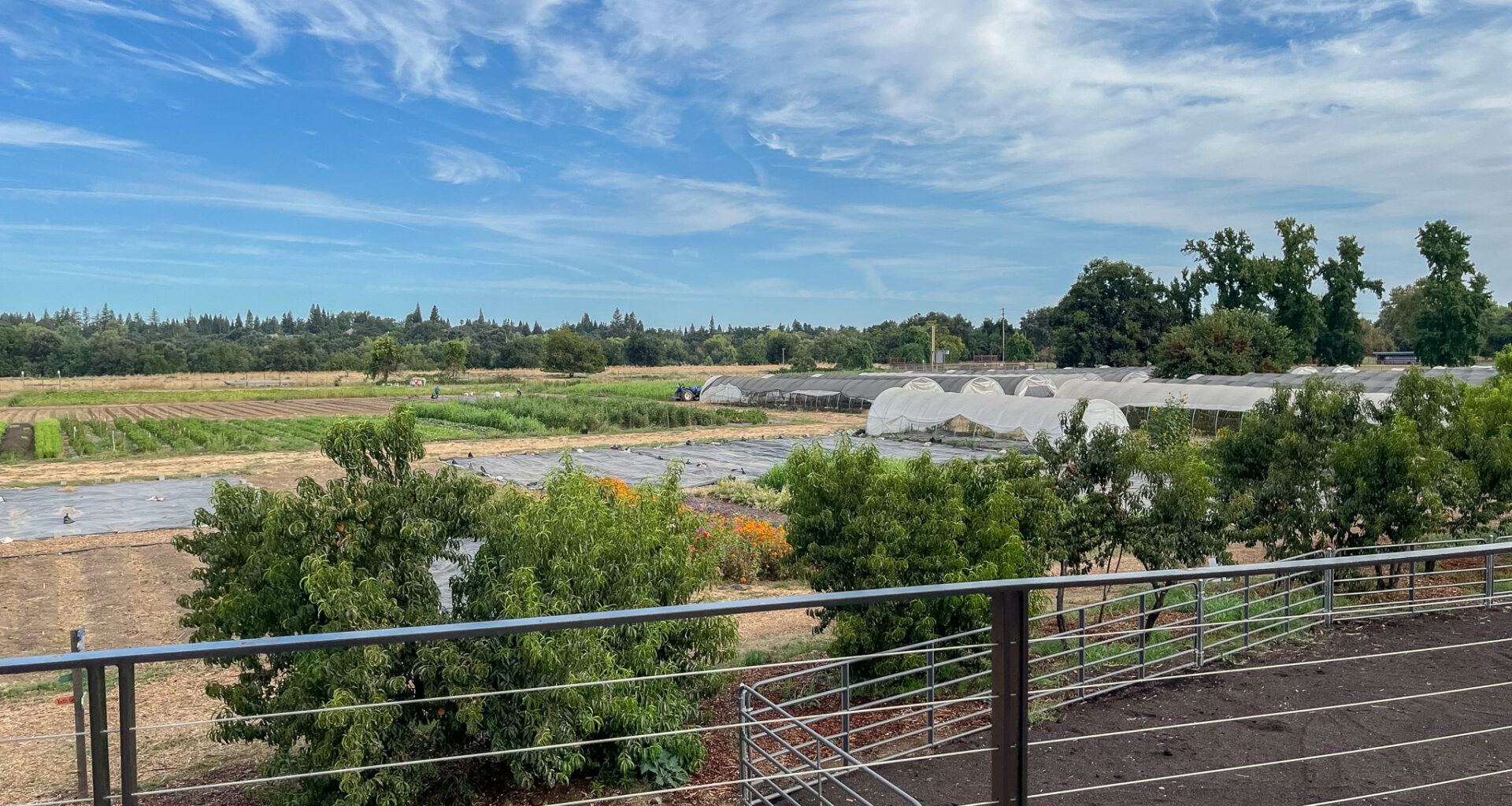
On a 55-acre stretch of land along the American River in Rancho Cordova, sheep graze where invasive weeds and piles of trash once covered the ground.
The animals are one of the newest additions to Soil Born Farms, but they are part of a much larger experiment that co-founder and co-director Shawn Harrison has been building for nearly two decades: What if farming could help restore an ecosystem, rather than simply take from it?
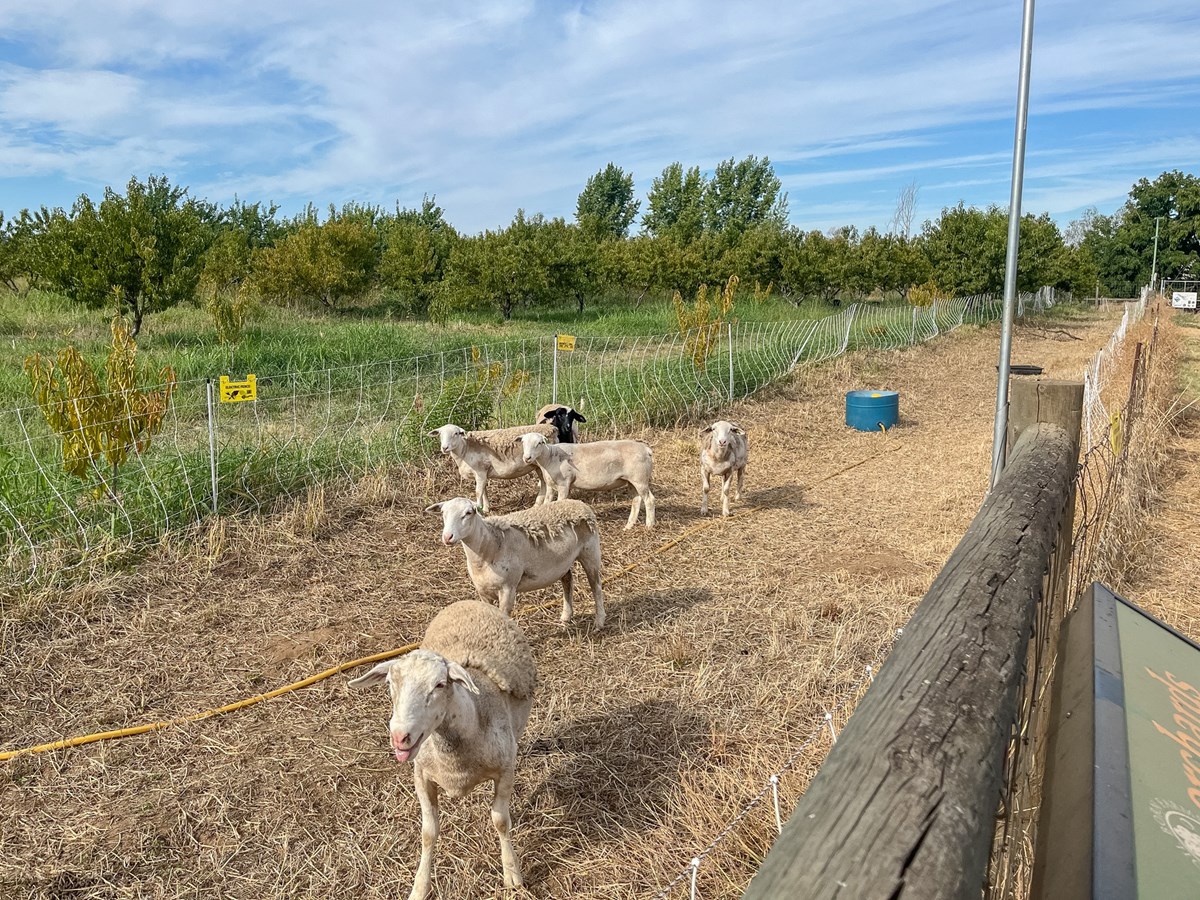 A flock of Dorper sheep Wednesday, Aug. 12, 2026, at Soil Born Farms in Rancho Cordova. The animals graze in the orchard and across property, managing weeds and stimulating plant growth.(Katerina Graziosi/CapRadio)
While agricultural production relies heavily on the land, disturbing natural habitats and depleting resources like topsoil and water, regenerative practices can be used to restore and even enhance natural systems and soil health.
Soil Born uses regenerative agriculture practices including minimal tillage, cover crops and compost as part of a larger effort to grow food while rebuilding habitat along the American River.
More than a place to grow food
Soil Born produces food for the community — including lettuce for local schoolchildren.
“We’re growing 70% of all the lettuce that goes into the school lunch program at Sac City Unified School District on one acre of land,” Harrison says.
While that kind of production might sound like conventional agriculture, the way the farm approaches soil health is different. By using low-till methods, integrating livestock and incorporating native plants — like oaks and elderberries — the operation is intentionally reducing the need for inputs that can degrade the land over time.
“If we’re trying all these bigger goals associated with ecological diversity and ecosystems… we’ve got to do a really good job of learning how to better manage and build up that sort of the conditions for all the biology to thrive,” he says.
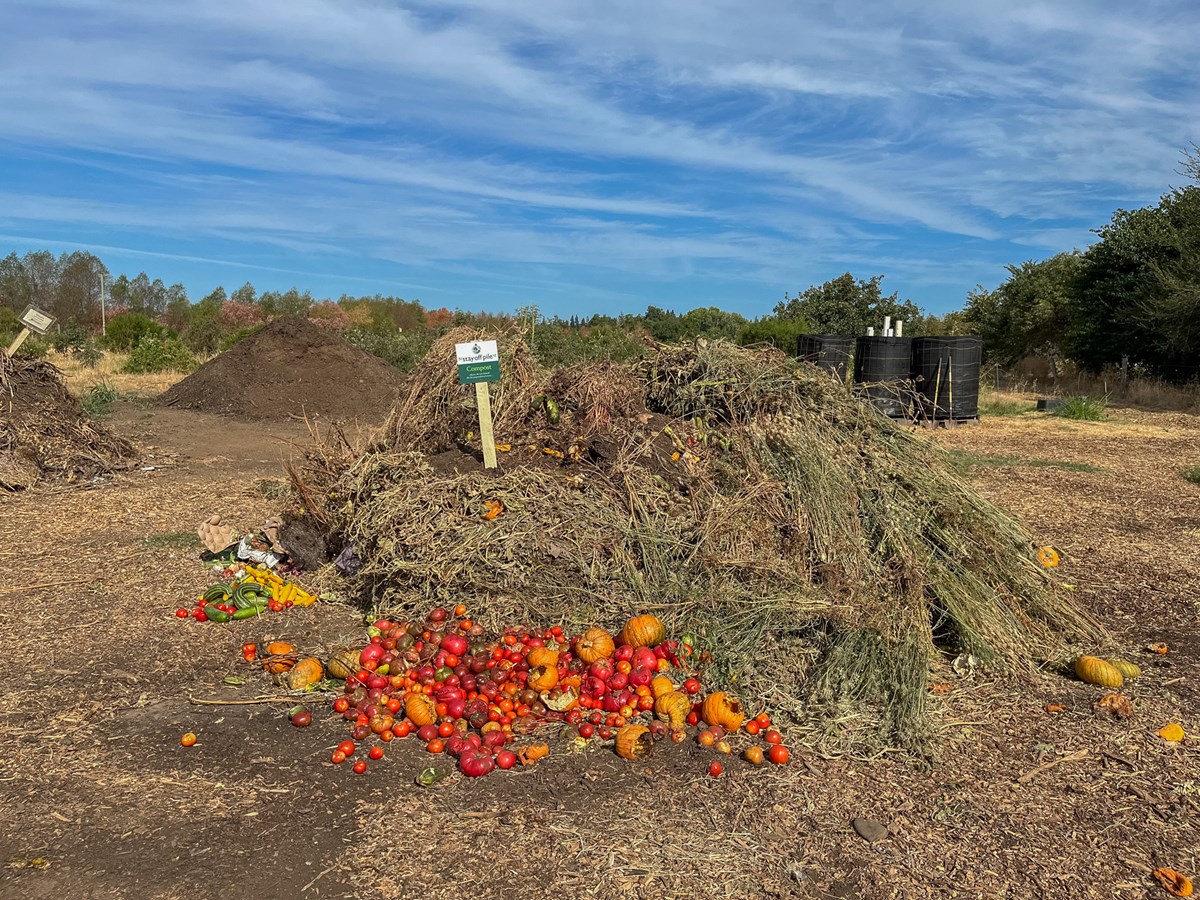 Piles of compost Wednesday, Aug. 12, 2026, at Soil Born Farms in Rancho Cordova. Compost helps the organization build healthier soils as part of regenerative agriculture practices.(Katerina Graziosi/CapRadio)
That means treating the farm not simply as a place to grow food, but as part of a larger biome.
Over time, that approach has transformed the property: what was once dominated by invasive weeds, trash and debris — including a concrete-lined creek — has become a habitat for reptiles, snakes, lizards, hawks, insects and 150 documented species of birds.
Combining farming with habitat restoration isn’t something Ann-Marie Benz with the California Native Plant Society sees often.
“It’s unusual in ag in general. It’s more common in small farms,” Benz says. “It’s less common with big ag.”
Benz says agriculture has often been shaped by economic incentives that prioritize short-term production and cost-cutting over ecological health.
“The answer to so many things is capitalism,” she says. “But with that capitalism, there is that loss of incentives, that loss of knowledge and just the short-term look at kind of, ‘How do they do the most immediately, not how do they do the most long-term?’”
She points to the Central Valley as an example of what can happen when the ecological health of farmland is overlooked.
“It’s struggling,” Benz says. “Sometimes driving through parts of the Central Valley where you see the soil dry and white and robbed of its nutrients, it’s painful.”
She also points to the way farms manage pollinators. Instead of creating and maintaining habitat for native pollinators, some agricultural operations rely on renting beehives to provide pollination services.
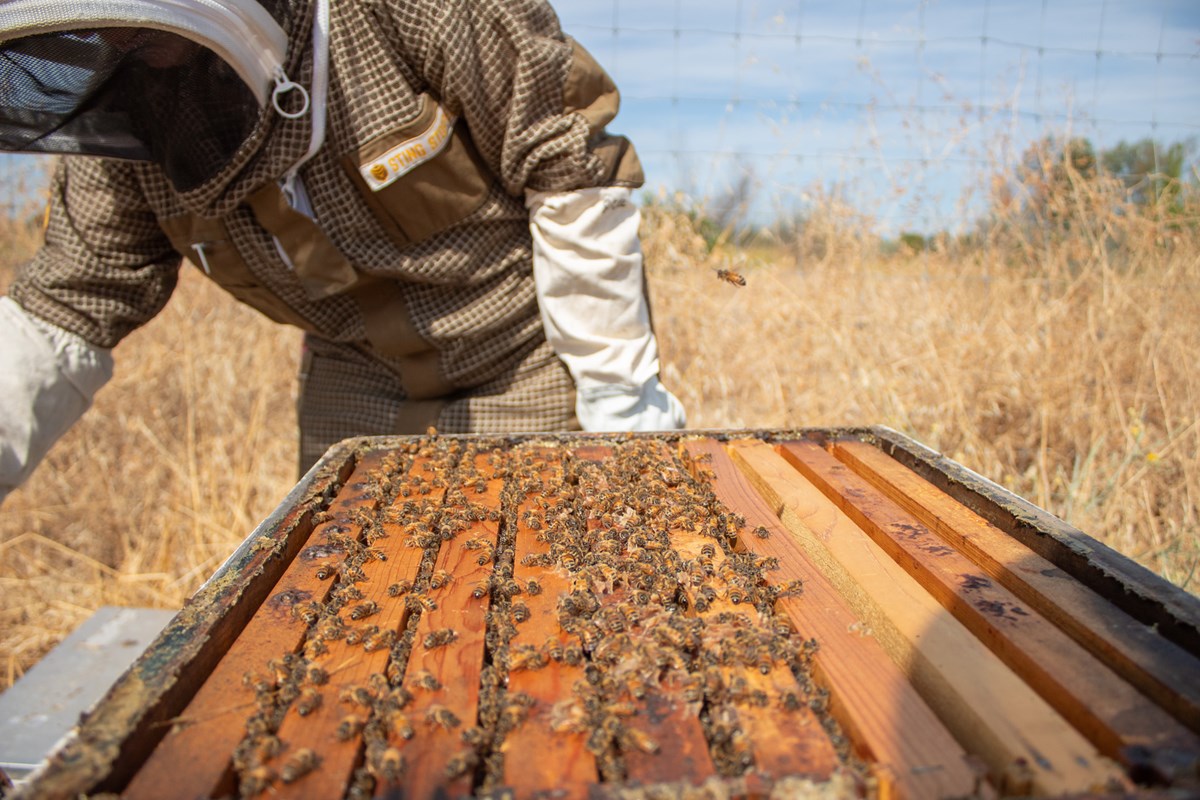 Youth educator Amy Tackett, shows an apiary Wednesday, Aug. 12, 2026, at Soil Born Farms.(Gerardo Zavala/CapRadio)
The distinction is important: regenerative agriculture isn’t just about replacing one farming input with another. It can mean changing the way a farm is designed and managed so that the surrounding ecosystem becomes part of the farm’s productivity and resilience.
But the idea that regenerative farming is inherently too difficult or expensive for farmers to adopt doesn’t necessarily hold up, according to UC Davis agroecology professor Amélie Gaudin.
“We often think that it’s impossible. It’s not economically viable. It’s difficult,” Gaudin says. “And the reality is that we’ve had farmers across California that have pioneered those systems for more than forty, fifty years.”
That history matters as California considers how to encourage more farmers to adopt regenerative practices.
Building momentum for a different kind of agriculture
The state adopted a definition of regenerative agriculture last year for use in state policies and programs. Rather than prescribing one set of practices that every farm must follow, the definition focuses on the outcomes farmers are trying to achieve.
The distinction leaves room for regenerative agriculture to look different from one farm or region to another. It could also become increasingly important as the state considers how regenerative agriculture fits into future agricultural funding and incentive programs.
Benz says those incentives should account for more than crop production or soil health. She says metrics around biodiversity and habitat should be part of the equation.
“Hopefully, Soil Born Farms gets to be a story that’s told to other startups or farms that want to trade over their practices and that there are people that they can look to and learn from and really that’ll inspire other groups to do this,” Benz says.
Harrison says regenerative agriculture is still a work in progress, but that farmers have an incentive to find ways to make their operations more resilient — for the land and their bottom line.
“All farmers want to do right by the land. But, you know, we’ve kind of got stuck in a paradigm of growing food where we’re too heavily reliant on tillage and the use of chemical fertilizers and pesticides,” he says. “And for a lot of farmers, that’s not really working for them either. It’s not leading to economically viable farms.”
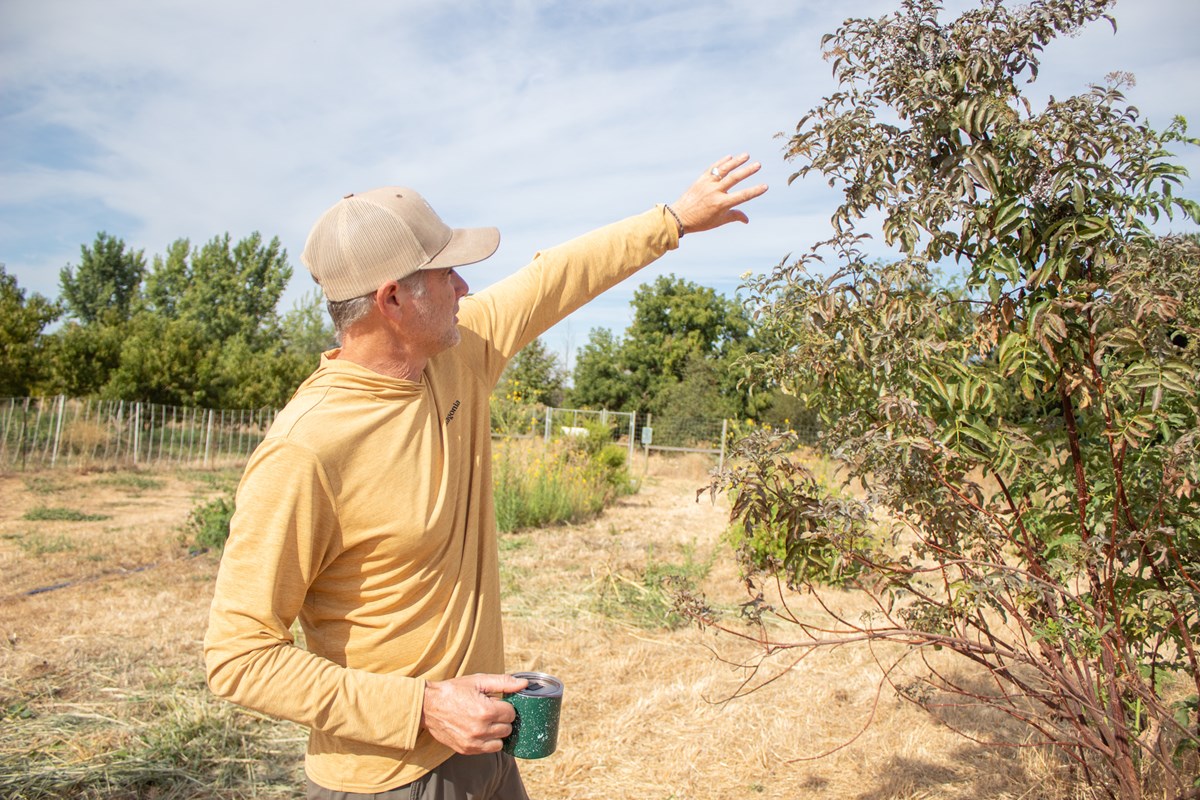 Soil Born Farms co-founder Shawn Harrison Wednesday, Aug. 12, 2026, in the farm’s three-acre agroforestry project.(Gerardo Zavala/CapRadio)
That tension is at the center of the broader debate over regenerative agriculture. The question isn’t simply whether a particular practice is better for the environment. It’s whether farmers can build systems that produce food while also improving soil, conserving water and supporting biodiversity while remaining economically viable.
For Soil Born Farms, that delicate balance is visible in the landscape itself: crops growing alongside native plants, sheep grazing the property and birds moving through habitat that wasn’t there before.
The farm is one example, but Harrison says the larger challenge is building enough examples at different scales that farmers can see what is possible.
“As we have more proof of concept at differing scales and that population of folks doing the stuff grows, it starts to build momentum,” Harrison says. “And that is happening as we speak.”
This story was produced by the Climate Solutions Studio, a project of the Central Valley Journalism Collaborative and its partner newsrooms. CapRadio is a founding partner.
Follow us for more stories like this
CapRadio provides a trusted source of news because of you. As a nonprofit organization, donations from people like you sustain the journalism that allows us to discover stories that are important to our audience. If you believe in what we do and support our mission, please donate today.