
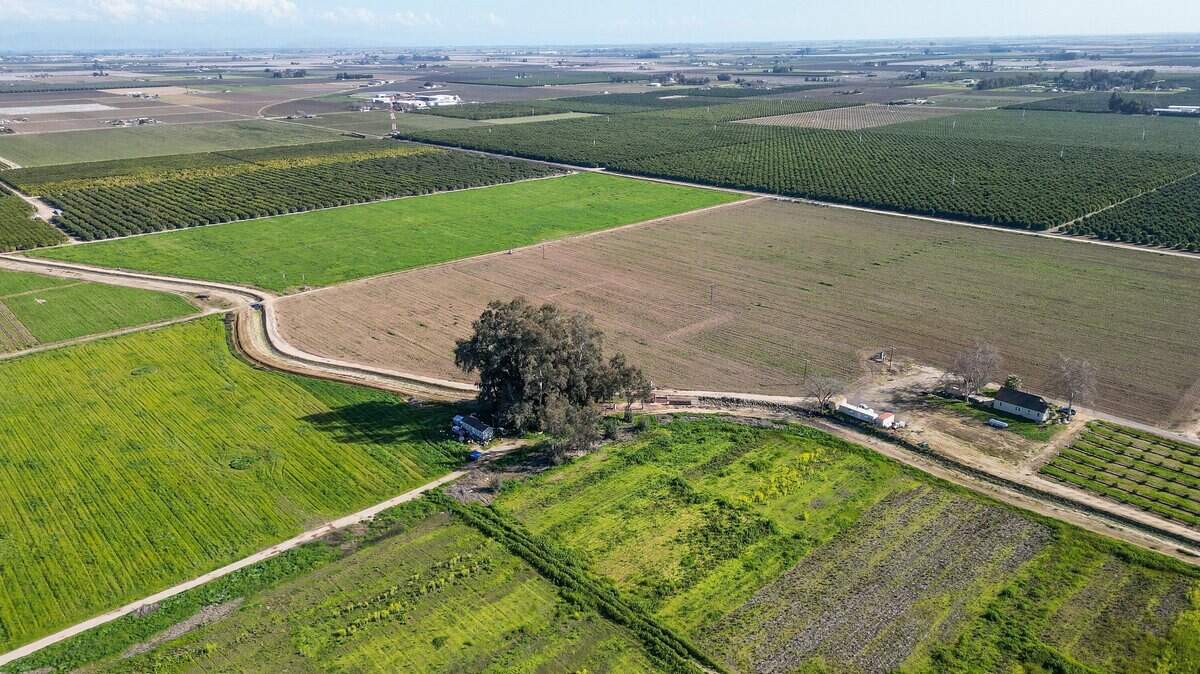
Fresno’s contentious development plan to add 9,000 acres of unincorporated farmland for up to 45,000 homes into the Fresno city limits won a key vote last week after more than six decades on the drawing board.
The city-expansion idea has crystallized over the years into the current SEDA plan, which has polarized the Fresno community. The Southeast Development Area has become one of the biggest controversies in recent Fresno politics.
Here’s how Fresno got here, and what happens next:
1958 to 2022: A plan on the shelf
The idea of pushing Fresno’s boundary southeast dates back to 1958, but for decades it stayed largely on paper as the city grew north instead. The Great Recession and the COVID-19 pandemic stalled earlier attempts to revive it.
Then, in 2022, Mayor Jerry Dyer’s administration brought SEDA back to the table. Dyer has argued the city needs the plan to keep up with a housing crunch and to compete for good-paying manufacturing jobs.
“We are in a housing crisis, and we’re not building housing fast enough in our city,” Dyer told The Bee, according to Bee reporting. “We’re starting to lose people who are moving to Madera, people that are building in Clovis, people that are going to Fowler, Sanger, Kerman to build because they’re not necessarily people that want to live in the infill.”
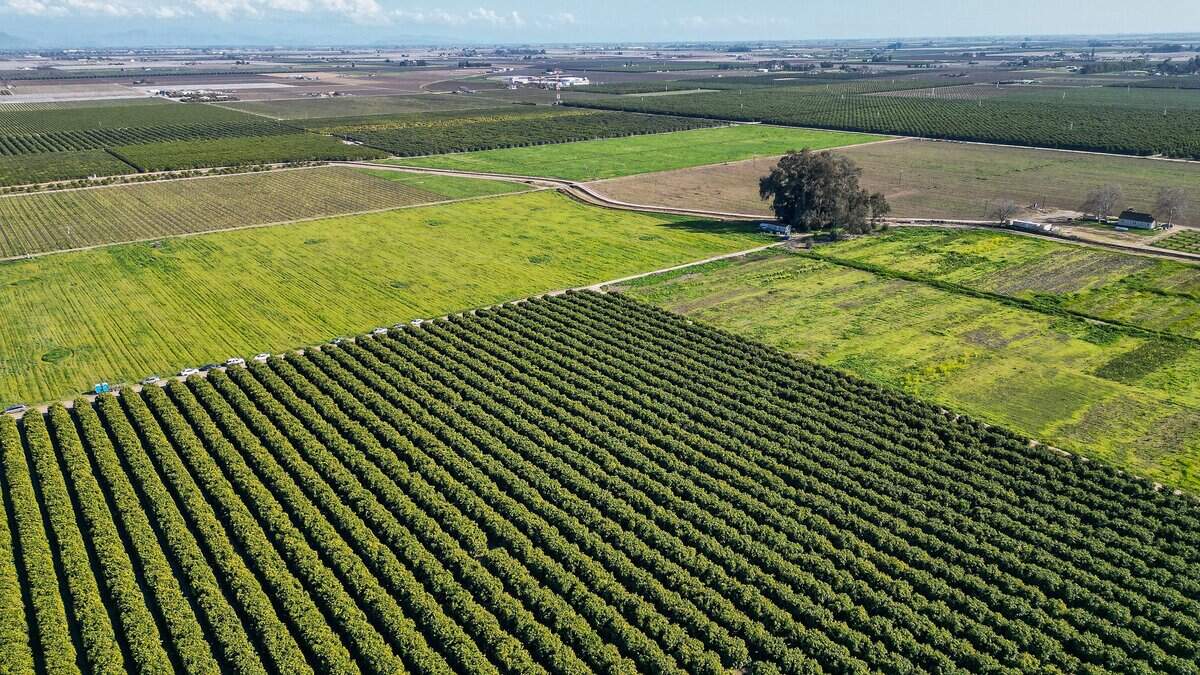 Mostly agricultural land is visible looking south from Temperance and Jensen avenues in rural Fresno County on Thursday, Feb. 12, 2026. The land is part of the Southeast Development Area, or SEDA, a 9,000-acre swath of unincorporated Fresno County land where Fresno Mayor Jerry Dyer and his administration are proposing the development of 45,000 homes. CRAIG KOHLRUSS ckohlruss@fresnobee.com Late 2025: Opposition organizes
By late 2025, a coalition of roughly 20 organizations — including the Fresno Teachers Association, the Greenfield Coalition, neighborhood groups and elected officials — had lined up against SEDA. So had rural homeowners inside the development footprint, who organized as the Fresno Southeast Property Owners and packed hearings in red “no to SEDA” shirts.
Their primary arguments include that the mega-development would divert resources from existing neighborhoods, exacerbate sprawl and stretch public services thin.
Dec. 18, 2025: Council sends the plan back
Hundreds filled City Hall for a special meeting where the City Council was scheduled to vote on SEDA. After hours of public comment, the council instead voted 5-2 to send the plan back to the Dyer administration with a long list of requested revisions, including new studies of the plan’s financial viability.
Dyer pivoted to a scaled-back opening phase he called South SEDA — about 1,963 acres at the bottom of the SEDA area, with roughly 4,800 residential units planned east of Temperance and the rest reserved for research and business uses. He proposed requiring that at least 70% of South SEDA’s residential land be built out before development could move into the rest of the area, and floated a voter referendum and more environmental studies before expansion.
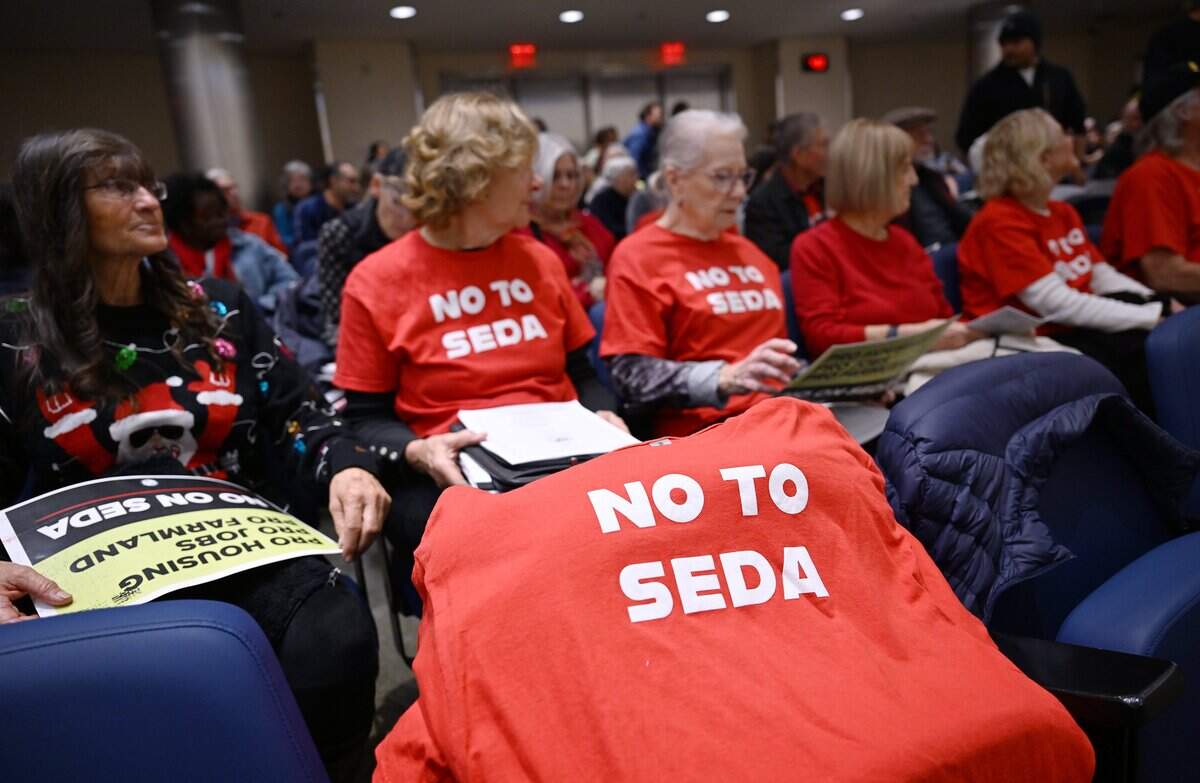 Hundreds gathered for a special Fresno City Council meeting open to the public to voice concerns over the Southeast Development Area (SEDA) plan Thursday evening, Dec. 18, 2025 in Fresno. ERIC PAUL ZAMORA ezamora@fresnobee.com Summer 2026: A revised plan
By August 2026, city planners had returned with revisions. Fresno’s supervising planner Adrienne Asadoorian walked the Planning Commission through the updates at a workshop and told commissioners the city had made a series of plan and policy changes in response to public comments gathered through community meetings, workshops and hearings that had drawn a combined attendance upward of 450 people, The Bee reported.
The main changes:
Shifting land use to allow more housing east of Temperance.Creating a “consolidated business park” south of Jensen that clusters employment, flexible research and development and office uses. It was identified in the environmental review as the environmentally superior alternative.Phasing growth so only the southern section develops first, with 75% of South SEDA’s residential land required to be developed and occupied before later phases open.Requiring further environmental and fiscal review before expansion.Adding a community benefit fund to help current rural residents pay to connect to city utilities, though the source of that money remains unclear.Clarifying service and buffer policies, including around Lone Star Elementary.
Critics were unmoved. Brett Thompson, part of the rural residents’ group, said the workshop and changes did not settle their concerns and that the fiscal analysis had not been made public. Attorney Patience Milrod, writing on behalf of the Central Labor Council and Regenerate California Innovation, sent a letter to the council asking that financial reports be fully released for public review before any vote.
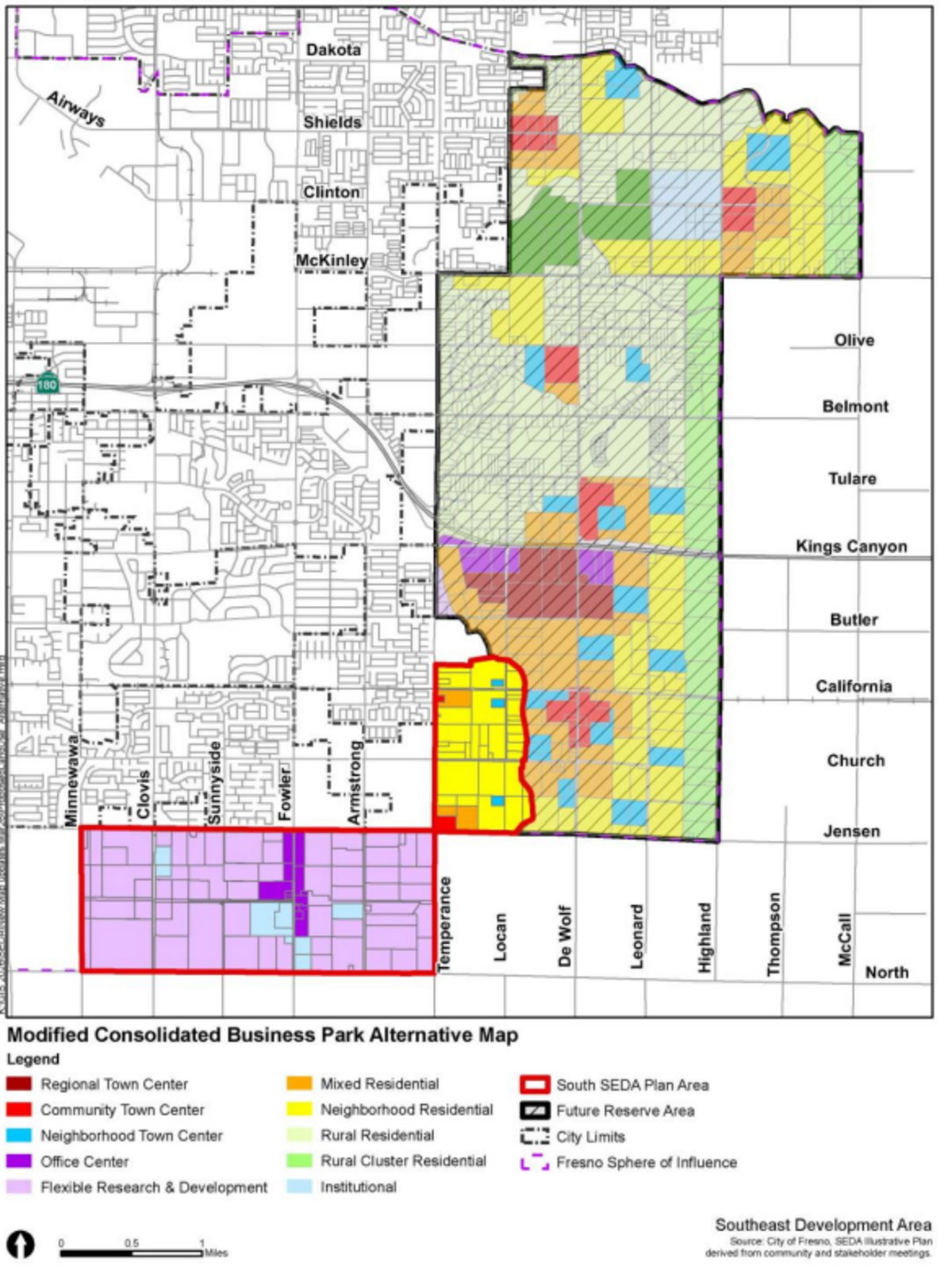 Modified consolidated business park alternative map for SEDA. City of Fresno Aug. 19, 2026: Planning Commission says yes — 6-1
An estimated 160 people packed the council chambers — the third overflow SEDA crowd in a year — as the Planning Commission voted 6-1 to recommend the revised plan to the City Council, The Bee reported. The vast majority of public commenters opposed SEDA.
FUSD school board president Veva Islas told commissioners she was worried about the impact on its classrooms.
“SEDA poses detriment to our schools, our students, and our teachers, and I’m concerned for them,” Islas said. “We are currently already suffering from a decline in attendance and enrollment.”
Central Unified Superintendent Mark Marshall urged the city to invest in existing neighborhoods before pushing the boundary south.
“We encourage the city to first partner with our community to create a funded infrastructure investment plan for communities west of Highway 99,” Marshall said. “Next, prioritize infill development and housing strategies that uplift existing neighborhoods first.”
Commissioners who supported the recommendation argued that growth will happen in the area regardless of whether SEDA’s land is incorporated into the city. Commissioner Chair Kathy Bray pointed to the new Terry P. Bradley Educational Center on Leonard.
“They would never put a school there if they didn’t think that there were going to be students in that area,” Bray said. “There’s going to be development there. I see this plan with it being phased down in the Jensen area first as the least awful iteration of this. At least it starts there.”
Councilmember Miguel Arias raised another concern — that the “consolidated business park” is really about data centers, not the advanced research the label suggests. Planning director Jennifer Clark said data centers are not currently permitted in Fresno, and that would apply to SEDA as well.
Five speakers in the audience of roughly 160 spoke in favor of SEDA, emphasizing job creation, housing opportunities and economic growth. The Fresno Chamber of Commerce’s Samantha Forgey called South SEDA an important opportunity to address the region’s needs. Peter Weber, founder of the Fresno Bridge Academy job training program, said Fresno lacks middle-income jobs and praised Dyer’s tenacity in pursuing the project.
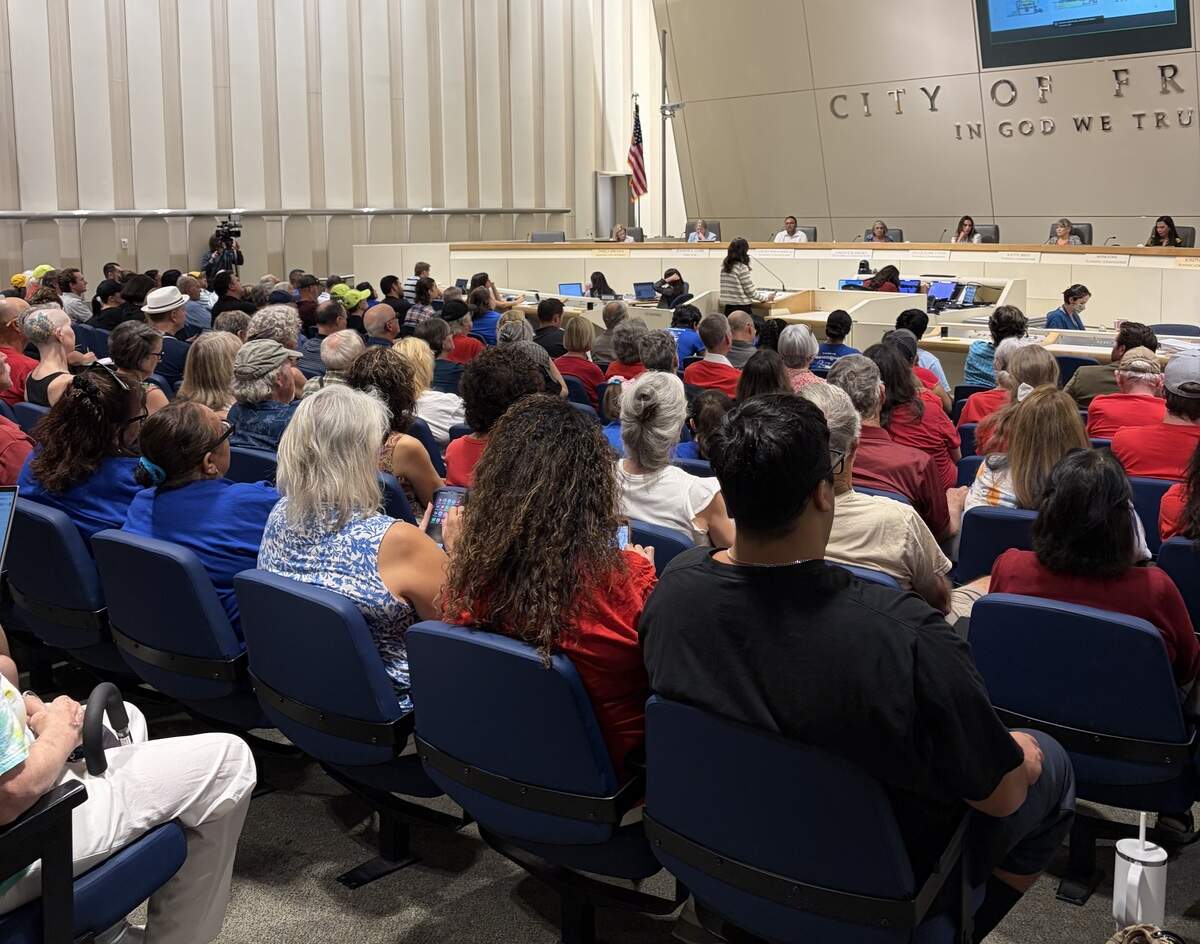 The Fresno Planning Commission voted 6-1 to recommend an updated version of the Southeast Development Area, or SEDA, to the City Council on Wednesday, August, 19. Liliana Fannin What’s next
The City Council could vote on SEDA soon. City staff plans to present a workshop on SEDA’s finances to the council on Sept. 3. Opponents have said they may file a lawsuit or pursue a citywide referendum to block growth on the SEDA land if the council approves the plan.
This report was produced with the assistance of a proprietary tool powered by artificial intelligence based on our own originally reported, written and published content. Before publishing, journalists reviewed this content in compliance with McClatchy Media’s AI policy.
Related Stories from Fresno Bee