
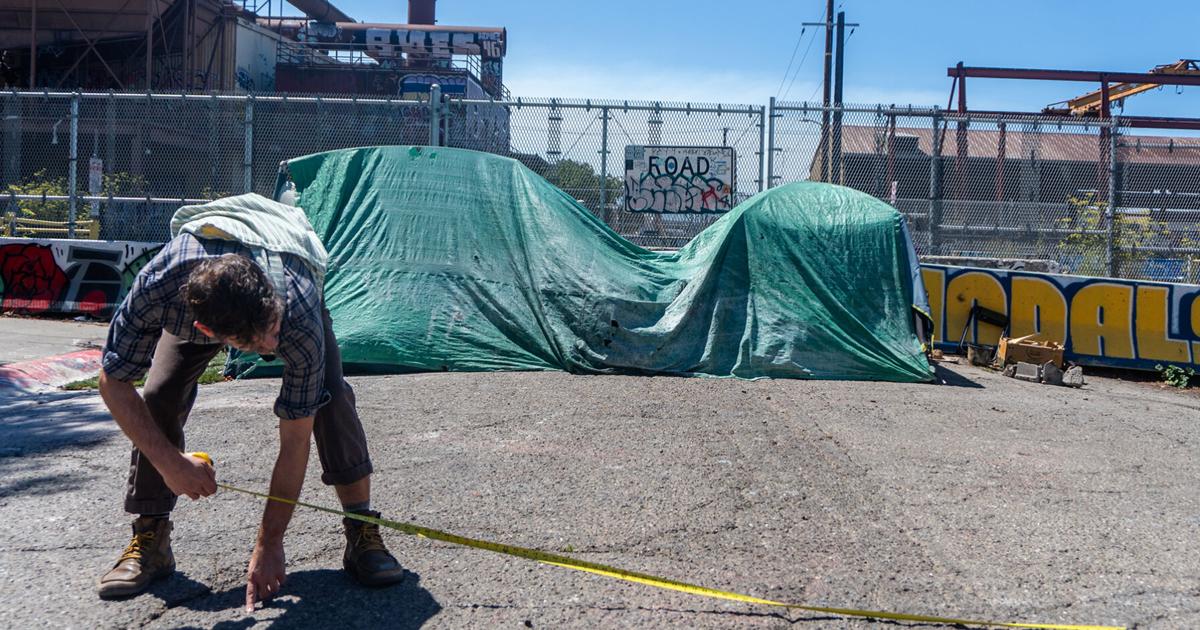
A little after 1 p.m. Wednesday, the city of Berkeley met with the Berkeley Homeless Union in a vacant city lot at the end of Harrison Street.
Just up the street lay the beleaguered 8th and Harrison streets encampment, the legal fight around which came one step closer to a conclusion Wednesday when a federal judge put forward his final judgement.
The city and BHU have long been at odds in court over the city’s plans to sweep the encampment. As the city prepares to sweep the encampment, the two parties met Wednesday to assess alternative sites for homeless and disabled 8th and Harrison residents to relocate to.
The city and BHU did so under a federal judge’s court order to collaborate on assessing relocation sites for 23 homeless residents who qualify under the Americans with Disabilities Act. Through the orders, these individuals have been exempted from city regulations that restrict homeless residents from occupying more than a 3-by-3 foot space on city sidewalks.

Federal judge Edward Chen’s final order, handed down Aug. 20 but confirmed Thursday, extends protections granted to 8th and Harrison residents to all BHU members throughout the city. Nonetheless, it maintains the city’s right to sweep the 8th and Harrison encampment and rules that the city has no obligation to designate enforcement-free zones or license encampments.
The city has announced it is planning to sweep the 8th and Harrison encampment Sept. 8.
At the vacant lot on Harrison Street, the city checked to see if it could accommodate three individuals who had requested two 11-by-30-foot spaces and one 10-by-30-foot space for tents and belongings.
“There is room for the three rectangles and they don’t even have to touch each other,” said Thomas Gregory, the city’s ADA program coordinator, after he finished measuring the lot.
Still, the city seemed poised to reject the site.
“It’s our understanding that this spot is not a public right-of-way,” said city attorney Nubyaan Scott. “If it’s a privately owned lot or a city-owned lot, it’s our position that is not a public right-of-way.”
If the city owns the lot, that would disqualify the site, as the city is not required to accommodate individuals in areas outside of the public right-of-way.
Much the same story played out at the other sites the city and BHU assessed that day. Of the five sites they visited, three appeared to be lots owned either by the city or privately.
At the second site that city staff assessed — a stretch of road in West Berkeley surrounded by industrial yards and situated near a former homeless encampment at 2nd and Cedar streets — city staff similarly expressed doubts about the site’s viability, citing concerns about access to a utility pole and preexisting “no lodging” signs on site.
Around the “no lodging” signs, two people had already set up tents to live in.
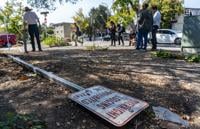
At all of the sites assessed Wednesday, the city raised various concerns about compliance with fire code, access to utilities and management of the public right-of-way. City code mandates six feet of open space for pedestrian access on sidewalks.
“The city doesn’t want to work with us. They’re just nitpicking about how much space people can have,” said BHU cofounder Yesica Prado during the tour. “We made our assessments and can actually see, ‘Hey, people can live here.’”
Prado alleged the city had communicated with BHU members prior to the Wednesday tour to tell them the proposed sites had issues which could disqualify them. The last time the city was in court, it testified to Chen “there are no spots in the city” for homeless residents to relocate to because most city sidewalks are not wide enough.
The city did not answer a request for comment on whether or not it had assessed the sites prior to Wednesday as of press time.
Prado described finding spots as “impossible” and complained about the city’s repeated concerns about compliance with various city codes. Throughout the assessments, the city repeatedly said it would follow up with BHU about its concerns at each site.
When asked why the city opposes opening vacant city lots to its homeless residents, Scott said, “There are legal reasons and other policy reasons. The legal reasons I couldn’t recite off the top of my head.”
The city and BHU are due back before Chen on Friday morning for a status conference. Prado said BHU is hopeful that Chen will make a ruling that would open up vacant city lots.