
Twenty years ago, in 2006, Oakland’s hyphy movement gas, break, dipped its way onto the national stage.
What had been a regional phenomenon became something much more with the release of E-40’s single “Tell Me When To Go.” Filmed at various locations in Oakland, including the former 16th Street train station, the East Bay Dragons’ headquarters, Youth UpRising, and Ben’s Burgers, the video’s cinematic look raised the bar for rap videos. Highly stylized and shot in monochromatic black and white, “Tell Me When To Go” made Oakland look like an exotic, dynamic and vibrant place, where modern-day griots, dreadlock-shaking Black youth, and classic muscle cars were all part of tribal rituals set to the thumping beats of 808 drums.
Which honestly wasn’t that far from the truth.
Often compared to Southern crunk for its uptempo energy, hyphy music differentiated itself as more than a backdrop for twerking in sweat-filled nightclubs. It was the soundtrack for a lifestyle whose cultural components include hardcore rap music made specifically for highsiding and sideshows; a unique form of movement known as turf dancing; and fashion that emphasized ghetto fabulousness — oversized sunglasses known as “Stunna Shades,” loud-colored hoodies, ball caps, gold grills, and dangly chains.
Hyphy also had its own coded language. “Tell Me When To Go” brought slang phrases like “go dumb,” “gas, break, dip,” “scraper,” and “yadadahmean” into America’s living rooms and commercial radio airwaves. Listeners could live vicariously through the eyes of E-40 sitting in his scraper “watching Oakland go wild.”
The song’s anticipatory mood establishes itself through the repetition of the chorus “tell me when to go” and a Run-DMC sample (“dumb, dumb dumb, dumb”) before E-40 begins his narrative:
Jesus Christ had dreads, so shake ‘em
I ain’t got none but I plan on growing some
Imagine all the Hebrews going dumb
Sitting on top of chariots and turning tight ones
The song featured a verse from Oakland rapper Keak Da Sneak, who reportedly originated the term “hyphy” — a contraction of hyperactive — as a young child and was the first to use it in a rap song. Keak is also credited with originating “fa sheezy,” one of many Bay Area slang terms that soon found its way into wider usage. Keak’s slang usage in “Tell Me When To Go” was so prolific it seemed to call for a hood edition of Funk & Wagnalls:
Cross game, you get flipped like a burger patty
Or zig-zagged, pass me the big ol’ fatty
To say the song’s impact was monumental might be an understatement. It peaked at No. 35 on the Billboard Hot 100, setting up E-40’s “My Ghetto Report Card” album, which sold 94,000 copies its first week. That single and album have both since been certified platinum.
“Tell Me When To Go” exemplified a year in which hyphy artists dominated local commercial radio airwaves, urban nightclubs and the streets, raising regional pride and creating expectations of a national resurgence of Bay Area hip-hop.
An E-40 in-store appearance at Emeryville’s Tower Records in March 2006 drew 1,200 people, the overflow crowds spilling out into the parking lot of the Bay Street mall as the Yay Area Ambassador dutifully autographed hundreds of copies of his album with “E-40. 2006. Yee.”
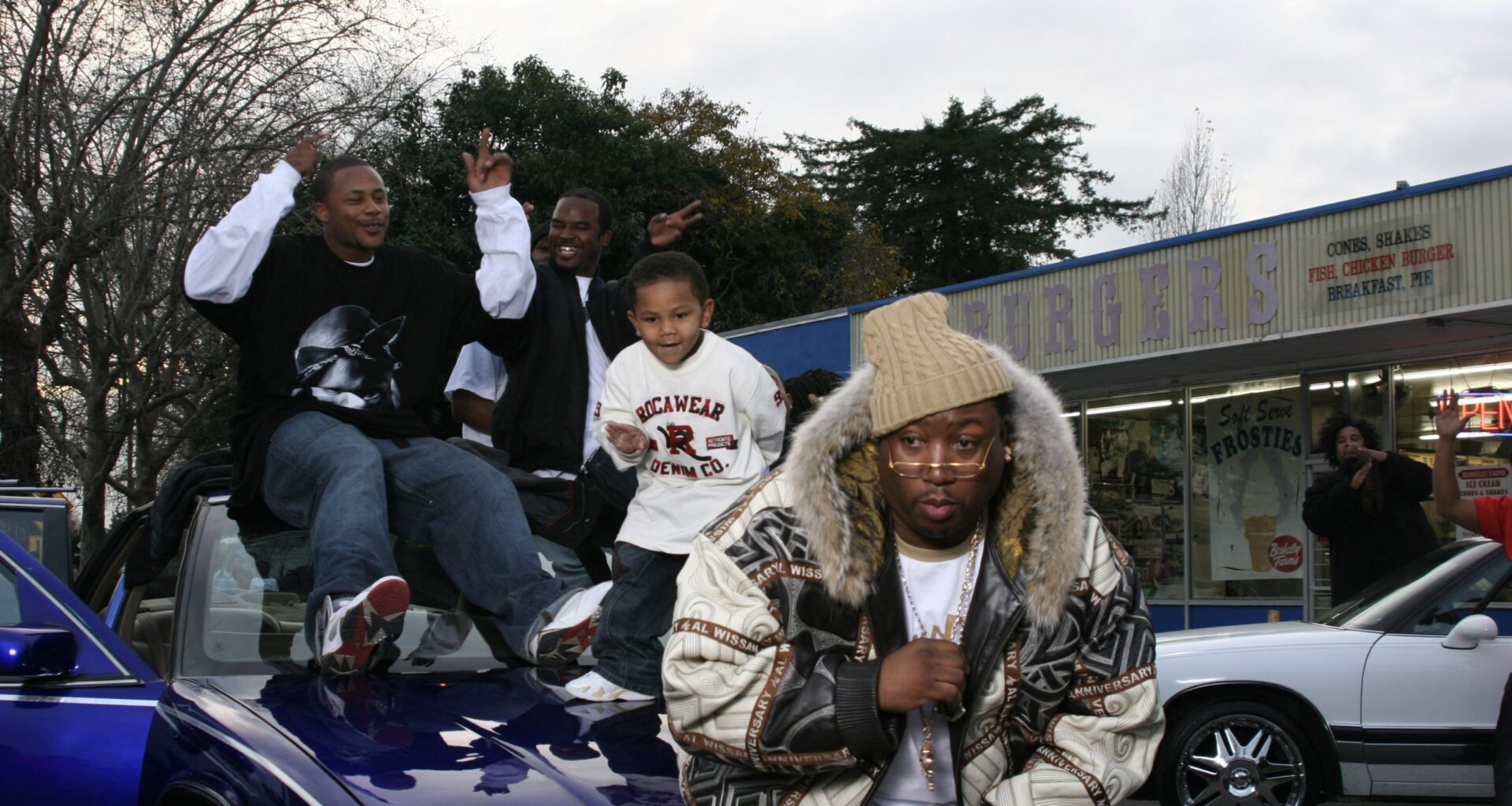
 Slim, Kada, Bobe, and Kuzzo Fly ghost riding in North Oakland during the filming of MTV’s “My Block: The Bay” in 2006. Credit: D-Ray
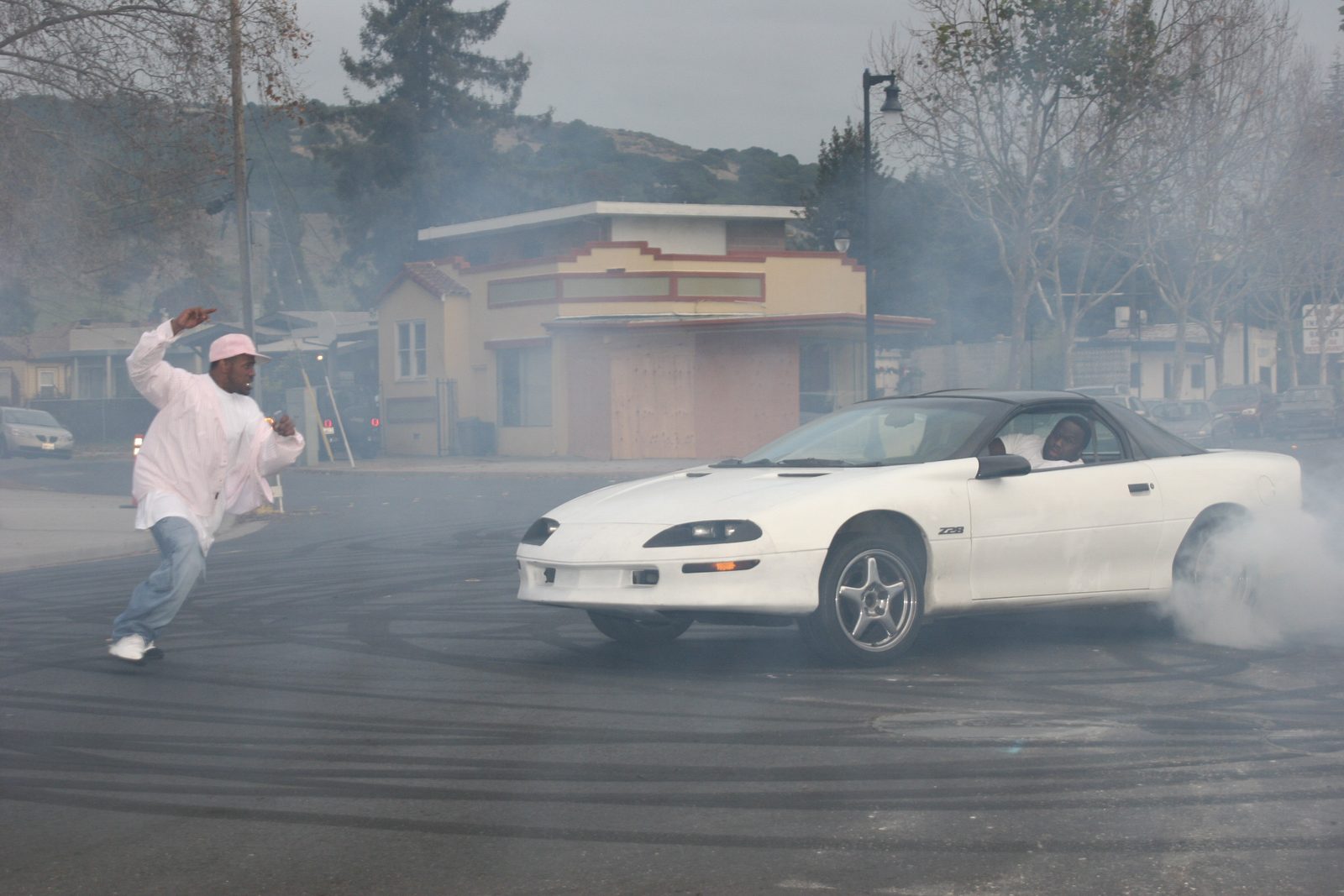 Sideshow tricks during a December 2025 video shoot for “Tell Me When To Go.” Credit: D-Ray
A month after the song’s release, MTV premiered “My Block: The Bay,” a music documentary. Along with segments on E-40, “I Gott Grapes” rapper Nump, and turf dance pioneers the Anamaniakz, the show showcased Oakland talent: “Crown Prince of Hyphy” Mistah F.A.B., “King of the Super Duper Hyphy” Keak Da Sneak, R&B singer Keyshia Cole, underground hip-hop duo Zion I, and OG pioneer Too $hort, as well as cameos from Town icons Hammer and Hieroglyphics.
Host Sway, an Oakland native, interviewed Keak — sporting a white Randy Moss Raiders jersey — in the rapper’s Walnut Street neighborhood, an area known as the Rolling 100s.
“The music takes you there,” Keak told Sway. “I don’t know what it is, but it got you.”
Asked about hyphy fashion, Keak slyly replied, “T-shirt, jeans, and Nikes. That’s the turf code.”
The answer referenced his 2002 song “White T-Shirt, Blue Jeans and Nikes,” often cited as one of the tracks that set off the hyphy movement.
Mistah F.A.B.’s segment in the documentary begins with him giving props to the late Mac Dre, the originator of the “thizz face” and the phrase “ghost ride the whip,” who was murdered in Kansas City in 2004.
“He’s somewhat of a martyr now,” F.A.B. says solemnly. The next moment, he’s animated again, running through slang terms like “yadidamean,” “shaboobalaboopy,” and “yellow bus.”
“What it means is hyphy, go dumb, all at once,” F.A.B. says. “The street, they took it like, ‘I ride the yellow bus, too.’”
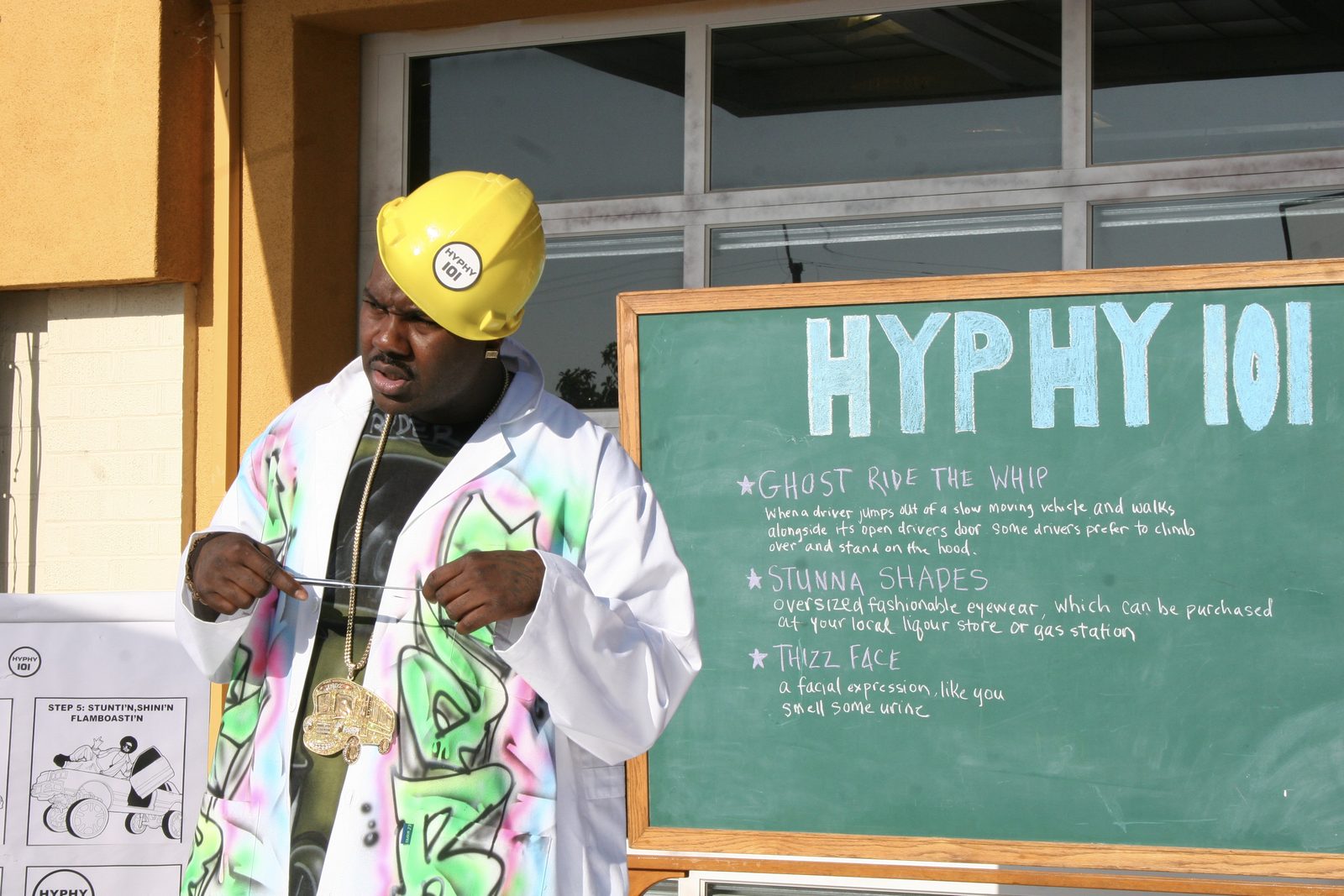 On the set of the video for Mistah F.A.B.’s “Ghost Ride It,” released in late 2006, at Youth UpRising. Credit: D-Ray
A nationwide audience also got to see a candy-painted, apple green “scraper” — an old school Falcon with 23-inch rims — and a demonstration of “ghost-riding 101.”
Zion I were more hyphy-adjacent than hyphy, but shared independent label status with the majority of the hyphy era artists and also appeared in the doc. In a segment filmed at Berkeley’s Rasputin Records, the late emcee Zumbi explains, “The Bay Area’s all about hustle and doing your thing, being original and unique.”
Too $hort gave a history lesson, explaining how he and his partner Freddy B got their start making homemade tapes in the early ‘80s. “We used to actually go to the turfs where the drug dealers sold dope,” he said. “There’s cash money in the dope turfs. And we’d just hit ’em one at a time until all the tapes were gone.”
When $hort entered the rap game, he said, Oakland was filled with hustlers and colorful characters. “It was a lot of pride in street images.”
National television features were only the beginning of the Bay’s resurgent year.
In April, USA Today ran a front page feature on the movement. The buzz on hyphy was starting to grow as deafening as a grill-mounted speaker.
In May, BET’s “Rap City” presented “Hyphy Week,” featuring segments with Too $hort. Posted up at his alma mater Fremont High — he graduated in 1984, the year before his first official single, “Girl (That’s Your Life)” dropped — $hort Dog takes the time to speak to some youngsters about leveraging hyphy’s popularity for economic opportunity. “Somebody gotta get some money off of this, because it’s gonna come and go,” he says.
July saw a feature on hyphy in the pages of Vibe magazine. F.A.B. was interviewed during a performance at a San Jose car show: “I didn’t think [mainstream audiences] were gonna go for it, because it’s so wild.”
August extended hyphy culture’s winning streak with new albums from Too $hort, Traxamillion and Beeda Weeda. By that time, $hort’s single “Blow the Whistle” had become his biggest in years.
I’m crazy, you don’t wanna be like me
I come from East Oakland where the youngsters get hyphy
One of the biggest summer songs of 2006 was The Federation’s “I Wear My Stunna Glasses at Night.” The song juxtaposed Fairfield rappers Stressmatic, Doonie Baby and Goldie Gold’s descriptions of their oversized eyewear and its elaborate festoonings with a Rick Rock beat built around the pulsating synths of Corey Hart’s 1984 hit “Sunglasses at Night.” The song was leaked to the Internet, picked up by the mixtape DJ circuit, and lapped up by the clubs, eventually landing in heavy radio rotation.
Guest rapper E-40 made a point to credit the Town during his verse.
Hyphy started in the O
The whole Bay go stupid, I’m from the Valley Joe
And you can put this in your hip-hop Bible
Keak Da Sneak said hyphy first on his album Sneakacydal
 Keak Da Sneak and E-40 in front of Oakland’s 16th Street train station on the set of the music video for “Tell Me When To Go” in December 2005. Credit: D-Ray
Hyphy’s summer sizzle extended past the fall and into the winter of ‘06. In September, DJ Shadow’s “The Outsider” — featuring Keak Da Sneak, Turf Talk, E-40, the Federation, and the Animaniaks — was released reinforcing the “Entroducing” artist’s Bay Area hip hop roots. October saw a new album by E-40 protégé Turf Talk, while F.A.B. guested on the single “Hit ‘Em” with Zion I and the Grouch.
The movement almost took November off for Thizzgiving, but Keak Da Sneak managed to headline “Super Hyphy 13” at Petaluma’s Phoenix Theater. The year of unprecedented hyphyiness ended with Berkeley teenagers The Pack’s “Skateboards 2 Scrapers” EP and F.A.B. dropping a new song and video, “Ghost Ride It.”
“Tell Me When To Go” and “Blow the Whistle” broke nationally. In addition to those two hits, the biggest local songs on KMEL — a tastemaker of urban contemporary radio — included F.A.B.’s “Ghost Ride It,” E-40’s “Yay Area,” Traxamillion featuring Mistah F.A.B. and Too $hort’s “Sideshow,” Keak Da Sneak’s “Super Hyphy” and “On Citas,” The Team’s “Jus Go,” The Pack’s “I’m Shinin,” and The Federation’s “18 Dummy.”
During this period, hyphy completely overshadowed any local rappers who didn’t jump on the Yellow Bus, and often out-performed national artists in KMEL’s market research — an important barometer for determining airtime. In an article for the Mercury News published in early 2007, hip-hop journalist and radio personality Davey-D proclaimed 2006 a “breakout year for Bay Area hip-hop.”
At the center of the storm
 Mistah F.A.B. performs in Las Vegas, February 2006. Credit: D-Ray
Imagine being in the center of that storm, as F.A.B. was at that time, just 24 years old.
At the end of 2006, Mistah F.A.B was the hottest young rapper in the Bay Area, hands down. As many as eight songs by him or featuring him were in regular radio rotation at one time, he recently told The Oaklandside.
The North Oakland rapper started 2006 with “Thizz Nation Vol. 8,” featuring the song “Yellow Bus.” The album’s cover featured a school bus perched on chrome Mag-type rims with the rapper towering above, ice-grilling with stunna shades on. That September, he signed a deal with Atlantic Records after a reputed bidding war. Throughout the year, he made appearances on songs by Traxamillion, E-40, Dem Hoodstarz, Rob Lo, Messy Marv, The Pack, and others. Songs from his 2005 album “Son of a Pimp” were still getting play on the radio and in clubs.
His most significant achievement may have been uniting Oakland’s different turfs — North, East, West — by featuring rappers G-Stack and Bavgate, representing rival neighborhoods, on the song “N.E.W Oakland” and by merging Vallejo thizz with Oakland hyphy juice. These efforts contributed to the sense that hyphy was a unifying force in Bay Area hip-hop.
“It takes me down a cultural highway,” F.A.B. said when asked what the word hyphy meant to him. The rapper was barely out of his teens when hyphy became a movement — roughly the same age as much of its core audience.
“When I revisit that highway, it’s some of my fondest memories of a great childhood,” he said. “My childhood in the music industry, in the infancy stages, I happened to play a significant part in spearheading hyphy nationwide and worldwide. When I look back on it, it was some fun times. It was some great, memorable times — and a lot of excitement.”
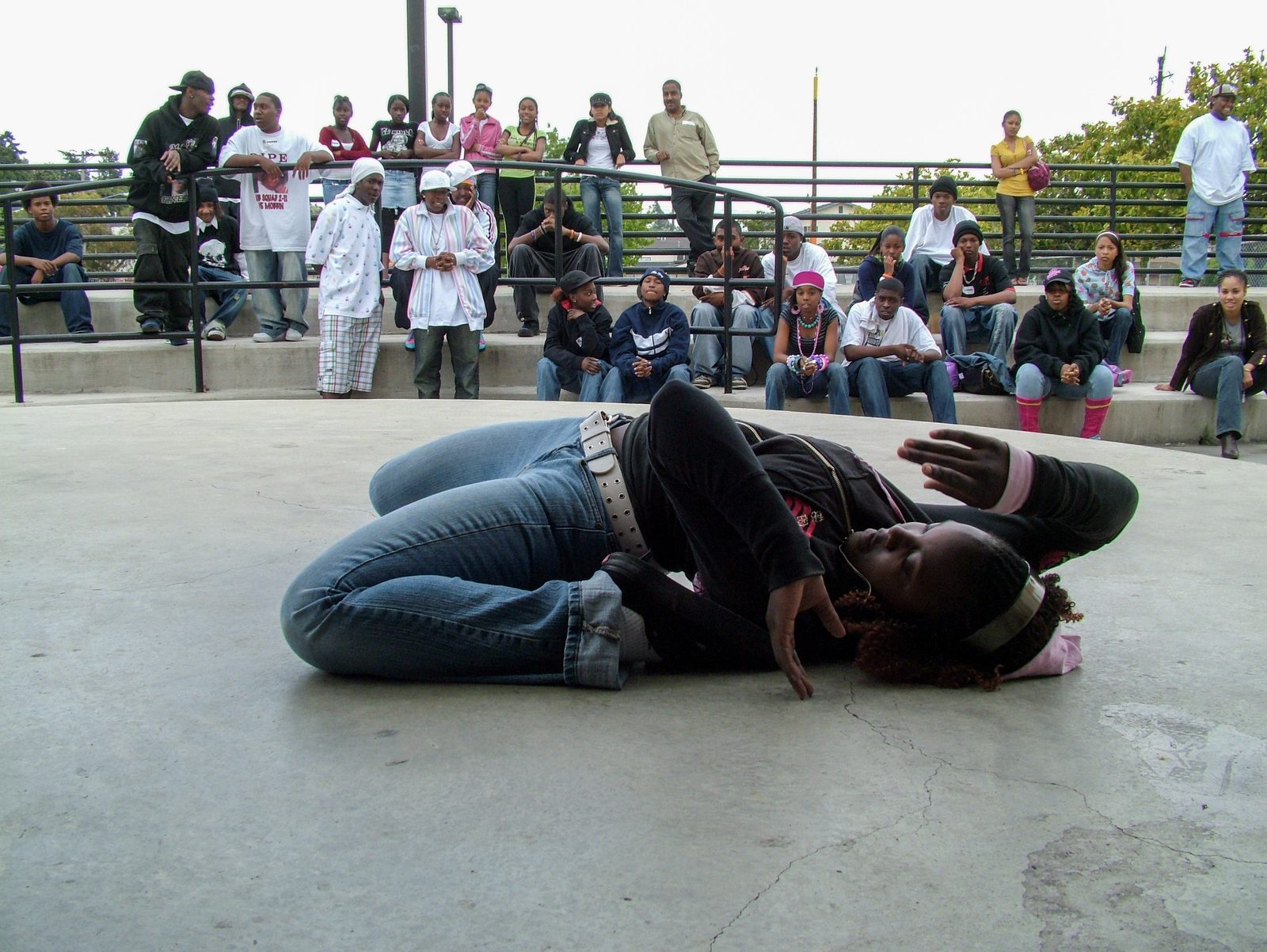 A competitor in a turf dancing battle at Youth UpRising, 2007. Credit: D-Ray
The word hyphy originally had negative connotations. Acting hyphy meant someone was doing too much, exhibiting rude or aggressive behavior or otherwise acting outside of societal norms. Sideshows, for instance, have become an Oakland cultural tradition, celebrated by rappers like Richie Rich and Too $hort and documented in the 2000 film “Sydwayz,” but they are an outlaw tradition that has long raised public safety concerns and led to decades of enforcement attempts by Oakland police.
“In the infancy stages of hyphy, it wasn’t something that the city was fond of,” F.A.B. said. “People were like, ‘Yo bro, get on with that hyphy. We ain’t on that type of stuff.’ But we later dove into it and we owned it and it became our cultural language. It became the one thing that everybody from this area could identify and could relate to.”
F.A.B. started his hip-hop career as a battle rapper; his 2002 debut album “Nig-Latin” was considered backpack rap. On its title track, he provides definitions for a running list of slang terms, from J-Cat (“wuss”) to tootsie (a hundred-dollar bill). It’s a masterful and instructive display of linguistic fluidity.
We from the ghetto, we understand this here
If you was from the ghetto you could understand this here
But you ain’t so no don’t try to talk this way
Or you just might find yourself chopped and laid.
The album’s cover depicts F.A.B. looking more like a poetry slam contestant than a turf rapper. He’s wearing a white golf cap with a plain white sweatshirt. Instead of a grill-revealing grin, he looks pensive, his arms casually folded. The beat on “Nig-Latin” bears none of hyphy’s signature elements — it’s set to a synthesized steel drum pattern.
The song clearly predates hyphy.
‘Sales started going through the roof’
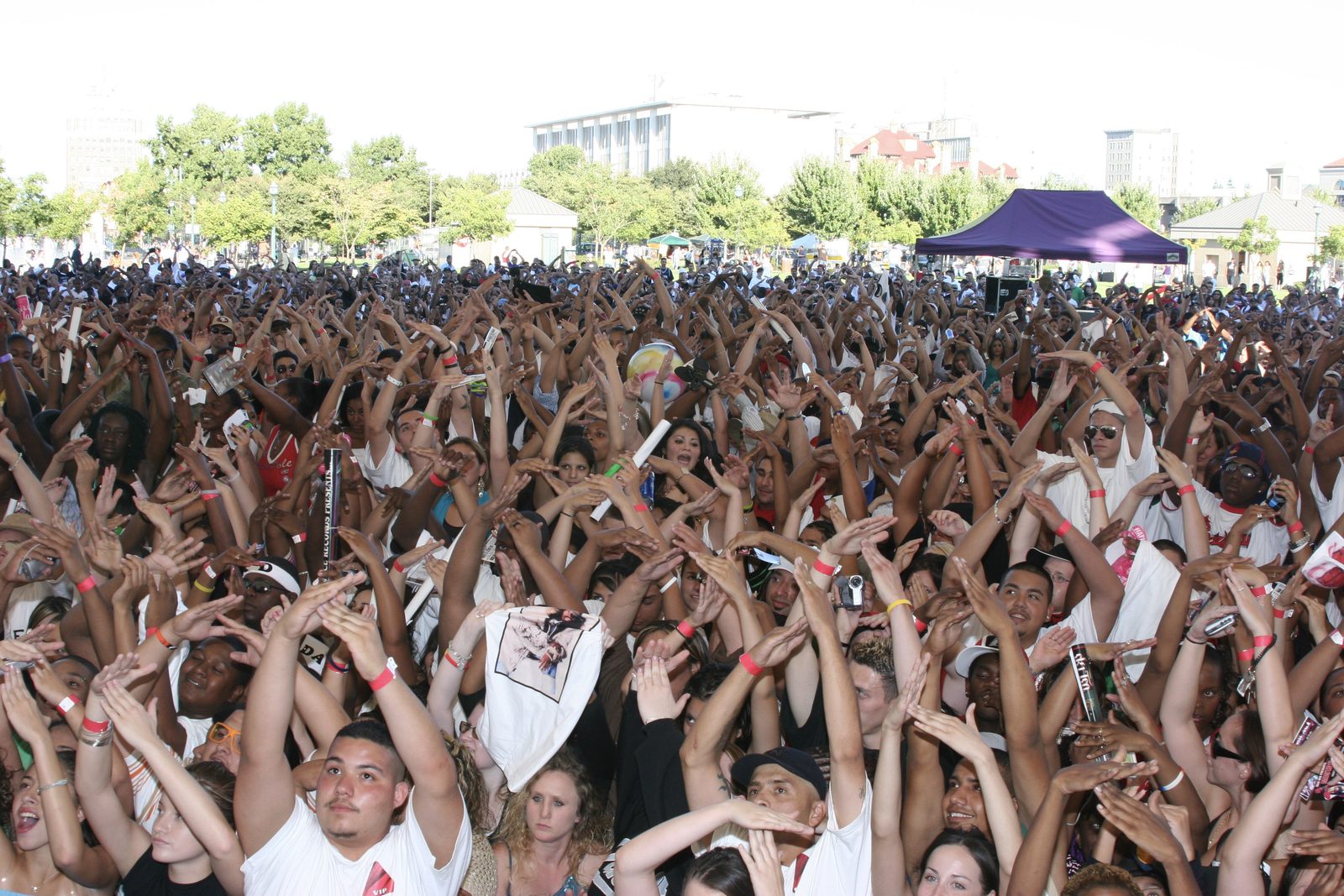 At hyphy’s peak, huge crowds of young people were throwing up the “T,” for Thizz. Summer Splash, August 2005, in Stockton, Calif. Credit: D-Ray
Many consider “Gasoline,” a 2003 E-40 song produced by Rick Rock, as the first true example of the hyphy sound. It’s uptempo, with minimal instrumentation and almost no melody. The kick drums and synth hits are engineered to provide a bed for a subtle yet present low-end 808 drop.
Later that year, Rick Rock produced The Federation’s “Hyphy.” While “Gasoline” had been a cool street hit, “Hyphy” careened onto the radio, demanding listeners’ full attention. More uptempo and in your face, it sounded disruptive, like barely controlled chaos.
“Hyphy” drew some inspiration from crunk, but tailored to fit the Bay Area’s dynamic.
As Rock told Complex, “It’s an energy that touches your chakras, your energy sources. Things that automatically make you feel great and you don’t know why. Hyphy was a great time when we had our own sound signature. The world was like, ‘That’s theirs.’”
“It was a new sound,” F.A.B. said, one that followed a long drought of Bay Area hip-hop artists not being heard regularly on the commercial radio airwaves. Not only did hyphy energize local artists, but “for the fans to hear something that represented their culture,” he said, “I think they connected with it tremendously.”
By 2004, the hyphy surge was becoming a wave, and Rick Rock soon had a lot of co-signers. A slew of Bay Area producers — including Oakland’s EA-Ski and CMT, San Jose’s Traxamillion, East Palo Alto’s Sean T., Berkeley’s Young L, and Vallejo’s Droop-E — fashioned their own variations on the sonic theme. Even Atlanta’s Lil Jon — a crunk pioneer and frequent collaborator with E-40 and Too $hort — got in on the act.
While many of the production styles and approaches were similar, East Oakland trio The Team developed a unique and original sound that drew on traditional hip-hop, funk influences, and a balance between street narratives and nightclub stunting.
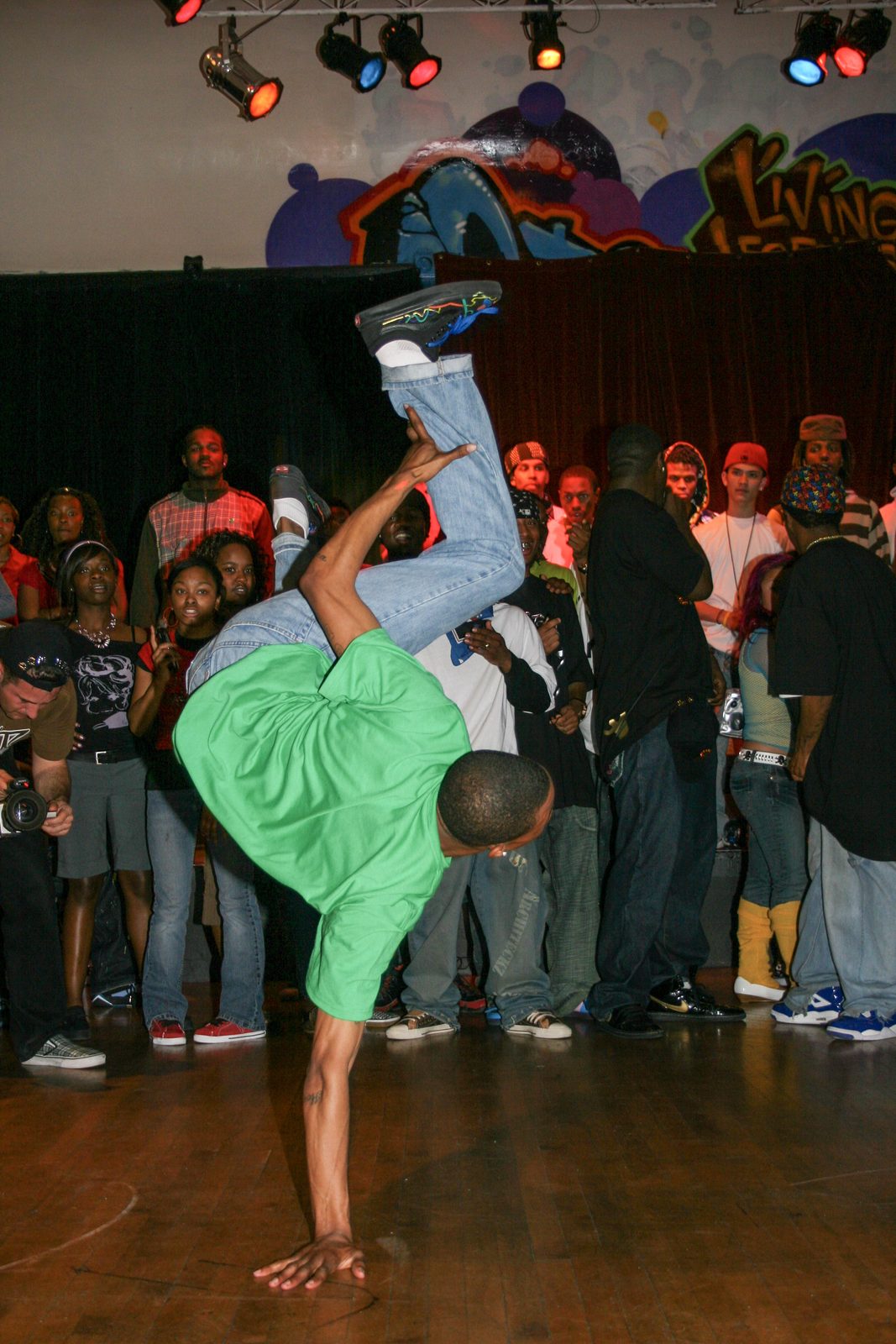 A turf dance battle between Oakland and Memphis in West Oakland, March 2007. Credits: D-Ray
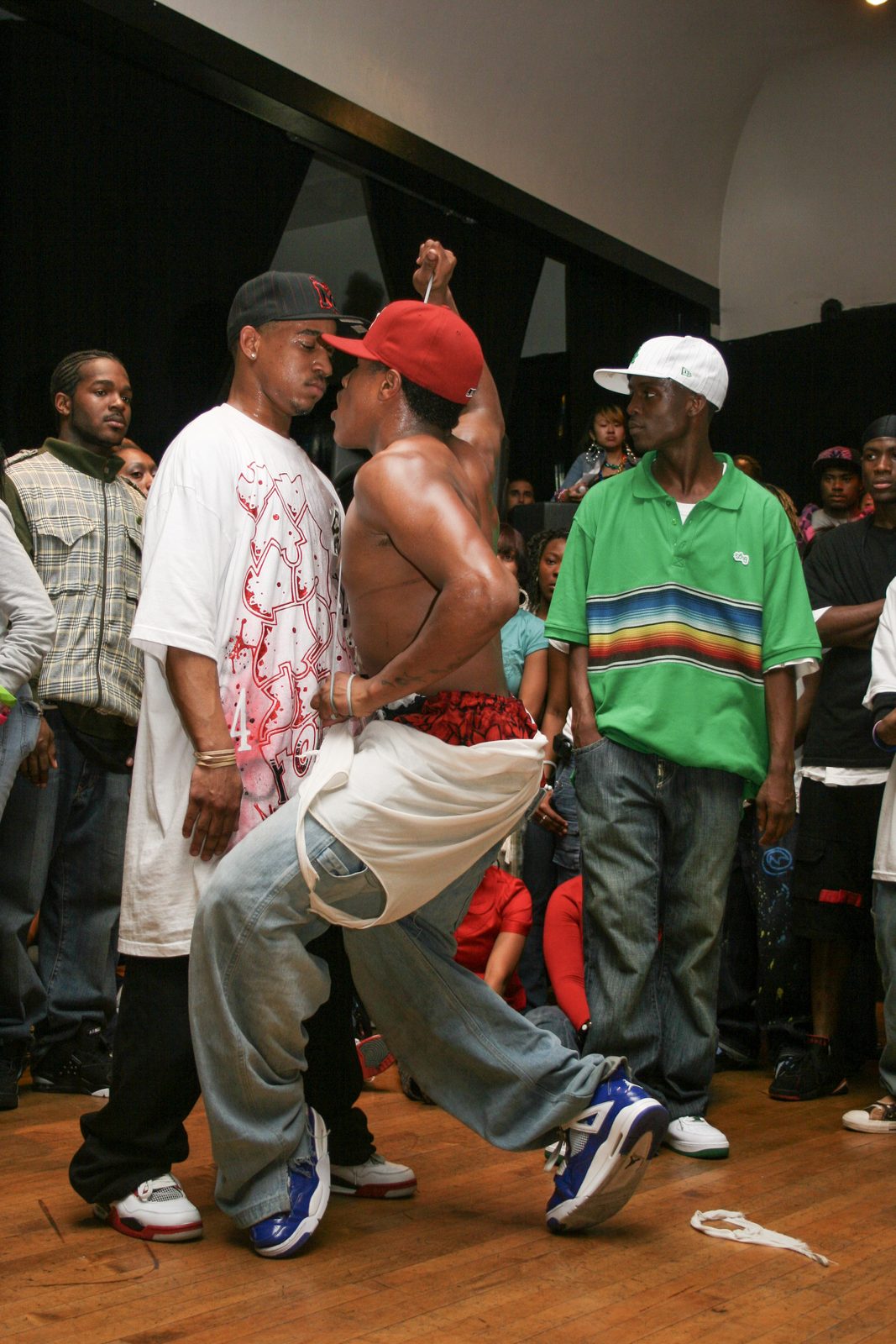
On The Team’s 2004 album “The Negro League,” Kaz Kyzer, Mayne Mannish, and Clyde Carson rapped convincingly about hustling and baller lifestyles — their gangster stories elevated by a swaggy sense of upscale savoir faire. The album’s biggest hit, “It’s Getting Hot,” took up its own private booth at clubs and on the radio that year.
That fifth of Hyp, that Swisher lit
That got her wildin’ out
She wanna get ripped, go ask your chick
Find out how I get down
It’s gettin’ hot in here
“It’s Getting Hot” wasn’t just another street record, it was a club anthem about a crew that acted and dressed the part of gentlemen of leisure. It opened up new pathways for the smoother side of hyphy.
All this club and radio play didn’t necessarily translate to record sales, at first. According to Ill Trendz street promoter and Moses Music owner Sean Kennedy, mixtapes were selling well around 2003-2004, but “even when The Federation dropped ‘Hyphy,’ Oakland didn’t really like The Federation’s hyphy song. They felt like Vallejo and Fairfield had stolen Oakland’s slang. That’s the reason why Keak Da Sneak wrote ‘Super Hyphy.’”
Local sales, Kennedy said, “started to spike at the end of 2004 after Mac Dre died. That’s when we started to see significant sales going to the Bay Area.” Then, in the fall of 2005, he said, “Keak Da Sneak dropped his record, and the sales started going through the roof.”
“Super Hyphy” originally appeared as a single on the “Dopegame” compilation. Once it was remixed for single release, Rah Records boss Al Keyes reportedly spent hundreds of thousands of dollars on promotion, wrapping a van in graphics and sending Kennedy out to different markets to promote it.
“I don’t think they know, that’s my word,” Keak says in the chorus section, reclaiming ownership of both hyphy and “fa sheezy.” The verses are a labyrinth of seemingly fractured syntax, interior rhyme schemes, and stuttering cadences delivered by one of the most unique voices in the entire rap world.
I mix big with husky brusky
Quarterbackin’, trust me, rugby rush me
Color purple, still in the street, it’s ugly
I don’t know you, but you lovin’ me, fresher than Doug E.
Look at what the motherfuckin’ rap game done done to me
So go on, n*gga, run the beat, here comes Keak Da Sneak
Self-taught, when he do a technique, nothing but heat
Self-taught, what to do on this beat? This for the street
One of the year’s most iconic hyphy albums was F.A.B’s “Son of a Pimp” which featured a photo of his late father on the cover in front of an elongated American-made sedan. Released by Thizz Entertainment, it’s become a period classic.
The rapper described the album’s lyrical content as diverse and multidimensional, with thought-provoking, socially-conscious material alongside more uptempo party-oriented fare. “It’s probably only two or three songs that would be considered hyphy,” he said.
Those three songs — “Super Sic Wit It,” “N.E.W. Oakland,” and “Kicked out the Club” — weren’t just popular, they were genre-defining anthems that landed in rotation on commercial radio stations, lit up nightclubs, soundtracked the streets, and elevated F.A.B. to the forefront of the hyphy movement.
I don’t need no iron (Why?), I’m already creased (Oh)
F-A-B what they call me, 40 say mouthpiece
I do the dummy, retarded, and ride the yellow bus
Put the town on, don’t bother me, doin’ hella much
High speed in my car, call it a scraper
Pop my Ps at your broad, cuff or I’ll take her
I only roll wit’ my folks, family, and next-of-kin
Ride away with a half, I’m a Baydestrian
The aftermath
The year 2007 started with high aspirations for the Bay Area’s hyphy riders. F.A.B., Clyde Carson of The Team, and the A’z all reportedly had major-label deals in the works. But the Federation’s Warner Brothers debut, originally scheduled for November 2006, kept getting pushed back due to sample clearance issues.
In summer 2007, hyphy remained tremendously popular locally, but the scene was starting to become saturated with similar-sounding songs. E-40’s marketing campaign — and mainstream press attention — had come and gone. If the movement’s national momentum was going to continue, it needed to penetrate other markets.
Enter “Ghost Ride It.”
As the story goes, the song came about from a conversation between F.A.B. and Too $hort. The Oakland pioneer, living in Atlanta at the time, told F.A.B. folks down there wanted to know more about ghost riding, and encouraged him to do a song on the topic.
F.A.B. called producer Sean T., told him the concept, and days later they had recorded a song and sent it to radio, where it lit up request lines. The rapper took the song to Atlantic and pitched a video, but “they didn’t seem too enthusiastic about it,” F.A.B.’s then manager, Chioke “Stretch” McCoy, later told SFGate.
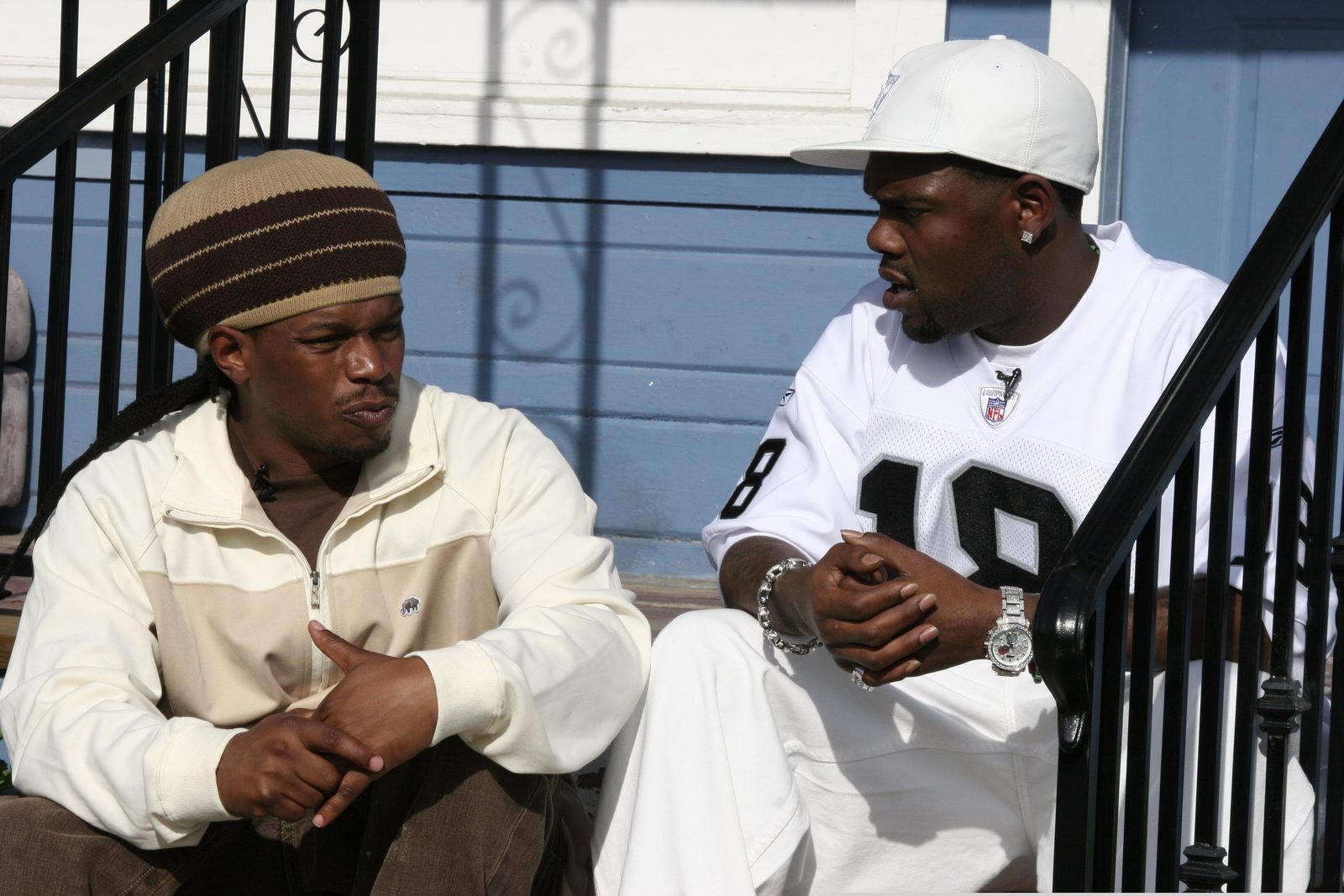 MTV host Sway Calloway interviews Keak Da Sneak on his front steps in East Oakland for “My Block: The Bay” in 2006, at hyphy’s height. Credit: D-Ray
F.A.B. and Stretch decided to shoot the video anyway, paying for it with their own money. They found the original car from the “Ghostbusters” movie and had it transported to Los Angeles. They filmed scenes in downtown LA, with the concept being that F.A.B. would ride around teaching people how to ghost ride their whips. Additional scenes were shot in Oakland and San Francisco.
The production crew overcame some issues: The car arrived needing repair to its front windshield, and a North Oakland location was shut down by the police for not having a permit. They also didn’t secure the rights to use the “Ghostbusters” logo or the theme song’s licensing rights.
The finished video became one of the first to go viral on YouTube. MTV added it to their rotation. But after two deaths involving ghost riding were reported by national media outlets, the song came under scrutiny. F.A.B. appeared on Fox News’ “Hannity and Colmes” to defend hyphy culture against ultraconservative wrath. Columbia Pictures, which had released “Ghostbusters,” sent F.A.B. a cease-and-desist letter, and MTV pulled the video from rotation. After re-editing the video, the song returned to MTV. But Atlantic Records delayed F.A.B.’s album, with no scheduled release date.
Undeterred, F.A.B. put out another album, “Da Baydestrian,” through local outlets Thizz and SMC. It was a solid release with diverse content, from the hyphy title song to more inspirational and conscious material like “My Life on Track.” But the marketing budget was modest, and only one track, “Sideshow (Remix),” made any noise on the radio.
F.A.B. then had the idea to pitch his own radio show to KMEL, the Bay’s preeminent urban radio station. When the station turned him down, he took the concept to WYLD’s program director, “Jazzy” Jim Archer. Archer greenlit the show — and then the station fatefully decided to air it directly opposite one of KMEL’s anchor shows, hosted by the station’s music director, Big Von Johnson.
Johnson took it as a slight, as I reported for SF Weekly at the time. In what appeared to be a retaliatory move, F.A.B.’s songs were stripped from KMEL’s rotation and his entire catalog was deleted from the station’s database. This included not only his own records, but songs by other rappers, like Dem Hoodstarz’ “Grown Man (Remix),” that F.A.B. appeared on.
The beef created a domino effect on radio and in the record industry.
Clyde Carson’s deal with Columbia and the A’z’s deal with TVT both fizzled without producing commercially released albums. The Federation’s debut album for Warner Bros. wasn’t released until September 2007 and went nowhere. Major label interest in Keak Da Sneak ebbed due to contractual entanglements with several independent labels. “We needed a face for it. We needed a leader,” Keak later told Complex.
Hyphy artists were still selling out concerts in 2007 like the “Hella Fresh Fest” at the Fillmore Auditorium and “Super Hyphy 17” at the Phoenix Theater in Petaluma. But even if fans were still buying Mac Dre bobbleheads, Hyphy Juice energy drinks and “Got Bay?” t-shirts, local artists noticed a shift.
“The last couple of years, the Bay Area was heavily on the radio. This year, we’re not so much on Bay Area radio, Zion I’s Zumbi told the East Bay Express in late 2007. “Just because the radio ain’t burning doesn’t mean cats ain’t hot, though.”
“How can hyphy be dead?” F.A.B. said to the SF Chronicle in June 2007. “They ain’t seen hyphy yet. Give us a chance to put a tour together.”
A national hyphy tour never happened. E-40 never even toured with The Federation when they were labelmates. Perhaps it was a matter of logistics. Perhaps it came down to the movement having no centralized organization. The unified front presented in the “Tell Me When To Go” video had fractured like a car window hit by bippers.
The following year, 2008, ended with no new national hits by any hyphy artist, dwindling radio support, and major-label cold feet over any substantial new investment in Bay Area hip-hop. The labels’ reticence was compounded by an industry-wide 20% drop in rap sales compared to the previous year.
Released from his deal with Atlantic, F.A.B. returned to making albums for local independent labels. Keak eventually landed a deal with Koch Records, but the resulting album, “Deified,” which featured a star-studded list of guest artists, from E-40 and Too $hort to Texas’ Paul Wall and New York’s Prodigy of Mobb Deep, was a commercial flop.
F.A.B. recently told The Oaklandside he was “blacklisted” from radio for more than a decade, and claims losing his record deal cost him millions of dollars.
“If you’re asking me to be transparent, I feel like they muted a voice that could talk about it, that could explain it, that would carry on tradition and culture and someone that would always put everybody else in the mix,” he said. “And when you take away leadership in that regard, then there’s no structure.”
Reliving those events, he said, is triggering. “Because you have to go back to a dark side of that road that we talked about where I was banned from the radio for like 13, 14 years. And I just felt like it was unjust. It was whatever lessons that life had wanted me to learn at that time, I had to adhere to it,” he said. “I felt it was egregious. I felt like it was wrong. I was befuddled for a long time.”
An East Oakland requiem
F.A.B. would go on to release an album called “Hyphy Ain’t Dead” in 2009. And as it turns out, he wasn’t delusional. Hyphy still lives.
The hyphy movement, i.e., the major label–funded marketing campaign that raised the expectations of Bay Area artists and fans alike, had run its course. Maybe those expectations were always unrealistic. As former Warner Bros. director of A&R Orlando McGhee told Complex, “Without millions of dollars in marketing money, I don’t know if the world would have embraced it on a larger scale.”
But the socioeconomic conditions that created hyphy organically in the Bay Area weren’t going anywhere. Neither were the sideshows that met the need for a late-night dopamine release. Or the artistic expression of young people living on the margins of mainstream society, who had created a culture that represented them prior to any corporate interest.
Originally posted to YouTube in 2009, the Turf Feinz’ low-production value “RIP Rich D — Dancing in the Rain Oakland Streets,” has since garnered almost 9 million views.
No words are spoken in the video, but none are needed. As cars pass by the corner of MacArthur Boulevard and 90th Avenue in East Oakland, two members of the dance crew appear on the sidewalk. What follows is a poignant expression of inner-city ballet at its most moving and inspirational. Arms and legs move sinuously, almost disconnected from the normal motions of a human body. Shifting, jutting, stretching, joints and muscles point at different angles, punctuated by sudden jetés, pirouettes, en pointe toe extensions and drops to the sidewalk — it’s a completely improvised turfing master class.
The dancers’ movements occasionally carry them off the curb and out into the street, into the path of oncoming traffic, where the possibility of being hit by a car feels very real. The moves are intentional, signifying the danger inner-city kids must navigate daily.
When the camera angle shifts to the other side of the street, two more Turf Feinz appear. They, too, honor the memory of Rich D with anguished yet resilient paragraphs written in turf dancing’s movement language. It’s exquisite, yet hard and unflinching. And it’s as Oakland as Oakland gets.
The viral popularity of “RIP Rich D” led to members of the Turf Feinz gaining international recognition and performing in places like England and France — proof of hyphy’s continued influence.
The video was meant to be a tribute to a fallen friend and family member. It could easily be seen as a requiem for the hyphy movement itself.
“*” indicates required fields