
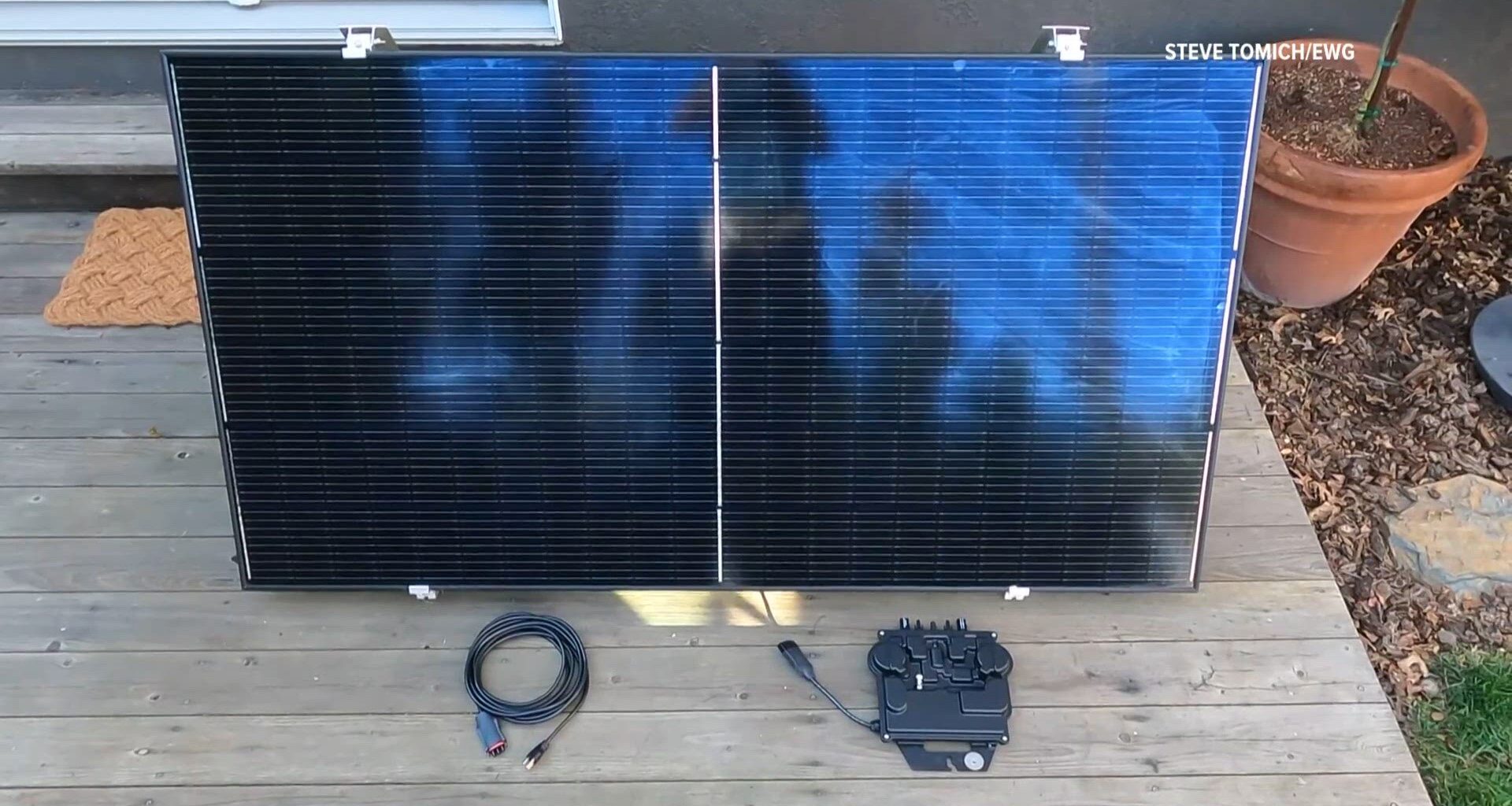
Senate Bill 868 would allow Californians to buy portable solar panels and plug them into a wall outlet without needing utility approval.
SAN DIEGO — Californians could soon buy a portable solar kit off the shelf, take it home and plug it directly into a wall outlet, no utility approval required, under a bill now sitting on the governor’s desk.
Senate Bill 868, known as the Plug and Play Solar Act or “balcony solar,” passed the Legislature and is awaiting the governor’s signature. If signed, the law would let homeowners and renters buy small solar systems and connect them to a standard outlet without going through their utility company first.

This story continues below.
Dave Rosenfeld, executive director of the Solar Rights Alliance, said the law is designed to make solar accessible to people who don’t own their homes.
“Anyone with a patch of sunlight and a wall outlet nearby, by this law would be allowed to buy these products, safely plug them in and begin to use them without needing permission from the utility,” Rosenfeld said. “That includes renters.”
Homeowners association restrictions on the systems would be limited under the law, and systems could not exceed 1,200 watts.
Smaller systems, running from 400 to 600 watts, cost about $500 to $1,000. Larger systems, up to 1,200 watts, can cost $1,500 to $2,400, depending on whether they include extra panels or a battery.
Serena Pelka, senior policy advocate at Climate Action Campaign, said affordability is driving interest in the bill.
“We really are in an energy affordability crisis right now,” Pelka said. “And with this bill, for all folks, whether they own their home, whether they are a renter, whether they’re in a mobile home, it really transforms the possibilities for them to be able to access a source of energy that is resilient, that is independent, and that can really sustain and keep their bills low.”
Home Depot shopper Olympia Beltran said accessibility is what excites her most about the technology. Beltran’s family has a Habitat for Humanity home with solar panels already installed, and she said without that program, they wouldn’t have been able to afford cleaner energy.
But Beltran said she’s concerned the push for wider access to solar hasn’t come with a plan for what happens to the panels once they wear out.
“I think as long as this accessible solar panel resource has a trade-in process for once the panels are no longer usable,” Beltran said, “I think making solar panels an accessible resource is really important for a lot of people.”
Beltran also said she doesn’t think her own neighbors currently see solar as accessible to install.
San Diego Community Power, the region’s public, not-for-profit community choice energy provider, has voiced support for the bill.
Not everyone is on board. The Southern California Rental Housing Association raised concerns about the bill in a statement to News 8:
“Helping people save on energy costs is a laudable goal, but SB 868 would allow tenants to connect portable solar equipment to a rental property’s electrical system without ensuring the property owner is notified or that the building can safely accommodate it. This is especially a concern in multifamily properties with older electrical systems. Property owners should not be held responsible for electrical and building safety if they have no reasonable ability to oversee equipment tenants connect to those systems.”
SDG&E also responded to the bill in a statement:
“SDG&E supports customer adoption of solar and energy storage technologies and recognizes the important role these resources play in advancing California’s clean energy future. Our priority is ensuring that any technology operating on or near the electric system meets strong safety standards that protect customers, line workers, and the public.”
If the governor signs the bill, it would go into effect in January, though it could take a few months to reach the market in California as products go through safety certification. Starting in 2030, the law would require utility approval that the current version bypasses.
News 8 reached out to the governor’s office and has not yet heard back on whether he plans to sign or veto the bill.