
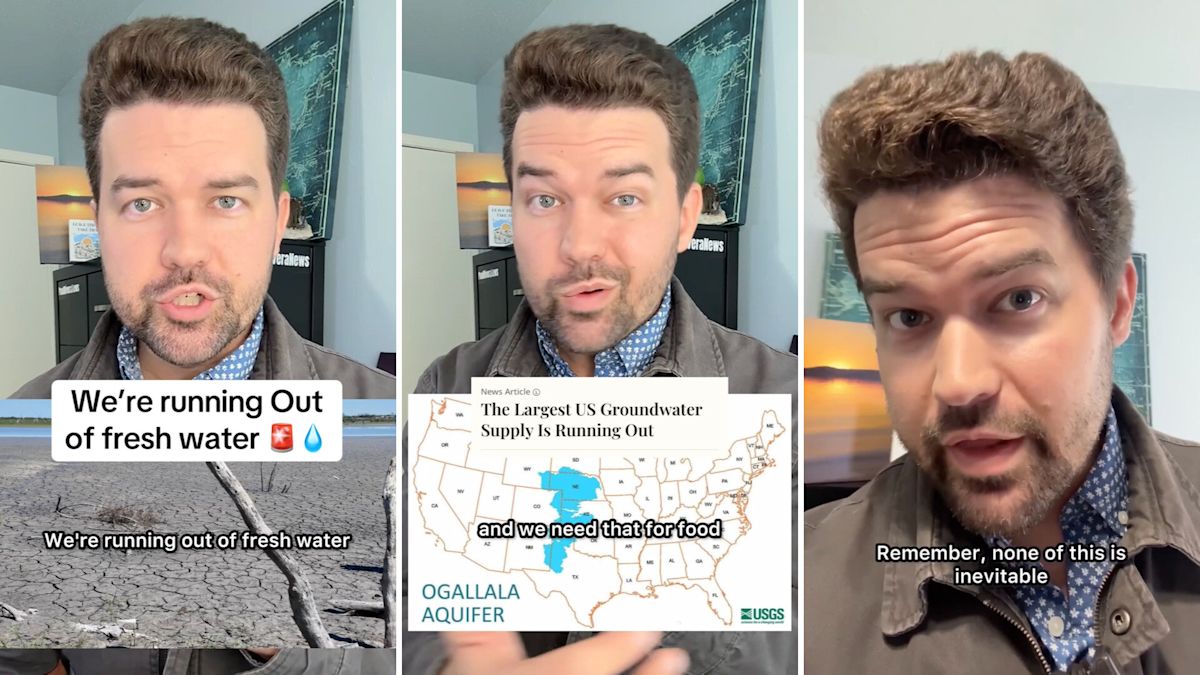
Freshwater shortages can seem like a faraway problem, but new research shows that shrinking reservoirs, overused aquifers, and threats to U.S. agriculture could drastically reshape communities and food systems in the near future.
Paul Rivera (@paulriveranews), who is “obsessed with saving nature,” argued that “we can’t keep doing things like we always have” in a TikTok covering the study.
Here’s what to know
“We’re running out of fresh water,” Rivera wrote in the caption. In the clip, he highlighted portions of the research published in Science Advances, noting that “dry areas around the world are increasing by almost twice the size of the state of California each year.”
The reasons for this are multifold. First, the freshwater crunch is worsening as hot conditions put increasing pressure on available supplies. Another issue is the overuse of groundwater.
“There are aquifers [in California] that have collapsed in the Sacramento Valley. They have been damaged so bad from overpumping that it’s irreversible at this point,” he said.
He also noted that the Ogallala Aquifer supports one-fifth of the country’s agricultural output but that “40% of it could be unusable within the next few decades.”
More background
Freshwater systems help grow crops, keep electricity flowing in some regions, sustain ecosystems, and bolster local economies. When aquifers collapse or reservoirs shrink, the effects can ripple through grocery prices, municipal budgets, and local restrictions.
Groundwater loss is especially concerning because the damage may be lasting. When aquifers are overdrawn, the land above them can sink, permanently shrinking the underground storage spaces.
For households, that can mean higher water bills, limits on water use for landscaping, and greater vulnerability during heat waves and droughts. For farmers, less reliable water can lead to tougher planting decisions, pressure on crop yields, and financial losses.
What can be done?
In Rivera’s view, responding to worsening water stress will require comprehensive adjustments. Potential solutions include investing in more efficient infrastructure, protecting aquifers from overpumping, and reducing water waste through improved irrigation and recycling systems.
“We have to have stronger regulations. We have to change the way that corporations do things. We have to change the agriculture. We’ve got to change the way we live,” he argued.
Get TCD’s free newsletters for easy tips, smart advice, and a chance to earn $5,000 toward home upgrades. To see more stories like this one, change your Google preferences here.