
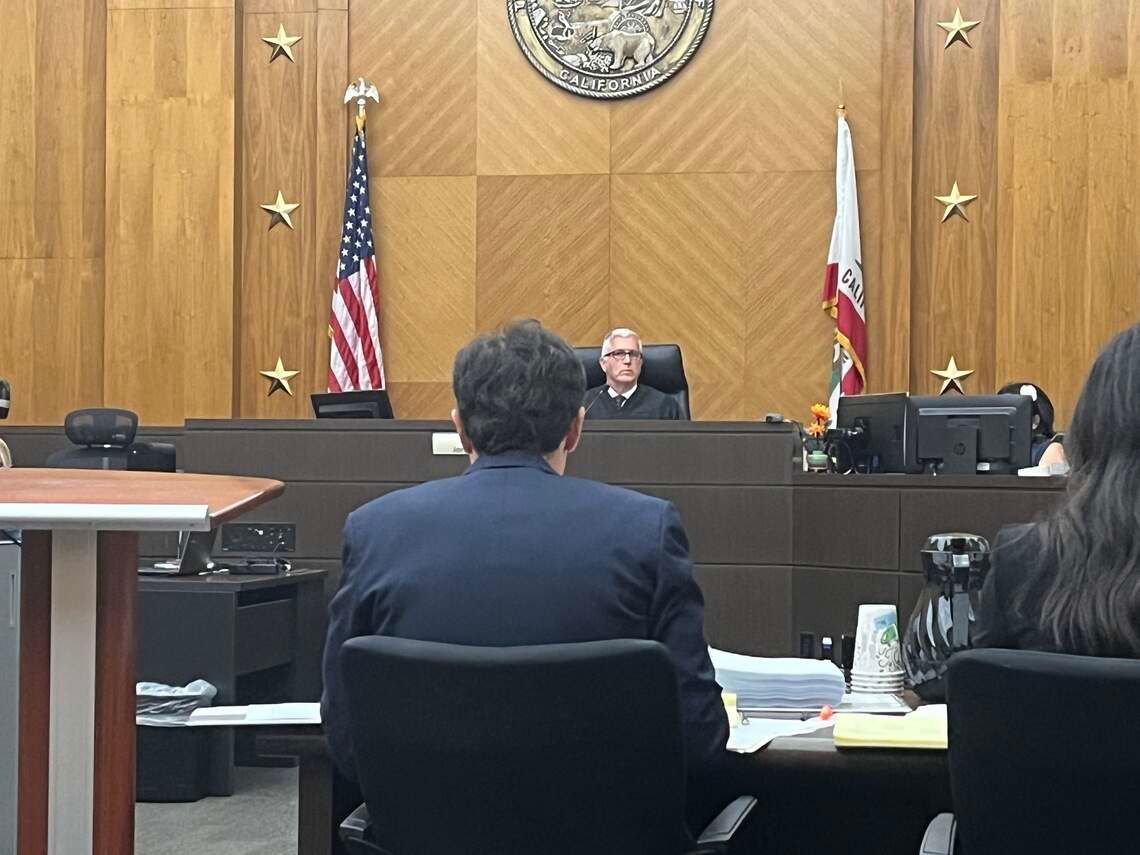
More than 50 people packed a downtown Fresno courtroom Friday afternoon, listening to arguments about when a county tax measure might go on the ballot.
The answer could come from a judge on Monday.
Fresno County Superior Court Judge Jonathan Skiles, who heard arguments for about an hour Friday, said he’d take the weekend to render a decision on Monday at noon.
His decision could provide the next checkpoint on the road to replacing Measure C, the current transportation tax set to expire June 30.
Supporters of Measure S, which was previously known as Better Roads, Safe Streets, gathered enough signatures to place the half-cent countywide sales tax on the ballot, presumably for Nov. 3.
A majority of the Fresno County Board of Supervisors, not in support of the plan, found a procedural way to delay the vote until March 7, 2028. The state legislature, however, passed special legislation to bypass the supervisors’ authority and force the ballot onto the Nov. 3 ballot.
The county sued, naming the state, and the county election official as defendants. The campaign and four individuals who signed on the notice of intention to start collecting signatures, are listed as “real parties in interest.” Former Fresno County Republican Party chair Fred Vanderhoof, and Fresno conservative activist Michael Der Manouel Jr. are listed as co-plaintiffs.
Skiles expedited the hearing, originally set for Sept. 23, to meet a Sept. 3 deadline for the county to prepare and mail ballots to approximately 2,000 military and overseas voters.
Most of the courtroom attendees Friday were Measure S supporters. Campaign chair Andy Levine, Fresno City Councilman Miguel Arias, and Fresno County Supervisor Garry Bredefeld — who led the effort to file the lawsuit — sat in on the proceedings.

Kerman Mayor Maria Pacheco, center in dark top, poses with fellow Measure S supporters, after a hearing on Aug. 28, 2026, at the B.F. Sisk Courthouse in downtown Fresno.
Legal issues in play
Skiles boiled down the reason the parties were in court — when the measure should be on the ballot.
In its lawsuit filed Aug. 12, the county contends that the state law violates the state constitution for several reasons: The issue did not qualify as “urgent,” a standard that allows legislators to bypass the 72-hour rule for bills to be in print before hearings; the bill specifically and unfairly targeted Fresno County, and usurps election authority granted to the supervisors.
Attorneys for the state and the campaign — in court documents — argued that the law and previous court rulings allow the legislature to not only pass county-specific laws, but also change election law when needed. The attorneys also argued that the legislator determines what is “urgent.”
The state also argued precedence for the legislature adjusting election law if there is an imminent financial crisis. It cited the loss of millions in road taxes if Measure C lapses and there is no replacement.
At the hearing, several of Skiles’ questions revolved around the supervisors’ method of delaying the vote.
On July 14, the Fresno County Board of Supervisors voted to order a 30-day economic impact report. The supervisors heard the report on Aug. 11. The deadline to place items on the November ballot was Aug. 7. As a result, the supervisors voted to place Measure S on the March 2028 ballot.
Skiles asked questions about the legislative intent of the law allowing for an economic impact study, and if it has ever been used as a way to delay an item from otherwise reaching a ballot.
“As far as I can tell, in the history of the state of California, no other (board of) supervisors has ever taken those steps to result in that kind of situation. It is a novel situation,” Skiles said.
Brian Hildreth, representing the county and its co-plaintiffs, said he disagreed that the supervisors misused the report as a delay tactic.
Other arguments centered around the state’s right to pass special legislation to fix a fiscal issue.
Hildreth, representing the county and its co-plaintiffs, said that was not the case with the bill. But Kristen Rogers, attorney for the campaign, disagreed.
“The cost of delaying this election from November of this year until March of 2028 is a guarantee of $100 million and more of lost funding, permanent lost funding,” Rogers said.
Skiles said he wants to rule quickly, predicting the next step in the legal proceeding.
“I’m anticipating the one side or the other is going to be making a beeline for the Fifth (California Fifth District Court of Appeal), depending on what the decision is,” Skiles said at the conclusion of the hearing.