
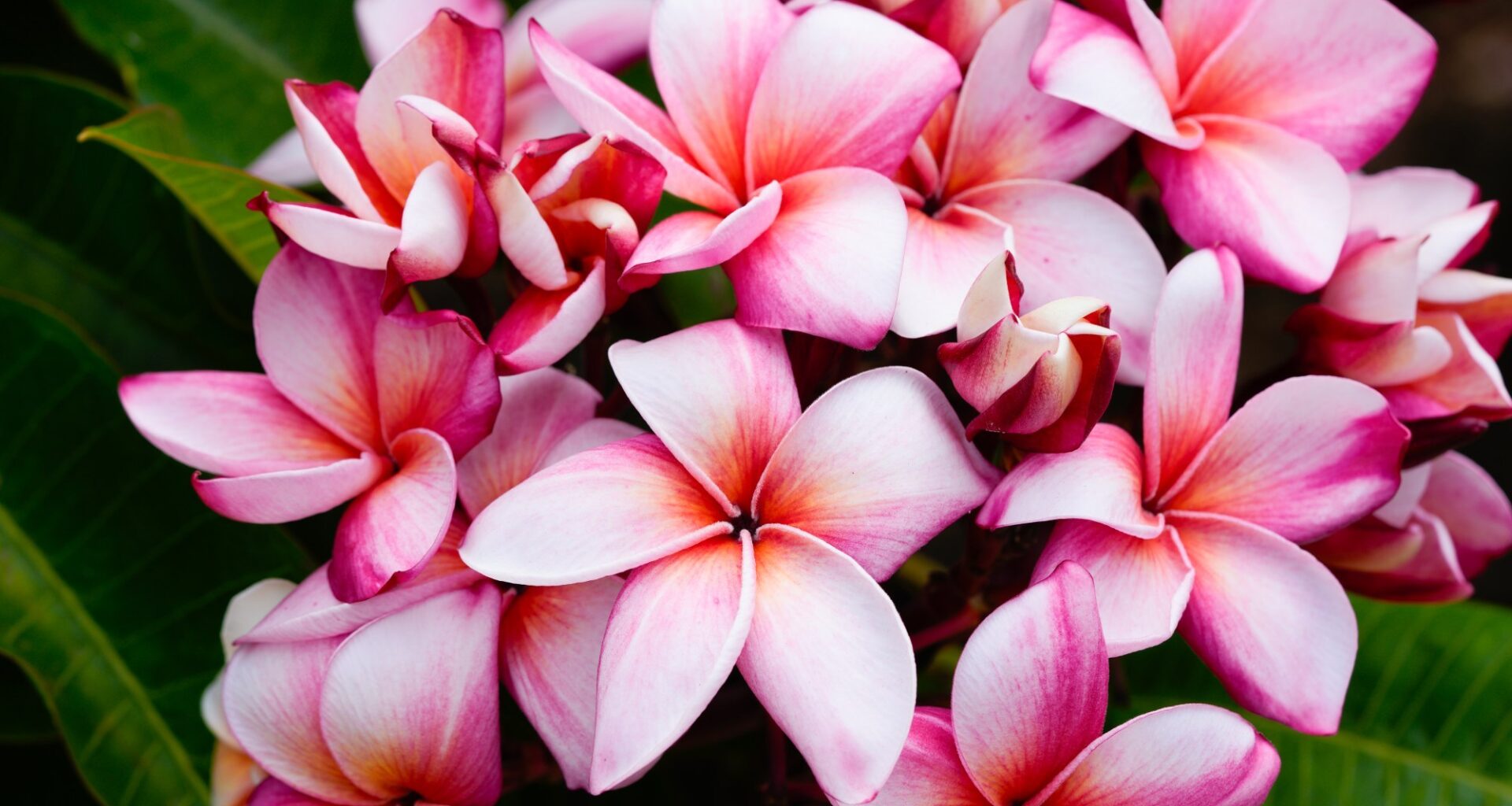
For The Union-Tribune
If you’ve ever strolled through some of San Diego’s older neighborhoods, particularly former Navy housing communities, you may have found yourself surprised and delighted by the sweet fragrance of delicate white and yellow blooms sprouting from the branches of a gnarly old tree.
What you’ve encountered is likely a plumeria, a living reminder of post-World War II sailors’ nostalgia for their tropical paradise postings in Hawaii and the South Pacific islands. Many brought plumeria cuttings home to San Diego, introducing the tree to the region for the first time. Starting in the late 1940s and ’50s, many returning sailors planted their rooted cuttings in their Navy housing gardens, where they’ve thrived for the past 70-plus years.
Plumerias are native to the Yucatán Peninsula of Mexico and Caribbean region but were introduced to warm regions around the world by missionaries and travelers.
After their arrival in Hawaii in 1860, they quickly became identified with the tropical islands. Many tropical and subtropical countries have become centers of plumeria cultivation, which provide cultivars to growers internationally.
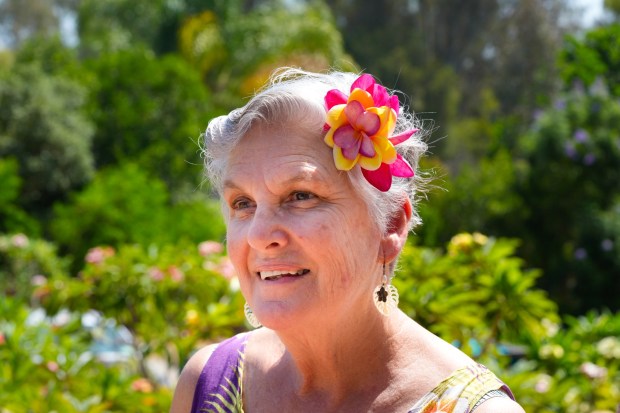 Stacy Atkinson, co-owner of Atkinson Plumeria on Mount Helix, displays a floral hair piece evoking the aloha spirit using flowers grown at the farm. She teaches classes on making leis and arrangements. (Nelvin C. Cepeda / The San Diego Union-Tribune)
Most old trees found in San Diego are ‘Celadine’ cultivars or similar, especially fragrant white and yellow varieties, descendants of early Hawaiian plantings.
Since then, plumerias, also known as frangipanis, have exploded in popularity and are now available in a wide array of colors and fragrances, including “rainbow,” featuring two or more varieties grafted together.
If you’ve developed a curiosity about the plants and want to learn more or want to acquire your own, your best opportunity is to attend the Southern California Plumeria Society’s annual Labor Day weekend Plumeria Festival, held Sept. 5 and 6 at the Casa del Prado in Balboa Park.
“The festival has six elements: the plumeria sales, flower show, Polynesian food, dancers and music, and our ‘tropical treasures’ room, featuring sales of plumeria-related craft and gift items, as well as plumeria care items, such as handbooks, fertilizers, plant tags, moisture meters, etc., plus festival T-shirts and calendars,” explained society president Ava Chan-Crowder.
Like many others, she became captivated with plumerias on her Hawaiian honeymoon. She brought home a cutting and is now growing about 45 different varieties at her warm and sunny Rancho Peñasquitos home, ideal conditions for plumerias.
The heart of the all-volunteer-run festival, which the society started about 2002 and now attracts as many as 10,000 people each year, is the plant sale.
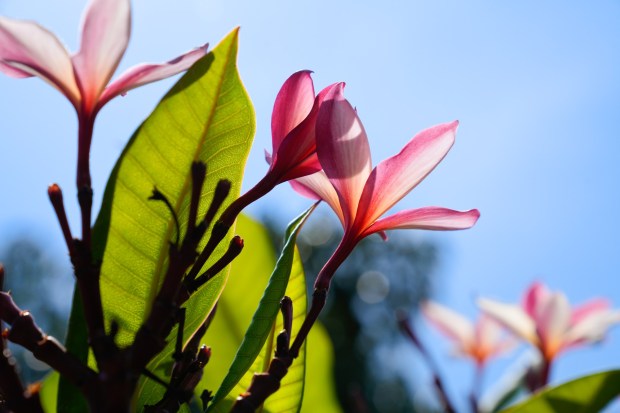 Light filters through the petals of a colorful ‘Bob’s Rainbow’ plumeria blossom at Atkinson Plumeria. (Nelvin C. Cepeda / The San Diego Union-Tribune)
About 25 growers, all based in Southern California, bring a wide range of colors and varieties, all with distinct scents, including whites, pinks, yellows, oranges, maroons and rainbows. Even though many cultivars originated in Thailand, now one of the main centers of plumeria development, everything offered at the sale is locally grown in Southern California, acclimated to the region’s growing conditions and in prime condition because of the growers’ specialized knowledge and care.
“The growers at the festival are all known for certain specialties and certain types of varieties. A couple have direct connections with growers in Thailand or the Pacific Islands, and they’re bringing a lot of really rare, interesting stuff,” explained Mike Atkinson, a Mount Helix-based grower and plumeria educator who’s been involved with festival and the society since its early days.
“Our last count (from the growers) was over 400 varieties, everything from the common to the rare varieties, which sell first on Saturday morning,” Chan-Crowder said.
A list of growers and their offerings will be available at the festival’s entrance, both in print and via QR code, she explained. Prices range from about $10 to $400 depending on size, variety and rarity.
The rare and unusual varieties and colors are usually snapped up by passionate plumeria collectors and hardcore growers, who line up early Saturday morning in search of the uncommon. But a wide choice remains for the general public after the collectors depart.
Both Chan-Crowder and Atkinson urge noncollectors to come later on Saturday and, better yet, Sunday, for the best experience of the festival. After the first rush, the growers will have time to talk with festival guests, answering questions and offering plant care advice.
Sunday is also the day to see the flower show, believed to be the largest adjudicated plumeria show in the world.
“There’s no guarantee that the flower show itself will be open on Saturday because it takes the judges a long time to complete their judging,” Chan-Crowder explained.
Polynesian food and beverages, including Hawaiian shave ice and shrimp-based plates, will be available throughout the festival.
For entertainment, Polynesian dancers will perform all day Saturday while Polynesian musicians will perform Sunday morning from 10 a.m. to 1 p.m. and dancers again in the afternoon from 2 to 3 p.m.
The Southern California Plumeria Society was founded in 1999 by a group of committed plumeria growers in response to burgeoning public interest. More and more travelers had discovered the fragrant trees on visits to Hawaii, while many in the Southern California Filipiino, Pacific Islander and Asian communities sought them as reminders of their ancestral homelands.
In addition to the September festival, the society holds a spring cutting sale, offers tree trimming services, and it provides educational programming at every meeting.
Plumerias are dormant over the winter, dropping their leaves, but they begin to awaken about February or March and bloom from about May or June through about October or later, dependent on weather. Blooms tend to be more vivid in hotter environments.
Whether you’re a plumeria buyer or simply an admirer, you’ll experience a taste of Polynesia and plumeria culture at the Plumeria Festival.
Plumeria Festival
When: 10 a.m. to 4 p.m. Sept. 5 and 6
Where: Casa de Prado, 1650 El Prado in San Diego’s Balboa Park, across from the San Diego Natural History Museum
Cost: Free admission
Details: Learn more about the Southern California Plumeria Society’s Plumeria festival, society meetings, membership and educational programming at southerncaliforniaplumeriasociety.com.