
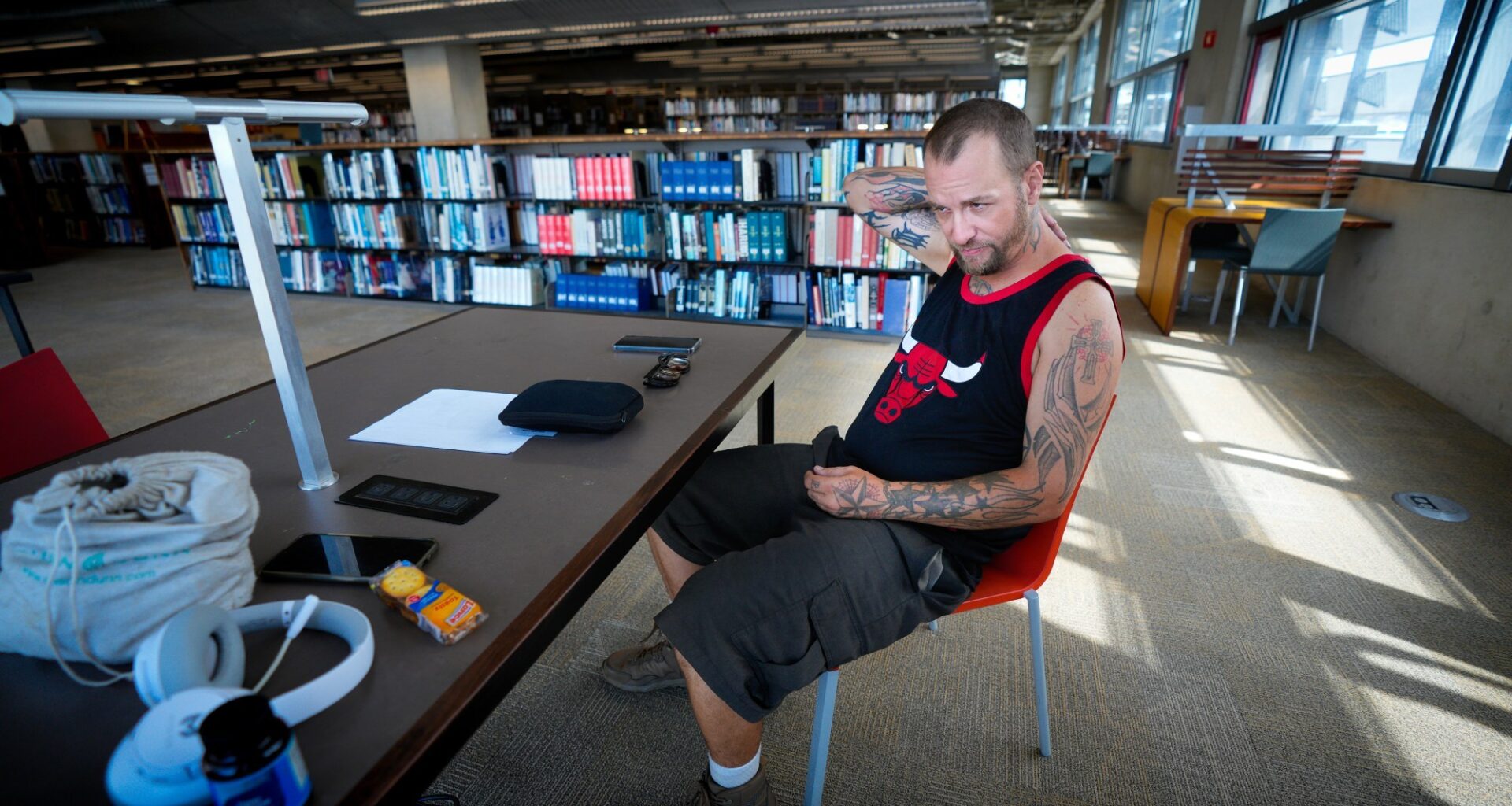
Janean Jauregui sat at a table on an upper floor of the San Diego Central Library on Thursday, charging her phone and waiting for another hot day to pass. Sitting under the table was her pit bull. The 65-year-old homeless woman said the public building and the city’s trolley system offer an air-conditioned respite from the heat wave that has punished San Diego County for weeks.
“The heat has just been unbearable, you know, for the most part,” Jauregui said. “I have my dog also and she’s not supposed to be in the sun for very long, she overheats really easily.”
The heat wave, accompanied by high humidity, was forecast to peak Thursday and Friday. The National Weather Service has issued an extreme heat warning, with temperatures near the coast expected to reach the upper 80s, while inland temperatures will reach into the triple-digits.
For homeless people in San Diego’s East Village, finding areas to cool down will likely become more difficult as some daytime shelters, such as the Neil Good Day Center, are scheduled to shutter this fall. But many sought refuge inside the library, waiting for the sun to go down.
Jauregui said she’s able to keep her possessions in storage as she goes about her day. But for those who can’t, a library or another air-conditioned public building isn’t an option, especially if they have more than one pet.
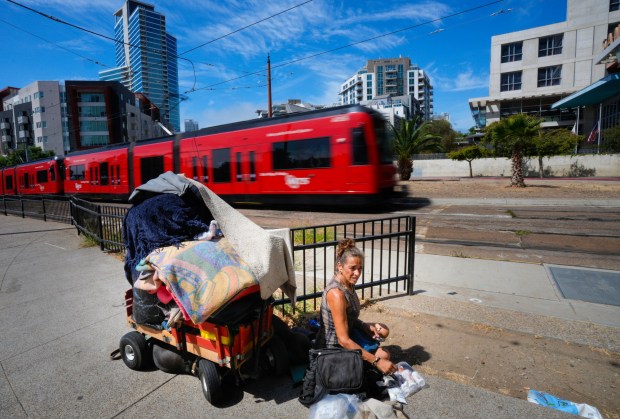 Jennifer Novarro, 55 sits with her personal belongings just outside the San Diego Central Library on a hot Thursday morning. While San Diego is experiencing a heat wave, Novarro, who has lived on the street since 2022, cannot go inside the library, which has air conditioning to provide relief from the heat, because she has nowhere to securely store her belongings. (Nelvin C. Cepeda / The San Diego Union-Tribune)
Jennifer Novarro, 55, was sitting just across the street from the library with her boyfriend and three dogs. A blanket was draped across a fence and a wagon that held her possessions. It shaded her dogs, but there wasn’t enough room for her. She sat in the sun.
She sat in a spot that would become shaded later in the day. Around 10 a.m. Thursday, the shaded areas were closer to the library’s entrance. Novarro said police are quick to make sure homeless people do not settle in those areas, typically sweeping it during the early morning hours.
“There’s not many places they let us go, it’s ridiculous,” she said.
Being outside in the sun without any shelter not only has an adverse effect on health; it can be deadly. In 2024, the most recent year the San Diego County Medical Examiner’s Office produced data, 17 people died from heat exposure — almost double the number from the previous year.
It’s unclear how many of those people were homeless. The examiner’s data found that two of them died in a hospital. The others were found outside. Five of them did not have a residence listed.
Josh Bohannan, Father Joe’s chief strategy officer, said their street team is working this week in the East Village to hand out hats, water and education on how to identify symptoms of heat exhaustion and heat stroke.
Scott Kline, 39, stays at the city’s B Street safe camping site. He said drinking water is available to the residents there, but it’s not cool. The showers, though, can produce cold water and can provide temporary relief. But because tents only offer shade and not cooling, he opted to spend the day in the library on Thursday.
Kline said he’s seen other homeless people suffer heat exhaustion and heat stroke. Typically, people look out for each other at the camp site and on the street. If someone is too far gone to notice how hot it is, Kline said, people usually try to get them to, at least, move into the shade.
Eventually, Kline said, he would like to live in a van with air conditioning. Until then, the camping site is a much better alternative than having to brave the elements with little to no shelter.
“I had to (go there), I didn’t have a choice,” Kline said. “It’s not suitable to be on the concrete.”
The city’s daytime high temperature has not fallen below average since July 10 and isn’t expected to do so through the weekend.
Residents can access cool zones designated by the city and the county, which can be found on their respective websites.