
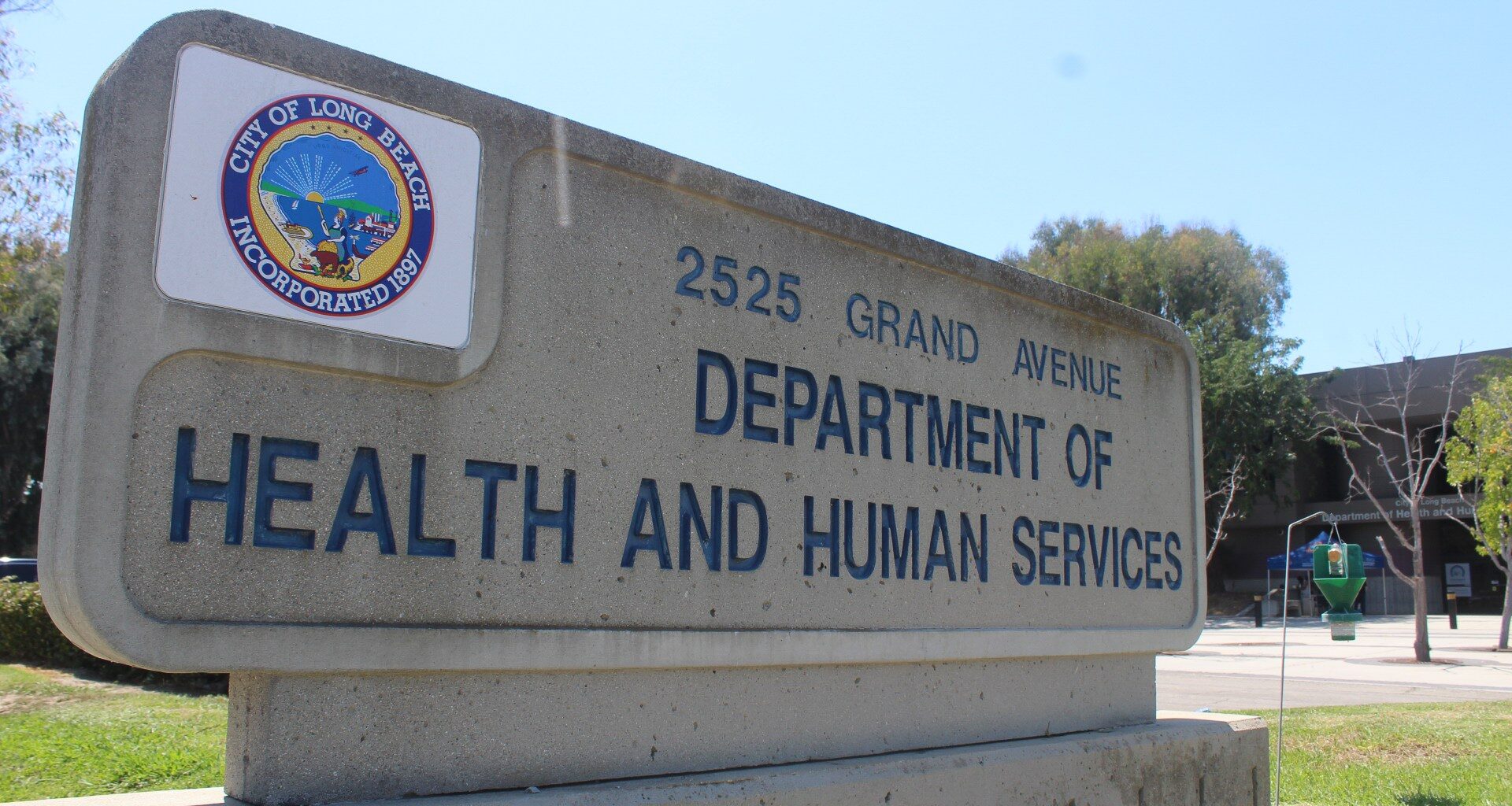
Long Beach officials pride themselves on being a city with its own independent health department – one of only a handful of cities in the state. But Long Beach has yet to provide the structural funding necessary to help the department remain sustainable.
As the city, once again, goes through its proposed budget process, Health and Human Services Department officials discussed how funding losses, rising costs and expiring resources have intensified existing financial pressures.
Despite these challenges, the department’s proposed $201 million budget for the 2026-27 fiscal year still prioritizes protecting essential public health services.
“While our funding landscape is changing,” health department Director Alison King said during a recent City Council presentation, “our commitment remains the same – protect health, support stability, use resources responsibly, and preserve the services Long Beach depends on.”
The programs and services the department provides, King said, range from protecting youth through immunization and community-based prevention, to helping adults and older adults stay healthy, housed and connected. The department’s work also includes clinics, outreach, emergency response, environmental health, housing, prevention, youth programs and community education.
Staffers continued delivering these services through a year of extraordinary funding uncertainty, King added.
Although grants support the programmatic costs associated with services, that money generally does not fund the department’s administrative costs. In prior years, the health department relied grant funds and other revenue sources to fill the required gap.
But as grant funding has been reduced at the federal, state and local levels, the department has assessed – and will continue to assess – its current portfolio of programs and services to respond to the uncertainly and the ending of various funding streams, according to the budget presentation.
Long Beach’s general fund provides the core infrastructure that allows the health department to bring additional resources into the city, King said. In FY25, for example, that foundation helped the department leverage approximately $253 million in outside resources for the community.
For roughly every dollar in general fund support, the department was able to leverage about $11 dollars through grants, partnership fees and other funding sources.
“This is why stabilizing the health department matters,” King said. “When local infrastructure is weakened, we do not just lose local dollars. We risk losing the ability to bring in and responsibly manage for larger outside investments. Sustaining the health department is one of the ways Long Beach turns a little into a lot for residents. That impact is why the fiscal challenges ahead matter.”
The health department is facing a number of fiscal challenges. This includes about $15 million in grant being canceled, reduced and not renewed, while the cost of delivering public health services has continued to rise, from personnel and technology to the overhead required to operate safe, accountable programs.
“To address fiscal challenges that we continue to have and reduce the general fund deficit, the department must reduce our costs,” King said. “The adjustments proposed during this budget process are aimed to stabilize the local public health infrastructure that protects Long Beach every day.”
With Long Beach facing budget cuts and staffing reductions for the 2027 fiscal year, the health department was asked to make reductions as well. The general fund savings target is around $716,000 and the health fund savings target is $9 million.
The department’s proposed budget focuses on making the best use of every available funding source while protecting the core public health responsibilities Long Beach is required to provide, King said. With one-time resources ending and federal policy continuing to complicate funding streams, the proposed budget focuses on what must be sustained, what can be funded differently and what must be reduced.
While Mayor Rex Ricardson’s recommendations would help restore critical capacity, King said, the city must be deliberate about how temporary funding is used and what happens when it ends.
The department will use a strategy of four pathways: reduce, realign, consolidate and maximize revenue. Reductions lower costs where funding is no longer available; realignments move eligible costs to the appropriate grants, fees or programs; consolidation reduces duplication and helps leadership manage a smaller and challenging service portfolio; and maximizing revenue requires the department to pursue grants, fees, cost recovery and partnerships before turning to the general fund, according to the budget presentation.
The mayor’s recommendation softened the impact by restoring priority reductions through Measure ER. Approved by voters in June, Measure ER is a significant opportunity to stabilize public health services in the upcoming budget, King said. Preliminary estimates indicate Long Beach could receive about $7 to $8 million.
With Measure ER funds, the department’s approach is phased and disciplined, King said, with $1.7 million being used to restore 12 full-time equivalent positions, $3.2 million to sustain 14.1 FTEs facing upcoming funding losses, $2 million for targeted public health enhancements, and $1.1 million for grant match and protection of mandated services.
“This is meaningful relief, but Measure ER is intentionally a bridge and not a permanent solution,” King said. “The five-year window gives us time to protect critical capacity while continuing the structural reforms needed for long-term health fund sustainability.”
Through department reductions, the community will see impacts to services.
Some community clinical homelessness outreach and administrative capacity, for example, will be reduced. The mayor’s recommendations would restore several important functions, but the department will operate more leanly regardless.
Homeless services will remain financially stable through the upcoming fiscal year, but the outlook changes significantly in FY28, King said. Total available funding is projected to be about $53.1 million in FY27, but that will decline to around $37.3 million in FY28.
That decline is because of grants expiring, expected federal reductions and changes to county funding, among other reasons, King said.
“Federal funding,” King said, “is projected to decline by more than $10 million between fiscal years ’27 and ’28.”
In FY27, Los Angeles County Measure A money will provide roughly $8.9 million dollars, according to the budget presentation. About $3.9 million of that will be for comprehensive homeless services funding, while around $5 million will come from Measure A’s Local Solutions Fund.
These resources will support time-limited rental subsidies, housing navigation, housing location services, street outreach, interim housing operations, year-round shelter, community crisis response and mental health services.
But Measure A funding is also expected to significantly decline in FY28, King said, because of projected lower county revenue receipts stemming from new and expanded cost obligations – coupled with the loss or reduction of funding sources.
The department will also restructure, including realigning community health programs into existing bureaus to reduce duplication and better match organizational structure to the current services. The department will also maximize available resources by moving eligible costs to grants, improving fee recovery, pursuing outside funding and aligning staffing with sustainable revenues.
Even in a difficult year, however, the health department will also continue making investments to improve the lives of residents.
The proposed budget, for example, maintains important Measure US-supported youth programming. It also highlights $8.5 million in funding for services, such as $4.5 million for the Long Beach Cannabis Safety Program, and $4 million in pending funding for community crisis response and early childhood mental health programming.
While the financial environment is changing, the health department’s commitment to Long Beach remains strong, King said during the Aug. 18 City Council meeting.
“Protecting core services means prioritizing the essential public health functions that only a local health department can provide,” she said, “disease surveillance, clinical care, emergency preparedness, environmental health and connection to services.
“The reductions presented today are difficult, but they should not obscure what this department means to Long Beach,” King added. “Much of our impact is measured by what does not happen – the outbreak that does not spread, the family that does not lose housing, the crisis that does not become an emergency.”