
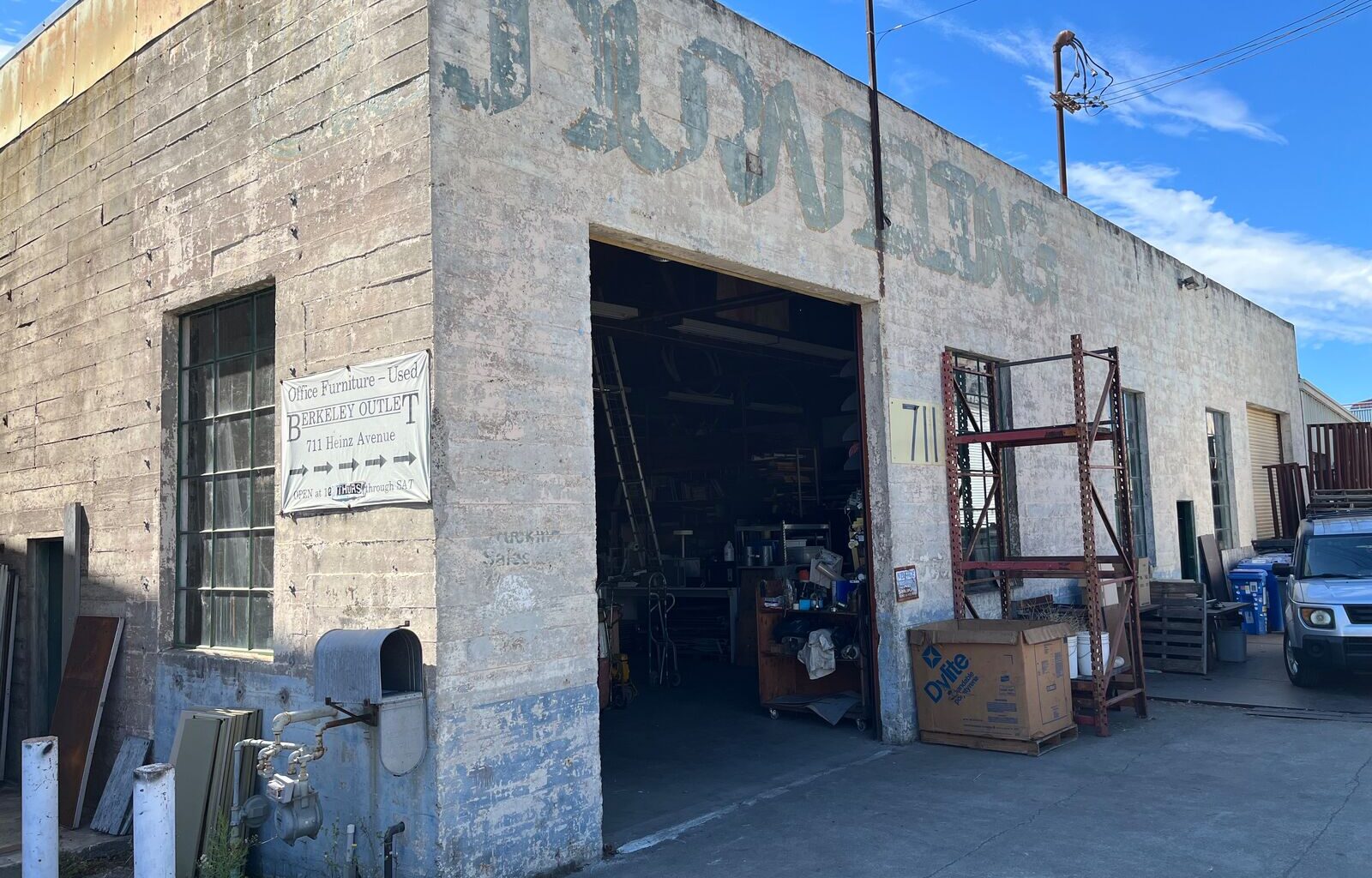
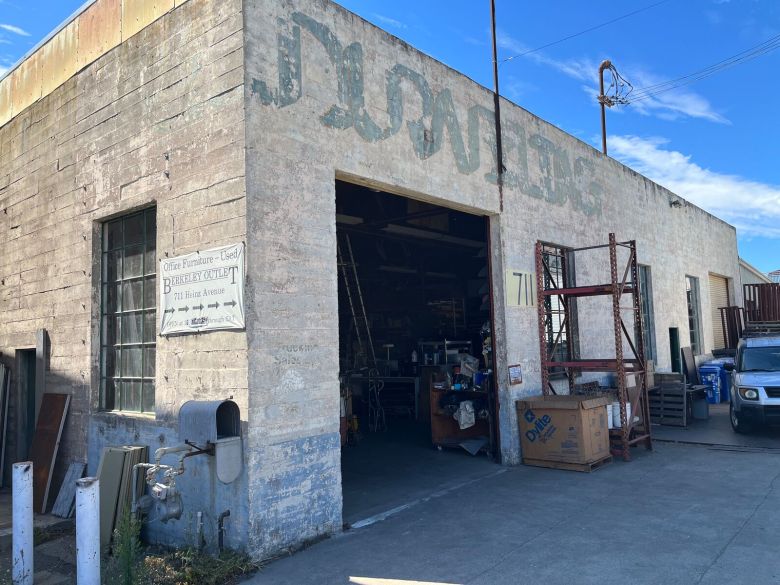
 Berkeley Outlet, a destination for secondhand goods in West Berkeley, will close in the coming months. Credit: Nathan Dalton
Paul Neidert still has the receipts. All of them. Every single one he’s written out by hand since he began selling used furniture and other salvaged goods in April 1978 can be found in a cabinet behind his desk at Berkeley Outlet, his vast warehouse in West Berkeley.
While it may be surprising that a company still has nearly 50 years of receipts on hand, to Neidert it’s just business as usual.
“I’m a hoarder,” he said. “I don’t throw anything away.”
But Neidert will soon write his final receipt, as he is finally ready to close up his second-hand shop, nine months after his wife, Kjersten, passed away from pancreatic cancer. At 84, Neidert can’t move around as well as he used to and isn’t nearly as strong as he once was, a must for a business that deals in large and heavy objects. And when he was offered what he called a “ridiculous amount of money” for the warehouse near the railroad tracks at the west end of Heinz Street, he decided it was time to call it quits. Neidert will continue to open Berkeley Outlet’s doors every Thursday, Friday and Saturday until the building sale is finalized in late September or early October.
Neidert describes Berkeley Outlet as a “hoarder’s delight.” It’s stocked with rows and rows of metal cabinets, desks, shelves, chairs, stools and other furniture. There are piles of reclaimed floor joists and old growth Douglas fir beams, stacks of pallets, pegboards, plywood and other lumber. There are pipes and metal rods and drawers full of screws and nuts and bolts. There are rusty wrenches for a dollar a piece and metal drums full of casters. There are bicycle tire inner tubes and stacks of plastic buckets, lightbulbs long past their prime and old lamps and lighting fixtures. There are dozens of vintage computer keyboards and mice and boxes full of electronic cables. There are Dumas flasks and centrifuge tubes and other glassware and so much more.
“Somebody was throwing that away,” Neidert said, pointing to a length of white tubing coiled up in the rafters. “And I said, ‘Oh, you should never throw any tubing like that away, especially when I have a place I can put it.’ And it’s been sitting quietly up there for three or four years.”
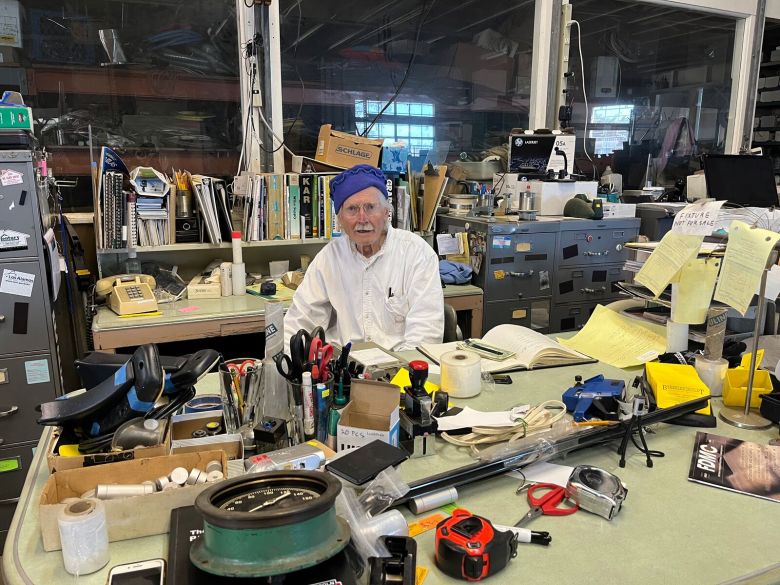 Paul Neidert sits at his desk at Berkeley Outlet. Credit: Nathan Dalton for Berkeleyside
Neidert seems to believe nothing that works should go to the landfill.
He founded Berkeley Outlet in 1978, but Neidert’s fascination with stockpiling stuff began long before that. Growing up in Kansas City, he always collected the most paper for his school’s annual paper sale.
“The schools made some money,” he said. “But it was a chance for me to hoard.”
After getting out of the Army in 1966, Neidert moved to San Francisco, where his brother lived. He moved across the Bay and took classes at UC Berkeley until his GI bill ran out. But he realized he didn’t need a university for his planned career.
“It no longer seemed lucrative to be at Berkeley,” he said. “I didn’t have the GI Bill subsidizing me, and I found that I liked the used business, the hoarding business.”
Berkeley Outlet’s first location was at 800 Heinz Avenue, the former site of the Durkee Foods cannery. Neidert’s business occupied most of the ground floor, while the rest of the building was occupied by “ young artists and people struggling to live a more creative, alternative lifestyle,” according to Edward Moore, who operated his burgeoning law practice out of the building.
Neidert and his wife threw the best parties, many of which took place on the rooftop, where the partygoers could see the San Francisco skyline across the Bay. The location made for particularly thrilling Fourth of July gatherings.
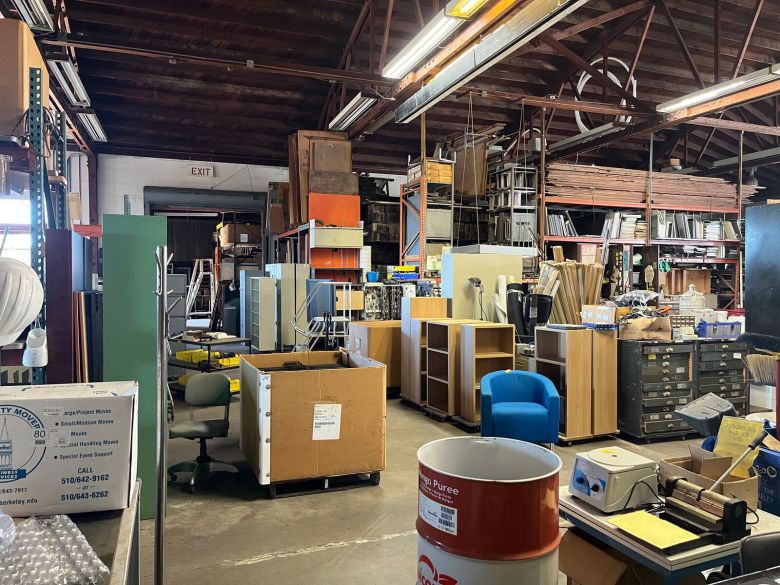 Just a few of the many items for sale at Berkeley Outlet. Credit: Nathan Dalton for Berkeleyside
“They were like the trunk of the tree,” said Suzanne Pettigrew, who lived at the cannery. “Many friendships grew out of that connection.”
Neidert served as an inspiration to the many young artists who lived and worked at the cannery.
“He saw the potential in everything,” said Pettigrew. “He would see a piece of wood and see it as a tabletop or know what kind of screws would work on which base. He really knew how things were put together. I always admired his inquisitive mind.”
After the Durkee building was sold, Neidert moved his business down the street to 740 Heinz Avenue before buying his current warehouse at 711 Heinz Avenue. Each time, Neidert moved every piece of furniture by hand.
“I learned from him how much you can accomplish by simply putting one foot in front of the other,” said Moore, who watched Neidert move out of the cannery.
“He just loves to move his furniture,” said Pettigrew with a laugh.
Neidert loves everything about the business, it seems. He loves collecting discarded items and fixing things. He loves chatting with customers and haggling over prices.
“And in this business, you get to go to the scrap yard,” he said before pulling up photos of his recent visit to Custom Alloy Scrap Sales in Oakland. “That’s entertainment for me.”
Curious collectors and deal seekers who want to visit Berkeley Outlet in its final weeks should make sure to bring cash or a checkbook, as Neidert is currently not accepting credit card payments. Whatever he doesn’t sell, Neidert will likely move to Vacaville, where he owns six and a half acres. And if the spirit moves him, he may even set up a little roadside salvage yard and continue selling his treasures. The hoarding business is one that’s hard to quit.
Berkeley Outlet, 711 Heinz Ave., Berkeley. Phone: 510-549-2896. Hours: Thursday-Saturday, noon-5 p.m.
We know that most readers don’t get to the end of the article. But you did! To support our in-depth, rock-solid reporting, please consider making a donation to our nonprofit newsroom today. We rely on our readers — particularly the ones who read the whole story!
“*” indicates required fields