
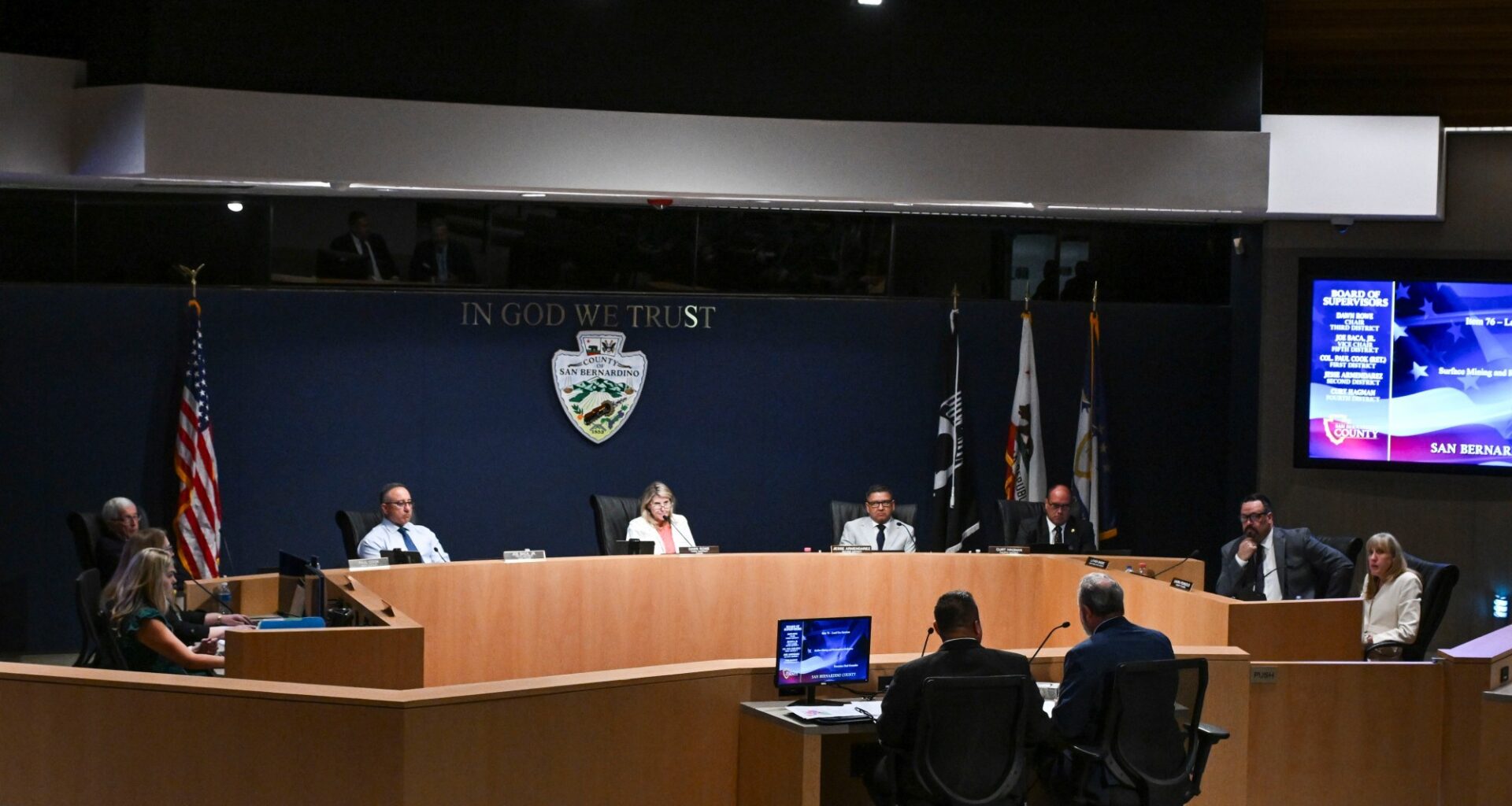
With the stroke of a pen, Gov. Gavin Newsom could soon give San Bernardino County residents their own pen to map their political future.
The state legislature has passed legislation that would give an independent citizens’ panel the final say in how the county’s Board of Supervisors districts are drawn. Today, the ultimate decision rests with county supervisors.
If Newsom signs SB 1414, the panel’s work would start after the 2030 census.
“SB 1414 puts the power to draw district lines where it belongs — with the people of San Bernardino County, through an independent, transparent and community-driven process,” the bill’s sponsor, state Sen. Eloise Gómez Reyes, D-San Bernardino, said in a news release.
“Our democracy is strongest when residents have a meaningful voice not only in who represents them, but in the rules by which they are represented.”
The county’s voters approved the current redistricting process “and no failure has been demonstrated that warrants replacing it,” San Bernardino County Supervisor Dawn Rowe, the board’s 2026 chair, said via text.
“As the bill heads to Governor Newsom, I hope he will carefully consider the precedent of overriding the will of local voters and allow our residents to continue determining how their county government operates.”
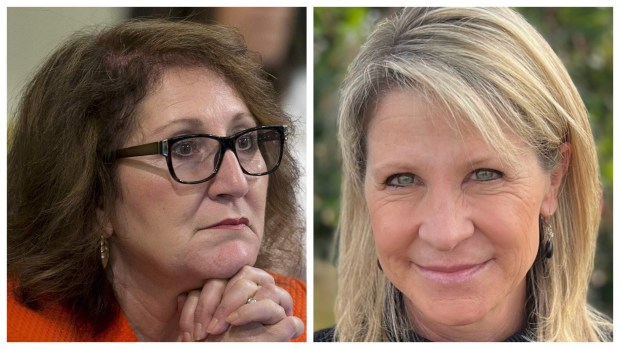 A bill from state Sen. Eloise Gómez Reyes, D-San Bernardino, left, that would change the way San Bernardino County draws supervisorial districts is headed to the governor. San Bernardino County Supervisor Dawn Rowe, right, opposes SB 1414. (Reyes file photo by Rich Pedroncelli, The Associated Press; Rowe file photo by Beau Yarbrough, The Sun/SCNG)
Following each decennial census, elected officials’ districts, from school board to Congress, are redrawn to reflect changes in population and demographics in an effort to ensure fair representation.
Currently, an advisory panel, appointed by the board and a judge, offers input on how the county’s supervisorial districts should be redrawn, with the board having the final say on the map lines.
This process, approved by voters through a ballot measure, led to the current board districts approved in 2021. In March, Reyes said the current advisory panel “is not the same as an independent, citizen-led commission with final map-drawing authority.”
The partisan makeup of SB 1414’s redistricting panel would be proportional to a party’s share of county voters in the last statewide election. There would have to be at least one commission member from each of the county’s five supervisorial districts.
County employees, lobbyists, past candidates and others with connections to county government would be ineligible to serve on the panel.
At a board meeting, the county’s auditor-controller would randomly choose commissioners from a pool of applicants whittled down by the county elections office.
SB 1414 also calls for public hearings and other steps to make the redistricting process open and transparent.
The bill comes after Riverside County’s redistricting process faced backlash from those who said it didn’t give a fair chance for Latinos in a Latino-majority county to win supervisor seats.
One of those critics, then-Assemblymember Jose Medina, is now a Riverside County supervisor. He joins Yxstian Gutierrez and V. Manuel Perez in forming a Latino majority on the five-member board.
In 2022, the Legislature passed a bill from state Sen. Sabrina Cervantes, D-Riverside, creating an independent redistricting commission to draw Riverside County supervisorial districts starting after 2030.
Los Angeles, San Diego, Orange, Kern, Fresno, Sacramento and San Luis Obispo counties also have independent redistricting panels, according to Reyes’ office.