
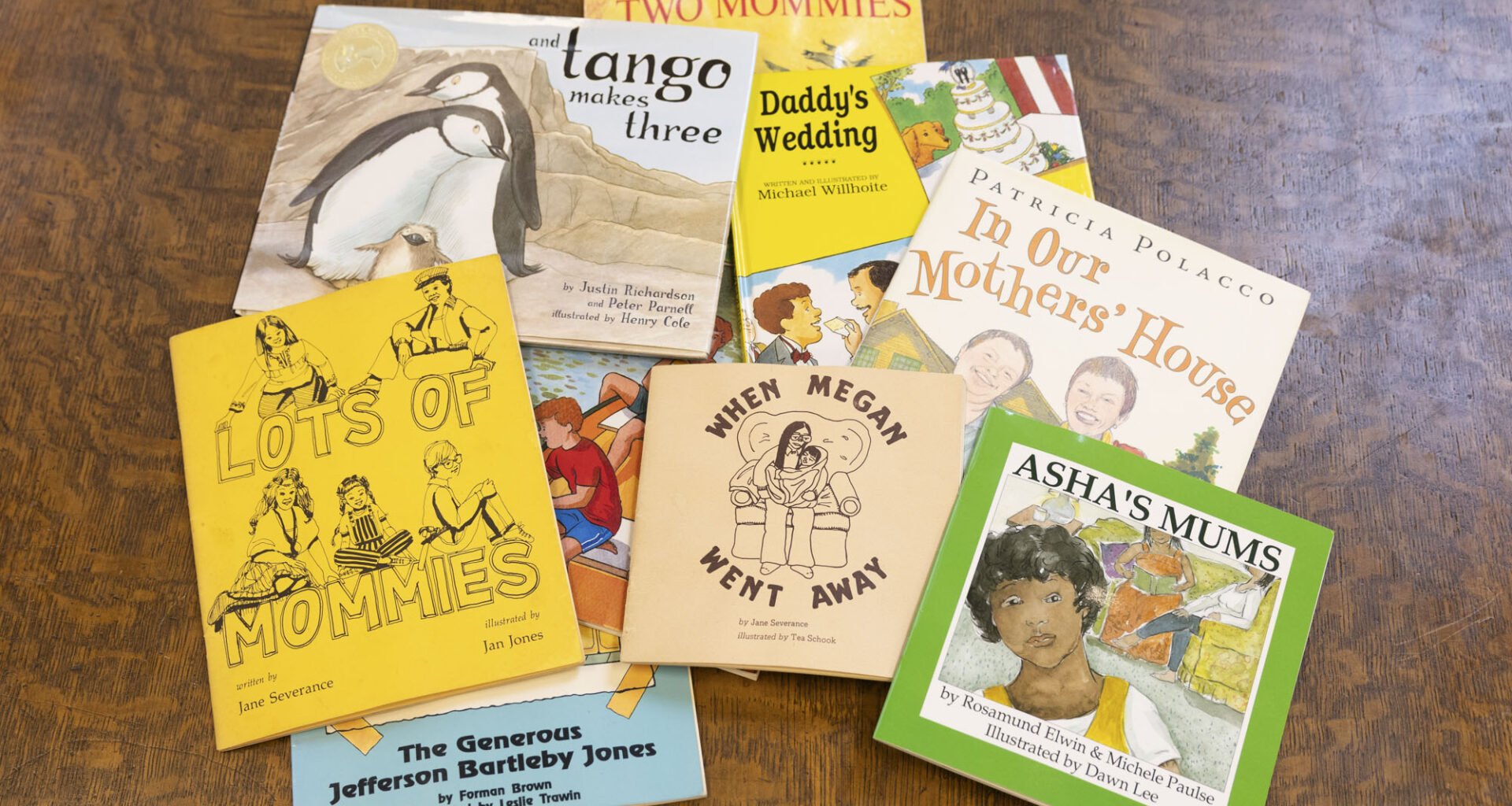
As a book collector in the early 2000s, Randall Tarpey-Schwed and his husband read bedtime stories endlessly to their children.
“We read all kinds of children’s books to our kids,” Tarpey-Schwed of Mill Valley said. “But I wanted to make sure that some of those showed their kind of family.”
Tarpey-Schwed’s passion had taught him to go searching for deep cuts like these: specifically, books for young people that featured LGBTQ families and characters. He began scouring used book websites and other corners of the internet for titles to bring back to his family — something that he said took “a lot of persistence.”
But his efforts paid off when these books became an instant hit with his daughters.
“I’d ask them, ‘What do you want to read tonight?’” he recalled. “Sometimes they would say, ‘Oh, I want a Papa and Daddy book.’”
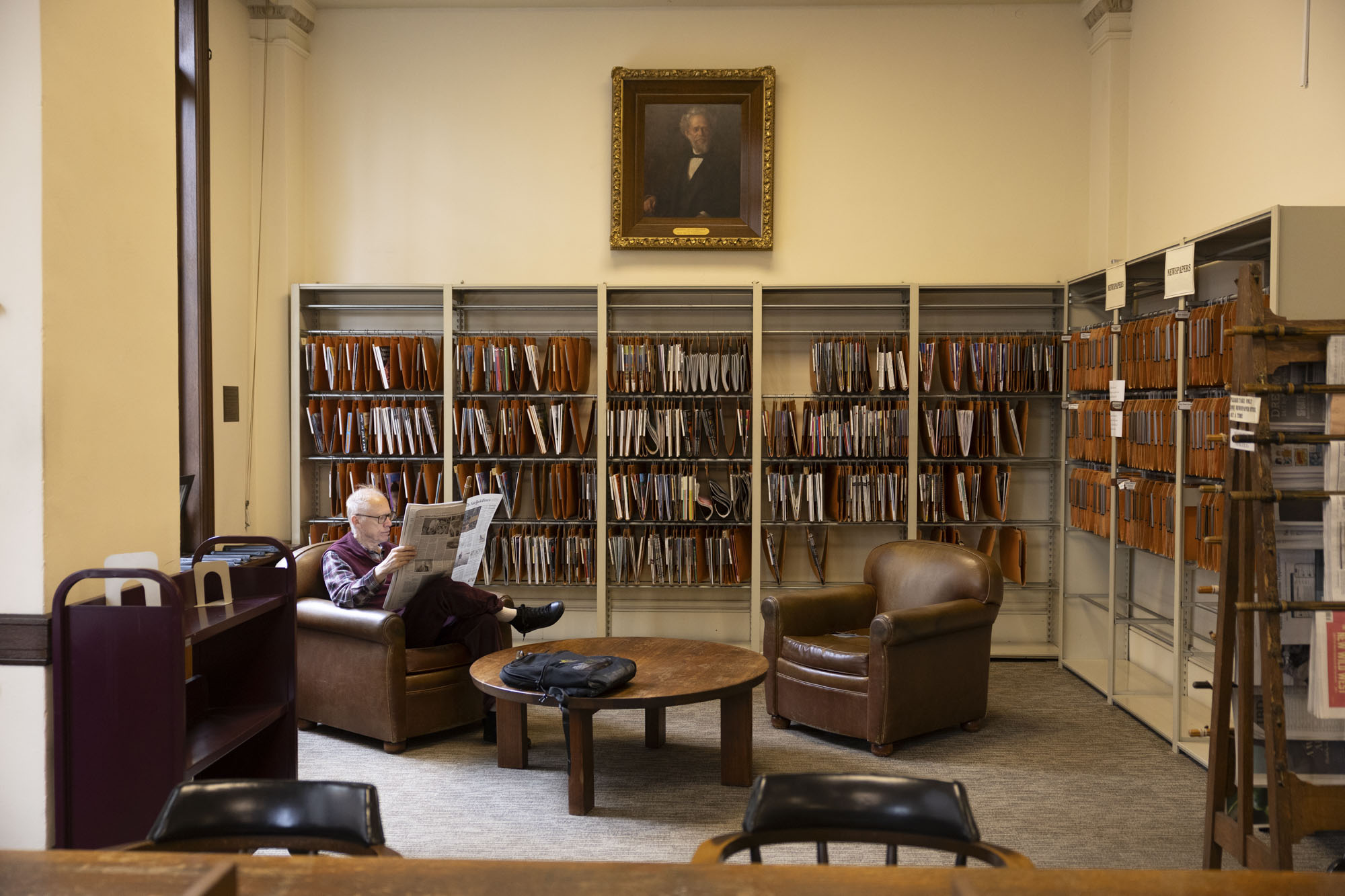 A person reads a newspaper at the Mechanics’ Institute Library in San Francisco on Aug. 14, 2026. (Nina Glick/KQED)
Exploring his growing collection, Tarpey-Schwed saw how the genre evolved — especially when looking at the earlier titles from as early as the 1960s. While some of the books were undoubtedly dated, they still communicated the values he and his husband felt were important: acceptance, community and love.
Over the years, he eventually amassed over 200 books, magazines and other printed materials that featured queer characters, themes and other diverse representations of families.
As his daughters grew up, Tarpey-Schwed carefully packed the books away. But he always wanted to find a home for them.
Then, through the bibliophile circles of San Francisco, Myles Cooper, a library manager at the Mechanics’ Institute — a beautiful Beaux-Arts-style historical library in downtown San Francisco — found out about Tarpey-Schwed’s archive of books.
Which is how Tarpey-Schwed handed off his years-long work in November last year — and how the Mechanics Institute became the new, public home of what they call one of the most thorough catalogs of early LGBTQ children’s literature in the United States, dating from 1969.
Scores of books which for years were stored in Tarpey-Schwed’s home can now be viewed in person by appointment or online
“The Mechanics’ Institute was willing to make a commitment to preserve it as a collection, rather than, say, putting all the books into circulation,” Tarpey-Schwed said. “I felt this was more important to keep it together. Because, in its whole, it shows the history of the genre.”
‘It’s adorable — and it’s true’
The Mechanics’ Institute dates back to the 19th century, years before the first branch of the San Francisco Public Library opened its doors. During its initial years, the center served as a place for people to learn vocational skills at the tail end of the Gold Rush.
Now, the Mechanics’ Institute is a home for the Bay Area’s chess players, cultural events and special collections for researchers to dive into. And a major reason, Cooper explained, why the Mechanics’ Institute took in Tarpey-Schwed’s “wonderful addition” was to “widen, broaden and tell more stories that relate to people here and that are important to people today.”
While the Tarpey-Schwed LGBT Families Children’s Book Collection has some contemporary examples, what makes it unique are the earlier titles Tarpey-Schwed discovered — many of which came from small independent presses, are out of print or were self-published.
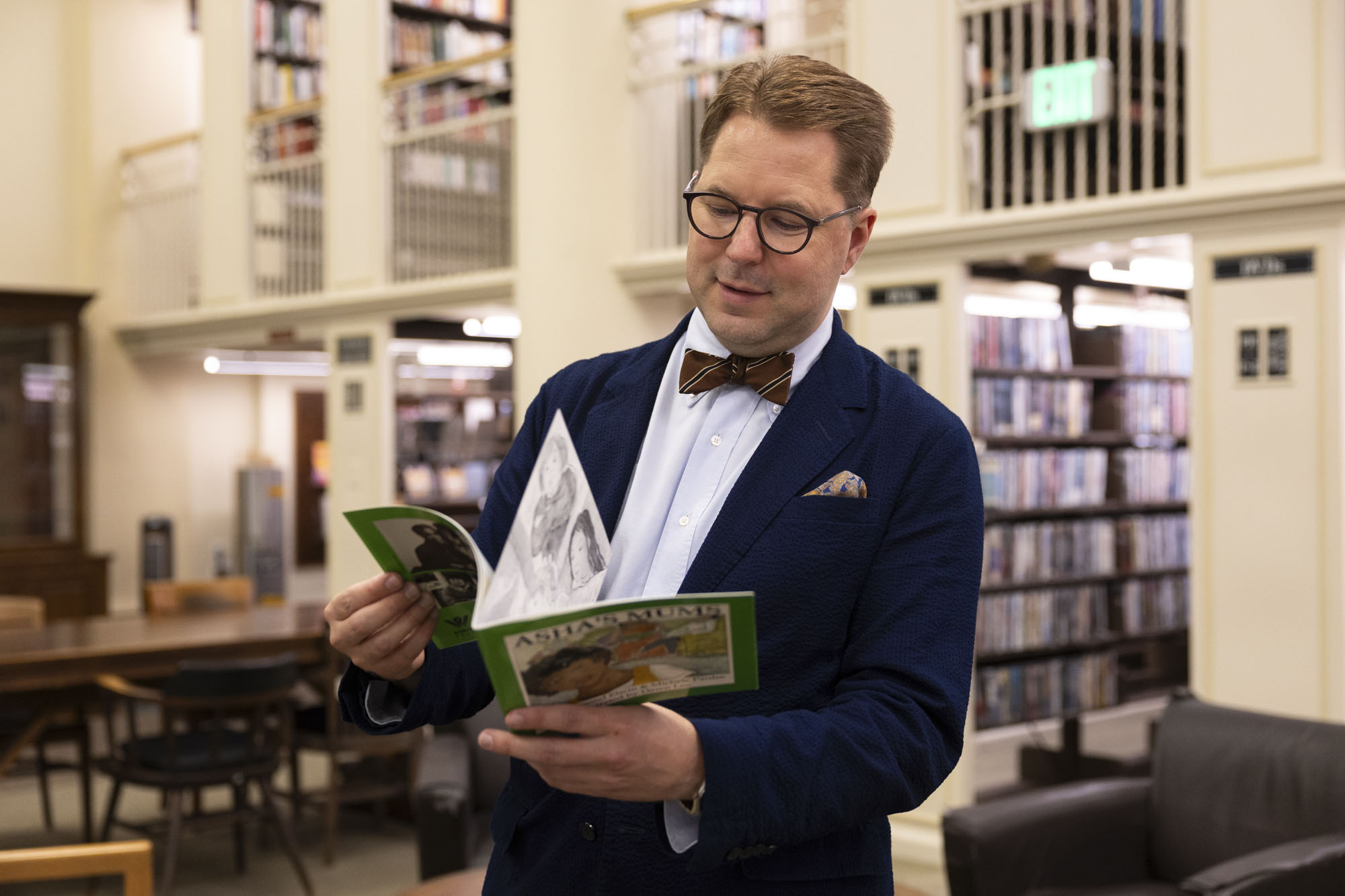 Myles Cooper, library manager and archivist is photographed at the Mechanics’ Institute in San Francisco on Aug. 14, 2026. (Nina Glick/KQED)
Like “Heather Has Two Mommies” by Lesléa Newman and illustrated by Diana Souza, self-published in 1989 before being picked up a year earlier by Alyson Wonderland — a then-brand-new LGBTQ children’s fiction publisher.
The collection, while telling the story of LGBTQ families, “also tells the stories of publishing,” Cooper said. “Publishers that dared to print some of those first stories that had representation of alternative families.”
Tarpey-Schwed’s collection traces how the genre was also impacted by real-life events, like legal developments around marriage equality and family law — or the lack of them. For instance, some of the earlier works Tarpey-Schwed found written before marriage equality tried to grapple with what to call the union of two parents, or a new partner of a parent.
“So, it could be ‘roommate’ — which I think is a hilarious euphemism,” he said. “There’s one story in which a little girl is portrayed as living with her mother and her godmother. But when you look at the iconography of the image, it’s clearly a lesbian couple.”
A title that became dear to Tarpey-Schwed’s own family is “In Our Mother’s House,” by Patricia Polacco, which follows two moms throwing a block party in Berkeley. At one point in the book, a neighbor storms in and snaps at the family, scaring the kids.
“And then — this is going to choke me up talking about it — what happens is that every one of the neighbors, one by one, comes up and gives the family a hug,” Tarpey-Schwed said. “Even though it’s a complicated and nuanced story, at the end, it cuts right through to: ‘But your family is loved.’”
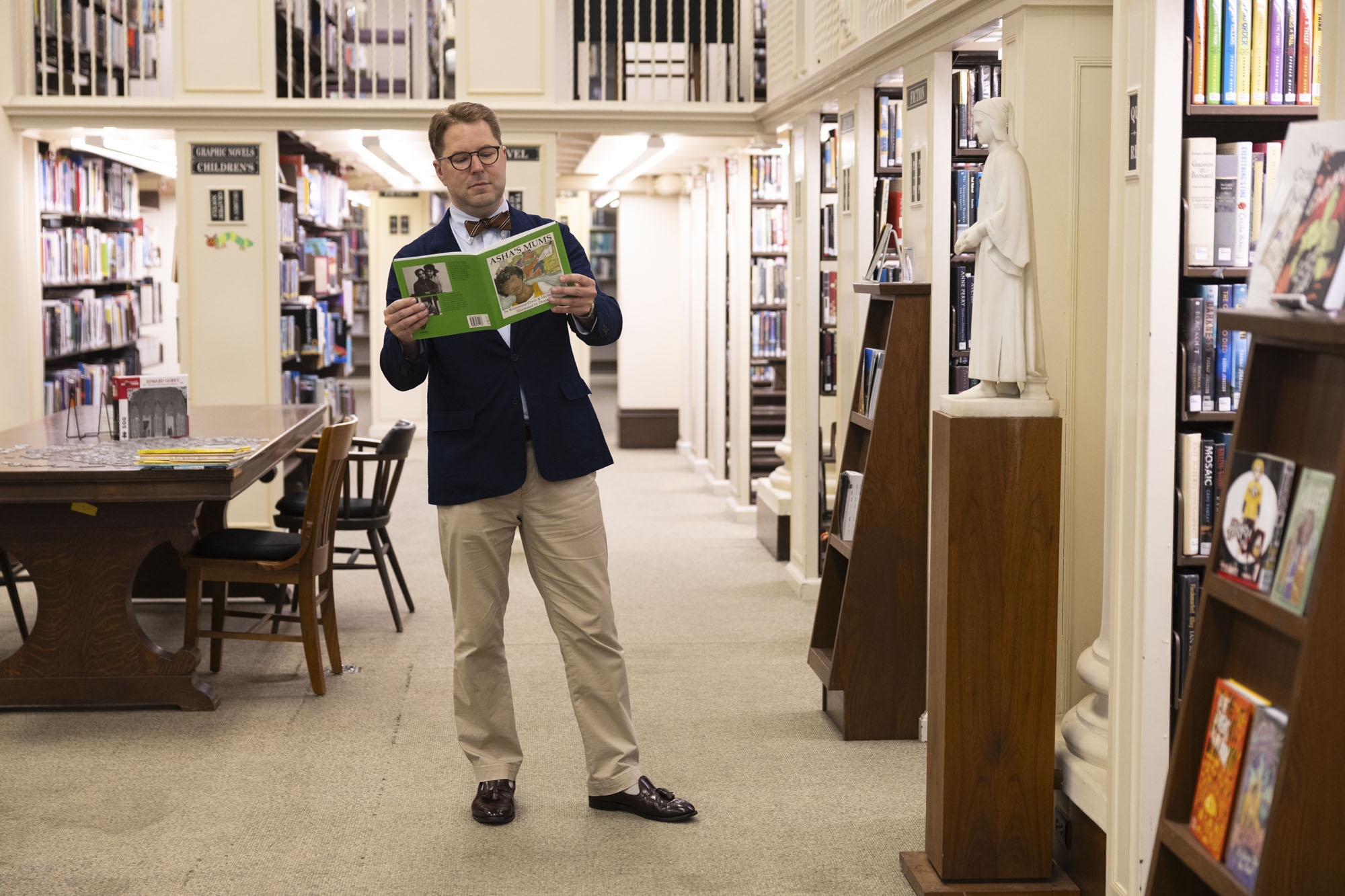 Myles Cooper, library manager and archivist is photographed at the Mechanics’ Institute in San Francisco on Aug. 14, 2026.
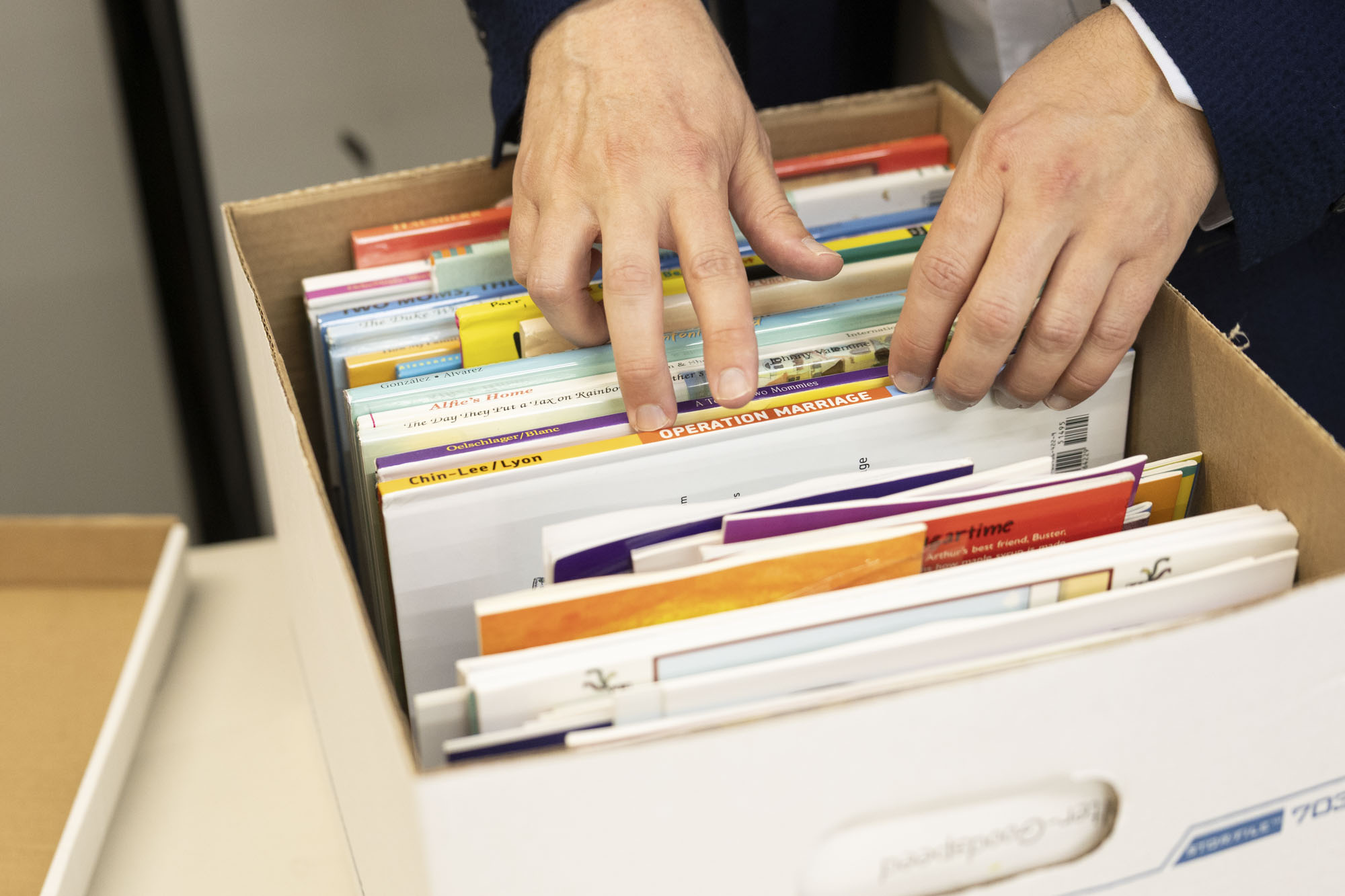 Myles Cooper, library manager and archivist at the Mechanics’ Institute, flips through a box of books from the institute’s Tarpey-Schwed LGBT Families Children’s Book Collection, at the Mechanics’ Institute in San Francisco on Aug. 14, 2026.
“There’s maybe an assumption out there that writing a children’s book is like writing a dumbed-down version of an adult book, and that’s completely wrong,” he said. “Children’s books are a genre of their own, and a really good children’s book is a good book, period.”
For Cooper, “And Tango Makes Three” has a special place in his heart, bringing back memories of reading it to elementary-school students upon its first release in 2005. Written by Justin Richardson and Peter Parnell and illustrated by Henry Cole, the famous book is based on a true story of two penguins in a New York zoo who raise a baby chick named Tango after zoo keepers notice their desire for a family — evidenced by their attempts to “hatch” a rock.
“How can you argue with that?” Cooper said. “It’s adorable, and it’s true.”
‘A broad censorship effect’
Nonetheless, “And Tango Makes Three” — like many of the books in the Tarpey-Schwed collection — has been a target of coordinated campaigns nationwide that aim to pull diverse books off the shelves of public libraries and schools.
“This is a very fragile area of collections,” Cooper said. “They’re being banned, even in public libraries in California. It really is an area that we need to collect and keep and maintain just for our own history.”
In 2016, the American Library Association tracked 208 unique titles that were challenged in public schools and libraries in the United States. In 2025, that number shot up to over 4,200 titles — and nearly 40% of those titles featured LGBTQ characters or characters of color.
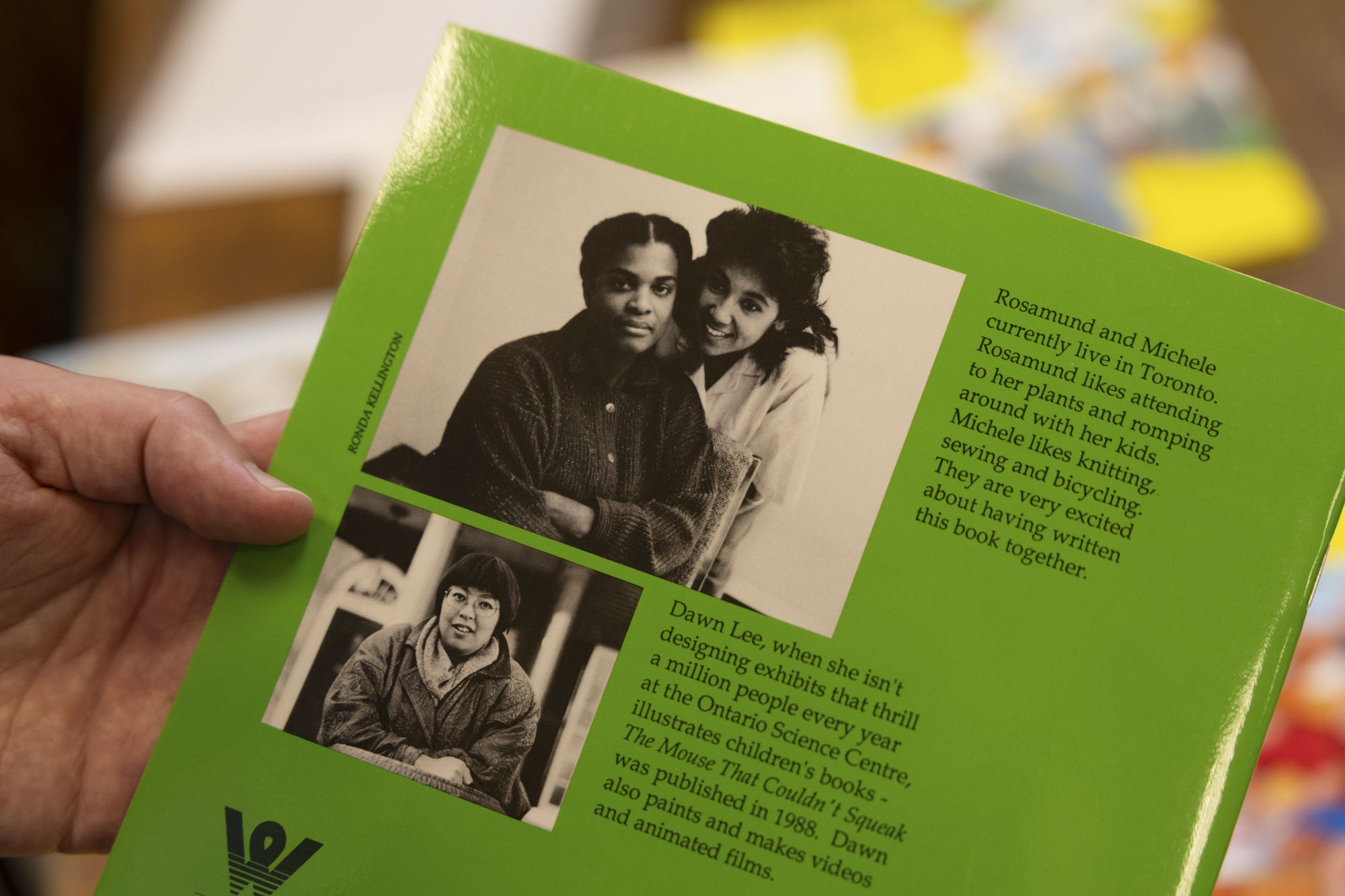 Myles Cooper, library manager and archivist at the Mechanics’ Institute, flips through Asha’s Mums, a book published in 1990, which is a part of the institute’s Tarpey-Schwed LGBT Families Children’s Book Collection, at the Mechanics’ Institute in San Francisco on Aug. 14, 2026. (Nina Glick/KQED)
The ALA also found that almost all book challenges in 2025 were initiated by pressure groups, government officials and decision-makers.
Along with these challenges, various laws and policies — some carrying serious consequences for offenders — can be found across the country that are attempting to restrict materials based on broad definitions like being “harmful to minors.”
The wave of censorship seen in the 2020s arose after the initial stages of the pandemic, often involving the same people involved with the anti-masking movement, like Moms for Liberty, said Sarah Lamdan, the executive director of the Office for Intellectual Freedom at the American Library Association.
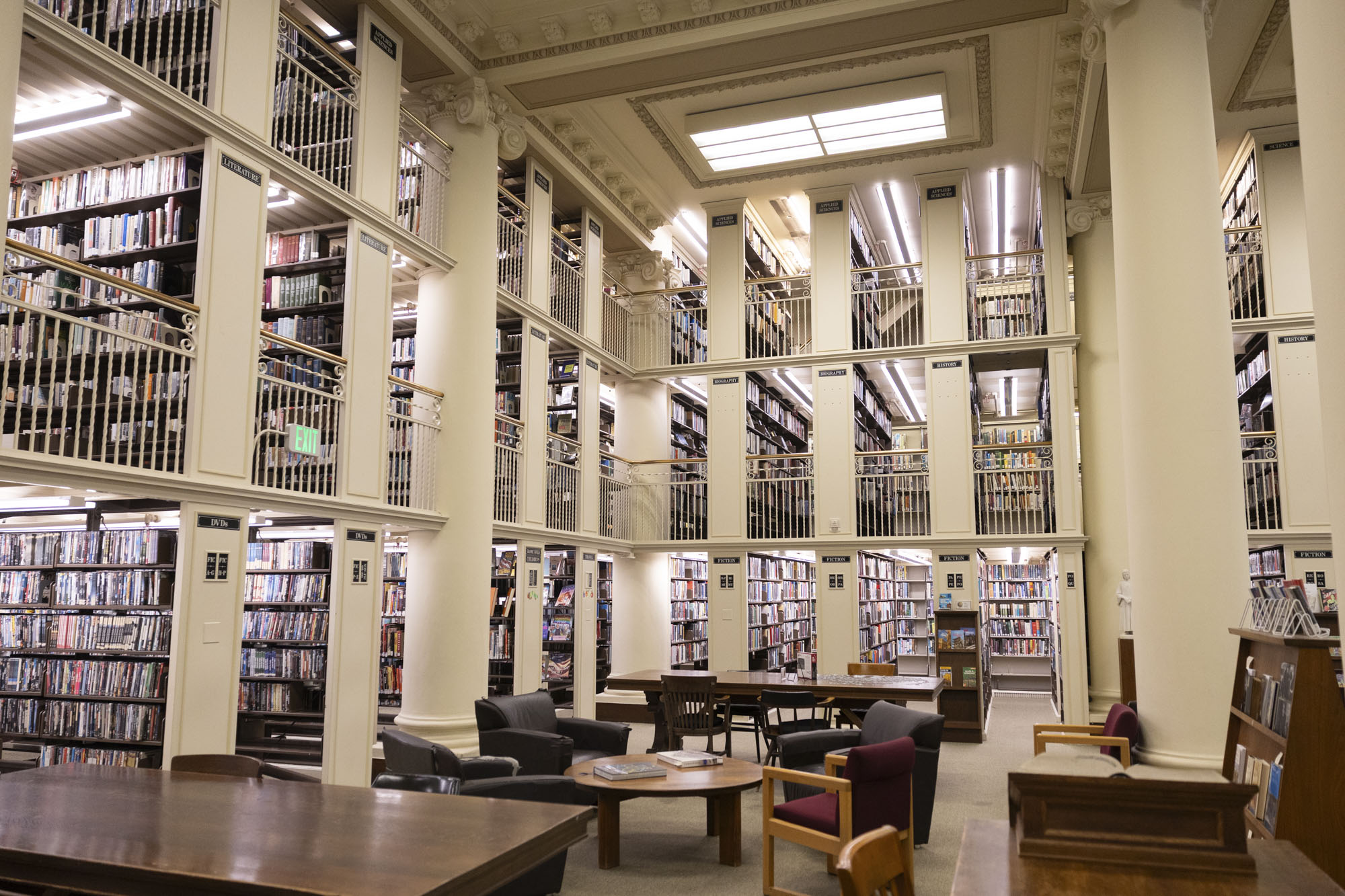 The Mechanics’ Institute Library in San Francisco on Aug. 14, 2026. (Nina Glick/KQED)
California does have some protections against these campaigns. In 2024, the state adopted a Freedom to Read Act, which states that public libraries cannot exclude materials from their shelves based on content like race, gender and sexual orientation.
“It’s not a cure-all. It doesn’t mean that, ‘Okay, there’s no more censorship in California,’” the American Library Association’s Lamdan said. Rather, “there’s a tool to push back on censorship attempts,” she said.
But in many other parts of the country, the book banning movement has only strengthened — especially after the Supreme Court’s Mahmoud v. Taylor ruling in 2025 that a group of parents’ freedom of religion was violated when they couldn’t opt their children out of a class that included LGBTQ storybooks.
“What is so stunning about that decision is that it has this potential to have such a broad censorship effect on the very books that we know can have such a powerful positive impact for many young children,” Friedman said.
‘Able to see themselves’
Libraries are intended to meet the needs of their communities, Lamdan said — and are supposed to have an array of books that touch every person.
For her, the Mechanics’ Institute’s motives for acquiring Tarpey-Schwed’s collection show “exactly why censorship in libraries is so harmful.”
“Everybody deserves to see themselves reflected in stories and to see themselves reflected in library collections,” she said.
Making sure children feel seen is a major motivating factor for the works written by Half Moon Bay author Cynthia Chin-Lee — compounded by her experience as an Asian American growing up in the 60s with little to no representation in the stories around her.
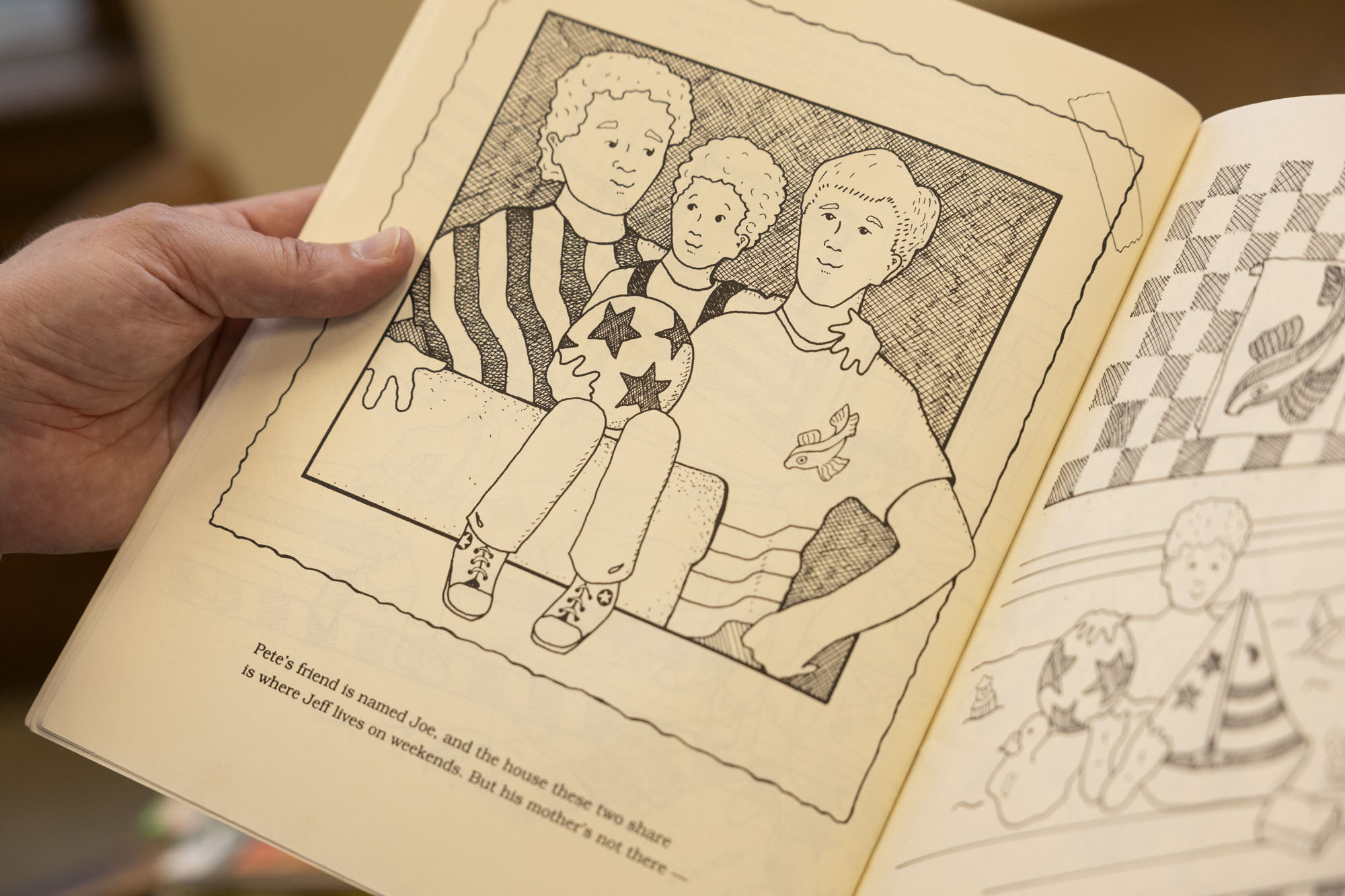 Myles Cooper, library manager and archivist at the Mechanics’ Institute, flips through the pages of The Generous Jefferson Bartleby Jones, a book published in 1991, which is a part of the institute’s Tarpey-Schwed LGBT Families Children’s Book Collection, at the Mechanics’ Institute in San Francisco on Aug. 14, 2026.
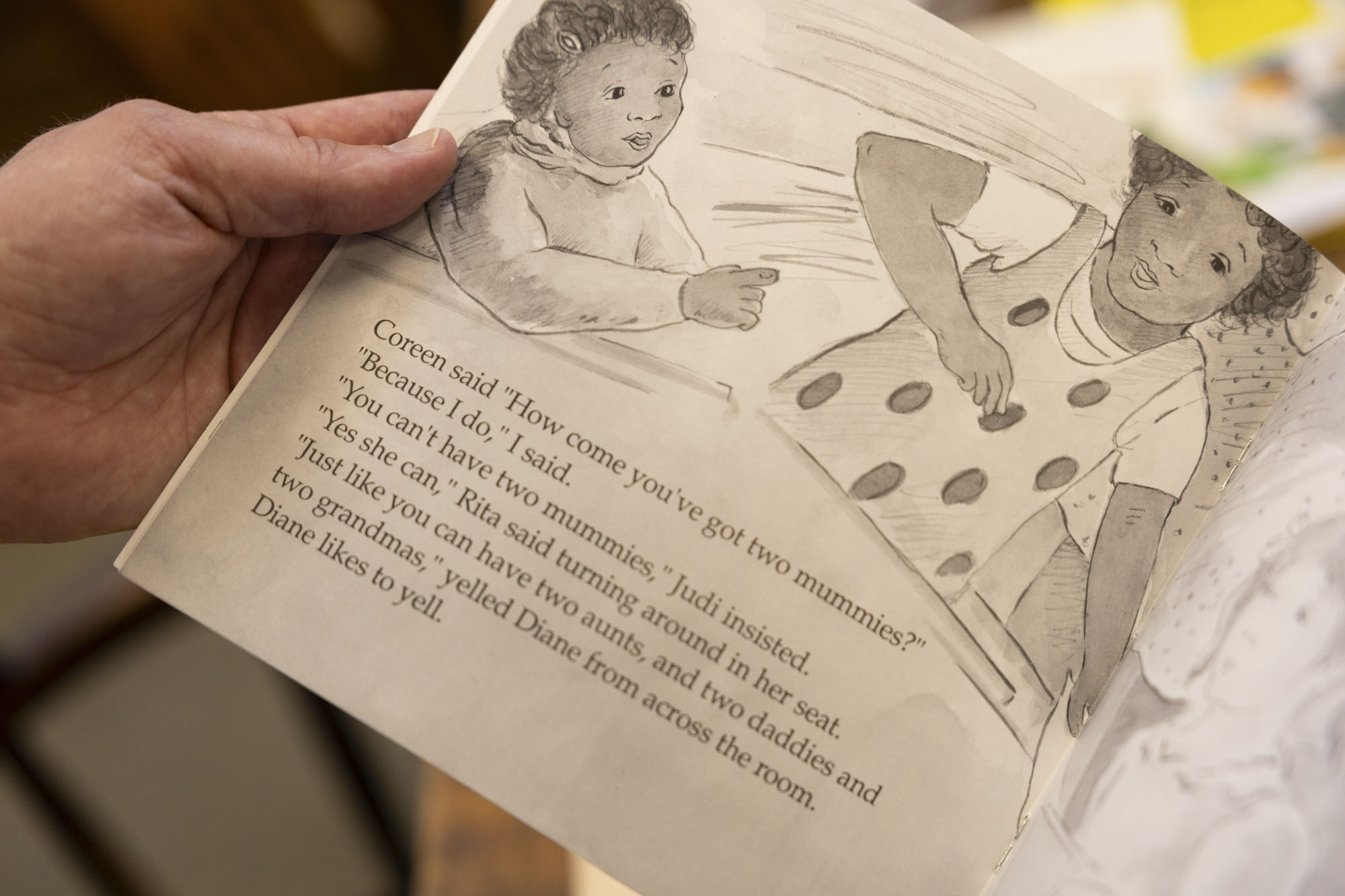 Myles Cooper, library manager and archivist at the Mechanics’ Institute, flips through Asha’s Mums, a book published in 1990, which is a part of the institute’s Tarpey-Schwed LGBT Families Children’s Book Collection, at the Mechanics’ Institute in San Francisco on Aug. 14, 2026.
Her picture book “Operation Marriage”, which features in the Mechanics’ Institute Tarpey-Schwed collection, follows Alex and her younger brother Nicky, who are trying to convince their moms to get married before the passage of Proposition 8 — the California law that banned same-sex marriage in 2008, which was ultimately struck down a few years later.
Chin-Lee said it’s based on a true story about a family who attended her church in Palo Alto. In fact, the making of the picture book was a community effort: People from the church even posed for pictures, which were then illustrated by local artist Lea Lyon, she said.
But in 2023 — well after the legalization of gay marriage nationwide — “Operation Marriage” was challenged by a Midland, Texas county commissioner and a group of volunteers who wanted to remove it from the shelves of the children’s section of a public library and into the adults’ section.
“We have freedom of speech, freedom of writing, and the kids that are LGBTQ especially need our support,” she said. “They need to be able to see themselves in books.”
These books also play a role for parents. The Hoffmans’ first book about Jacob — “Jacob’s New Dress” — depicted a little boy who wants to wear a dress. It was based on their son Sam, who, as a kid, “liked all things that were pink and girly and sparkly” and asked to wear a dress to school when he was four, Sarah Hoffman said.
“That was when we faced our first issue as parents, because we wanted to let Sam be himself,” she said. “And clearly this was coming from him, because nothing around him said little boys should like these things.”
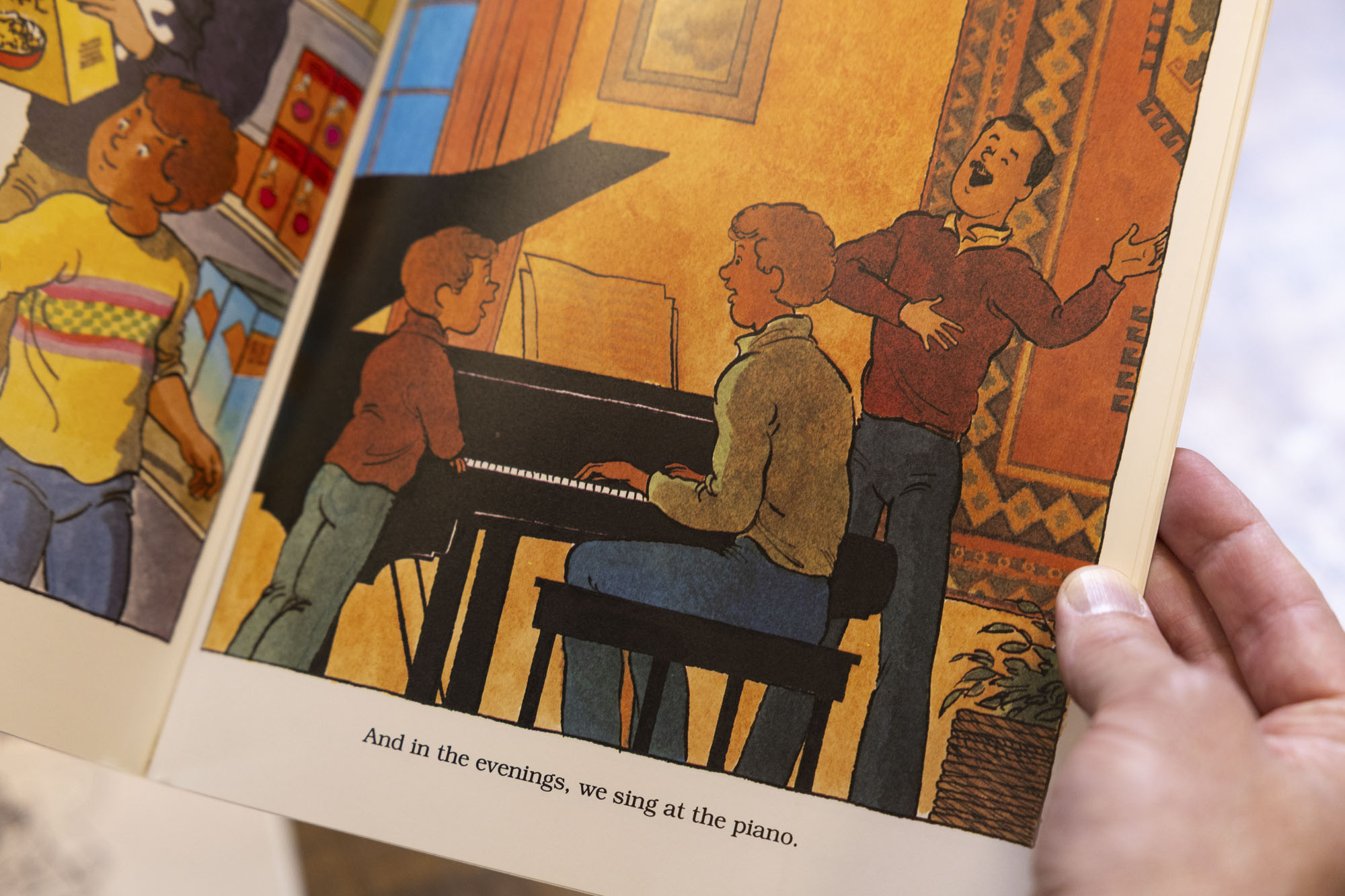 Myles Cooper, library manager and archivist at the Mechanics’ Institute, flips through the pages of Daddy’s Roommate, a book published in 1990, which is a part of the institute’s Tarpey-Schwed LGBT Families Children’s Book Collection, at the Mechanics’ Institute in San Francisco on Aug. 14, 2026. (Nina Glick/KQED)
While they were the only parents in Sam’s school navigating this, they connected with other parents online all over the world who also had gender non-conforming kids.
“Everyone felt alone until they found this group, and suddenly we had community,” Hoffman said. “We realized that we all face the same kinds of issues.”
The collection is already acting as a historical reference — and source of inspiration — for the field’s writers too. Like San Francisco children’s book author Marcus Ewert, the writer of “10,000 Dresses,” about a young trans girl named Bailey. For Ewert, the archive functions as a trove of the genre’s pioneers.
“Oh my God, I wanna spend hours and hours and hours just looking at all these things,” he said. “As little time capsules, as little pieces of history.”
‘Profound effects’
Along with being a resource for early examples of LGBTQ children’s literature, Tarpey-Schwed said he hoped that more titles and examples will continue to be added to the collection.
The children’s publishing world in the past few years has seen a major wave of inclusive literature, partly thanks to industry-wide initiatives like the We Need Diverse Books campaign.
“It was hugely successful in getting all these stories out there that weren’t being told,” Ian Hoffman said. But the backlash to the campaign was also swift — and he admitted the last few years have felt “bleak.”
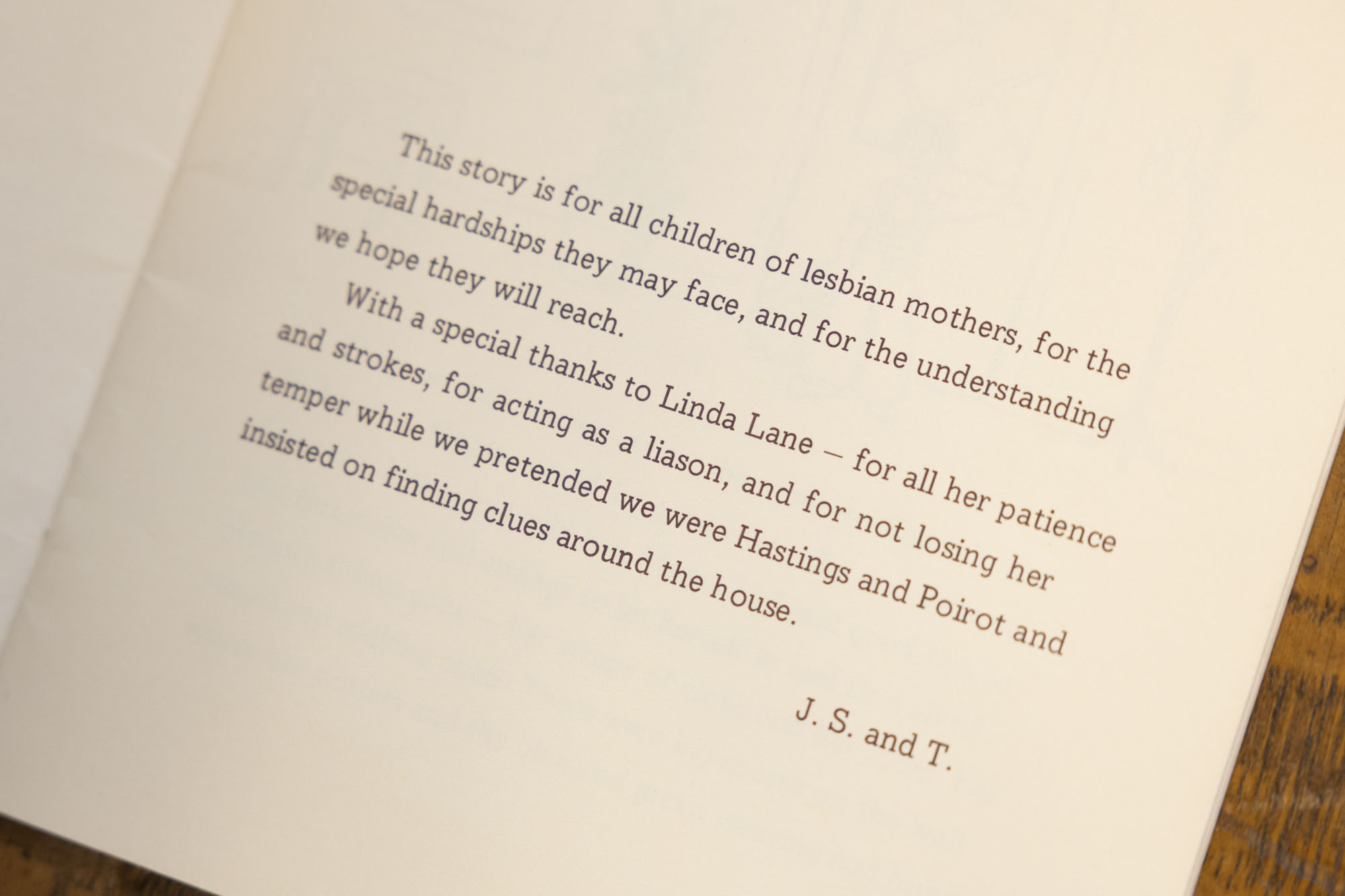 The authors of the 1979 children’s book When Megan Went Away dedicate the book to children of lesbian mothers. The book is a part of the institute’s Tarpey-Schwed LGBT Families Children’s Book Collection.
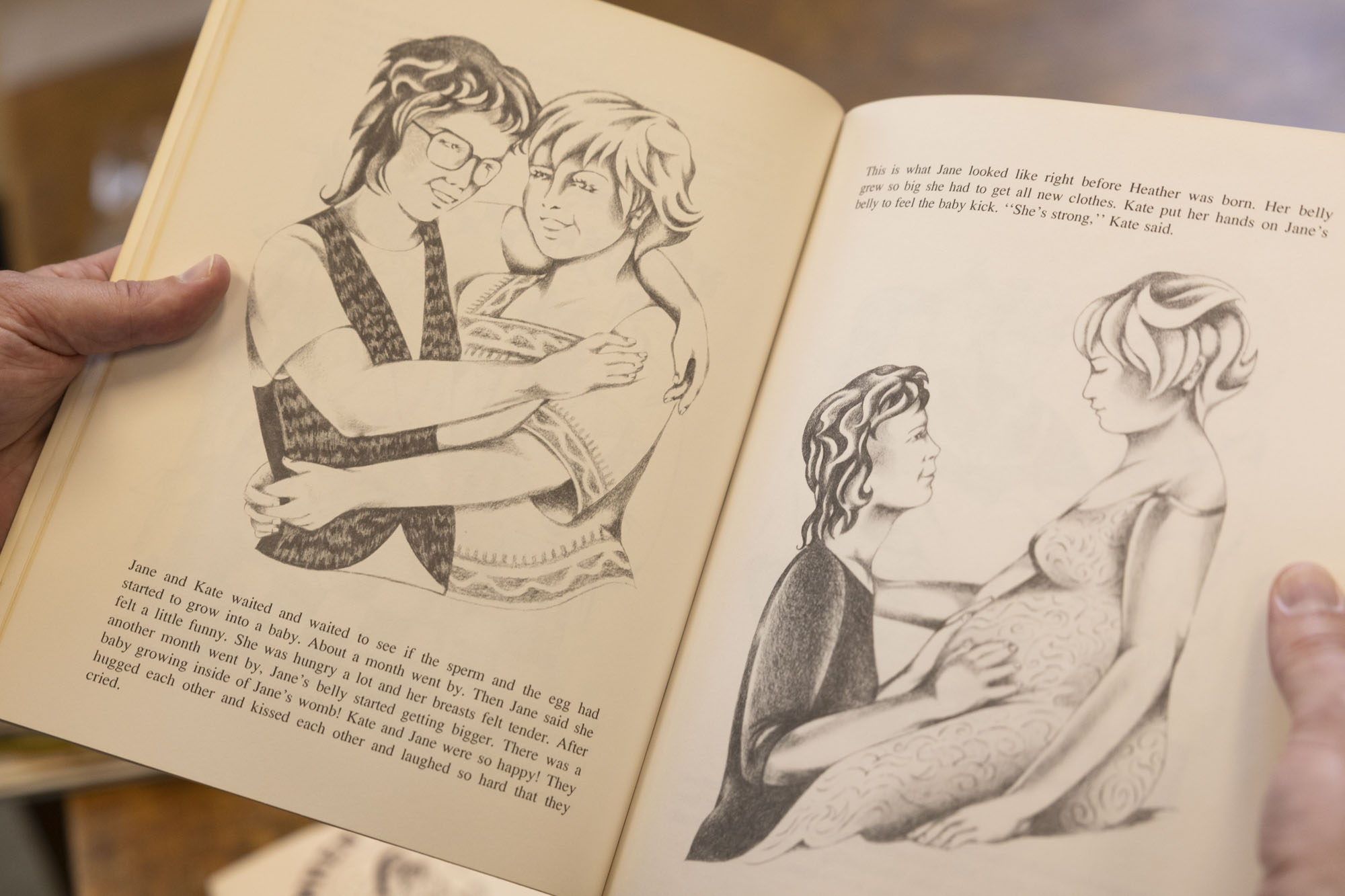 Myles Cooper, library manager and archivist at the Mechanics’ Institute, flips through the pages of a 1989 self-published version Heather Has Two Mommies, which is a part of the institute’s Tarpey-Schwed LGBT Families Children’s Book Collection, at the Mechanics’ Institute in San Francisco on Aug. 14, 2026.
But his wife, Sarah Hoffman, had some optimism. “We can temporarily go back, but you can’t change the fact that these books have existed,” she said.
For Mechanics’ Institute archivist Cooper, the collection has been an exciting opportunity to learn more about children’s literature. Most people in his 40s like him, or older, have never experienced queer picture books.
“[We] didn’t grow up with these kinds of stories,” he said. “I think that really does affect children … When they’re thinking about their life, what’s it going to be like? ‘I never pictured having a family, because I didn’t see that reflected in literature.’”
“This can really have profound effects on children today,” Cooper said.