

San Francisco State University has halted work authorizations not required for graduation for international students after ICE warned that improper approval processes will result in the termination of the university’s international programs.
SFSU’s Division of International Education received the warning from the Student Exchange and Visitor Program, which falls under the jurisdiction of ICE, in an August 24 memo. The message read “SEVP has observed a rise in Curricular Practical Training (CPT) authorizations that appear to violate regulatory requirements” and “failure to comply with SEVP regulations may result in an institution losing certification to enroll foreign students.”
International students attending SFSU on F-1 status are allowed to live and study in the U.S., but are generally prohibited from working off-campus without employment authorization. One avenue for obtaining authorization is CPT, which allows eligible students to participate in temporary off-campus employment directly related to their field of study and integrated into their academic program.
The Trump administration has been vocal about universities abusing their power by authorizing CPTs that allow non-qualifying international students to be employed. The warning from the SEVP comes on the heels of a broader review of visa holders in the U.S. by the State Department under the administration.
After receiving the SEVP memo, SFSU’s DoIE sent a message to the international student body informing them that it would no longer approve most CPT requests. The university will continue authorizing CPT when an internship is a mandatory part of a student’s degree program.
“We promptly notified our entire F-1 international student population and communicated our decision to pause authorizations. We also notified deans and did a special outreach to department chairs in academic programs with a large number of CPT applicants,” Jackson said. “The decision to pause authorizations was not made lightly and was done to protect both our students’ legal status and the university.”
According to Dr. Marilyn Jackson, the vice president of the DoIE, the pause in CPT authorizations came as a result of advice from SFSU’s general university counsel.
While the DoIE awaits further guidance from the California State University Chancellor’s office, Jackson says that she and the rest of the department’s faculty have committed themselves to assisting international students who are unsure of their futures. Among those stuck in the in-betweens is Yu Wathan Aung, a fourth-year child and adolescent development major from Burma.
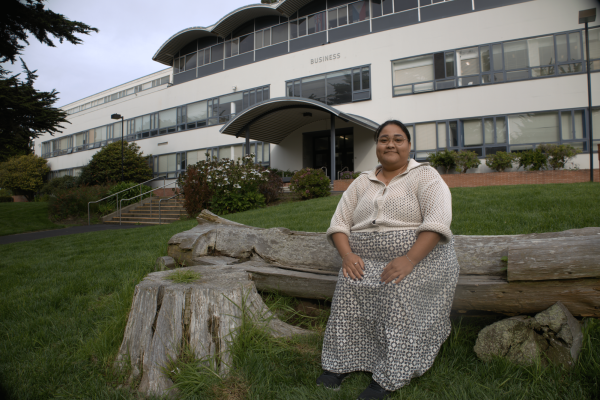 International student Yu Wathan Aung sits outside the Business building on Thursday, Aug. 27, 2026. (Chad Church / Golden Gate Xpress) (Chad Church)
“I want the experience on my resume. Let’s just not say it’s not about the money; of course it’s always about the money, but it’s about being able to put ourselves in the market,” Aung said. “We all want to get a job after we graduate. That’s the whole point of us investing tens of thousands of dollars in a college education, right? To ultimately culminate in a career, and if you’re not gonna let us build a career throughout the college years, then why am I in the US? Why am I paying your country?”
According to Aung, the DoIE office had just recently assured students they would be able to apply for CPT.
“Last Thursday they were like ’Yeah, CPT is still in effect. We’re accepting applications’,” Aung said. “Both the UCs and the CSUs decided to cave after a day of the [SEVP] announcement, and then they all just decided all together to put [CPT] on hold, which is very disheartening for us, especially to receive this news on the first day of school.”
Without the ability to secure a stable job, Aung reports that some international students she knows are forced to work under-the-table jobs that are prone to exploitative practices.
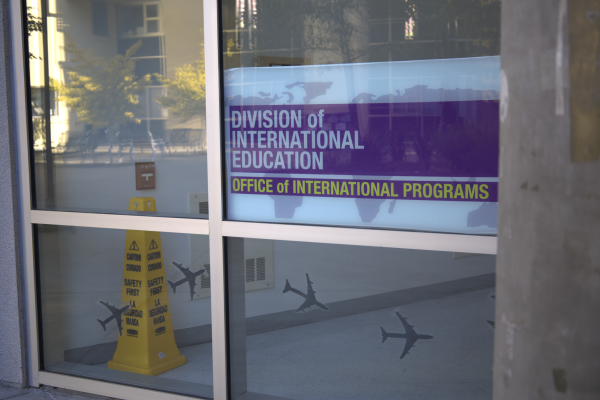 The office for the Division of International Education on Friday, Aug. 28, 2026. (Chad Church / Golden Gate Xpress) (Chad Church)
“I’ve had friends who were subjected to a lot of verbal harassment,” Aung said. “They’re not given any proper compensation, like sick leave or paid time off.”
California labor laws require that employers provide workers with 40 hours or five full work days of paid sick leave per year. Employers are not legally required to provide vacation time to employees.
The president’s office Director of Communications Bobby King was contacted for comment, but was unavailable. King forwarded Golden Gate Xpress to Strategic Marketing and Communications media relations specialist David Knutson, who was asked to comment on the matter. Knutson was unwilling to make an official statement until receiving further guidance from the CSU Chancellor’s office.
International students with questions or concerns are encouraged to contact the DoIE office at [email protected] for guidance.
A correction was issued to clarify that Knutson is not affiliated with the president’s office.