
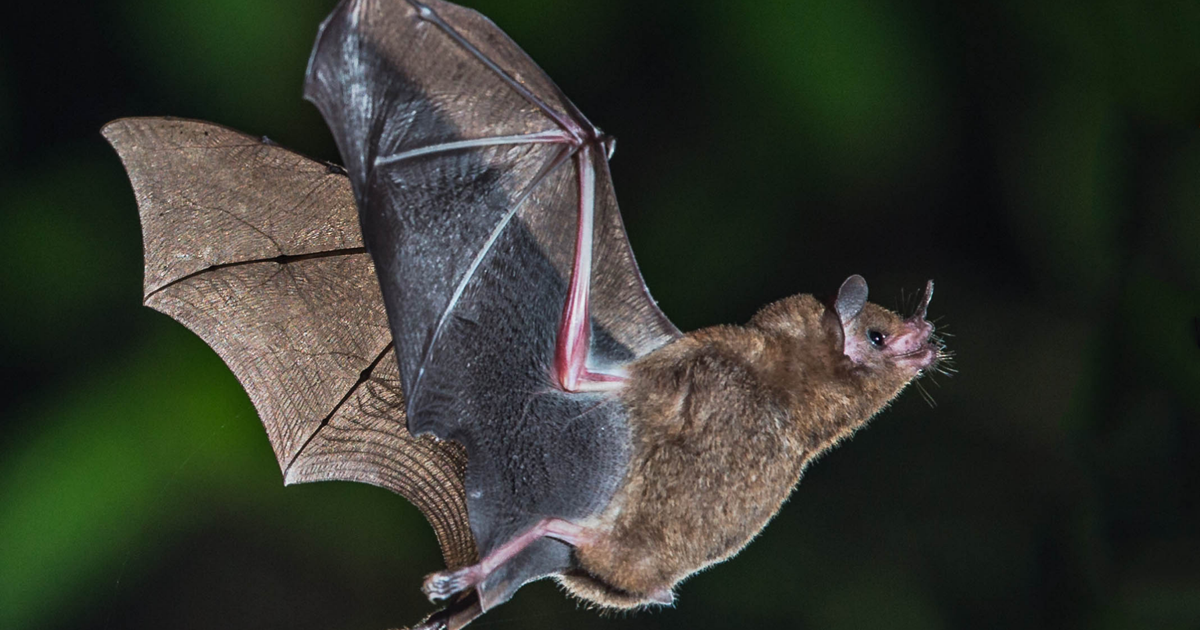
Rabies has been detected in five bats in Berkeley this year, according to a report by the city’s Health, Housing, and Community Services Department. This marks an increase from an average of zero to two bats found with rabies per year, observed from 2020 to 2025.
Scott Gilman, director of the Health, Housing, and Community Services Department, said the bats were confirmed to be rabies-positive in cooperation with the Alameda County Vector Control Services District, which aims to reduce the spread of diseases carried by wildlife.
“They let us know every time that there’s a bat picked up that’s gone for testing that comes back positive,” Gilman said. “The main reason that we wanted to get this out there is that a lot of people (aren’t) aware that even having a bite or a bat in your house can be a problem.”
Rabies passes from animal to animal and is almost 100% fatal after the onset of symptoms, but is nearly 100% preventable with immediate medication. Outside Berkeley, a cat contracted rabies in Alameda County this year.
The bats were discovered between January and April this year around West and North Berkeley: two around University Village, one at an intersection in front of Martin Luther King Jr. Middle School in North Berkeley, one at Sixth and Delaware streets in West Berkeley and one in the Northside neighborhood at Hilgard and Scenic avenues.
Gilman said local health providers were given formal notice about increased rabies prevalence.
“One of the reasons why we put the alert out to physicians is we want them to know that there (is) rabies in the area,” Gilman said. “If they have a patient that calls them and says, ‘Hey, there was a bat in my bedroom this morning, or worse, it was laying on my pillow and scared the heck out of me,’ the doctor can have that information to make their decision on what they want to do.”
About 200 animals are found with rabies statewide every year. Gilman said the unusually high number of rabid animals in Berkeley alone provoked the city to alert medical providers and the public.
Bat bites are small and easy to miss, the report says, adding that bats make up about a third of total animal rabies cases and are the origin of more than 80% of fatal human rabies cases in the United States since 2000.
“That is what the alerts are about, just to remind medical providers that there (is) rabies in the area,” Gilman said. “What we want people to know is that if you do wake up in the morning, and you have a bat in your house, you need to talk to your doctor, and you need to call county Vector (Control) to come and pick the bat up so it can be tested.”