
The California Legislature has adjourned for the year. But a key debate remains unresolved, as the Assembly in a last-minute move Tuesday morning killed the contentious wildfire bill.
What was understood to be a three-party agreement with the Governor, Senate and Assembly is off the table now. It remains unclear if Governor Gavin Newsom will call a special session on the matter. He has repeatedly declined to rule it out.
Both the Assembly and Senate reconvened Tuesday morning for their final day of session. Unresolved matters included what’s known as a budget bill junior, as well as the wildfire bill, Senate Bill 492.
But right before the Assembly was set to vote on SB492, they abruptly broke into Democratic caucus for about an hour. Sources tell ABC10 conversations were being exchanged, as the lower chamber did not have enough votes to pass SB492 and get it over to the Senate.
Ultimately, the lack of votes did not change, and the Assembly did not vote on the matter, effectively killing the bill.
“Wildfire survivors, they did not lose their homes so Sacramento could settle for half measures,” said Assembly Speaker Robert Rivas on the floor, explaining the decision.
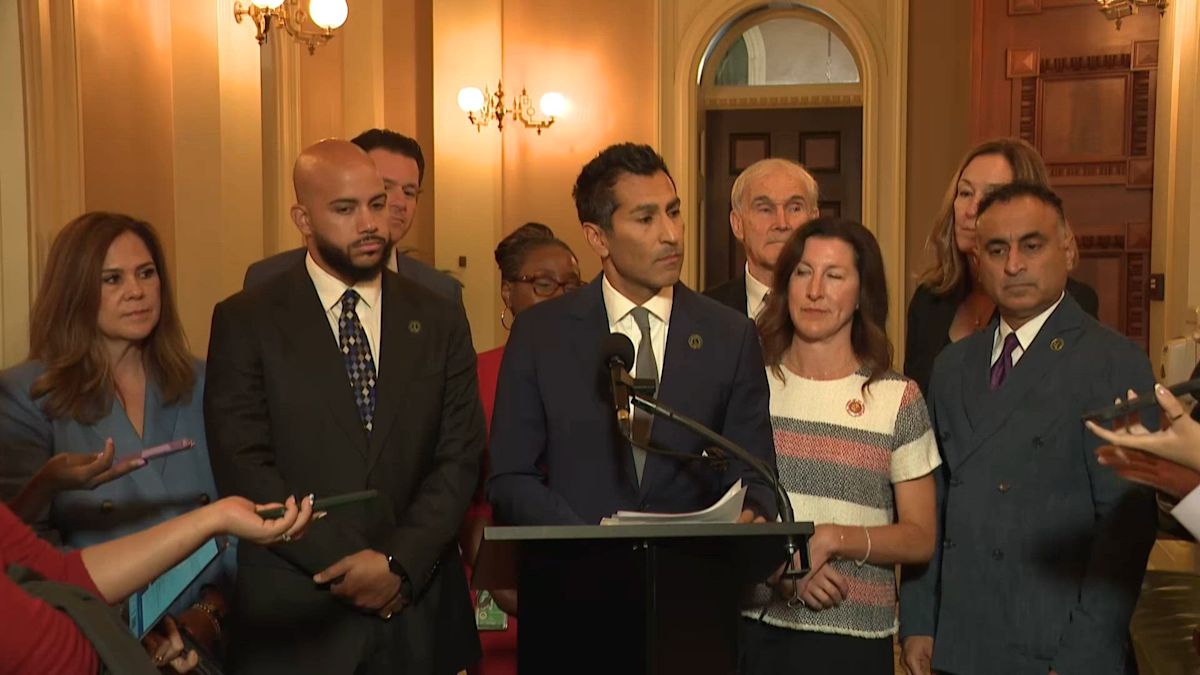
Rivas added despite the weeks and weeks of debate among the three parties, “But the proposal before us, from our governor, it did not deliver the support, the accountability that wildfire victims deserve and that Californians deserve.” Rivas, alongside other Democratic assemblymembers, including Cottie Petrie-Norris, one of the bill authors, spoke to press afterwards.
ABC10 asked if the Legislature’s discomfort in voting for the bill should indicate to Newsom he should not call a special session and rush reform in his remaining four months in office.
To which Rivas responded, “You know if the governor calls a special session, we’re ready to stand up and serve.”
Petrie-Norris stated, “Only the governor can call a special session. We are digging in and doing this work regardless. You’ll see us announcing a series of hearings. We are going to be asking agencies for additional information and data that we think we need to craft the right policy.”
State Senator Josh Becker, the lead bill author, said in a statement, “it is deeply unfortunate” the bill did not advance. “We have spent months listening to wildfire victims, working through difficult issues, and bringing together stakeholders, legislators, and the Governor around reforms that could make a meaningful difference now. We have heard directly from wildfire survivors, and they are hurting. Families have lost their homes, their livelihoods, and their loved ones. Many are still struggling to rebuild and waiting for the compensation they need to move forward with their lives. They need relief. This delay only prolongs their suffering …”
Senate President Pro Tempore Monique Limón also noted disappointment, reacting in a statement, “After extensive negotiations and a three-party agreement on a path to provide victims with fast and fair pay after devastating wildfires, prohibit bonuses for C-Suite level executives when their investor-owned utility sparks a wildfire, and block speculative hedge fund involvement in claims, it is unfortunate that SB492 was not given a vote. Thousands of survivors made their voices clear — they needed reform to ensure the next wildfire does not continue to cause the mental and financial stress that recent disasters have placed on Californians. We stand ready to take this on in 2027 to ensure wildfire survivors are protected, that our state has the tools it needs to tackle mitigation, and that the voices of everyday Californians are heard.”
Governor Newsom made a pit spot Monday afternoon at the Capitol, saying hello to legislators in both the Senate and Assembly chambers. He briefly spoke with reporters about how wildfire conversations were going as of Monday afternoon. But he also reiterated his desire to establish some reform to the status quo before he is termed out in January.
“However we can problem solve. I’m all in, sleeves rolled up to solve this … I could’ve easily walked away from it, and that would’ve been a disservice to you and the people of this state,” Newsom told reporters when repeatedly pressed on whether he would call a special session.
The sticking point had been subrogation, which is the ability of insurance companies to be reimbursed by the third party responsible — utilities. Newsom wanted to eliminate it; the Legislature did not, out of concern that could destabilize the state insurance market.
The elimination of subrogation was not in the final wildfire bill, which many legislators and survivors celebrated.
But with news of that continued financial liability for utilities, the stock market value of California’s three major investor-owned utilities dropped significantly. The numbers jumped back up following news SB492 had died.
Speaker Rivas denied the decision to kill the bill Tuesday had anything to do with market impact.
PG&E, Southern California Edison and San Diego Gas and Electric had all submitted letters of concerns over how financial instability affects their credit ratings. The utilities noted if it becomes more expensive to borrow money as a result, it’ll be more difficult for them to invest in clean energy infrastructure demanded in the state.
“The utilities, their ratings are all going to be downgraded, meaning that it’s going to cost more money for them to borrow money to buy infrastructure, meaning that all our rates are going to go up as well,” explained Republican Assemblymember Joe Patterson.
Patterson has been part of the greater wildfire liability conversation with his own bill, AB2700, which seeks to fully compensate victims. That bill is on the Governor’s desk.
Governor Newsom, however, has repeatedly expressed concerns over market instability.
“I don’t know what more evidence that you need today with the markets reacting as they have,” Newsom said Monday.
Newsom in response to SB492 failing to pass said, “If we are to maintain our status as one of the world’s great economies, California cannot settle for half measures. We need comprehensive structural reform to protect the state from catastrophic fires, prioritize wildfire survivors, hold utility executives accountable, and provide reliable, affordable power to all Californians. The reforms in this bill, while important, did not address the underlying structural problems driving this crisis, as the initial market reaction this week demonstrates. Simply put, this measure did not meet the gravity of this moment. The only solution is to return to fix the entire problem, not part of it. The chaos we have seen was clearly laid out in the SB254 report, which said: ‘Failure to act, or a conscious decision not to act … will have large near-term and severe long-term adverse consequences for Californians.’ That is why we have been working for two years to enact comprehensive reform. Californians are relying on us to keep the lights on — they cannot afford for us to fail.”
PG&E declined to comment, other than their initial letter of concern.
A spokesperson for SCE stated, “We appreciate the efforts of both Governor Newsom and the Legislature to address California’s wildfire challenge. at the same time, Californians need durable comprehensive policy that places wildfire survivors first protects communities and strengthens the safety resilience and reliability of the energy system.”
A spokesperson for SDG&E stated, “California’s climate-driven wildfire challenges are too important to leave unresolved, and it is critical that policymakers develop a sustainable structure for wildfire survivors, customers and communities across the state. The need for comprehensive, long-term solutions has not changed. SDG&E remains committed to working with policymakers and stakeholders to advance reforms that help wildfire victims recover more quickly, strengthen community resilience, protect customers from unnecessary costs and support a safe, reliable and resilient energy system.”
There are several survivor and survivor advocacy groups weighing in with mixed reactions.
Joy Chen with Every Fire Survivor’s Network, a coalition of more than 10,000 Los Angeles wildfire survivors, said in response, “SB492 was a negotiated leadership compromise. Now it is dead because the utilities wanted even more. They would rather kill the bill than accept a compromise that rejected the bailout they sought … California does not need to restore Wall Street’s confidence in Edison and PG&E. Edison and PG&E need to earn it by making California safer.”
On the other hand, William Abrams with the Utility Wildfire Survivor Coalition, a grassroots organization representing thousands of California wildfire survivors, has been opposed to SB492.
Abrams expressed concern over a specific part of the bill: the creation of a fast-pay program for victims. This would’ve created a streamlined claims process in which eligible victims could submit documentation, have their claim reviewed within 60 days and receive a settlement offer within another 30 days. They would still have been able to reject that offer and pursue litigation.
Abrams stated while the program sounds nice, survivors should not be pressured into any early settlement decisions before a thorough investigation of the fire is done and a report on the cause is produced.
Abrams also noted he was concerned about potential utility interference in post-fire investigations as a result.
Meantime on the state Senate side, Sen. Ben Allen, the chair of the Energy and Utilities Committee, candidate for California Insurance Commissioner, as well a representative for several Los Angeles areas affected by wildfires, said, “I think the Senate would’ve likely passed it.”
Watch more: SB 492 explained: How California’s wildfire liability rules would change