
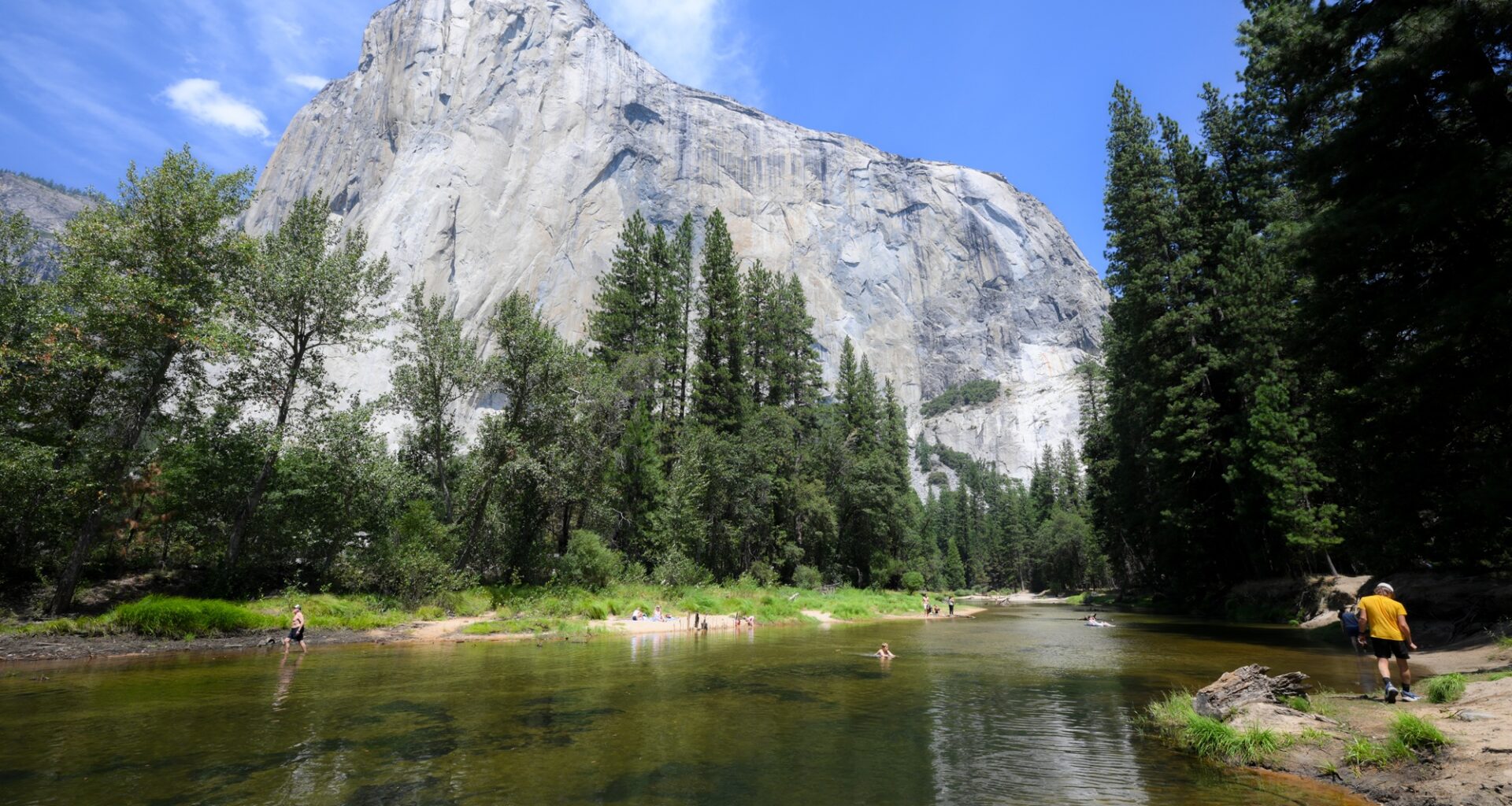
Backlash against a proposed deal to develop a private road into Yosemite has intensified as National Park Service employees grapple with an uncertain future.
Sep 2, 2026
Updated 4:36 pm PT
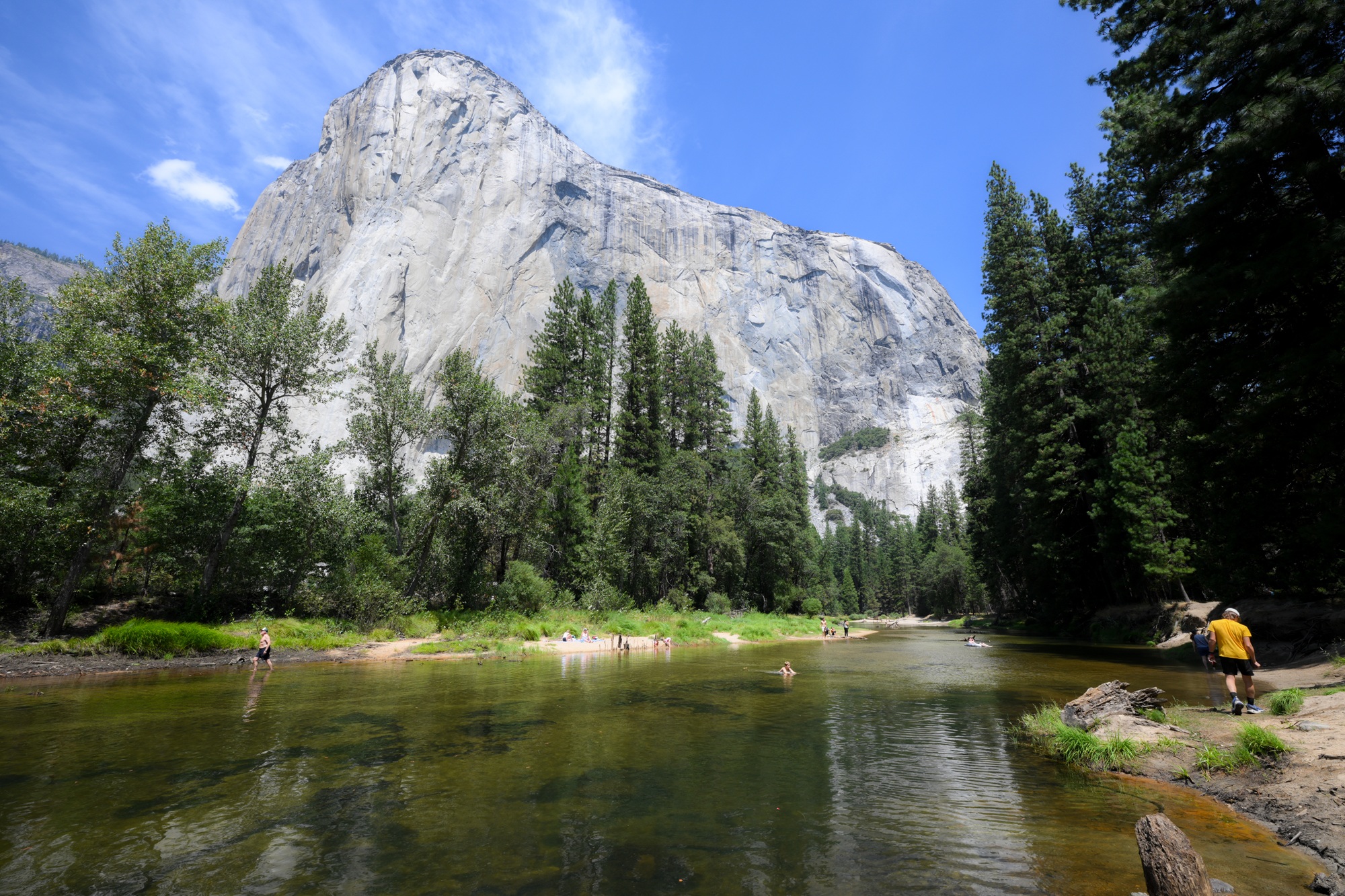
A view of El Capitan as tourists visit Yosemite National Park during warm weather in California on Aug. 14, 2026. (Tayfun Coskun/Anadolu via Getty Images)
A group of California lawmakers called on federal officials to halt and reject a proposed land exchange in Yosemite National Park that would allow a private developer to take control of a strip of land in the park for an access road to the park’s main attractions.
The letter to Department of the Interior Secretary Doug Burgum on Wednesday was signed by a bipartisan group of 61 state legislators led by Assemblymember Greg Wallis, a Republican who represents Riverside and San Bernardino counties.
“Republicans and Democrats from both houses of the Legislature are standing together because some things are bigger than politics,” Wallis said in a statement. “Yosemite is not a subdivision. It is not a bargaining chip. And it is not for sale. Secretary Burgum and the administration should put an end to this proposal.”
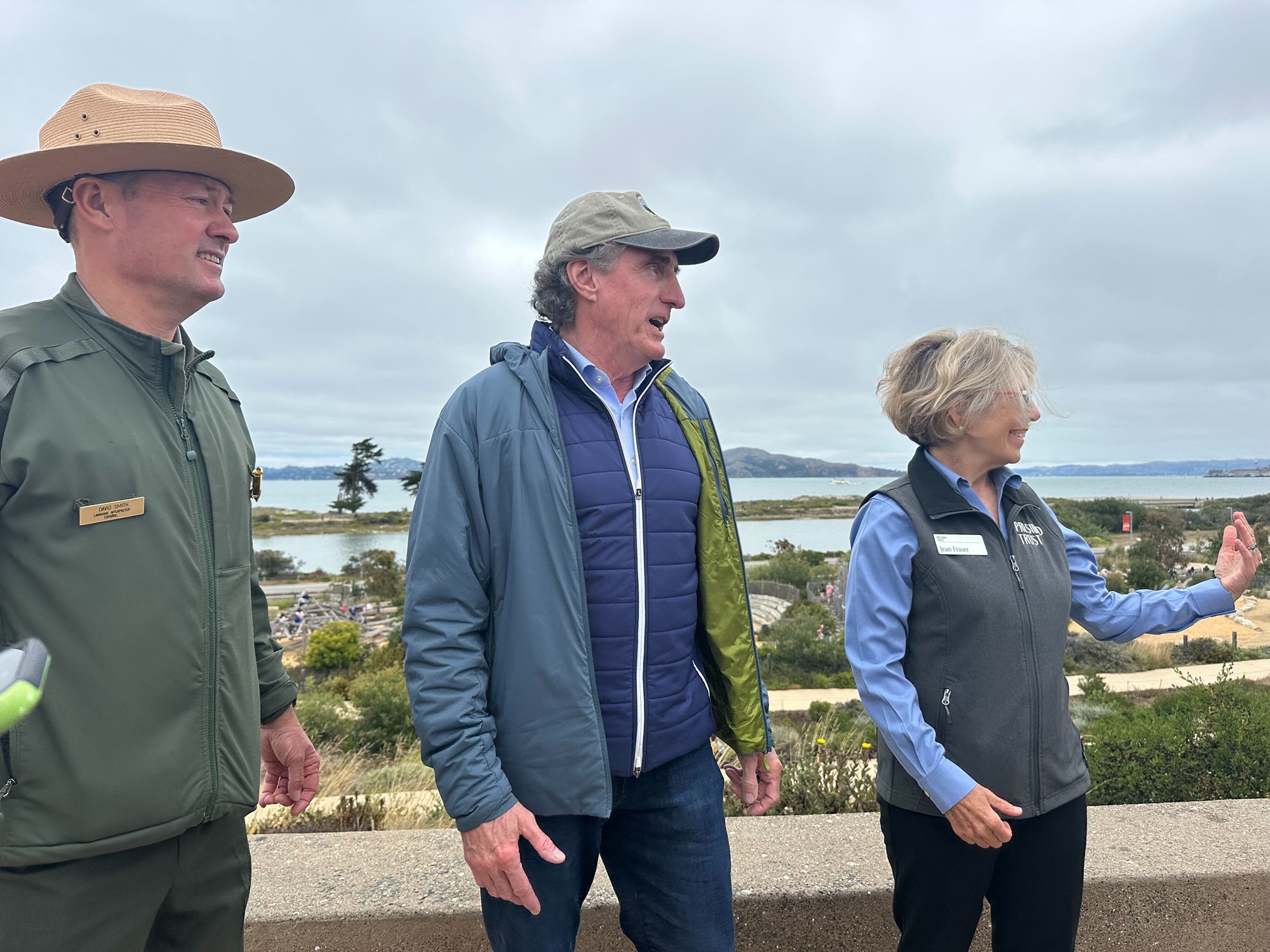 Interior Secretary Doug Burgum (center) visited the Tunnel Tops in San Francisco in 2025 after he and then-Attorney General Pam Bondi toured Alcatraz ahead of their announcement to reopen the former federal prison. (Katie DeBenedetti/KQED)
The group argued that the proposed land exchange is counter to the mission of the National Park Service and the founding of Yosemite in 1864, which set aside the start of the park for public use and protection for the first time in the history of the federal government.
“What is being proposed now runs directly against that founding principle, more than a century and a half later,” the letter states.
It continues later: “Our national parks belong equally to every American. They are not the Department’s to trade away, and they are not for sale.”
The proposal was first reported by news outlet NOTUS, which published a story last week alleging that members of the Trump administration were meeting with representatives of Kingsbarn Realty Capital, a private equity group that owns an 83-acre parcel next to the park. In an email to KQED, Kingsbarn’s lawyer Lanny J. Davis confirmed the group is pursuing the land exchange to build a new access road from its property to the park.
In a statement to KQED, state Sen. Marie Alvarado-Gil (R-Modesto), whose district includes parts of Yosemite, said she will “keep pressing the Department [of the Interior] for a clear answer that this exchange will not proceed.”
Since the news of the deal broke late last week, it has sparked condemnation from a number of Democratic state leaders, including Sens. Alex Padilla and Adam Schiff, as well as Attorney General Rob Bonta and Bonta’s predecessor, Xavier Becerra, who leads the race for California governor.
 People demonstrate during a protest against federal employee layoffs at Yosemite National Park, California, on March 1, 2025. (Laure Andrillon/AFP via Getty Images)
“The secretive backroom land-exchange scheme has gotten everyone’s attention,” said Neal Desai, senior Pacific regional director of the National Parks Conservation Association. “I can’t recall another issue — and I’ve been working in the conservation space for over a couple of decades — where the response has been this sharp and so one-sided that this is a terrible idea that should not happen.”
The backlash comes at a turbulent time for National Park Service employees, who have faced layoffs, staffing cuts and fear of retaliation for speaking up against Trump administration policies since the start of the second Trump administration.
Some former employees have also raised concerns about a potential reorganization of the National Park Service, according to a separate letter sent to Burgum’s office Wednesday. According to an email seen by KQED, park superintendents have been asked to attend in-person regional meetings in September — with no clear agenda beyond discussing “agency priorities, our FY 2026 outlook, and other matters important to the work ahead.”
The letter to Burgam, signed by 20 retired parks superintendents warns: “An ill-advised and hastily planned reorganization could dismantle that structure, putting our parks — and those who visit them — at great risk.”
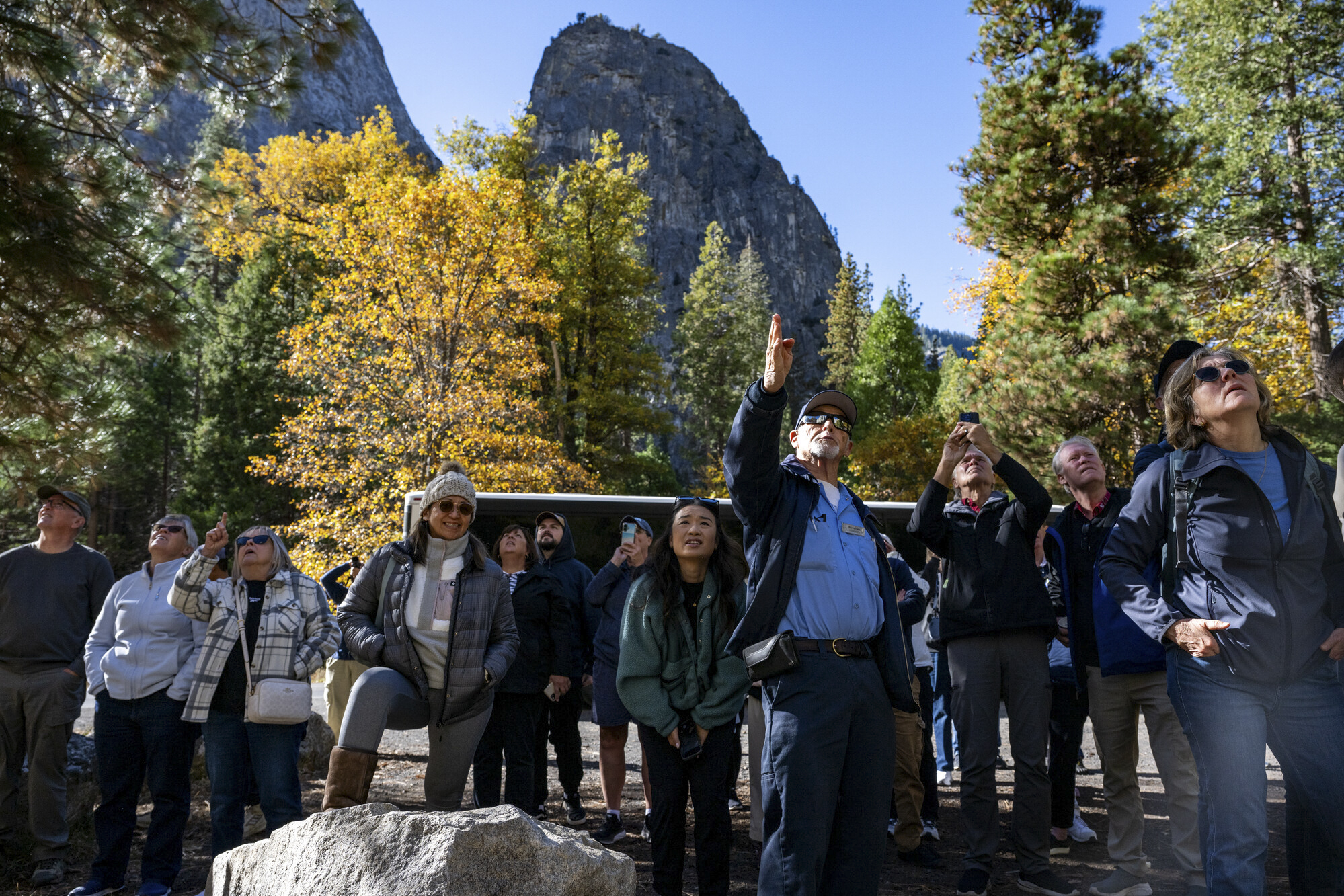 Tour guide William Fontana points visitors to climbers on El Capitan during a tour of the Yosemite Valley in Yosemite National Park in the Sierra Nevada Mountains on Oct. 28, 2025. (Beth LaBerge/KQED)
Emily Thompson, executive director of the Coalition to Protect America’s National Parks, which organized the letter, said the email about regional meetings “raises some alarm bells.”
“The Park Service is already operating from a difficult place, from a place of crisis,” she said. “And any additional cuts, any movements or actions that would further jeopardize the capacity of the folks that are left, that’s concerning. It’s worrying, and it’ll have a devastating impact on the Park Service.”
Among the letter’s signatories is Don Neubacher, retired Yosemite superintendent, who has been a vocal advocate for parks amid the Trump administration’s changes.
Thompson said she’s worried parks leaders will be stretched even further than they already are, and local decision-making over parks could be in jeopardy.
“Morale is low,” Thompson said. “It’s a hard time to be a federal employee. Anything that … contributes to this culture of fear, it’s just not acceptable.”