
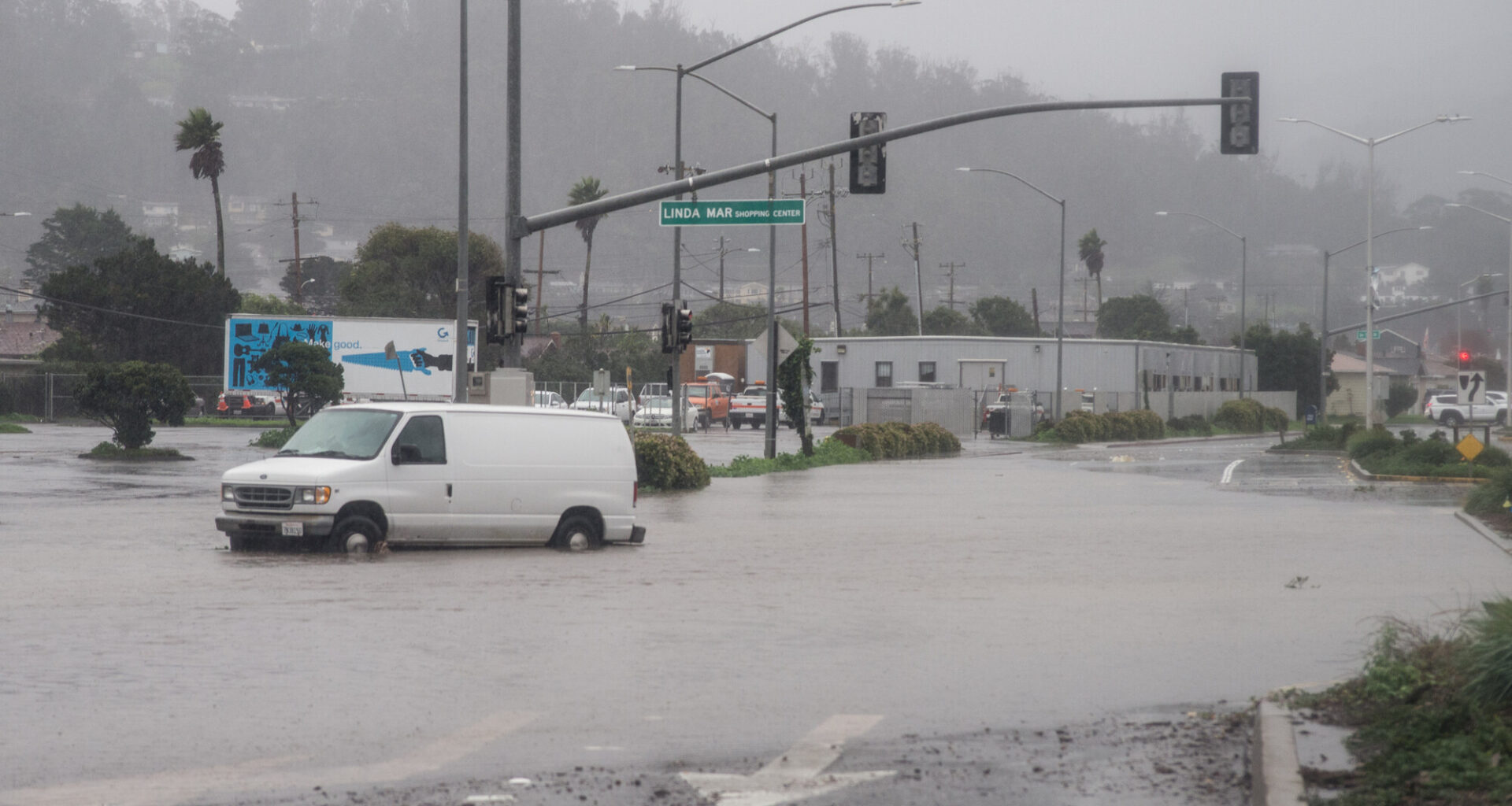
The Bay Area is getting ready for a ‘Super El Niño’ this winter. This natural weather pattern, — made worse by human-caused climate change — could bring flooding, mudslides, power outages and road closures. KQED Climate reporter Ezra David Romero explains how we might feel the impact of El Niño in our day to day lives.
Links:
Episode transcript
This transcript is computer-generated. While our team has reviewed it, there may be errors.
Ericka Cruz Guevarra: I’m Ericka Cruz Guevarra and welcome to The Bay, local news to keep you rooted. Scientists have been warning about a super El Niño this year, which will bring wetter than normal weather to the Bay Area. But what is an El Niño?
Ezra David Romero: Yeah, that’s like the million-dollar question, right? I mean, this is a big scary thing that we see all these headlines about.
Ericka Cruz Guevarra: El Nino weather events have been happening for thousands of years. It’s when tropical winds shift in the Pacific, warming ocean water. And when the ocean warms, it could reshape weather systems, bringing stormy weather to California and disrupting marine life.
Ezra David Romero: Warm water, the ocean, affects how weather happens all around the whole world.
Ericka Cruz Guevarra: Today, what this year’s El Niño will mean for the Bay and how to stay prepared.
Ezra David Romero: You know, officials say that there’s a 69% chance this El Nino could exceed the strength of any El Nino dating back to 1950, that’s when records began.
Ericka Cruz Guevarra: Ezra David Romero is a climate reporter for KQED.
Ezra David Romero: El Nino’s are a natural climate phenomenon. They happen in the ocean, you know, this communication between land and sea. You know, studies indicate that human-caused climate change is creating a warmer, more moisture-related atmosphere, right, like up in the air. And that can, like, intensify the power and rainfall capacity of these modern El Nino events.
Ericka Cruz Guevarra: So, we’re going to have a lot more warmer water along our coast, and broad strokes, how could that then impact us in the Bay Area? What kind of impacts may people feel in their everyday lives?
Ezra David Romero: What this could look like is like your street flooding if you live near the bay. If you live in San Francisco, if you lived in a place where there’s like poor drainage, if there’s a big rainstorm, your street could flood. Water could come from underneath your house into your place. That could also mean like if you’re like on highway 101 and it’s so wet, a mudslide could come in front of you in front your car. Could mean if you are a fisher or a person banking on these crabs or the species to be there and they’re not because of the warm water, like you know, your livelihood at stake. It also could mean like downed trees and things like that in communities, you know, it could mean power outages, but the list goes on and on. So I think that’s why like everyone should prepare for the worst. Like if it means you have a go bag with water and batteries and extra flashlights and some canned food, you know, in your home, there’s just like so many impacts that could be happening.
Ericka Cruz Guevarra: And timeline-wise, when can we expect this El Nino to hit us here in the Bay Area the hardest?
Ezra David Romero: Basically, this fall and winter, there are already effects in the ocean happening now down in Southern California. Like I talked to a scientist this week, he said the ocean water temperatures are already in the mid 70 degrees, ours are around mid 50s. So as we get deeper and deeper into fall and winter, that’s when we could see these effects of El Nino.
Ericka Cruz Guevarra: I want to talk about how this might affect us here in the Bay Area. I’m thinking about a place that you’ve reported on quite a bit, San Rafael, which is also a place in the bay area that has flooded a lot already without El Nino. And it’s also a place. That’s now bracing for what is to come, right?
Ezra David Romero: Exactly. San Rafael is this community up in Marin County. There’s a creek that runs from San Francisco Bay called San Rafael Creek through the town. And that creek is kind of massive. It is built up on all the sides with homes and businesses. This is a place that flooded almost every year during king tides. King tides are one of the highest tides of the year that correlate with the moon. This past January, the King Tide happened that like with these back to back storms. And so the water was extra high and it flooded parts of neighborhoods and businesses.
Derek Bentley: We flooded from the back wall all the way to the bathrooms to here and the karate school dojo went about three to four inches under water.
Ezra David Romero: I met a guy named Derek Bentley back in January. He runs a karate studio right next to a marina of this creek and his business flooded from the inside out and through the front door.
Derek Bentley: So the mats started filling with water and then they started kind of bubbling a little bit because all the foam in there started getting big and then we had another flood that happens underneath the mats.
Ezra David Romero: He’s super nervous that what could happen this winter could be worse.
Ericka Cruz Guevarra: And like a lot of coastal cities, I mean, here in the Bay Area, I have to imagine a lot preparation is going on. So what is San Rafael doing to prepare?
Ezra David Romero: I talked to Kate Hagemann about this, she’s the Climate Adaptation Resilience Planner with the City of San Rafael.
Kate Hagemann: Our main options are just to do what we can to get people and critical equipment out of harm’s way.
Ezra David Romero: They’re working with the community. They want to create messaging so when flooding happens, they can put messaging out like, no, avoid this area.
Kate Hagemann: We have to focus, especially as bad weather approaches, on just making sure people have a plan and somewhere to go.
Ezra David Romero: They’re also working with groups like Caltrans and Highway Patrol and things like that because there are Highway 101 cuts through the town, that’s an area that could flood too.
Kate Hagemann: We met with owners and operators of critical facilities like PG&E, water, sewer, fire, these areas are at risk. If this happens, then what?
Ericka Cruz Guevarra: There are so many cities on our coast here in the Bay Area, I mean what else are cities doing to prepare and how can you prepare for something like this?
Ezra David Romero: I think cities across the Bay Area are thinking about this, you know, all at the same time. Places like Pacifica are thinking of the wave action that erodes the hills there, and what they do and how they message that. Places, like San Francisco, right, where we have this, like, huge downtown and this seawall that protects it that already floods in certain spots, they’re thinking about how they stop traffic, how they message to people. Do they put in pumps that can pump that water out? Because some of this water could go into like critical infrastructure, like the Muni tunnel. Cities like Alameda, you know, that are an island, they have water from all sides. And during these events where you have flooding from the side and from below, because it’s so saturated, they’re thinking about like similar things, like where they pump the water and also what kind of messaging, but also like what can homeowners do if like your basement’s full of water and you pump it out. So I think they’re encouraging people to come up with plans as well.
Ericka Cruz Guevarra: We’ll have more with KQED’s Ezra David Romero right after this break. By the way, if you appreciate the local deep dives that we bring you on the bay, consider becoming a sustaining KQED member. Listener donations are the lifeblood of what we do here at KQED. Just go to donate.kqed.org/podcasts. We’ll be right back. I mean, Ezra, it sounds like there’s this short-term preparation that’s sort of happening, but what about long-term?
Ezra David Romero: The Bay Area is thinking about this. You know, there was a bill passed a few years ago that mandates every coastal city and Bay Area city and county come up with like a sea level rise plan. And so all these cities around the Bay are like in some status of this. Places like Alameda, San Rafael, Suisin City, Oakland. The city of San Francisco has come up with a plan with the Army Corps of Engineers to re-engineer the entire seawall. And that’s a very active seawall within that seawall, it’s like BART infrastructure, Muni, you know, electrical lines.
Brad Benson: You know, in some of these areas, we have very important assets for the functioning of the cities.
Ezra David Romero: I talked with Brad Benson about this. He’s the Waterfront Resilience Program Director for the Port of San Francisco.
Brad Benson: One of the goals of the Downtown Coastal Resilience Project is to defend that area from future flooding. So we don’t have a super storm sandy kind of event that floods our underground uni system.
Ezra David Romero: They have a plan to do that, but they have to convince Congress to fund a big portion of it, because it’s going to cost billions of dollars to do.
Ericka Cruz Guevarra: And I want to go back, as read to Derek Bentley, who owns the karate studio in San Rafael. How is he preparing?
Ezra David Romero: He has this like, elaborate plan, sort of like, if the floods happen, he wants to get down there pretty immediately and like, put all these expensive mats he just bought like, up high so they don’t flood. He’s also working with the neighboring businesses, it’s like a long strip mo-
Derek Bentley: If I stop the water, you know it’s going to the next business. So they have to be ready. And you know, it’ll go to the next business
Ezra David Romero: They want to have this plan together, you know, so they can all make it in San Rafael. Because I mean, they’re like literally across the street, like from his front window, you can see boats rise up and down in this marina. And so like the threat is like right in front of them.
Derek Bentley: But my fear is just, we’re now getting to the point where you won’t be able to do anything. Like I can put tarps down, I can wrap them, I can send bags down, but my fear is that we’ll lose this place because it’ll just be too much water.
Ericka Cruz Guevarra: What about us as individual people? What might we do to prepare for this El Nino?
Ezra David Romero: Yeah, I talked to a lot of experts about this and they, you know, basically say like preparation is like the number one thing you can do. Like have a list of things that you need to take with you on your refrigerator. Think about this now, like meet your neighbors if you don’t know them, get their phone numbers, especially live in an area that floods, you know, clear drains. If you have a roof, make sure it’s not leaking. You know, if you have like a creek or like a something like that in your backyard, make sure you clear it out. So like if there is a big rainstorm, you know, it doesn’t get clogged in your home floods. It’s like. Talk to your neighbors, make a plan, and do that now.
Ericka Cruz Guevarra: Why is it going to be important to see how this El Nino affects the Bay Area this winter?
Ezra David Romero Well, I think what happens this year is sort of like this like window into the future. What could happen with sea level rise? Like state scientists project that we could have like one to three and a half feet by mid-century and even way more by the end of the century. What we’re going to see, depending on what happens to see or is sort like what could be like everyday flooding or everyday high tide levels in the next 20 to 70 years. Like I think this is an opportune moment to like witness our responses and what, what, what we do with it.
Ericka Cruz Guevarra: Ezra thank you so much as always.
Ezra David Romero: Thanks for having me.
Ericka Cruz Guevarra: That was Ezra David Romero, a climate reporter for KQED. I’m gonna leave you a link to Ezra’s guide on how to prepare for El Nino in our show notes. This conversation with Ezra was cut down and edited by Pauline Bartolone. Gabriela Glueck is our producer. She scored this episode and added all the tape, music courtesy of Audio Network and APM. If you want to get in touch with us here at The Bay, feel free to send us an email. We’re at thebay.kqed.org. Support for The Bay is provided in part by the Osher Production Fund. Some members of the KQED podcast team are represented by the Screen Actors Guild, American Federation of Television and Radio Artists, San Francisco Northern California Local. And I’m Ericka Cruz Guevvara. Thanks so much for listening. Talk to you next time.
Some members of the KQED podcast team are represented by The Screen Actors Guild, American Federation of Television and Radio Artists, San Francisco-Northern California Local.