
View the full episode transcript.
A few years ago, a friend sent me the link for a job listing that seemed like an absolute dream. The opening was for a resident innkeeper at a bed and breakfast on an island in the middle of San Francisco Bay. Even better, the B&B was housed in a 152-year-old working Victorian lighthouse!
From my cramped desk, I fantasized about a simpler life, spent outside in one of the most gorgeous settings I could imagine. And living rent-free while earning a salary! But reality came crashing down when I read the job required a boat operator’s license and high-quality culinary experience — both of which I lacked. Alas.
But the fantasy of East Brother Light Station stayed with me. So I was delighted when a Bay Curious listener named Kathleen Taylor wrote in, looking to learn more about the place.
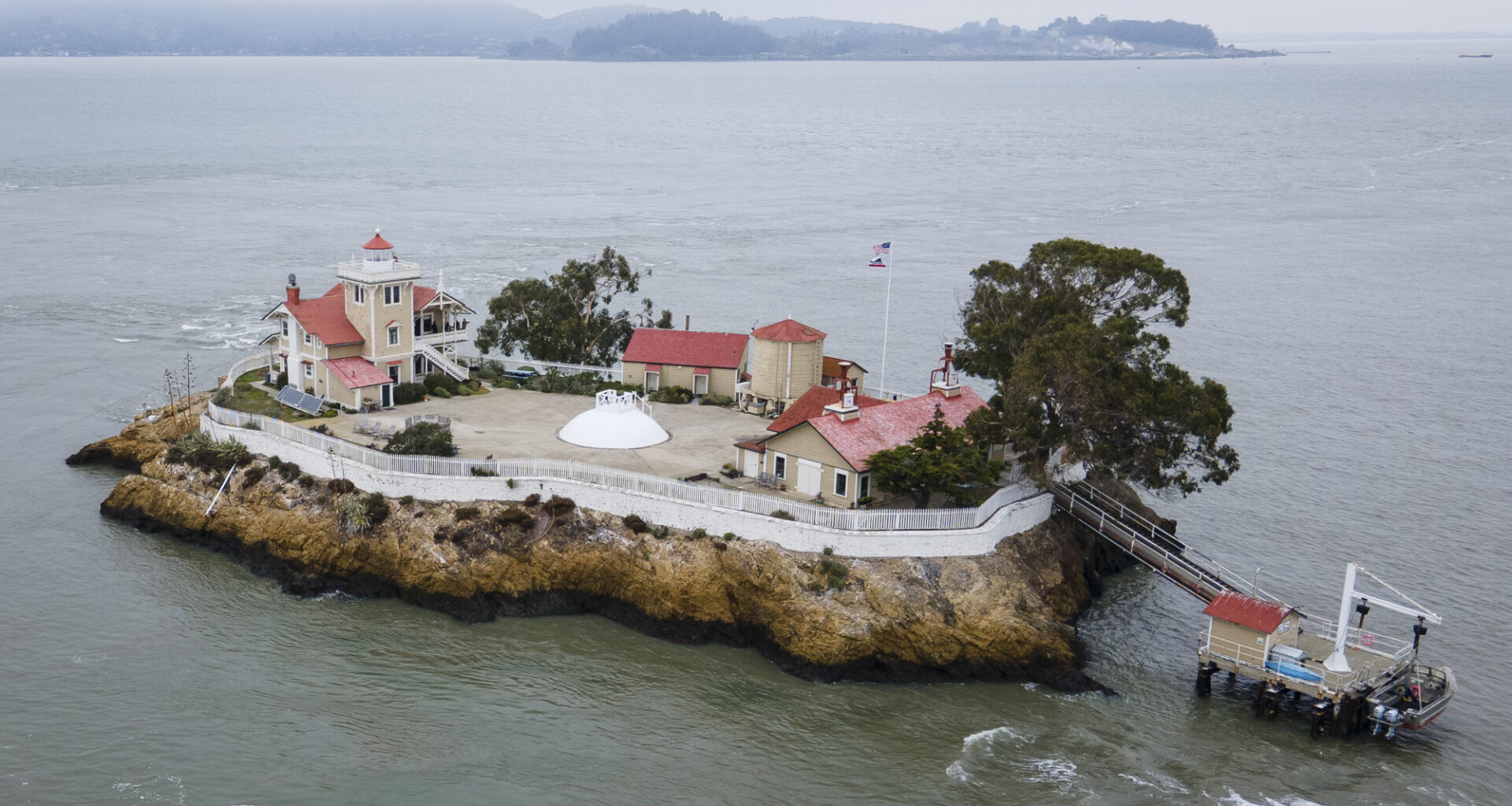
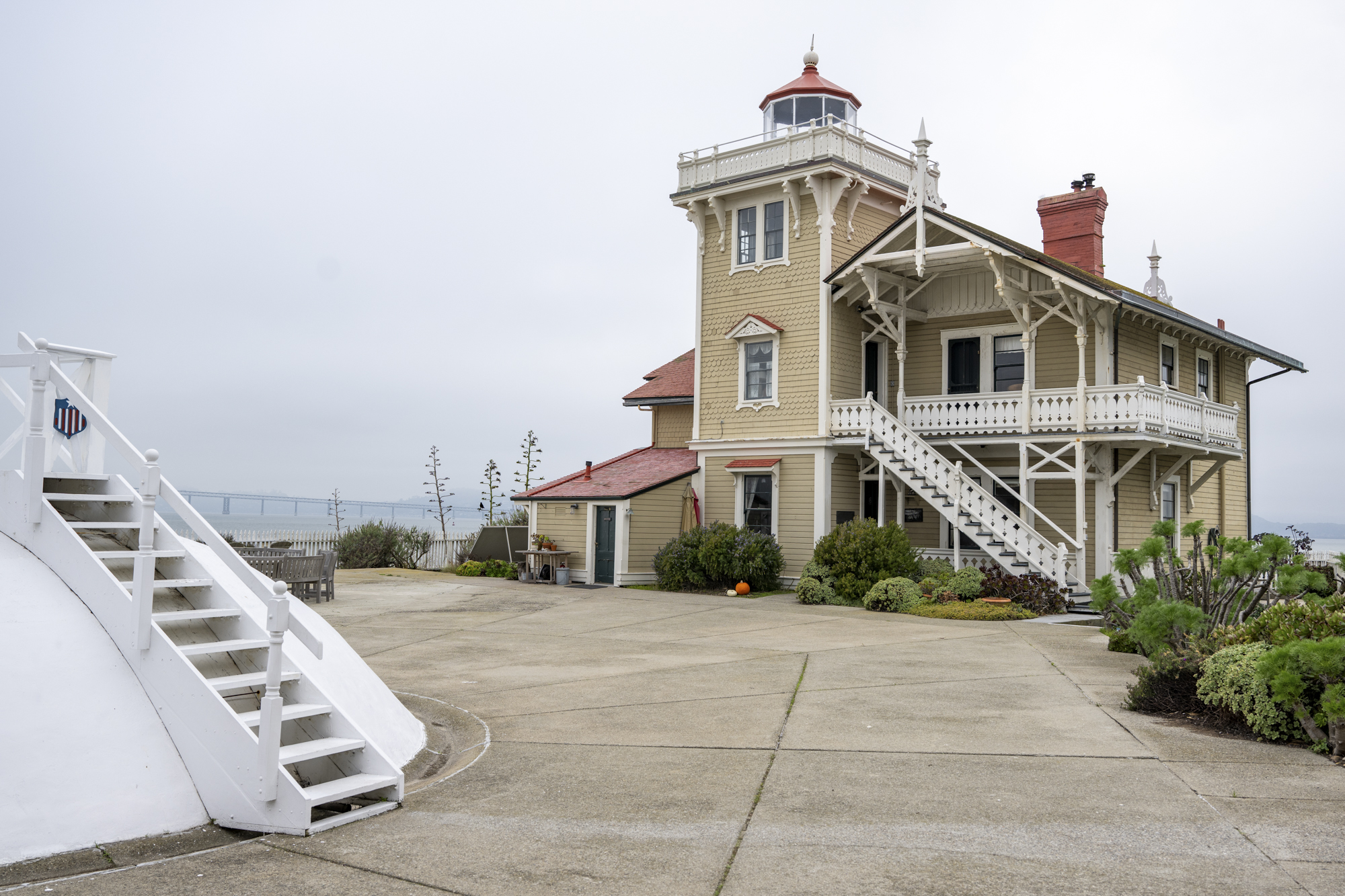 The inn at East Brother Light Station, an island just off the Richmond shoreline, on Dec. 8, 2025. The historic lighthouse sits on a small, rocky outcrop in San Pablo Bay and is accessible only by boat, and the inn provides overnight stays in the restored 19th-century keeper’s quarters. (Beth LaBerge/KQED)
“We were taking the ferry from Vallejo to a Giants game and passed by what looked like a small island with an East Coast-style lighthouse on it,” she recalled. It captured her imagination, too, and she got to wondering: “What’s the history? Did somebody live on that island previously? Just how far back do we have documentation of what went on on that island?”
So we headed to the island together to get some answers.
Jump straight to:
History of East Brother Light Station
In the decades after gold was first found in California in 1848, mining activity in the Sierra ramped up. Getting supplies from San Francisco up into the mountains often meant floating things up the Sacramento and San Joaquin rivers. To get there, boats had to skirt around Point San Pablo, the thumb sticking out from Richmond, California. This part of the bay can be especially tough for mariners.
“The topography under the water is pretty interesting,” said Rae Colvin, one of the resident innkeepers at East Brother Light Station. “There’s a 160-foot-deep chasm right off the island. But most of the [water] off to the side averages about 15 feet deep.”
Ships passing through this channel were constantly at risk of running aground even in good weather. Add in some dense fog, and it’s pretty precarious. So in the early 1870s, it was decided a lighthouse and fog horn were needed. Initially, the Lighthouse Board hoped to put the light station on the mainland, but landowners fought back. They delayed things so profoundly that eventually an alternative site was chosen — East Brother Island.
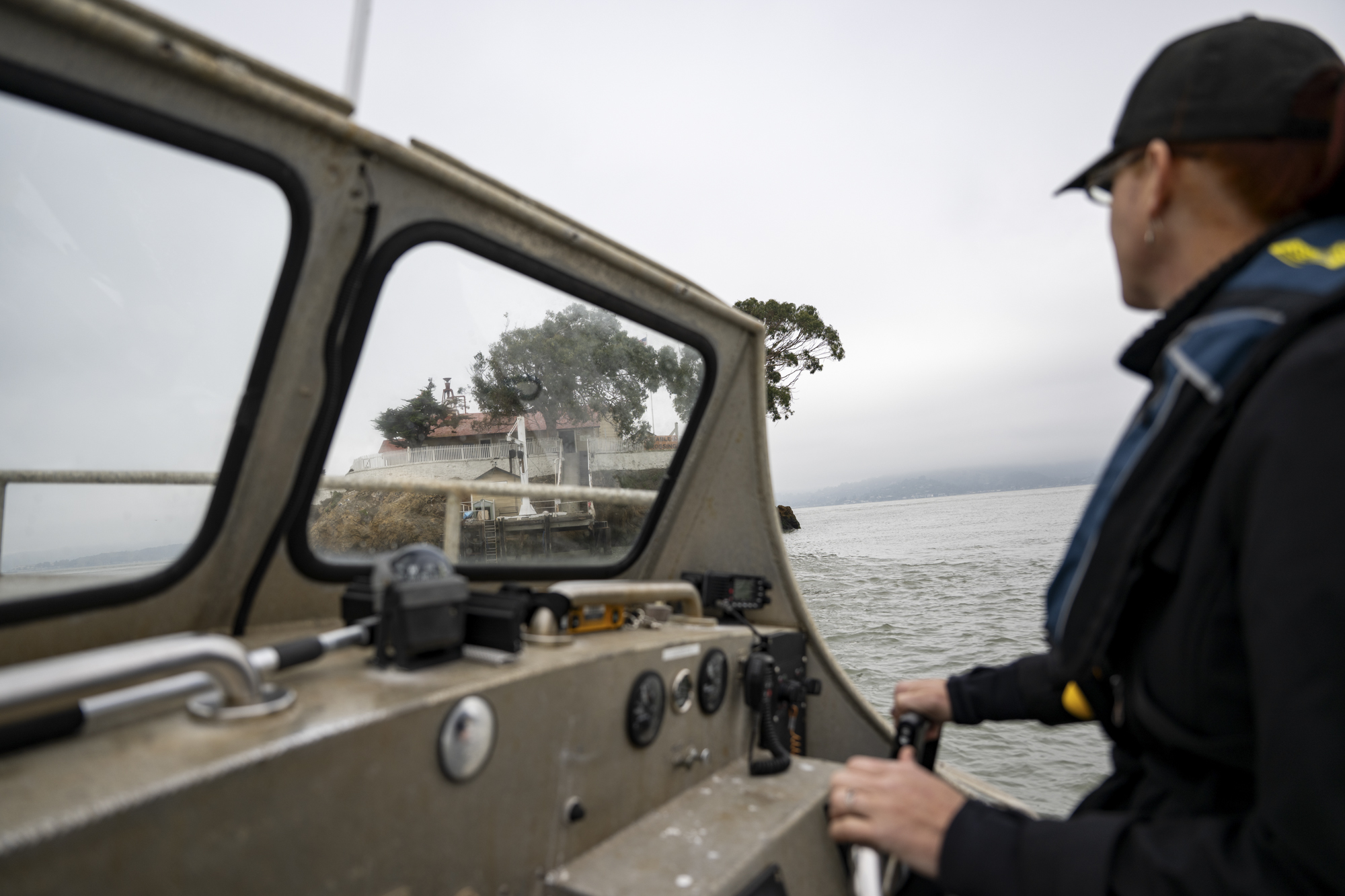 Inn keeper Danielle La Vigne pilots a boat from Point San Pablo Harbor to East Brother Light Station in Richmond, California, on Dec. 8, 2025. (Beth LaBerge/KQED)
It was small, less than an acre in size, but it was land the U.S. government already owned. Construction began in 1873.
The exterior of the light station features gingerbread trim, scrollwork and a generous second-floor porch. Not the standard-issue government building we’ve come to expect today.
The six-room Victorian light station was intended to house three lightkeepers, and two of them could have families. Downstairs was a bedroom and parlor for the principal keeper. Upstairs was a smaller bedroom and parlor for the assistant keeper. There was also a third bedroom for the most junior keeper. Things were cozy, to say the least.
Stacked on top of the living quarters was also the tower that housed the light. When the light station began operating on March 1, 1874, the light’s flame was powered by lard oil and featured a fourth-order Fresnel lens. The lens rotated on a clockwork mechanism. On a clear night, this beam, which appeared to flash every 30 seconds because of the design of the lens, could be seen from about 15 miles away.
What life was like for early lightkeepers
“Despite the romantic portrayal of lighthouse keeping in novels, poems and art, the job was monotonous, and the Lighthouse Board knew it. Pay was modest and much of the work boring,” Frank Perry wrote in his book, East Brother: History of an Island Light Station. Much of what we know about life on the island comes from Perry’s book, which was compiled using primary sources.
In 1874, the primary keeper earned $800 a year — the equivalent to about a $24,000 salary today. The assistants earned even less. Their primary responsibility was keeping the light running from sunset to sunrise every night and keeping the fog signal sounding during inclement weather.
The nightly routine would begin at sunset. Lightkeepers would fill the lamp with lard oil, light the wick, and slowly bring the flame up to the optimal size of about 1 and 13/16 inches. If they did this too quickly, the glass chimney inside the rotating Fresnel lens could crack from the change in temperature. That alone was a 30-minute job. Then the keepers had to sit in the watch room all night, tending to the needs of the light.
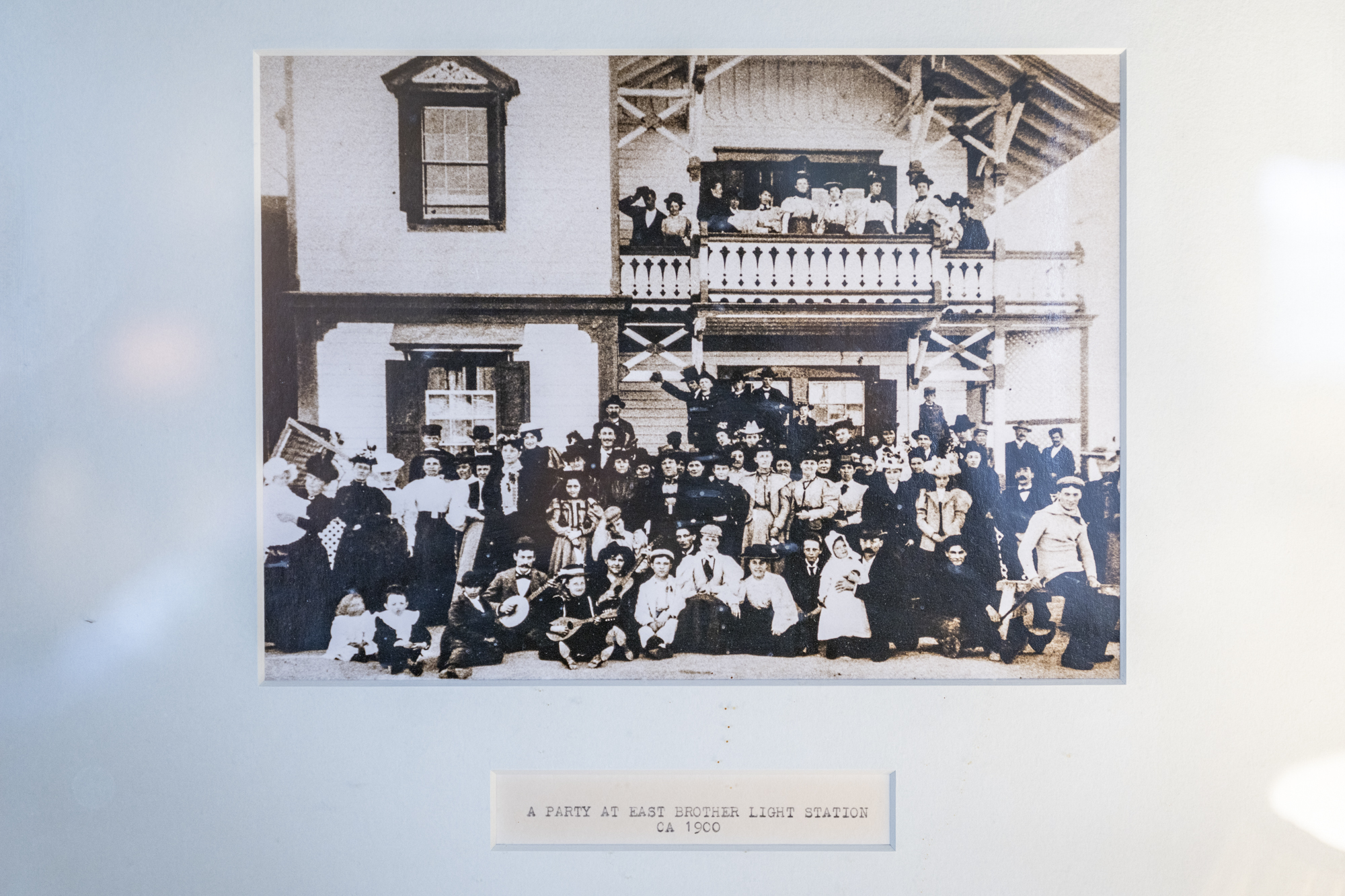 Historic photos hang on the wall at East Brother Light Station, an island just off the Richmond shoreline, on Dec. 8, 2025. One lighthouse keeper, John Stenmark, brought his wife and children to live on the island. They had many friends in the community and would host large gatherings on the island. (Beth LaBerge/KQED)
“Because of the timing on that clockwork mechanism and how quickly the wicks would burn down, you gotta check it every half hour,” said Danielle La Vigne, one of the resident innkeepers at East Brother Light Station.
The innkeepers also had to wipe the glass panes of the lantern room with dry towels to keep moisture away.
On foggy nights, the keepers’ jobs were doubly hard. They had to run the fog signal, too, which sits in another building on the island.
“The whistle was sometimes more important in aiding mariners than the light,” wrote Perry. “In dense fog or heavy rain, East Brother’s powerful light was virtually useless. The 10-inch whistle, on the other hand, could often be heard from 10 or 12 miles away.”
It took about 45 minutes to build up enough steam in the boiler for the fog whistle to work. So in the meantime, one of the keepers went outside and struck a large bell every 15 seconds until the whistle could be sounded.
Beyond the core responsibilities, keepers kept up with a long list of chores: cooking, cleaning, maintenance and repairs.
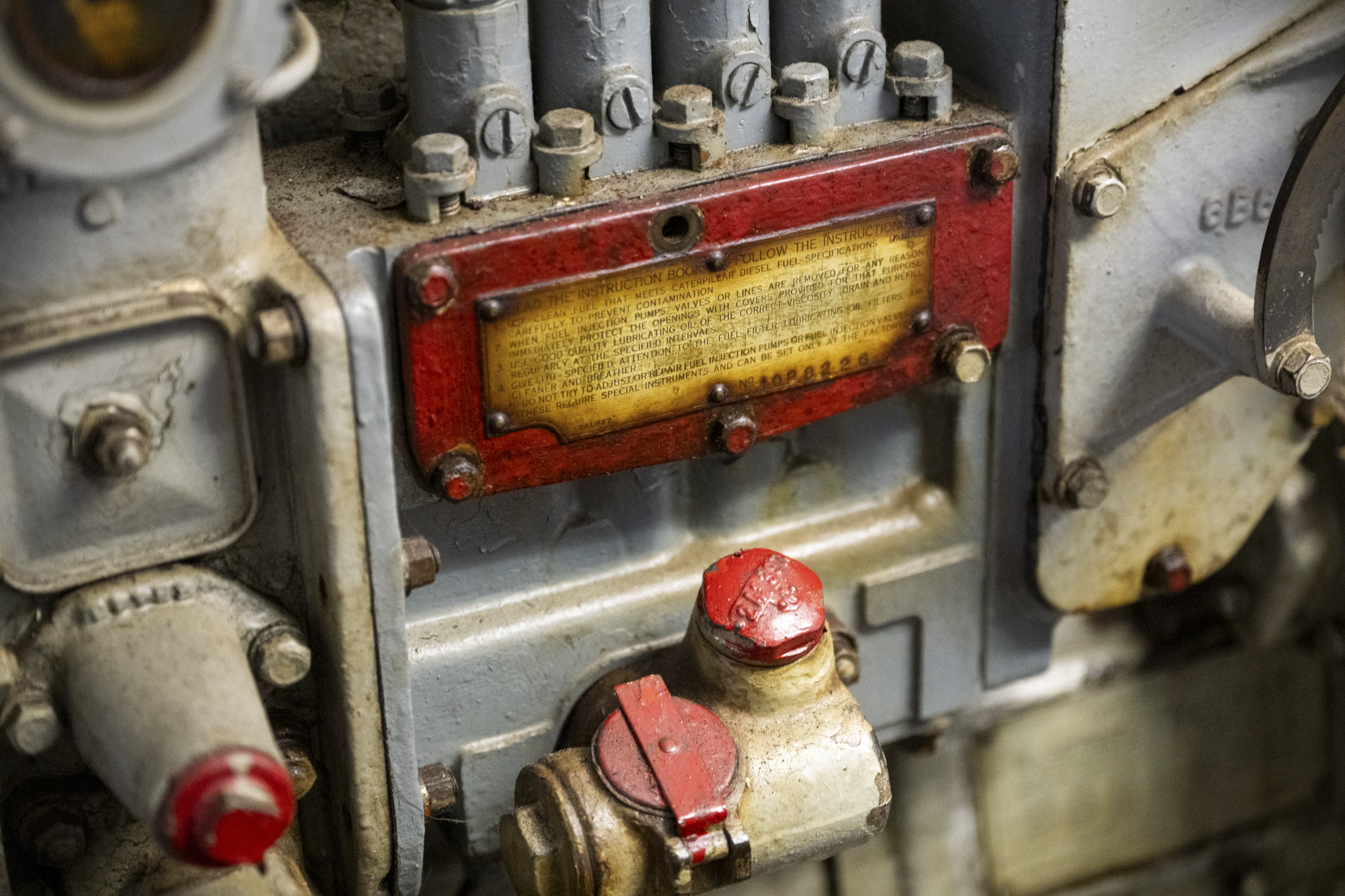 The foghorn machinery at East Brother Light Station, an island just off the Richmond shoreline, on Dec. 8, 2025. The 19th-century lighthouse complex includes a restored fog signal that once warned ships navigating San Pablo Bay.
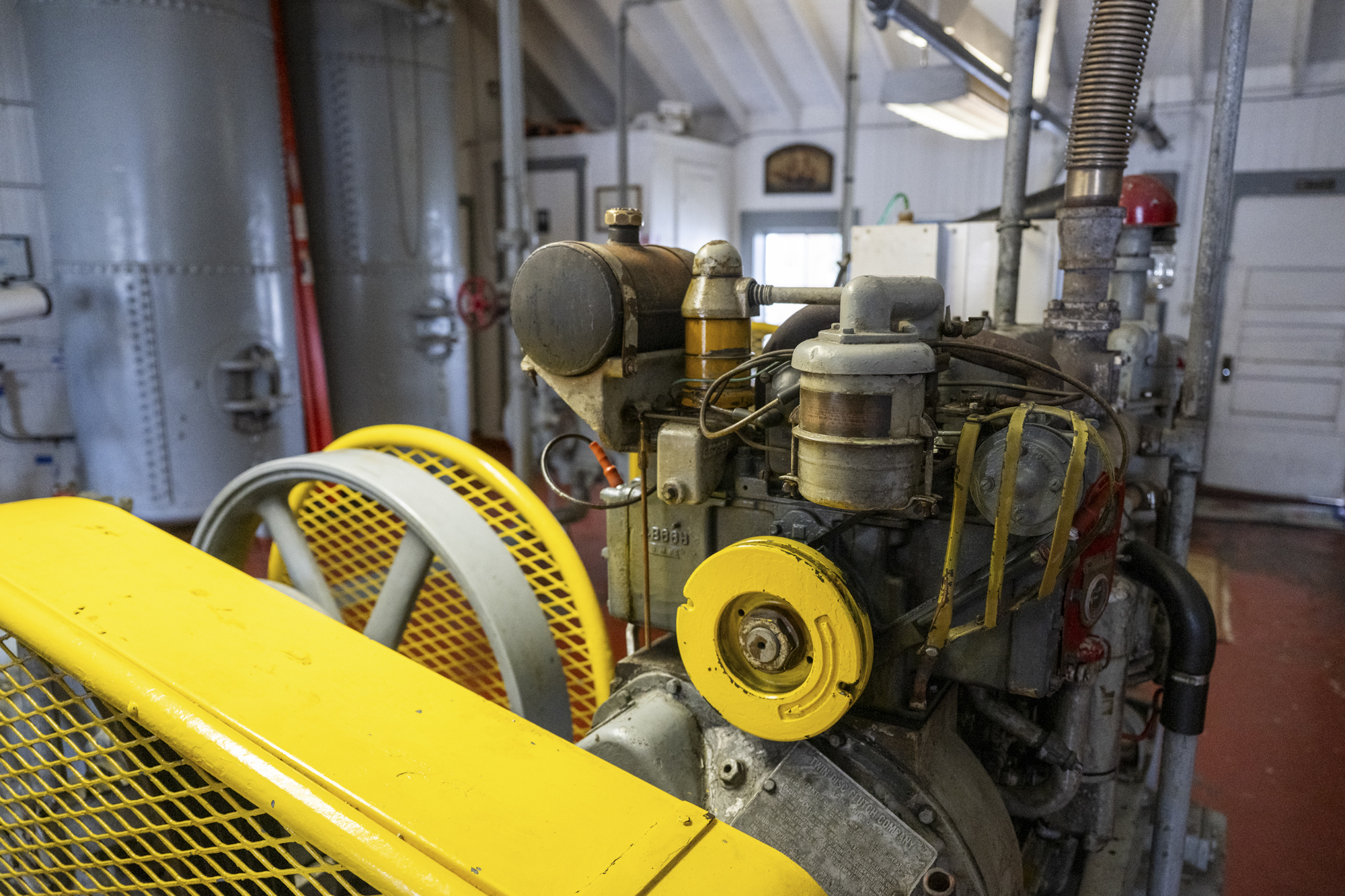 The foghorn machinery at East Brother Light Station, an island just off the Richmond shoreline, on Dec. 8, 2025.
When they needed food to supplement the dry rations that got delivered once a year or so, they had to leave the island for the nearest town. At the time, that was San Quentin, about 2 1/2 miles away.
“I have a 200 horsepower motorboat to get back and forth to our little harbor,” said La Vigne. “They had to row.”
A daily log was kept by the primary keeper, accounting for the day’s weather and work. Most entries are not more than a sentence, but they do give us a glimpse at the day-to-day life on East Brother. A string of entries in 1882 mention an assistant keeper named Mr. Page, who was a bit of a screw-up.
July 14, 1882 – Wind S.W., strong. Mr. Page left for San Quentin A.M., capsized off the buoy near the West Brother at 12:15 p.m. Capt. Windsor hailed the Steamer Reform passing up at the time and sent her to his relief. The Reform picked him up ¼ of a mile N.N.E. of the Light House and landed him and the boat at the dock at 1:15 p.m. Oars, rudder, mail and all the marketing – consisting of mutton, cabbages, peas, etc., etc., lost, also milk and can.
Dec. 14, 1882 – Wind N.E. Foggy from 4 a.m. to 10 a.m. Mr. Page went to San Quentin for mail, returned as usual, drunk.
Feb. 8 1883 – Wind N.E. Light, clear. Mr. Page went for mail and stores, drunk, no mail.
On Feb. 10, 1883, a new assistant, Mr. Tippett, is mentioned, and Mr. Page is never spoken of again.
The Stenmark era
Though some keepers were men living on their own, passing through East Brother for only a few years, families lived here, too. John Stenmark moved here in 1894 with his wife and 3-month-old daughter, Annie, and they stayed for 20 years.
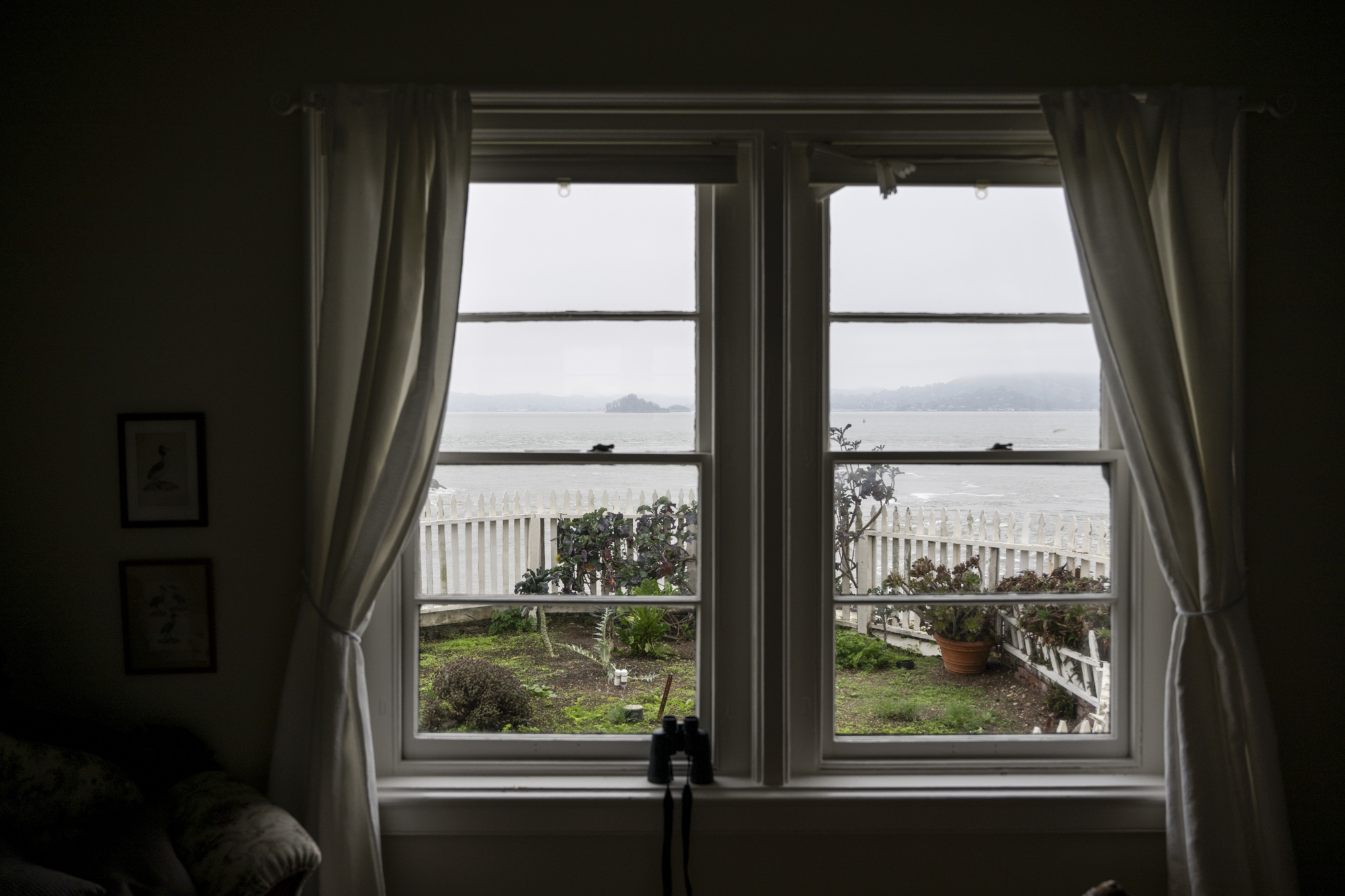 A view from the inn at East Brother Light Station, an island just off the Richmond shoreline, on Dec. 8, 2025. (Beth LaBerge/KQED)
One big change came in 1934 when electricity arrived on the island via an underwater cable that connected it to shore. A lightkeeper was no longer needed to keep a flame burning all night — greatly reducing their daily chore load. The steam-powered fog signal was replaced with a diaphonic horn that can still be operated today and is one of only eight like it in the world.
To save on salaries, the U.S. Coast Guard automated everything and pulled the last resident personnel from the island in 1969. They planned to demolish all the buildings and put the light on a steel tower. But residents living in Point Richmond had other plans. They had grown attached to the charming lighthouse off their shoreline and were ready to fight for it.
How it was converted to a bed and breakfast
“One of the first things [local residents] did was write a National Register nomination for it, which was successful,” said Tom Butt, founder and president of East Brother Light Station Inc., the nonprofit that operates the bed and breakfast. He’s also the former mayor of Richmond and a longtime city council member. “That didn’t save it, but it made it harder for the Coast Guard to tear it down because it invoked the Historic Preservation Act of 1966.”
The group then tried to find a local organization to take on rehabilitating the site, because by that point it was more than a decade behind on maintenance and needed serious work. They focused on organizations like the National Park Service and East Bay Regional Park District, but no one was interested.
“I think everybody looked at it and [thought] it was just too much,” said Butt.
He went to the island in 1978. “Looking back now,” he said, “I was a lot younger and not near as smart as I am now, and I was intrigued by it and said, ‘you know, we can do this.’”
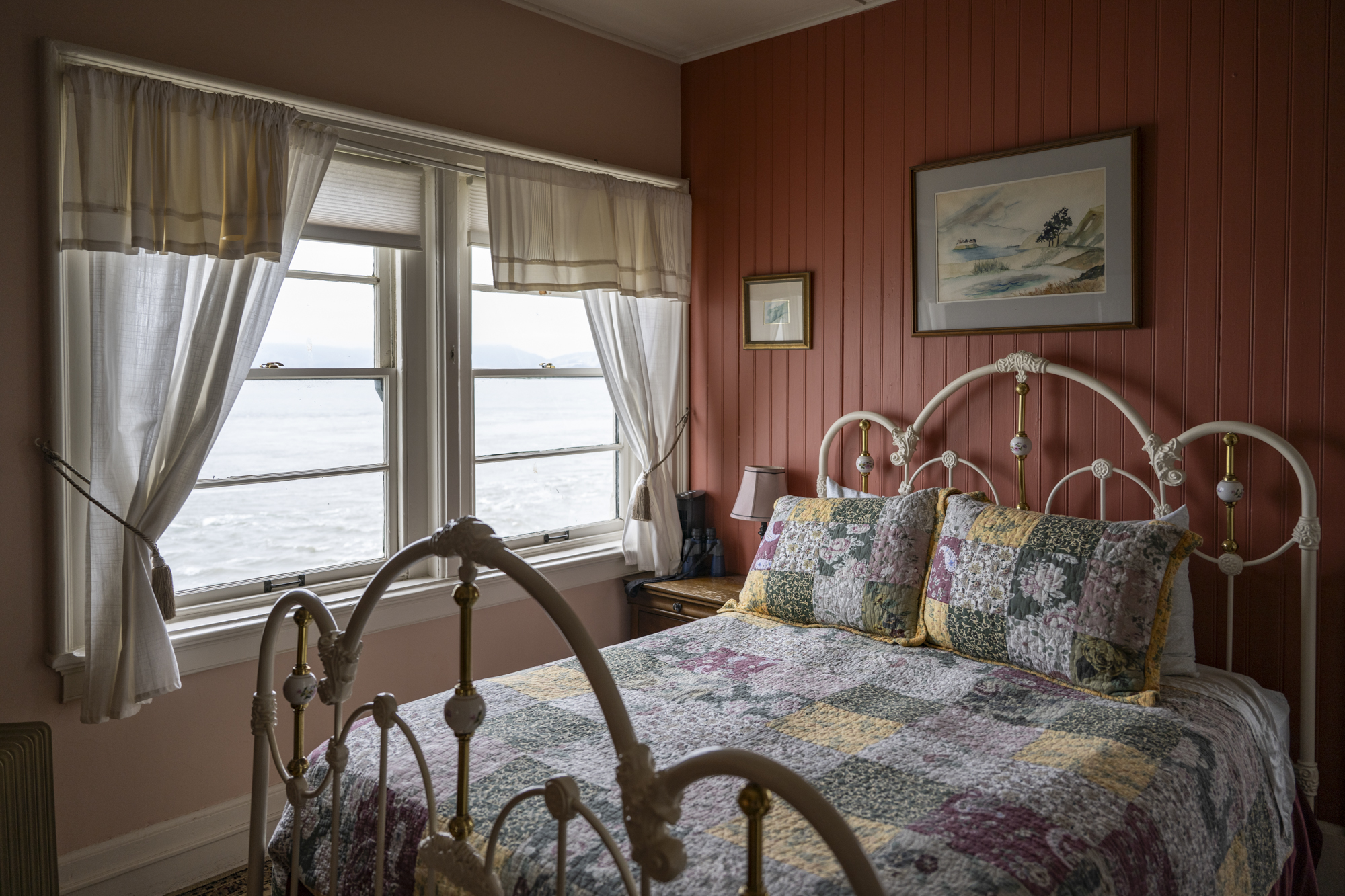 The Marin Room, which faces Mount Tamalpais, at East Brother Light Station, an island just off the Richmond shoreline, on Dec. 8, 2025. The historic lighthouse sits on a small, rocky outcrop in San Pablo Bay and is accessible only by boat, and the inn provides overnight stays in the restored 19th-century keeper’s quarters. (Beth LaBerge/KQED)
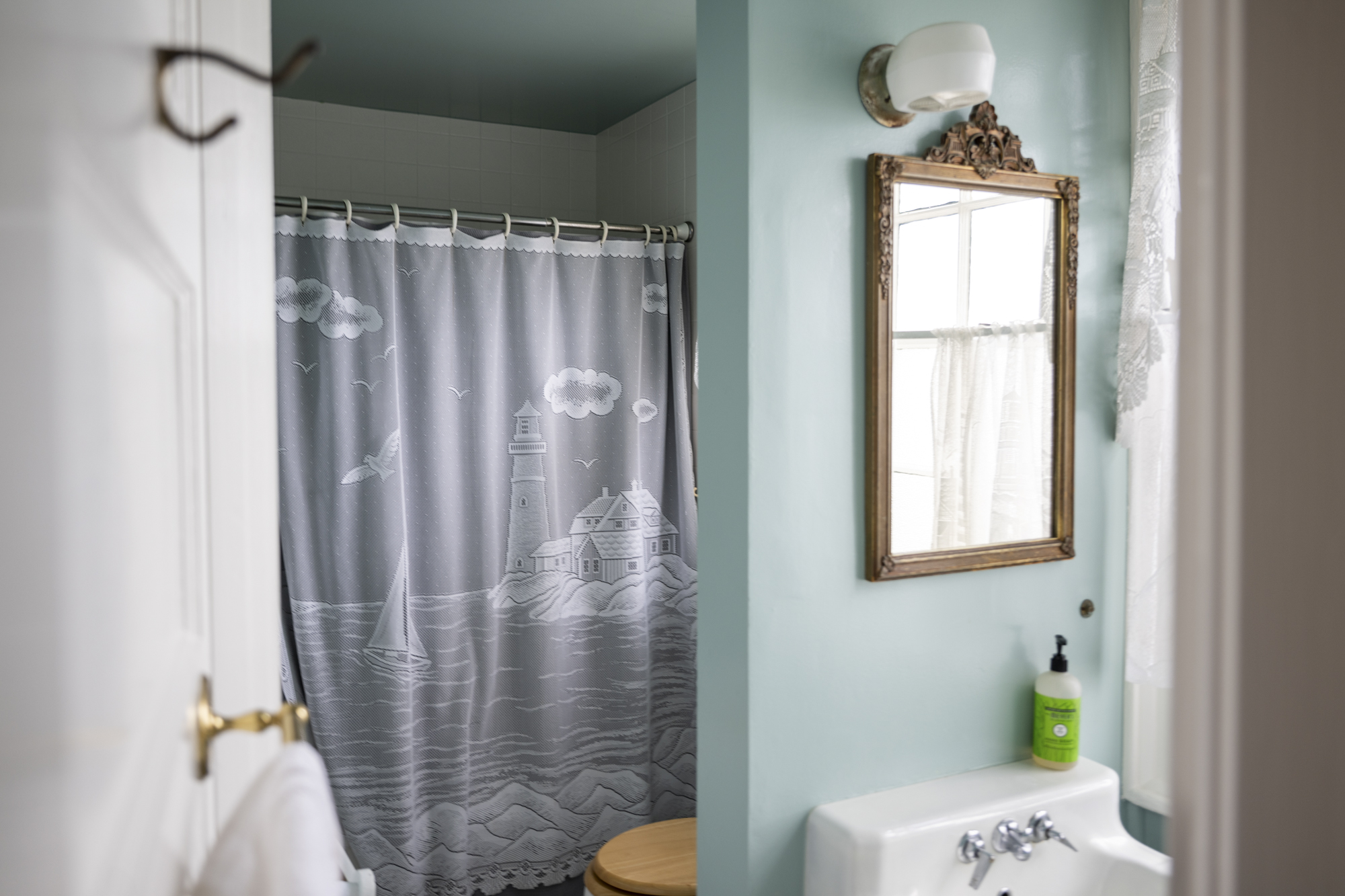 A lighthouse shower curtain hangs in a bathroom at the inn on East Brother Light Station, an island just off the Richmond shoreline, on Dec. 8, 2025.
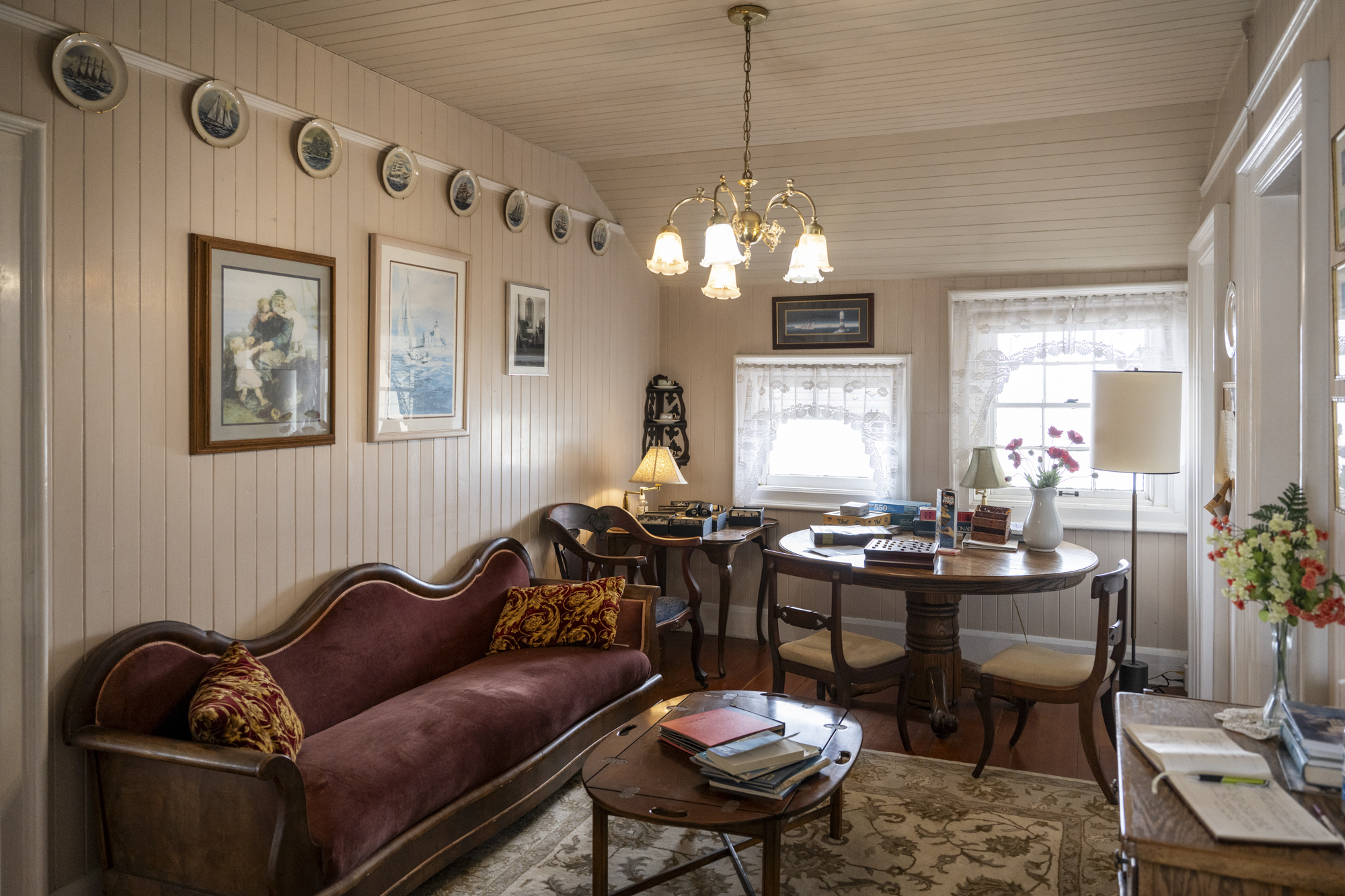 A room at East Brother Light Station, an island just off the Richmond shoreline, on Dec. 8, 2025. The historic lighthouse sits on a small, rocky outcrop in San Pablo Bay and is accessible only by boat. The inn provides overnight stays in the restored 19th-century keeper’s quarters.
He and others formed a nonprofit and started leasing the site from the Coast Guard. They spent a year rehabilitating everything, mostly with volunteer work.
“All the buildings at that point were covered with asbestos shingles,” Butt said. “All of the ornamental railings had long since been taken off. We were lucky we had original plans from the National Archives, so we were able to replicate all that trim and put that back on.”
Volunteers did electrical work, plumbing, plastering and painting. It was a ton of work, but they managed to get it all done in about a year. The nonprofit began running the site as a bed and breakfast in 1980 to provide a stream of revenue to keep up with the maintenance.
Though most of the operational costs and maintenance for the B&B are now covered by the nightly fee guests pay, a major fundraising effort is underway to replace the dock and gangway on the east side of the island. It must be replaced, or access to the island could be threatened.
Visiting East Brother Light Station today
The nonprofit B&B is open four nights a week for overnight guests, and it’s recommended you book one of the five rooms well in advance. Rates range from $525 to $575 per night. During summer months, there is once-monthly day-use access for $45, which includes the boat ride to and from the island.
At the beginning of the overnight stays, guests are taken by boat from Point San Pablo Marina by innkeepers Colvin and La Vigne. Once on the island, hors d’oeuvre and champagne are served, Colvin gives a history talk, and then comes a four-course dinner with wine.
“We try to focus as much as we can on keeping things local,” La Vigne said. “We collaborate with the little goat farm that’s in the harbor, and we tend to plan the meals around what is being harvested now, what’s in season.”
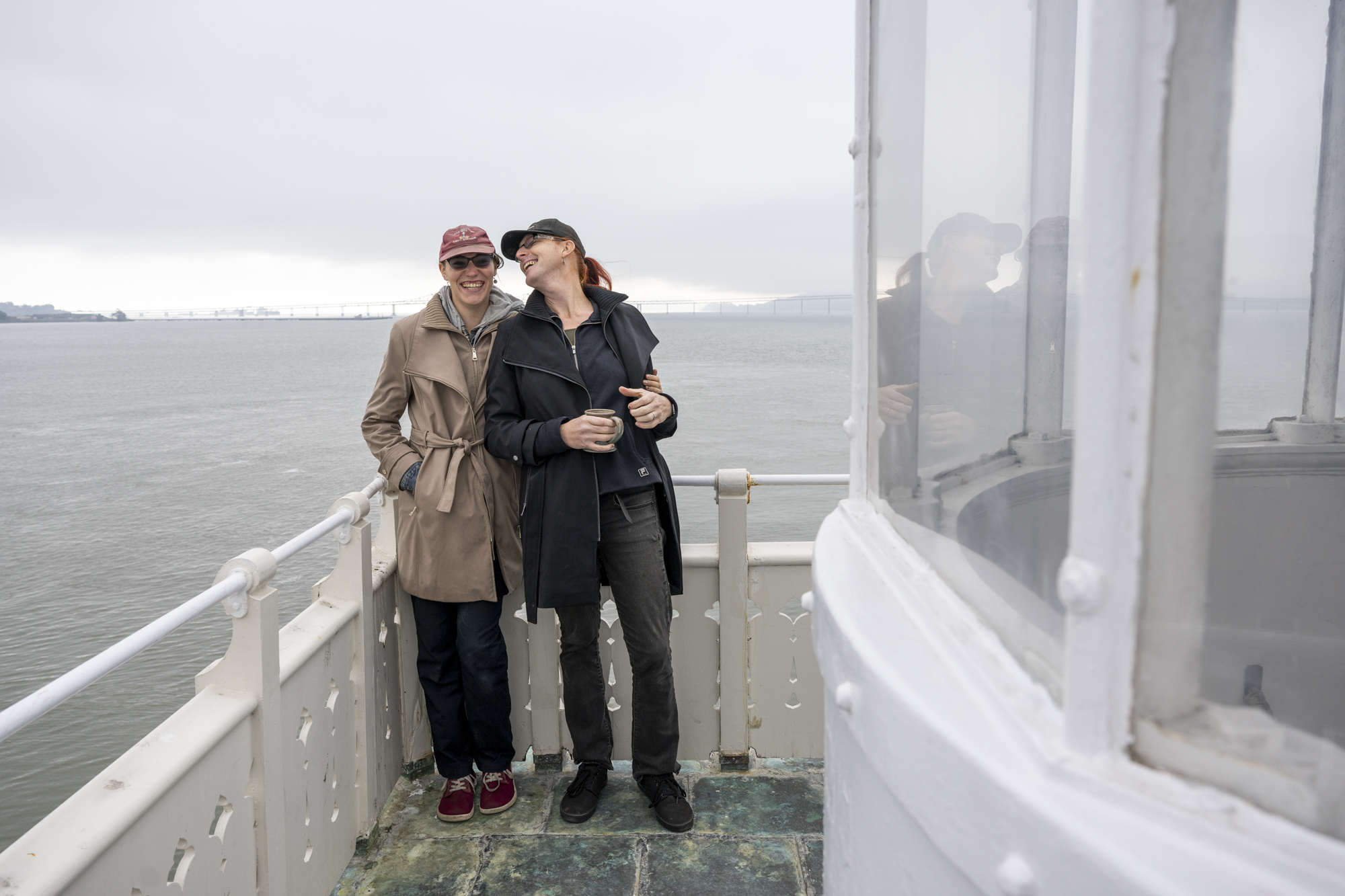 Innkeepers Rachel (Rae) Colvin (left) and Danielle La Vigne at East Brother Light Station in Richmond on Dec. 8, 2025. The historic lighthouse sits on a small, rocky outcrop in San Pablo Bay and is accessible only by boat, and the inn provides overnight stays in the restored 19th-century keeper’s quarters. (Beth LaBerge/KQED)
They also try to make meals part of the historical experience, using ingredients the keepers would have received as part of their rations — like potatoes, rice and salted pork.
“We have recipes from the Lighthouse Keeper’s Manual from 1891 that had recipes for how to stretch your rations. Last night we served for the first course a corn chowder that is from that original Lighthouse Keeper’s handbook,” La Vigne said. “Although their recipe was incredibly bland, and I spruced it up a lot.”
So, historically inspired … but for a modern palate.
Guests sleep in rooms neatly decorated with antiques. Most rooms are named after the view you see from the room, so there’s West Brother (the neighboring island), Marin Room, San Francisco Room.
A more modest room is out in the fog signal building — a popular choice for returning guests looking for a different experience, Colvin said.
Most of the clientele are couples looking for a romantic getaway, but the house is also regularly rented out entirely by groups for birthdays, anniversaries or themed experiences.
“We had two murder mystery dinner parties in the past month,” La Vigne said. “Both parties dressed up. They were in character the whole time. It was 1920 the whole time they were here.”
In the morning, before guests depart, they offer a demonstration of the fog signal — I can attest, it’s loud!
Episode transcript
Olivia Allen-Price: I’m Olivia Allen-Price. This is Bay Curious.
sound design of the sea: waves, gulls
Olivia Allen-Price: There’s something dreamy about lighthouses.
Their striking architecture, rising high above our human scale.
Their symbolism. A literal light in the darkness.
In me, lighthouses stir something nostalgic. A time before GPS and radar — when navigation was done with charts and stars.
Today, many lighthouses across the United States have become tourism attractions, like Cape Hatteras in North Carolina and the St. Augustine Lighthouse in Florida.
But there’s a lighthouse near San Francisco that offers an experience like none other. Not just a quick trip to the top, but an opportunity to live like a lighthouse keeper of yore!
East Brother Light Station looks like it could have been plucked from a child’s storybook. It’s a charming three-story wooden house, painted a creamy yellow with white gingerbread trim. At the top, stands a tower, where the brilliant light beckons through the fog.
Kathleen got to wondering a lot of things about this lighthouse.
Kathleen Taylor: What’s the history? Did somebody live on that island previously? Just how far back do we have documentation of, you know, what went on on that Island?
Olivia Allen-Price: So today we’re on a mission for answers.
Step one! We have to get to the lighthouse. At a marina north of the Richmond-San Rafael Bridge, Kathleen and I make our way toward a small boat.
There we meet Danielle La Vigne and Rae Colvin — the two keepers currently living on the island.
Danielle La Vigne: Oh, you guys can hop on board. Our insurance company does ask that you wear those.
Olivia Allen-Price: Life vests are on, and we are off. Danielle and Rae have been living at the East Brother Light Station for about a year and half. But the helm of a boat is a familiar place for them.
Olivia Allen-Price in scene: Did you know how to drive a boat, or is this a recent skill you’ve had to acquire? ‘Cause you’ve, you guys have been on the job for…
Danielle La Vigne: I’ve been a commercial captain for almost 20 years. This is the smallest boat that I’ve ever operated professionally.
Olivia Allen-Price: As we’re making our way out of the marina, Rae spots a seal.
Rae Colvin: A lot of seals live out by the island. … we have a bunch of birds and the harbor seals and sometimes a sea lion.
Olivia Allen-Price: Danielle and Rae are the only two full-time human residents of East Brother Light Station. But they’re far from alone out there. Because keeping the light running is not their main focus. Instead it’s catering to the weekly overnight guests who join them at the Light Station. Because these days East Brother is a one-of-a-kind bed and breakfast.
Olivia Allen-Price in scene: Oh, we just snuck around the bend, and I am seeing the light station probably 400 feet away or so.
Olivia Allen-Price: I can’t see it from up on the water, but down beneath our boat lies the answer to one of Kathleen’s questions. Why is this lighthouse here, some 15 miles from the open ocean?
Music begins
Olivia Allen-Price: In the decades after gold was first found in California in 1848, mining activity in the Sierra really ramped up. Getting supplies from San Francisco up into the mountains often meant taking a boat — floating things up the Sacramento and San Joaquin rivers.
Ships had to skirt around Point San Pablo — where our little boat just departed from. Rae Colvin explains.
Rae Colvin: And they put a lighthouse out here because the topography under the water is pretty interesting. There’s a 160-foot-deep chasm right off the island. But most of the open ocean off to the side that you can see averages out to about 15 feet deep.
Olivia Allen-Price: Ships passing through this channel were constantly at risk of running aground even in good weather. Add in some dense fog and it’s pretty precarious.
So in the early 1870s, it was decided a lighthouse and foghorn were needed. Initially, they hoped to put the light station on the mainland, but quickly ran into issues…
Rae Colvin: The people who owned the land on the East Bay there didn’t want to sell to the government to let them build a lighthouse.
Olivia Allen-Price: After years of trying and failing to get the landowners to relent, the government changed course. Just offshore was East Brother Island — a speck of land really, smaller than an acre — but it was enough. And better yet, it was land the U.S. government already owned.
Music starts
Olivia Allen-Price: Workers blasted sandstone from the top of the island to create a level plot. A foundation went in, walls went up, and in less than a year the six-room Victorian light station was complete. The design is quite striking…
Rae Colvin: There’s a lot of ornamental woodwork on it, and it’s three stories.
Olivia Allen-Price: But it’s not exactly unique. Lighthouses with a similar design were built all over the West Coast. This is the oldest one still standing.
Music ends
Fade up on sound of boat slowing down and approaching dock. Ambi of arriving sounds.
Olivia Allen-Price: The wind picks up as our little boat approaches the island and sidles up to the dock. Once we’re off, Danielle and Rae work to get the boat lifted out of the water.
Danielle La Vigne: If we left it in the water, it would just get thrashed against the dock all day long, and this dock already needs help so.
Rae Colvin: This one’s been here since I think the 1960s, and, you know, it’s seen better days.
Olivia Allen-Price: The dock may need work, but as we make our way up some stairs and onto the property, a tidy semicircle of three buildings emerges. The main light station to the west, a small cottage to the north, and a fog signal building to the east. All fit on about three-quarters of an acre.
The buildings surround a low white dome covering something beneath the pavement. Danielle explains…
Danielle La Vigne: We need to collect rainwater to survive out here, this whole courtyard is set up to direct all of the rain flow down into the cistern.
Olivia Allen-Price: Across the courtyard we head into the main house, where today most of the overnight bed-and-breakfast guests stay.
Danielle La Vigne: So of course we have to do the shameless product placement. As you enter the house, the first room you see is the gift shop.
Olivia Allen-Price: OK, so, the gift shop is not original to the light station, but the mugs they sell are popular with B&B guests. Couples often come out for romantic getaways. Kathleen and I learn learn groups stay here for birding weekends or murder-mystery parties.
Kathleen Taylor: How often do you get groups that rent the whole island?
Danielle La Vigne: Two, yeah, two to three times a month.
Olivia Allen-Price: The house has seen some changes over its 152-year life, but it’s not hard to imagine what it once was.
Most often three lighthouse keepers, and sometimes their families, shared the home. There’d be a primary keeper, aka the boss, living downstairs. And then the first assistant upstairs, along with a junior keeper, someone just learning the ropes.
They all lived, ate and slept beneath the tower that housed the light. Staying close because it needed constant attention.
Danielle La Vigne: This is the parlor, which is the comfy hangout spot for the guests. Originally this would have been the junior keeper’s parlor. And the bedroom right over here, the Marin room, would have been the junior keeper’s bedroom. So it was kind of like a little apartment.
Olivia Allen-Price: Today, B&B guests stay in bedrooms with cozy beds, decorated with beautiful antiques. Historical maps and pictures of boats hang on the walls. And each room gets a name, based on what is visible outside the window.
Rae Colvin: So this is the San Francisco room, and it’s my personal favorite room. It has an arched ceiling, and it looks out to San Francisco.
Olivia Allen-Price: We make our way to the main attraction: the tower … which is made up of three tiny rooms stacked on top of each other. We start at the base.
Danielle La Vigne: So this is kind of the prep room where they’d get everything ready, but every half hour they had to go up there and trim the wick and refill the oil.
Olivia Allen-Price: Next we head up to the Watch room.
Rae Colvin: It’s a tightly winding staircase like you would expect in a Victorian mansion.
Danielle La Vigne: We’re now 40 feet up. So you’ve got a pretty good view. If it’s stormy out, if it seems like it’s there’s a danger of a ship not seeing the light or whatever, that’s where you’re watching from so that you can signal those people if you need to.
Olivia Allen-Price: Finally, we head to the pinnacle.
Rae Colvin: Up here is more winding stairs up into the actual lighthouse.
Olivia Allen-Price: I will say, the view from this room is spectacular. The light itself, a little bit of a letdown. Today a 4 inch LED sits in the space.
Rae Colvin: So the original light, it was a Fresnel lens with a little lantern torch in the middle. And originally that torch on this station was powered by lard oil.
Olivia Allen-Price: A fourth-order Fresnel lens! Imagine a magnificent orb of glass, made up of neat rows of prisms, standing several feet tall. They were designed to concentrate the light of a single flame so intensely it could be seen for about 15 miles.
On March 1, 1874, as sunset approached, three lighthouse keepers climbed up into this very tower, and lit the oil lamp for the very first time.
The lighthouse has been operating, in some fashion or another, ever since.
[Music moment]
Olivia Allen-Price: When we return, we explore what life was like living and working at East Brother. And it might not be like you expect! Stay with us.
Sponsor messages
Olivia Allen-Price: If you enjoy stories like this one, consider becoming a financial supporter of KQED. Learn more at donate.kqed.org/podcasts.
Music begins
Olivia Allen-Price: It’s easy to get enamored by the apparent simplicity of life on an island in the middle of the Bay. I know I imagine myself reading in a hammock. Our question asker, Kathleen, loves that cell reception out on East Brother is limited.
Kathleen Taylor: It is great to decompress and turn your phone off, and we don’t have a lot of opportunities to do that.
Olivia Allen-Price: And sure, that is the experience you will get here today as a guest at the B&B. But working here is hard, as Danielle can attest.
Danielle La Vigne: The work is never-ending. Because it’s just the two of us … So we’re the phones and the emails and the booking. There’s some degree of maintenance work that is pretty much always happening. The house needs to be deep cleaned every week between guests.
Olivia Allen-Price: Working here has always been hard. Historian Frank Perry makes clear that his book, East Brother: History of an Island Light Station. Here’s an excerpt…
BOOK VO: Despite the romantic portrayal of lighthouse keeping in novels, poems and art, the job was monotonous, and the Lighthouse Board knew it. Pay was modest and much of the work boring.
Olivia Allen-Price: The nightly routine would begin at sunset. Innkeepers would fill the lamp with lard oil, light the wick, and bring the flame slowly up to the optimal size, just shy of 2 inches. If they did this too quickly, the glass chimney inside the rotating Fresnel lens could crack from the change in temperature. That alone was a 30-minute job. Then the keepers had to sit in the watch room all night, tending to its various needs.
Danielle La Vigne: And because of the timing on that clockwork mechanism and how quickly the wicks would burn down, you gotta check it every half hour.
Olivia Allen-Price: On a clear night, the tiny flame, refracted through that powerful lens, could be seen from parts of San Francisco.
On a foggy night, things got more complicated. Keepers had to run the fog signal across the courtyard too.
Book VO: The whistle was sometimes more important in aiding mariners than the light. In dense fog or heavy rain, East Brother’s powerful light was virtually useless. The 10-inch whistle, on the other hand, could often be heard from 10 or 12 miles away.
Olivia Allen-Price: It took about 45 minutes to build up enough steam in the boiler for the fog whistle to work. So in the meantime, one of the keepers went outside and struck a large bell until the whistle could be sounded. Danielle gave us a demonstration.
Sound of Danielle whacking the bell
Olivia Allen-Price: What a job.
Bell ambi
Book VO: Since the whistle might be put in operation night or day, off-duty keepers had to learn to sleep in spite of the noise. Some keepers apparently got quite good at this.
Olivia Allen-Price: Keepers were also quite busy with chores. Cooking, cleaning, maintenance, repairs. When they needed food to supplement the rations that got delivered once a year or so, they had to leave the island for the nearest town, which at the time was San Quentin.
Danielle La Vigne: So in order to get anything, they had to go to San Quentin. And I have a 200 horsepower motorboat to get back and forth to our little harbor. They had to row.
Kathleen Taylor: So how far would the trip have been from here to San Quentin?
Danielle La Vigne: Two and a half miles.
Olivia Allen-Price: Light Keepers also kept daily logbooks with short entries about the day’s work.
Voice Over: Feb. 14 1883 – Wind S.W. Squally, strong. Employed all day cleaning engine room and lens in lantern.
Olivia Allen-Price: …but sometimes you get a glimpse of more.
Music start
Rae Colvin: There was an assistant keeper who got put down in the logbook as a drunken screw-up. He’s one of my favorites.
Olivia Allen-Price: Joseph Page was his name. And let’s just say the head keeper at the time was not a fan.
Voice Over: Dec. 14, 1882 – Mr. Page went to San Quentin for mail, returned as usual, drunk.
Voice Over: July 14, 1882 – Mr. Page left for San Quentin. Capsized off the buoy at 12:15 p.m. … The Reform picked him up ¼ mile NNE of light house. Oars, rudder, mail and all the marketing – consisting of mutton, cabbages, peas, lost. Also milk.
Music end
Olivia Allen-Price: Over the decades, technological improvements came regularly to East Brother Light Station … most often to the fuel source used to power the light.
Rae Colvin: The originals used lard oil lamps, and then they switched to mineral oil, and then they used kerosene.
Olivia Allen-Price: One big change came in 1934 when the lens was electrified – via an underwater cable that connected the island to shore.
A light keeper was no longer needed to keep a flame burning all night – greatly reducing their daily chore load – and probably greatly improving their quality of life.
But it was also the first step toward automation – and eliminating the need for lighthouse keepers altogether.
Eventually that came, of course, in 1969. To save on salaries, the U.S. Coast Guard automated everything and pulled the last resident keeper from the island. They planned to demolish the light station, and all the buildings on the island, and put the light on a steel tower.
Music end
But locals living nearby in Point Richmond had other plans. They had grown attached to the charming lighthouse out in the bay, and vowed to save it.
Tom Butt: One of the first things they did was write a national register nomination for it, which was successful.
Olivia Allen-Price: Tom Butt is the president of East Brother Light Station Inc., the nonprofit that operates the bed and breakfast. He’s also the former mayor of Richmond.
East Brother Light Station made it onto the National Register of Historic Places in 1971.
Tom Butt: That didn’t save it, but it made it harder for the Coast Guard to tear it down.
Olivia Allen-Price: The local group then tried to find a local organization to take on restoring the site — by that point it was more than a decade behind on maintenance and needed serious work. They focused on groups like the National Parks Service and East Bay Regional Park District. But no one bit.
Tom Butt: I think everybody looked at it, and they just it was it it it was just too much.
Olivia Allen-Price: Tom went out to the island in 1978.
Tom Butt: Looking back now, I was a lot younger and not near as smart as I am now, and I was intrigued by it and said, you know, we can do this.
Olivia Allen-Price: He and others formed a nonprofit and started leasing the site from the Coast Guard. They spent a year rehabbing everything, mostly with volunteer work.
New concrete around the cistern.
Tom Butt: We had to do electrical work, we had to do plumbing.
Olivia Allen-Price: All the ornamental railings had been taken off, so they made new ones using the original plans they found in the National Archives.
Tom Butt: Repainted everything on the inside.
Olivia Allen-Price: There was asbestos to remove.
Tom Butt: It was a lot of work. And you know … it took a year, but we got it done.
Olivia Allen-Price: When the work was complete around 1980, the nonprofit began running the site as a bed and breakfast to provide a stream of revenue to keep up on the maintenance. And … well … because it’s fun!
At the beginning of the stay, guests get a boat ride out with innkeepers Danielle and Rae, just like we did at the beginning of the story.
Rae Colvin: We do charcuterie and champagne…
Olivia Allen-Price: A history tour with Rae.
Rae Colvin: And then dinner is a four-course dinner with wine.
Olivia Allen-Price: A fantastic sunset, if the weather cooperates…
Rae Colvin: And then in the morning it’s a full breakfast.
Olivia Allen-Price: Just before heading back to shore, guests get a special demonstration that we also get to see on our tour…
Rae Colvin: So the gasoline starter engine here is what actually starts the diesel … And this one starts with a ripped cord.
Olivia Allen-Price: In the fog signal building, Rae shows us the multistep process it takes to blow the foghorn like they did in the 1930s. The small room is packed with old mechanical equipment, some more than 100 years old. It smells like… old military? Is that a smell?