
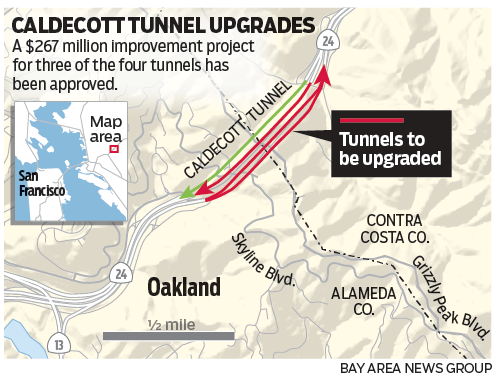
ORINDA — The Caldecott Tunnel, a major thoroughfare between Contra Costa and Alameda counties, is poised for a major renovation backed by $267 million in federal and state funding, state officials recently announced.
The project will be the most extensive investment in the tunnel since the addition of the fourth bore, completed in 2013, which exposed just how much of an upgrade the other three tunnels needed, said former Orinda Mayor Amy Worth, who served as chair of the Metropolitan Transportation Commission and was a key player in getting the fourth tunnel built in the early 2000s.
 “The Caldecott Tunnel has always been a very critical, vital transportation link between Contra Costa County and the rest of the Bay Area,” Worth said. “I am really grateful for Caltrans. We’ve been talking about the need to upgrade the tunnels and it is joyous news that this is in the budget and will be moving forward.”
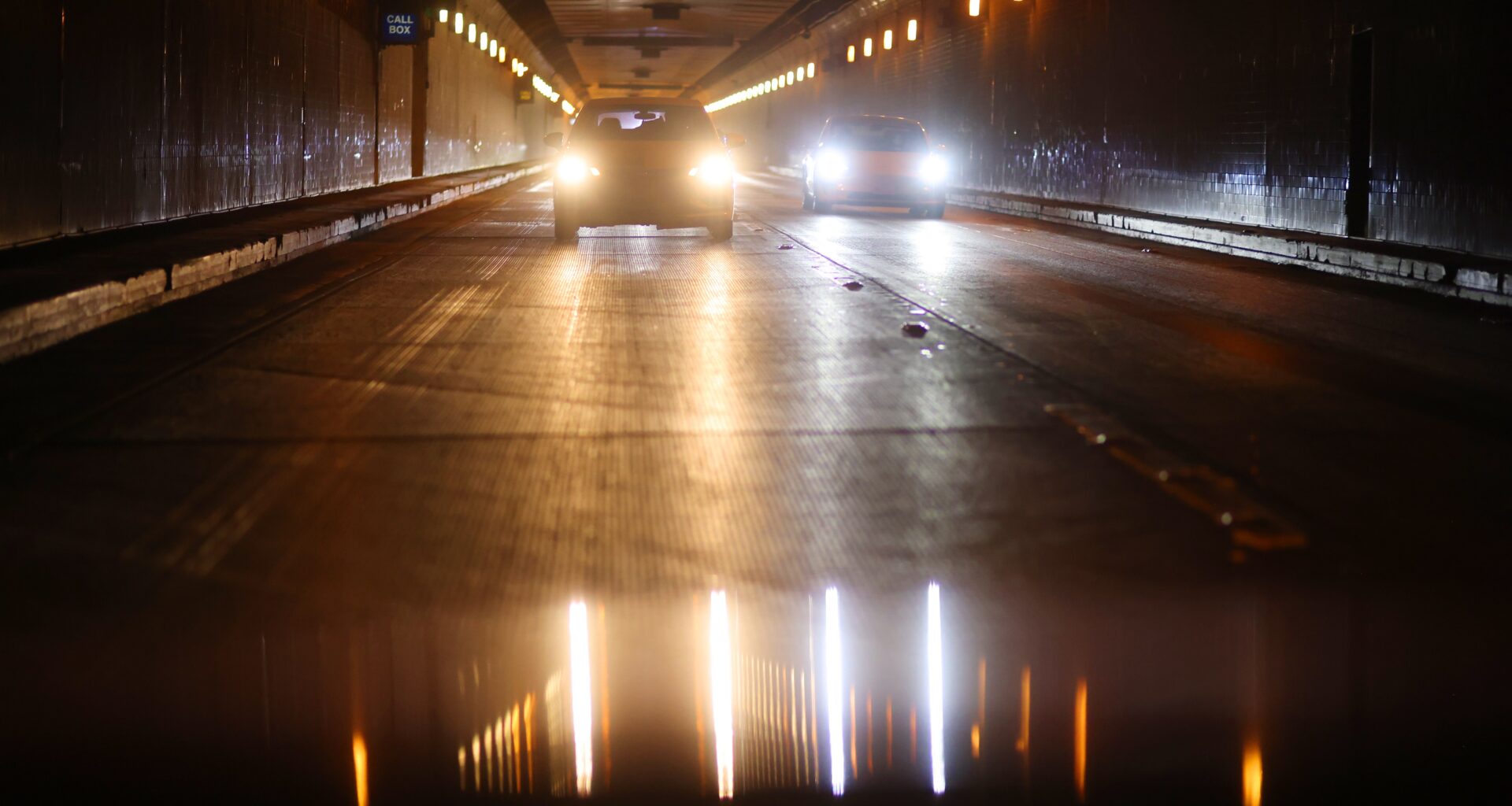
The new project will include an improved ventilation system, better lighting and upgraded drainage for three of the oldest routes in the four-tunnel system, which moves drivers along State Route 24 through the Berkeley and Oakland hills.
“It’s a smart investment to make sure the tunnel can keep connecting the East Bay for many more decades to come,” said Metropolitan Transportation Commission spokesperson John Goodwin.
Caldecott Tunnel was first opened in 1937 with two bores containing two lanes each going opposite directions. A third bore with two additional lanes was constructed in the 1960s. Before the fourth bore, containing two additional lanes, opened in 2013, traffic in the center tunnel would switch directions during peak hours to alleviate congestion.
The California Department of Transportation, the lead agency behind the new project, plans to replace fans in the three oldest tunnels with jet fans that are better equipped to manage smoke in case of a fire in addition to providing better airflow during day-to-day operation.
Upgrading the drainage system, repairing cracks, rust and water damage and improving the electrical and lighting systems are also meant to preserve the structural integrity of the tunnels.
Projects like what’s proposed at the Caldecott Tunnel are no easy feat, Worth said. They require broad buy-in from all levels of government, cannot be phased like many other highway projects and have to contend with a wide range of environmental factors.
The tunnel’s creation and upgrades over nearly a century have been “revolutionary,” as Worth put it, particularly for the central and east Contra Costa County residents once separated from the bustling business centers along the San Francisco Bay’s shoreline.
A smaller tunnel predates the Caldecott Tunnel by more than 30 years, but its higher elevation made it challenging to travel and it was often closed due to flooding and mud slides.
More than 160,000 commuters now use the tunnel daily, according to the Contra Costa Transportation Authority. That’s roughly twice the number of people who lived in Contra Costa County around the time the tunnel was first opened.
“Thousands of people a day rely on the Caldecott to get to and from Berkeley, including residents, workers and students, so this is a real win that allows them to come into our city safely. (I’m) glad to see the state investing in the infrastructure our region depends on,” Berkeley Mayor Adena Ishii said in a statement.
Construction is expected to take three years, beginning in November, according to the project’s environmental report. To mitigate traffic impacts, at least two bores, one going either direction, will remain open at a time, and some work will occur in the evenings and over weekends, according to the document.
Details on future closures, detours and other traffic mitigation plans will be shared with the public as the project moves forward.
The Caldecott Tunnel rehabilitation is among more than 150 transportation projects across the state that have received $2.7 billion in funding. A majority of the funding, $1.6 billion, comes from the Biden-era Infrastructure Investment and Jobs Act, a $1.2 trillion bill approved by Congress in 2021. Another $542 million comes from state Senate Bill 1, known as the Road Repair and Accountability Act of 2017.
“These investments support a transportation system that meets the diverse needs of communities throughout California,” said California Transportation Commission Chair Clarissa Falcon in a statement. “By improving safety, strengthening resilience, and expanding transportation options, these projects will deliver lasting benefits for Californians.”