

BAKERSFIELD, Calif. (KBAK/KBFX) — A proposed housing development in Shafter has become the latest flashpoint in an ongoing dispute with the California High-Speed Rail Authority, with city leaders arguing the neighborhood plans predate the rail project and the authority warning the development conflicts with its approved alignment.
Shafter Mayor Chad Givens said the city and homebuilder Lennar have had plans for the area since 2005, several years before voters approved high-speed rail in 2008. The city recently approved plans for about 1,200 Lennar homes in the Gossamer Grove area.
“Uh, High Speed Rail, um, they’re kind of the bully in the room. They don’t really care,” Givens said.
“Gossamer Grove was in existence well before High Speed Rail ever even decided to exist, let alone provide maps of where they were gonna go,” he said.
In an email, the city said Lennar approached the authority about selling the property. The city also said it was willing to discuss the development during the eight years since a 2018 settlement agreement, but the authority did not secure the right of way. The city said it now wants the authority to honor that agreement or return to negotiations on a new solution.
The authority, however, said the 2018 settlement agreement mainly focused on downtown Shafter and that it did not receive a formal objection to the alignment through the eastern part of the city.
“We have a hard time getting a hold of High Speed Rail. We try to have as much conversation as we can on our end, and Lennar’s in the same position,” Givens said.
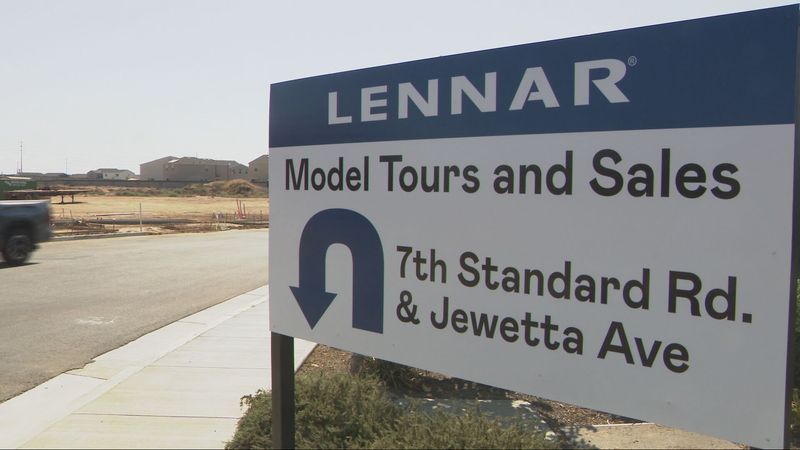
In a March letter to the city, the authority said the tract map is in direct conflict with the planned high-speed rail alignment. The authority said Tract 7422 was not included in the environmental review because it was not known as a future project at the time.
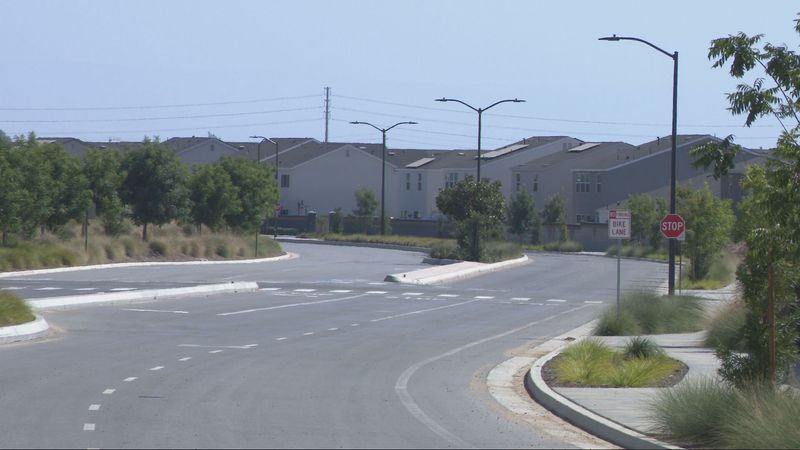
The authority is asking the city to remove streets, lots and other permanent improvements that fall within the alignment. If the current alignment moves forward, property owners could face the possibility of having their land acquired for the project.
Givens said some business owners have already felt pressure to accept offers tied to the rail project.
“We’ve had a lot of business owners who have already walked up to us and said, listen, I got an offer. I’m taking the offer because they’ve already, either, A, threatened for eminent domain or B, started the eminent domain process, and I don’t have the wherewithal to manage them,” he said.
Authority documents say the process generally starts with an appraisal once a property is identified as being in the path of the designated alignment. If an owner does not agree to sell, the authority’s documents say it can use eminent domain to acquire property for the project.
It was not clear how many Shafter properties are currently in negotiations, how many have received formal offers, or whether the authority has started any condemnation proceedings for specific Shafter properties.
Givens said he is not opposed to the rail project itself, but criticized its planning and management.
“So I’m not saying the high speed rail is a bad project. I’m saying it was poorly designed, and it’s being poorly ran, to my opinion,” he said.
With a projected delivery date in the mid to late 2030s, the city believes there is still time to find another route. “The best possible solution would be for CHSRA to go around the city of Shafter,” Givens said.