
Three months after the Trump administration pledged $75 million toward the construction of a controversial coal export terminal in Oakland, the project appears to be in line to receive millions more from another source.
A coalition of Utah counties is ramping up its plan to invest $45 million into the proposed fossil fuel export hub.
At a meeting of Utah’s Permanent Community Impact Fund Board on Thursday in Salt Lake City, members of the Rural Utah Infrastructure Coalition — including eight counties with significant coal, oil, and gas deposits — said coal has a bright economic future and provided an update on their plans.
“We have plenty of coal in the ground, we just needed a reason to take it out,” said Keith Heaton, the coalition’s executive director. “Asian markets are interested in continuing to burn thermal coal for the next at least 20 to 60 years.”
Reaching Asia requires a seaport on the Pacific Coast.
Led by county commissioners and state officials in Utah, the Community Impact Fund Board’s purpose is to use federal mineral lease revenue to help pay for infrastructure in rural areas impacted by the mining industries. Most of the board’s grants and low-interest loans are for drinking water systems, fire trucks, and roads, but since 2015 the board has also considered investing in the proposed Oakland coal hub, or some other facility to reach foreign markets.
Those early plans never came to fruition as the Oakland project was stalled by a city effort to ban coal and later moves by Oakland to kill the project. That prompted a series of lengthy lawsuits between developer Phil Tagami’s companies, which are leading the terminal’s development, and Oakland and environmental justice groups, which say the terminal would overburden communities already heavily impacted by air pollution.
Last year, members of the Utah board lamented the situation in California. In addition to Oakland’s opposition to coal, they noted during a June 5 meeting that the Port of Richmond planned to phase out coal shipments from its Levin Terminal this year, leaving Stockton as one of the few remaining places to ship coal overseas. Coal plants have been closing in western North America for years and Utah and its mining sector have been desperately searching for new markets.
Utah has considered Mexican ports, but members of the board noted in past meetings that cartels have hijacked trains and fossil fuel shipments, and stated that ownership questions make investments south of the border risky.
Still, one former board member, real estate developer and Utah Transportation Commissioner Naghi Zeenati, said during a meeting last year that he would “rather negotiate with the cartels of Mexico than California,” due to environmental opposition in Oakland.
The situation changed dramatically late last year when the California Supreme Court declined to hear Oakland’s appeal in the lawsuit it lost against Tagami’s company, ending the court battles and paving the way for the coal terminal’s construction. But the question remained as to where financing would come from. Estimated to cost $250 million a decade ago, the coal terminal might now cost as much as $400 million.
 Utah’s Permanent Community Impact Fund Board gets an update on Sept. 3, 2026 from the coalition of counties seeking to invest in Oakland’s coal terminal. Screenshot courtesy of Utah CIB.
Heaton said the Utah coalition and coal terminal developers have “come out the other side very favorably” after all the lawsuits. “Right now, the port is moving quickly but this is a big project with a lot of moving pieces, a lot of players,” he said at Thursday’s meeting.
The Utah groups commissioned a study regarding the feasibility of a West Coast coal terminal. According to a letter from the infrastructure coalition, the study showed that Utah’s coal exports will be profitable for at least 20 more years. The groups also looked into helping finance a coal export hub in Longview, Washington.
On Thursday, Heaton recommended the board split its investment between Oakland and Longview, with Oakland getting 80%.
The board will take up a vote on whether or not to fund the Oakland coal project at its October meeting.
The Community Impact Fund Board didn’t respond to The Oaklandside’s request Thursday for a copy of the feasibility study.
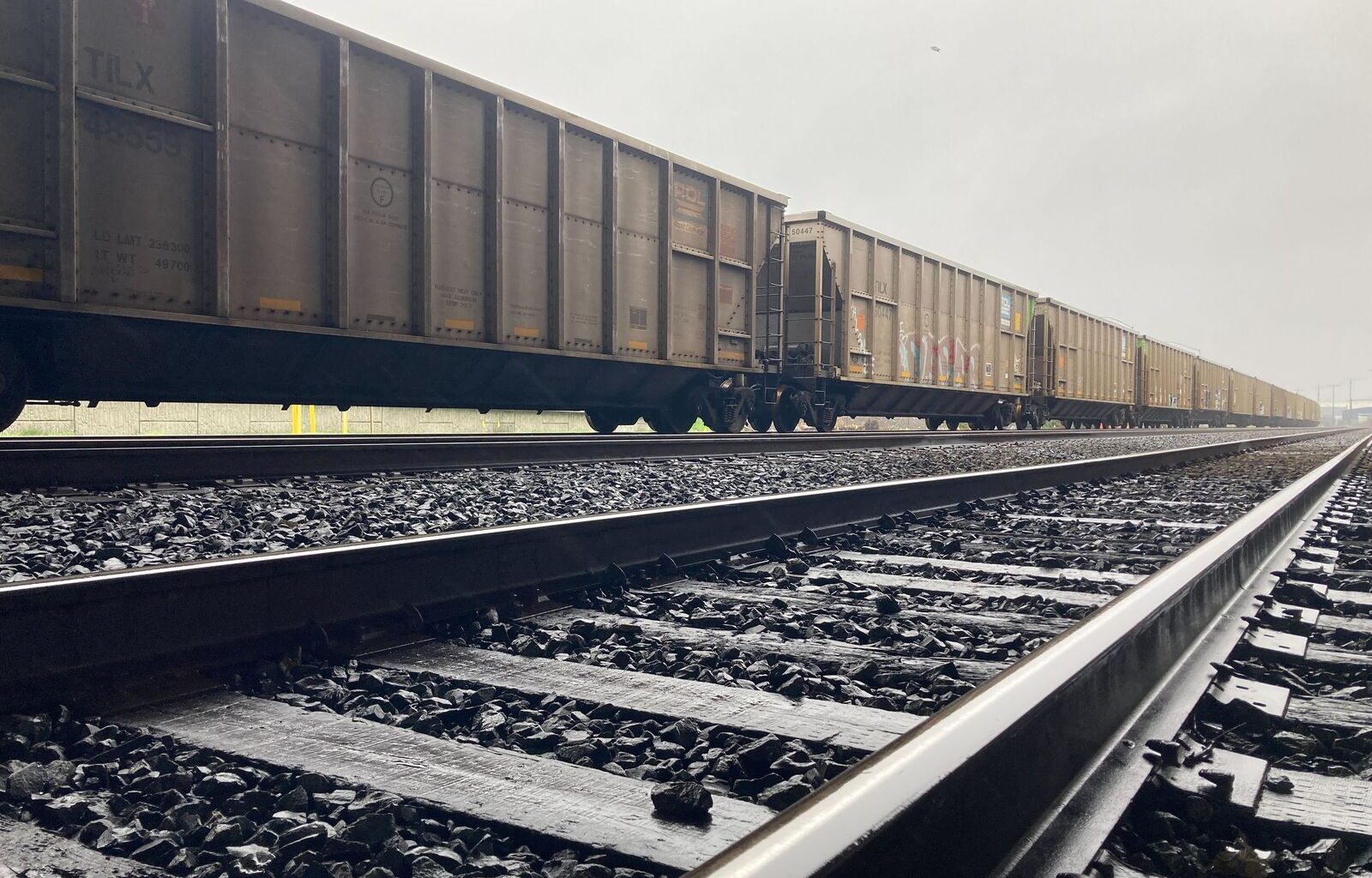
The proposed Oakland coal terminal would sit near the foot of the Bay Bridge on the former Oakland Army Base. It would receive coal shipments on trains and store the mineral on site before loading it onto ships bound for Asia.
Opponents say dust will blow off coal as it’s shipped through Oakland and other parts of the East Bay, sending tiny particles drifting into homes, schools, parks, and senior centers. The health impacts of exposure to coal dust range from asthma to cancer.
The coal terminal’s developer, Tagami, has said that an analysis conducted by his company showed no elevated health risks from coal trains that transited through Oakland from 2013 to 2021.
In 2016, the Oakland City Council banned the storage and handling of coal in the city. Tagami’s company sued in federal court and a judge in 2018 ruled Oakland had violated its contract and could not apply the ban to the proposed coal terminal.
Having lost in the courts, opponents are continuing to fight the coal terminal. This year, they began a campaign to try to convince the Bay Area Air District to impose strict regulations that would make construction and operation of the terminal difficult, if not impossible.
East Bay State Assemblymember Mia Bonta’s bill, AB 40, may also put up obstacles to the coal terminal. The law, if signed by Gov. Gavin Newsom, would require the coal terminal developers to prepare a new environmental impact report for the project, and take steps to mitigate hazards.
Many of the other projects considered for funding at the board meeting on Thursday had to do with rebuilding local infrastructure that was damaged by devastating fires and floods in rural Utah counties over the past several years. Some cities and counties also sought money to drill new wells and shore up water infrastructure in the rapidly drying region. Scientists say that climate change, fueled partly by the burning of coal, has turned the American west hotter and drier, feeding wildfires and other climate disasters.
“*” indicates required fields