
Stay up to speed with stories written by drivers, for drivers.
Get automotive news, DIY tips, market trends, in-depth car profiles, and more right in your email inbox.
Over the past five years, the best-in-show winners of the Pebble Beach Concours d’Elegance have been, in order: a 1932 Duesenberg Model J, a 1937 Mercedes-Benz 540K, a 1934 Bugatti Type 59, a 1924 Hispano-Suiza, and, most recently, a 1935 Duesenberg SSJ. Notice a pattern? Each of these cars is at least thirteen years older than the event itself.
However, in the first five years of the Pebble Beach Concours, the best-in-show winners were basically brand new. The prewar car trend didn’t really kick off until 1955, when a 1931 Pierce-Arrow took home the honors.
A modern obsession with prewar automotive manufacturing is entirely understandable at one of the world’s most prestigious concours. These cars are constructed by hand, their bodies shaped more by the eye than the wind tunnel, the bodywork frequently unique one-offs. Heck, at the microscopic level, there’s even a language to how they are built—the metalwork of an Italian car should bear the tiny pocks of a powerhammer, where something like a Bentley would have been shaped on an English wheel.
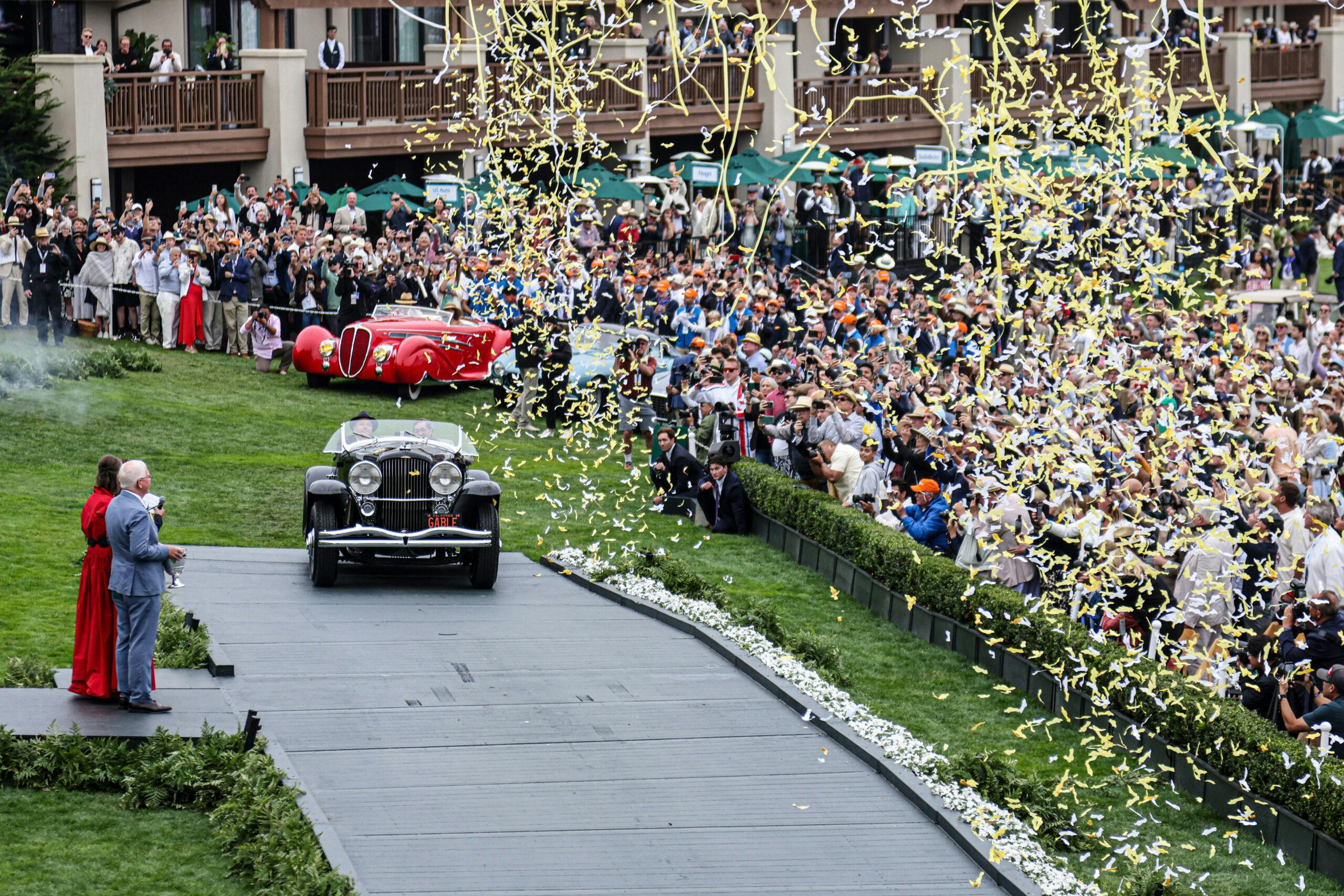
In short, they’re artwork. However, if we wind the clock back to the very first winner at Pebble Beach, we find another unique car that fits all the prerequisites that make prewar cars so interesting, but is actually a postwar creation. Even more interestingly, perhaps, it’s actually an accidental show-winner, not even listed on the program in 1950.
It’s called the Edwards R-26 Special and, far from being a footnote, it’s part of the pioneering story of racing on the West Coast. The first American-built special to take on the Pebble Beach road race, it blended European inspiration, Indy 500-winning know-how, and early V-8 hotrodding magic.
Were it not missing in action (more on that in a bit), a restored Edwards R-26 might be just the thing to break the prewar stranglehold on Pebble Beach. But then again, its owner and creator was more concerned about winning races than concours. As it happens, it’s only the first Pebble Beach best-in-show because he figured that the race’s start-stop line wasn’t too far from the concours.
America in Europe
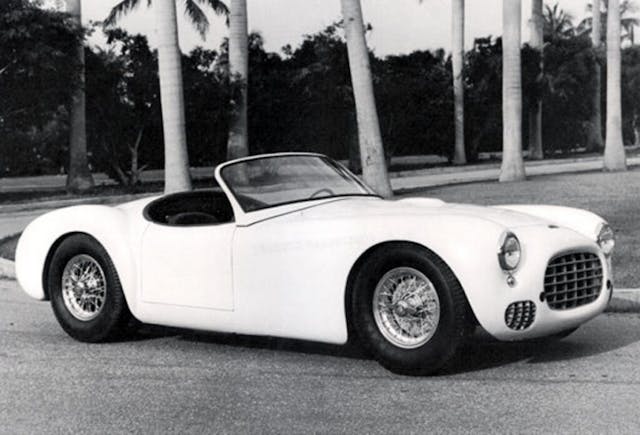 Cunningham C-1B.S. Cunningham Company
Any student of this era of change in America’s car industry is probably thinking, “Hey, this sounds a bit like the Briggs Cunningham story.” Basically, it is, though a parallel evolution based on the West Coast. Cunningham’s Cadillac-based special, Le Monstre, debuted at Le Mans in 1949, and he produced the C1 sports car in 1950.
Sterling Edwards revealed his take on a European-style sports car right between Cunningham’s racing Cadillac and C1, showing it off in the fall of 1949. It appeared on the cover of Road & Track magazine in the December issue of that year.
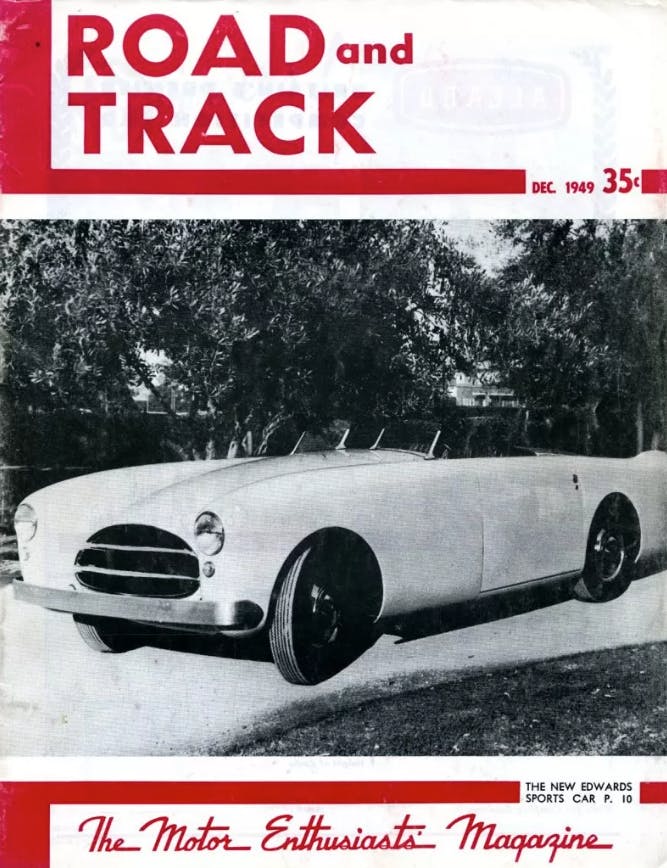 Hearst Magazines
At this time, sports car racing hadn’t yet blossomed on this side of the Atlantic. Road & Track was barely two years old when the Edwards R-26 graced its cover. But in the postwar boom, the wealthy offspring of American banking and industrial empires were often found holidaying in Europe, and they liked what they discovered there.
Edwards was from a steel-manufacturing family in San Francisco, and is said to have first come across the sports car phenomenon while attending the winter Olympics in the Swiss Alps. On that trip, he saw a small Italian roadster, quite possibly a Cisitalia 202 MM. You can see a little influence of the Cisitalia’s fins in the shape of the R-26.
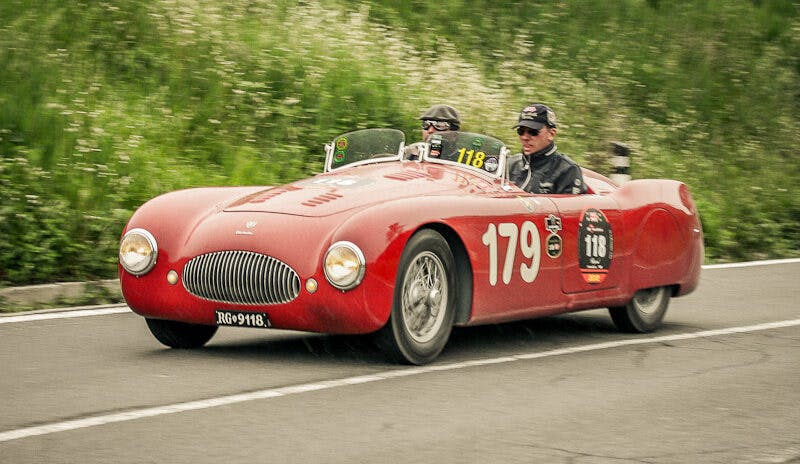 Cisitalia 202 SMM Spyder NuvolariWiki Commons/paPISC
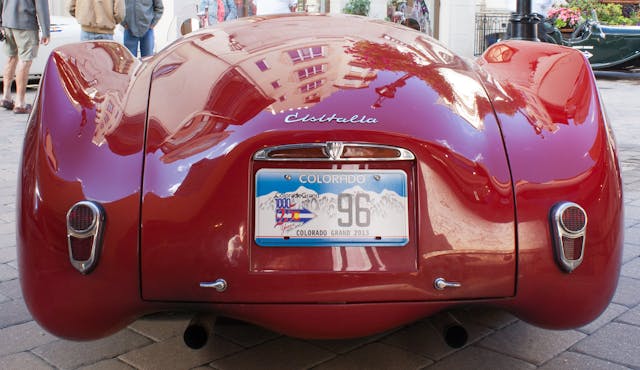 Flickr/Shogun_X
Returning to San Francisco, Edwards set about creating his own idea of what an American-made sports car might look like. He sketched out his own design, and sought out knowledgeable constructors and engineers to help make it a reality.
For chassis and bodywork, that meant knocking on the doors of the people who built Indy racers. German-born Emil Diedt and Czech-American Lujie Lesovsky were an experienced pair, with Diedt having built the winning cars in the 1947 and 1948 Indianapolis 500. Edwards also brought in Norman Timbs, who had particular expertise in aerodynamics and had worked on those winning cars, too.
Details on the R-26’s construction have become a little muddled over the years. Because Edwards later built road cars with fiberglass bodies, some sources suggested his special was built with a fiberglass body, but this is not so.
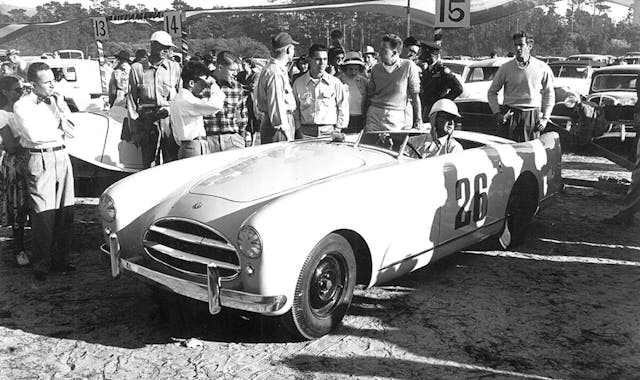 Pebble Beach Concours d’Elegance
Happily, early American racing historian and writer Mark Brinker has just completed an exhaustive history of the racing scene in California at the time, and has dug up the salient details on the R-26. His four-volume set is called Heroes of the Forest: The Complete History of the Pebble Beach Road Race, and it comes with rave reviews from the likes of Derek Hill, whose father, Phil Hill, actually raced against Sterling Edwards in those days.
The R-26’s chassis was built of tube steel, and the bodywork was hand-formed aluminum. The engineering was pretty advanced, especially for its day, featuring fully independent suspension at all four corners. As this was a sports car, not a pure racer, the interior was lined with fine leather, and a removable hardtop and windscreen were added. Stripped down for racing, the R-26 tipped the scales at just 2380 lbs.
For power, a 2.5-liter (136-cubic-inch) Ford V-8–60 engine was built up by Eddie Meyer, a well-known Flathead–V-8 specialist. It later ran Ardun overhead-valve heads, which would have made it even more lively, but when raced at Pebble Beach in 1950, it’s estimated to have put out around 125 hp.
Those are pretty competitive figures, and Edwards managed to win the Del Monte Trophy at that 1950 race. Brake issues kept him out of the Pebble Beach Cup that year, but the R-26 had already notched its belt twice earlier with wins at Palm Springs and Buchanan Field. These are among the very earliest major auto races held in California after the war.
The car would go on to rack up wins both in class and outright over the next several years, with Edwards himself at the helm. However, from here, what happened to R-26 gets a little murky.
First in Fiberglass
Looking to build a racecar that was even lighter and more powerful, Edwards turned towards a then brand-new composite material—fiberglass. Confusingly, he called this new car the R-62, with a chassis sourced from a Kaiser Henry, and power from a Chrysler V-8. It was plenty fast, but the V-8 was perhaps too powerful for the chassis, causing it to twist under power.
R-62 appears to be the first fiberglass-bodied sports car anywhere in the world, not just in America. Much later, the material would see its reputation sag in the kit-car era, but for a long time, specialist manufacturers like Devin and Chevrolet, with its more mainstream Corvette, proved that lightweight fiberglass was very high-performance indeed.
The R-62 also ended up bringing Edwards’ ideals to the road. With the two specials built, he turned towards the idea of building and selling a production sports car. These cars would be called the Edwards America, and after a prototype was made with an Oldsmobile V-8, five more were built using Ford chassis and Lincoln V-8 power.
As is typical of startup car makers in this era, high prices meant low sales, and Edwards soon lost interest in trying to make his own San Francisco-built sports car a reality. He also seems to have given up racing in the mid-1950s.
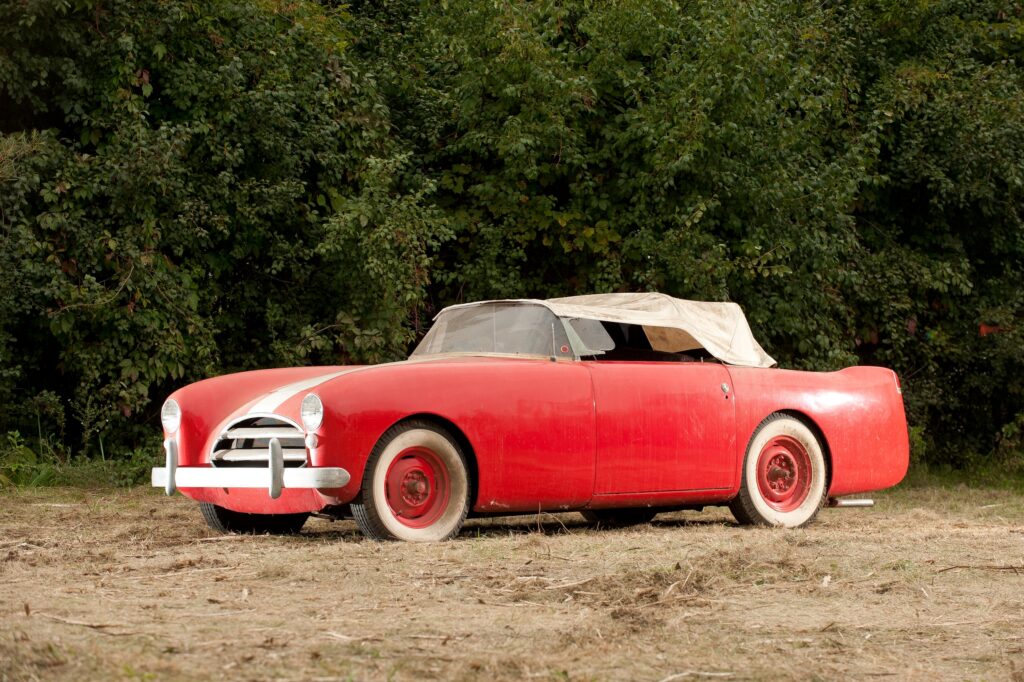
Before that, however, he had his R-26 rebodied in a more race-purposed form, with cycle fenders and a torpedo body. The original aluminum body was removed and sold to a friend in Chicago, and it still exists. It was sold at auction in 2024 for $143,750.
The original chassis and its new body raced at Pebble Beach twice more, in 1953 and 1954, managing podium finishes in class. Edwards had moved on to a Ferrari 340 MM, and his creation was campaigned by his friend, Barry Wagner.
From here, the trail of R-26 goes cold. As mentioned, the original body still exists, but the chassis that underpinned it is missing. Possibly, it’s still out there somewhere, waiting to be reunited with the bodywork drawn by the man who gave it his own last name.
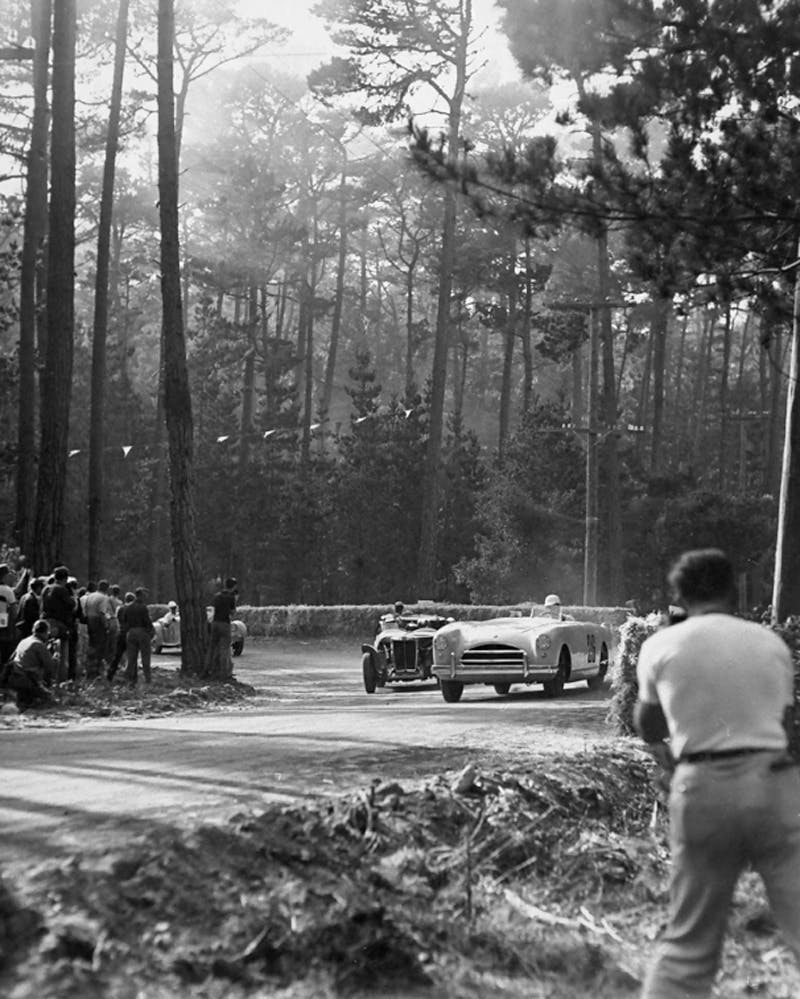 Instagram/pebblebeachresorts
The Edwards R-26 is a singularly important car. The product of the man who fought to bring racing to Pebble Beach, and thus instrumental in creating the supporting Concours, it’s a part of California’s motorsport heritage. As a car, it’s one-of-one; its construction on par with any European coachbuilder.
Perhaps it’s out there somewhere, waiting to be discovered, a story looking for a conclusion. If it’s ever found and restored, one would think it’d have pretty good odds for another good showing at Pebble’s 18th fairway.