
The sound that we started, they stealing it
But that just let us know they still feeling it
—Mistah F.A.B, “Still Feelin’ It”
In 2006, hyphy was the reigning buzzword in Bay Area hip-hop, a source of regional pride — and national attention. Local artists, all working variations on the same sonic theme, dominated commercial radio playlists. But just a few years later, the musical genre and cultural movement had all but disappeared from mainstream pop culture.
Now, 20 years later, hyphy’s cultural significance and musical legacy have come into focus, as we see a wave of faithful homages, inspired adaptations, and as hyphy music evolves into a broader West Coast sound. We’re also witnessing a fresh examination of what was at the root of hyphy’s rebellious, youthful anti-authoritarianism.
READ PART I of The Oaklandside’s series on the Summer of Hyphy
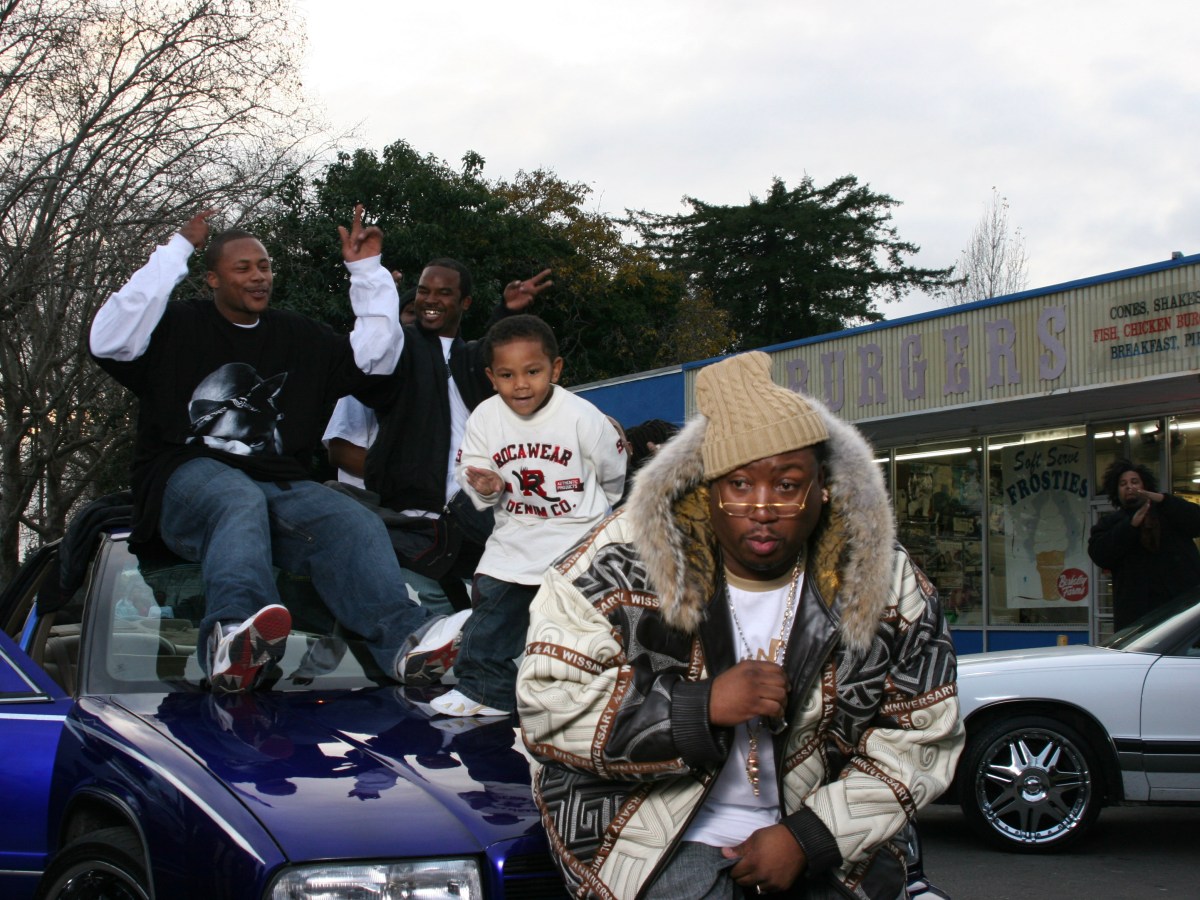
Looking back, Oakland rapper Mistah F.A.B. said he sees hyphy as an engine of community-building. When hyphy artists had local shows, their peers came out, creating a scene that reinforced a sense of unity and mutual support and an intensity among hyphy’s fans, who participated in the culture, emulating its style and aesthetics, even as major labels never fully got on board the yellow bus.
To this day, F.A.B. believes hyphy could have gone national, comparing it to ratchet music in Shreveport, crunk in Atlanta, and chopped ‘n’ screwed in Texas, “similar local movements,” he said, “that was pushed on us nationwide.”
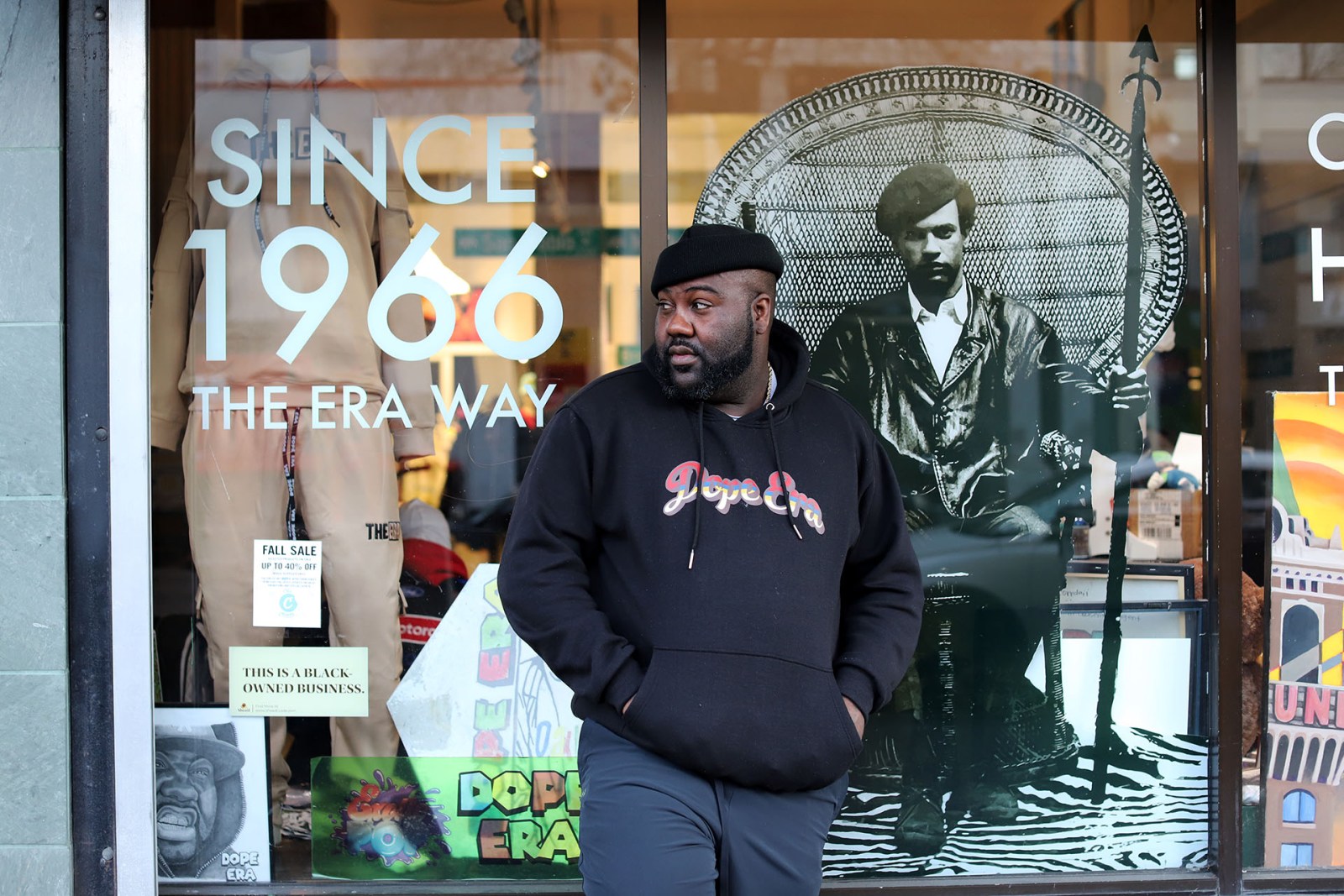 Mistah F.A.B. outside his streetwear boutique, Dope Era, in January 2022. Credit: Nastia Voynovskaya/KQED
While that may be true, none of those other musical genres were as subversive as hyphy or had such a developed subculture. Crunk only existed within nightclub spaces. Ratchet didn’t have a dance or car culture component. Chopped ‘n’ screwed was a music production technique, not a lifestyle. Each proved easier to co-opt and market to mainstream audiences.
When commercial radio support of hyphy faltered, so did major-label investment in hyphy’s young upstarts. That collapse of support resulted in a lot of finger-pointing, but multiple factors were responsible: contractual entanglements, sample and licensing issues, the public safety controversy over ghost-riding, and an industry-wide decline in rap sales.
F.A.B.’s aborted album for Atlantic, “Da Yellow Bus Rydah,” for example, was the casualty of a feud with KMEL’s then music director Big Von Johnson, sparked by KYLD’s decision to air the Oakland rapper’s “Yellow Bus Radio” program directly opposite Johnson’s prime-time evening show.
“I got banned from the radio,” F.A.B. recounted. “The label is looking [at me] like, ‘Bro, what the hell happened?’”
Two decades after helping lay the blueprint for a new Bay Area sound, F.A.B. has also helped spearhead a revival, boldly reclaiming the term with numerous albums revisiting the hyphy era. He’s made several tribute songs delivered in the rap styles of Yay Area icons Keak Da Sneak, E-40, Too $hort and Mac Dre. For him, the 2006 vibe is now a badge of honor he wears as resolutely as he once sported that yellow safety helmet. On “Hyphy Story,” released in 2018, he reminisces over a version of the Beastie Boys’ “Paul Revere” beat.
Here’s a little story, I gots to tell
About some boys from the Bay you know so well
It started way back, we made history
It was DJ Fresh, Traxamillion and me
Keak Da Sneak is how it got started
Hyphy movement is what they really called it
R.I.P. to the homie Mac Dre
Somethin’ terrible, tell ‘em how we coming in the Bay
The truth is, hyphy never really went away. Even when it was considered played out locally in the early 2010s, it subsisted through underground, indie label turf rappers like Keak, D Lo, J. Stalin and The Jacka, whose core audiences remained loyal to the soil.
Hyphy’s influence can be felt in 2011 hits like Georgia rapper Tyga’s “Rack City,” LA emcee 2 Chainz’ “I’m Different” and Toronto-based Drake’s “The Motto,” which achieved mainstream success by tapping into what had been a regional sound. As a 2014 USA Today story noted, “the Bay Area’s sound was re-introduced nationally” — but not by Bay artists. DJ Mustard, the LA producer behind 2 Chainz and Tyga, told USA Today he grew up in the hyphy era, listening to E-40 and Mac Dre, but stopped short of crediting the Bay for inspiring his production style.
In 2012, Clyde Carson’s single “Slow Down,” featuring East Oakland hyphy pioneers The Team, became that year’s most-played song on KMEL and went to No. 1 at LA’s Power 106. “Slow Down” was essentially a hyphy track, its rough edges slightly smoothed over to make it more accessible for commercial radio. The song charted on Billboard, then got featured in the video game “Grand Theft Auto V.”
The post-hyphy era has been largely defined by a new generation of young Bay Area artists including IAMSU!, P-Lo, Sage The Gemini, Jay Ant and Kehlani, who formed North Bay hip-hop collective Heartbreak Gang, or HBK, back in 2008. They built on the hyphy template, evolving the sound and developing national followings as independent artists through tours with G-Eazy and Wiz Khalifa. An early hit, Sage the Gemini and IAMSU!’s 2013 “Gas Pedal,” showcased P-Lo’s production style — smooth and minimal, with EDMish synths and resonant bass, evoking hyphy beatsmiths Young L and Traxamillion.
“I’m hyphy as f*ck so that energy shows through my music,” P-Lo told the East Bay Express. “That’s what needs to be put in the forefront, the free-spirited energy to express how you feel.”
Kamayiah and G-Eazy both grew up attending turf dancing battles at East Oakland community center Youth UpRising and became successful major-label acts during the 2010s — again focusing the national spotlight on Bay Area hip-hop. G-Eazy took HBK artists on tour, while Kamaiyah’s “Ain’t Going Home,” which told the story of a girls’ night out partying Town-style, became a hit in 2016.
You know how we do it, we get Oakland live
I’m just riding, chilling; this is how I’m living
Watch me swerve and get no ticket
Put your blunts up if you feel it
Public conversation around hyphy’s cultural legacy deepened after a 2015 Beats by Dre commercial recreating E-40’s iconic “Tell Me When To Go” video, featuring Golden State Warriors star Draymond Green. The ad, which aired nationally during that year’s NBA Finals, transports Green back to the 16th Street train station in Oakland, where he’s surrounded by the dread-shaking Turf Feinz and swerving muscle cars.
A year later, Complex magazine published “An Oral History of Hyphy,” a look back at the movement’s rise, fall, and growing influence.Part of hyphy’s legacy, $hort told Complex, was its influence on artists from outside the region. “People were on that vibe of what the Bay music sounded like, and without even acknowledging it,” he said. “They kind of incorporated the best, commercial elements of Bay Area music.”
“Everything I hear now is what we started,” Keak said. “But I can’t say they bitin’ us. What I call it is paying homage.”
In 2017, veteran Bay Area production duo Tha Mekanix — whose resume dates back to the Digital Underground era — produced an entire Keak Da Sneak album, “Withdrawlz.” The album stands as one of the Rolling 100s rapper’s best over a career that’s spanned four decades. A video for the single “Zippin” celebrated the muscle car culture still revered in East Oakland.
Reach for the D, I’m on the gas, right foot heavy
Dropping low low breaking down corners in the Chevy
I’m not pulling over on ever, plus I got warrants
No L’s and I’m dirty strapped with thirty Astro fluid joints
On point, checking size in my rear viewing
Daredevil, all the shit they told me don’t I’m doing
Bust a U and whip runnin’ got me cuttin’ up
Left hand swinging donuts, right pinky throwing Hunnids up
Another Keak x Mekanix collaboration, the 2020 single “Steal My Word,” offered a rambling discourse about Keak being “hyphy-ed out” since his Fremont High School days, over a replayed version of $hort’s 1988 classic “I Ain’t Trippin.’” The song strongly argues for an Oakland/Bay Area foundation for West Coast rap.
All of these developments illustrate that hyphy was never dependent on record label executives. It was an organic culture birthed in the streets of Oakland, whose lifespan has outlasted the movement’s corporate dalliance.
Those knocks, blaps and slumps
As hyphy elements have appeared in songs by artists from other regions over the past 15 years, the Bay Area has responded by updating the sound into the broader genre of “slap music.”
“Slap” is the slang term for beats with deep bass, minimalist melodies, and prominent handclaps or hard kick drums, synonymous with “knocks,” “blaps” or “slumps,” terms all derived from the physical impact of playing the music at loud volumes while driving in a car outfitted with a system loud enough to vibrate the entire vehicle. The obsession with the slap sound has been a driver for West Coast rap, transcending even lyrical content in importance. Back in 2006, Keak explained to MTV’s Sway Calloway that new recordings were scraper-tested as a matter of routine.
Over the past nine years, songs like F.A.B.’s “Still Feeling It,” P-Lo’s “Put Me on Something,” E-40’s “The Bay” and “Bay Area Anthem,” and LaRussell’s “I’m From the Bay” — to name a few — all either evoke or directly reference hyphy. Regional pride in the Bay is trending, and hyphy’s legacy is at the center of it.
Video treatments for many of these songs again make Oakland seem both glamorous and dangerous. “Bay Area Anthem” juxtaposes drone shots of the Grand Lake area and the port’s loading cranes with stripper-pole twerks, ATV wheelies and lowrider hydraulics.
“Still Feelin’ It,” F.A.B said, aimed to “bring that ‘06 Fabby back,” honoring the memories of Mac Dre and The Jacka, while reasserting sovereignty over the sound and swagger that started in the Bay.
Now can I get a YEE, for who I’m in the building with?
Who I came with is who I’m still chilling with
The sound that we started, they stealing it
But that just let us know they still feeling it
E-40’s “The Bay” video updated the hyphy formula while evoking 2006’s “Tell Me When To Go,” with Las Vegas-certified dance act the Jabbawokeez standing in for original turf dancers the Arkitechs.
We gon’ make ’em bring out all the candy toys
This slap right here is hyphy on steroids
In short, intergenerational respect has been a hallmark of Hyphy 2.0.
LaRussell name-drops iconic Bay rappers who came before him on “Pop My Collar” and “I’m From the Bay”; P-Lo updates Too $hort’s “Sideshow” lyrics on “E-40’s “Bay Sh*t,” also featuring $hort. Many recent collaborations have featured rappers from different eras of Bay Area hip-hop — OGs like E-40, B-Legit, Spice-1, and Too $hort and hyphy era stars like Keak Da Sneak, F.A.B. and Clyde Carson, all mixing it up with post-hyphy prodigies like P-Lo, G-Eazy, and IAMSU!
The collaborative nature of Hyphy 2.0 has also resulted in more regionalism and less territorialism in Bay Area hip hop. While videos like P-Lo’s 2025 “Had To” project a lavish, international player image, they’re rooted in the grit, grind and hustle that has characterized Bay Area rap through its many eras.
A high point in hyphy’s sonic revival came in 2017. That’s when the F.A.B./Traxamillion reunion, “Can’t Kill Hyphy,” responded to Keak surviving a robbery and shooting.
“You know what would be crazy?,” F.A.B. says in the song’s video. “If we brought that ‘06 sh*t back one time.”
“On some hyphy sh*t?”,” Trax responds.
They were dusting off swag and attitude, getting the band back together again to honor a fellow OG and reclaim the thing that was taken.
Hey, I don’t think they know, they some nerds
Shaboobalaboopy, that’s my word
Did on my first win what n*ggas don’t do until their third
Hyphy ain’t dead, them n*ggas just scared
Hands on the clock gettin’ turned back
Year 2006, where the herb at?
The Bay fell off? N*gga what? I heard that
Been gettin’ lit, tell the world we want our word back
That same year, P-Lo’s “Put Me on Somethin’,” featuring E-40, referenced F.A.B.’s 2005 “Super Sic Wit It”; in the chorus, the Filipino-American rapper from Pinole scolds doubters and forecasts a Bay Area resurgence.
If they hatin’ got a price to pay
California on my license plate
Last year they ain’t even like the Bay
As P-Lo would later tell Maekan magazine, ”In the Bay we’re living in the future with all the different ideologies and backgrounds. With HBK, there were so many people that came together and created something that was unique, multicultural, and progressive.”
By the time E-40 released his quadruple album last weekend, on August 29, efforts by Bay Area artists to reclaim hyphy and its legacy were pronounced.
“I’m From the Bay,” released earlier this year, immortalizes hyphy’s peak year, while bigging up the Bay Area as a place of vibrancy and inspiration and acknowledging those who came before.
This ain’t nothin’ you ain’t heard before
I put a new twist on a slap from ’06
And the self-referential verses of Lyrics Born’s 2026 single, “I Love Myself,” featuring P-Lo on the song’s hook, infuses the spirit — and humor — of Mac Dre’s “Feeling Myself” with the wry irony of a stylistic chameleon who doesn’t have to try too hard to make a relevant song.
I ain’t gotta be witchu
I got myself
I was cheating on me
I caught myself
I’m drippy, I’m pretty
I’m hot myself
Slidin’ in my own DMs
I blocked myself
I don’t need more drama
I’m a lot myself
The brilliance of “I Love Myself” lies in its simple, plaintive aesthetic. The Skyline High alum toes the line between narcissism and self-care, eschewing the funk and classic hip-hop trappings of his prior material in favor of a minimal, pulsating beat perfect for ghost-riding the Prius.
Lyrics Born was a hyphy observer 20 years ago. This time around, he wanted to get involved. “It just felt like it had been bubbling in the culture recently,” he said. “And I was like, Okay, well, this gives me the opportunity to fully participate and not just be adjacent.”
“It was meant to be a hyphy throwback,” Lyrics Born said of the song. “It just felt like a hyphy revival was in the air and it was ripe.”
‘In retrospect, something was up’
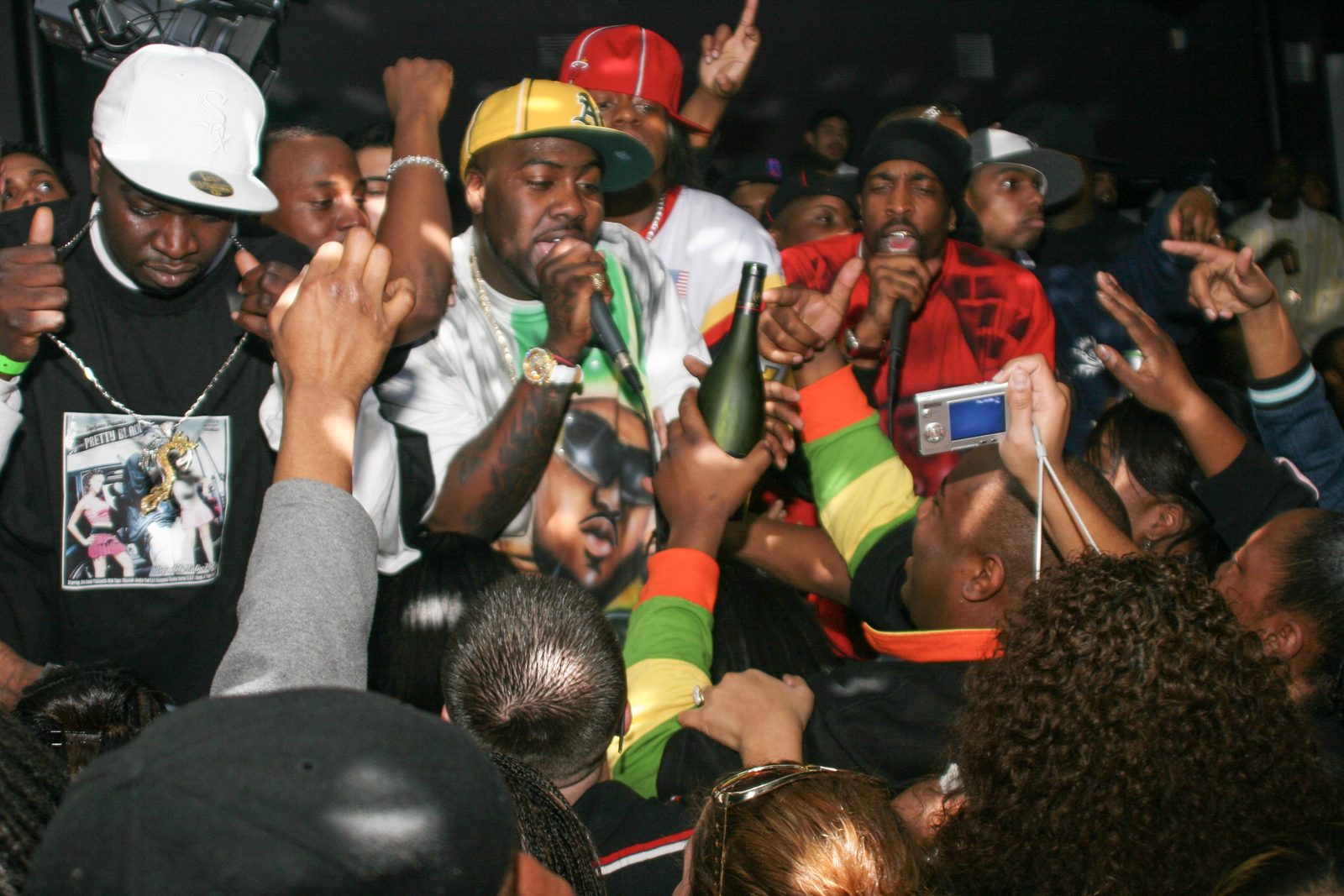 Mistah F.A.B. performs with Kuzzo Fly at the old Club Ibiza in East Oakland in 2006. Chopper Young City, from MTV’s Making The Band, is in the red hat. Rapper Pretty Black is at left in the white hat; he was shot and killed in Oakland in 2008. The Jacka is in front, holding the bottle; he was shot and killed in Oakland in 2015. Credit: D-Ray
The revival has unlocked hyphy’s deeper meanings. It’s become the subject of doctoral dissertations, documentaries and podcasts exploring themes of generational trauma, socioeconomics, and the politics of the flatlands.
An older and wiser F.A.B. certainly sees things differently than he did at age 25. Had his major-label deal worked out then, “I wouldn’t have had the mental fortitude to deal with it,” he said. Refusing to stay resentful, he’s focused on all that he’s been able to accomplish by staying rooted in Oakland. He’s become a parent, a community activist, a clothing designer, a club owner, and a mentor to inner-city kids, all while still releasing music independently, getting featured on records by West Coast titans E-40 and Snoop Dogg, writing for other artists and re-establishing himself on the battle rap circuit.
Most importantly, he says, he was able to spend time with his mother before she passed. His Oakland nightclub, Dezi’s Lounge, which he opened in 2021, is named after her.
His retail shop, Dope Era, originally in North Oakland, now stands out as a Black-owned business in a post-gentrified downtown. The brand, known for its limited edition runs, has become synonymous with Oakland street credibility. Before it was shuttered due to a fire in the apartments above, the store had become a gathering place for local and visiting hip-hop celebrities.
And then there’s the program F.A.B. created in 2023 after he went public about his debilitating anxiety attacks. Called “Thug Therapy” — the acronym stands for “Teaching, Healing, Uniting, Guiding” — the program is a recurring safe space where Black men can address mental health challenges, share experiences, and engage in supportive community discussion. It may be the most significant development in the hyphy revival to date.
“It was like, ‘Yo, I know I can’t be the only person going through it. Now let me be the voice for the voiceless, let me be the voice of the village,” F.A.B. told NBC Bay Area.
Held at various locations, including Dezi’s Lounge, Merritt College and Oakstop, Thug Therapy has featured speakers ranging from hip-hop journalist and educator Davey-D to former drug kingpin Lil D to “Sinners” director Ryan Coogler.
The free community events are a 180-degree turn from hyphy’s aggressive, hypermasculine aesthetic. Instead, they encourage emotional openness and even vulnerability.
“I’d never take those years and disregard them,” F.A.B. said. “Those years helped formulate what is today. I was able to use the platform that those years created to create a brand that connects with the people. I was able to dive deep down into the community and create grassroots programs…organizing, galvanizing. And it was all based off my popularity from that time.”
“We Were Hyphy,” which aired on PBS in early 2023, starts out as a love letter to hyphy, from the perspective of those who participated in it. “For us Bay Area youth,” says Benjamin Early Turner, the narrator, “it was everything.” By the end it gets deep, as Dr. Andrea L. Moore, an associate professor of Ethnic Studies at Cal State Sacramento, explains that the hyphy generation was made up of “the children of families impacted by the crack epidemic in the ‘80s, who are now in the streets. They’re the people who began to release unbridled anger and frustration, but also joy.”
Photographer D-Ray, who’s originally from Hayward but has attained All-Bay status, chronicled hyphy from its inception in the early 2000s. She recalled being contacted by the documentary’s producers, who used several of her images in the film. She said she agreed to be interviewed for the film “only if I could talk about The Jacka,” a rapper and personal friend of hers who was murdered in Oakland in 2015. She appears in the doc in a purple Jacka hoodie, and she’s brought to tears as she speaks about him.
“I didn’t know what I was doing,” D-Ray told The Oaklandside of those years. “I didn’t know I was documenting a whole movement.”
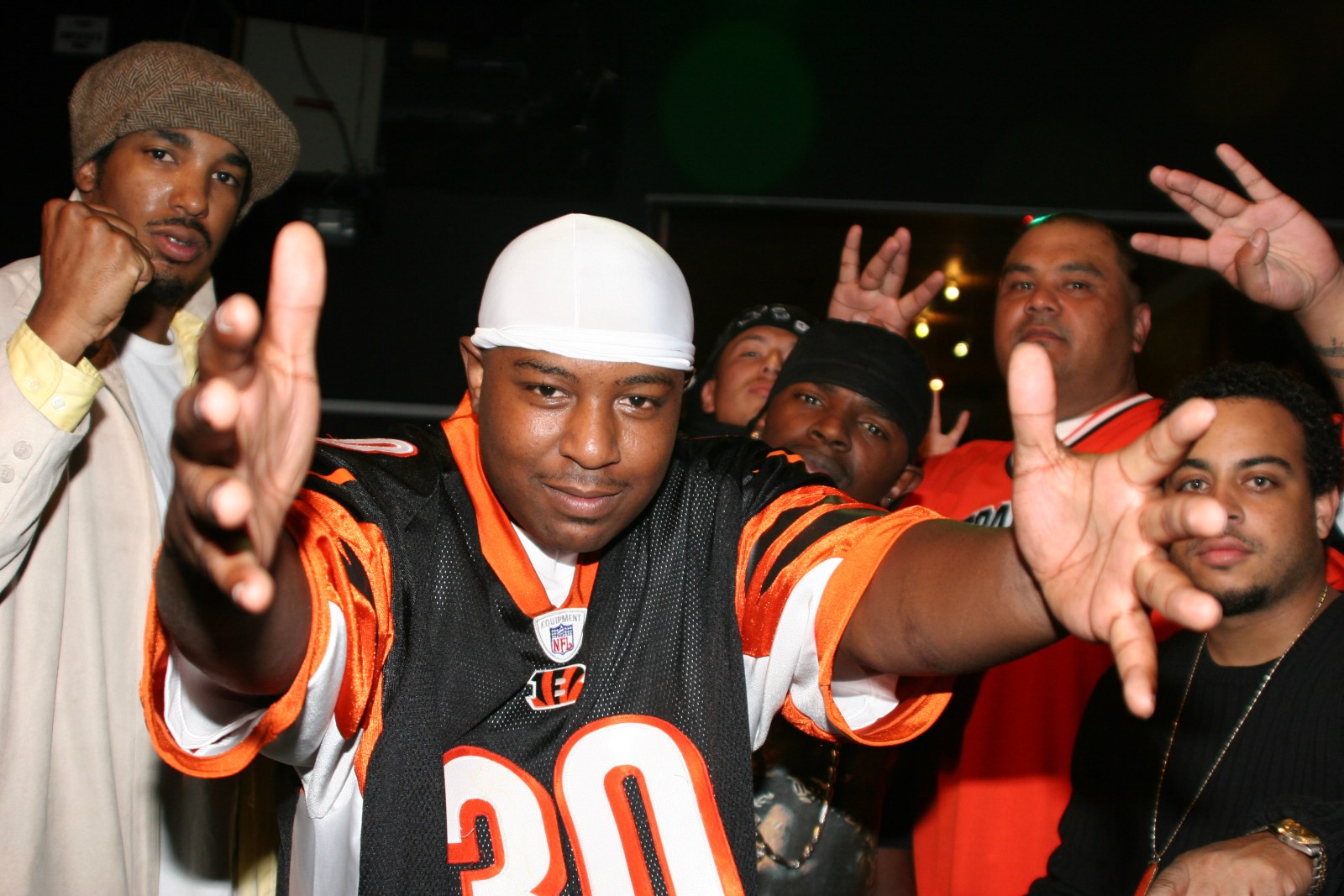 The Jacka at the Milk Lounge in San Francisco, September 2005, with East Bay rapper Husalah, at left in the brown hat. The Jacka’s friend, the photojournalist D-Ray, snapped the shutter just as he reached out to hug her. Credit: D-Ray
D-Ray was Thizz Entertainment’s staff photographer and worked at Youth UpRising; she was present at the “Tell Me When To Go” video shoot. She was all-in for hyphy’s best years, documenting tours, video shoots, live performances and casual hangouts. But she stopped shooting regularly after losing too many loved ones.
The death of The Jacka in 2015 was a crushing blow for D-Ray. Grief led her to pull back from the intensive engagement she’d had for years with Bay rappers.
“Who would want to hurt Jack?” she said. “He’d give you the shirt off his back. It really bothered me that I was outside taking pictures of people that didn’t love my loved ones.”
Her grandma’s passing in 2024 was a final straw. “It was too much,” she said. “I just don’t have the passion to go outside and take pictures anymore. I’ll go to a community event and I might not take my camera out of the camera bag.”
Still, she’s assembled an archive of some 15,000 of her hyphy-era photographs honoring fallen icons Mac Dre, The Jacka and Traxamillion, along with living artists like The Team, F.A.B., and Keak Da Sneak, as well as turf dancing participants, whips being ghost ridden and fearless donut matadors. And she’s got a new Nikon Z8 that may see some action yet.
The same year the PBS documentary came out, KQED released “Hyphy Kids Got Trauma,” a podcast hosted by Pendarvis Harshaw, with sound design by Trackademicks. Over four episodes, Harshaw recounted how 2006 impacted him and his friends in ways that were both grievous and exhilarating. He got perspective from rappers such as Tajai Massey of the Hieroglyphics, who recalled how he almost singlehandedly lowered the crime rate in the Murder Dubs by opening up his studio there to local turf rappers. For real tho.
In an interview with The Oaklandside, Harshaw recalled his first hyphy experience: a house party he attended during seventh grade. He remembered getting a lap dance as “Alright Cool” by Keak Da Sneak played in the background. Suddenly the plastic chair he was sitting in broke and he and the young dancer tumbled to the floor.
Hyphy giveth, and hyphy taketh away.
As a teenager, Harshaw grappled with far bigger losses — including the deaths of friends and comrades in the midst of the hyphy maelstrom.
“We didn’t have the terminology to express mental health crises,” he said. “In retrospect — looking at the high rate of homicides, our indulgences in substances, be it pills, alcohol or really strong marijuana, and just showing out, wanting attention, for some pretty wild reasons — something was up.”
Years later, he saw the words “hyphy kids got trauma” inscribed on a wall, and it resonated. “I’m like, Oh, ok, I’m not the only one who realized it. That was a very traumatic time.”
A gangster and a trickster
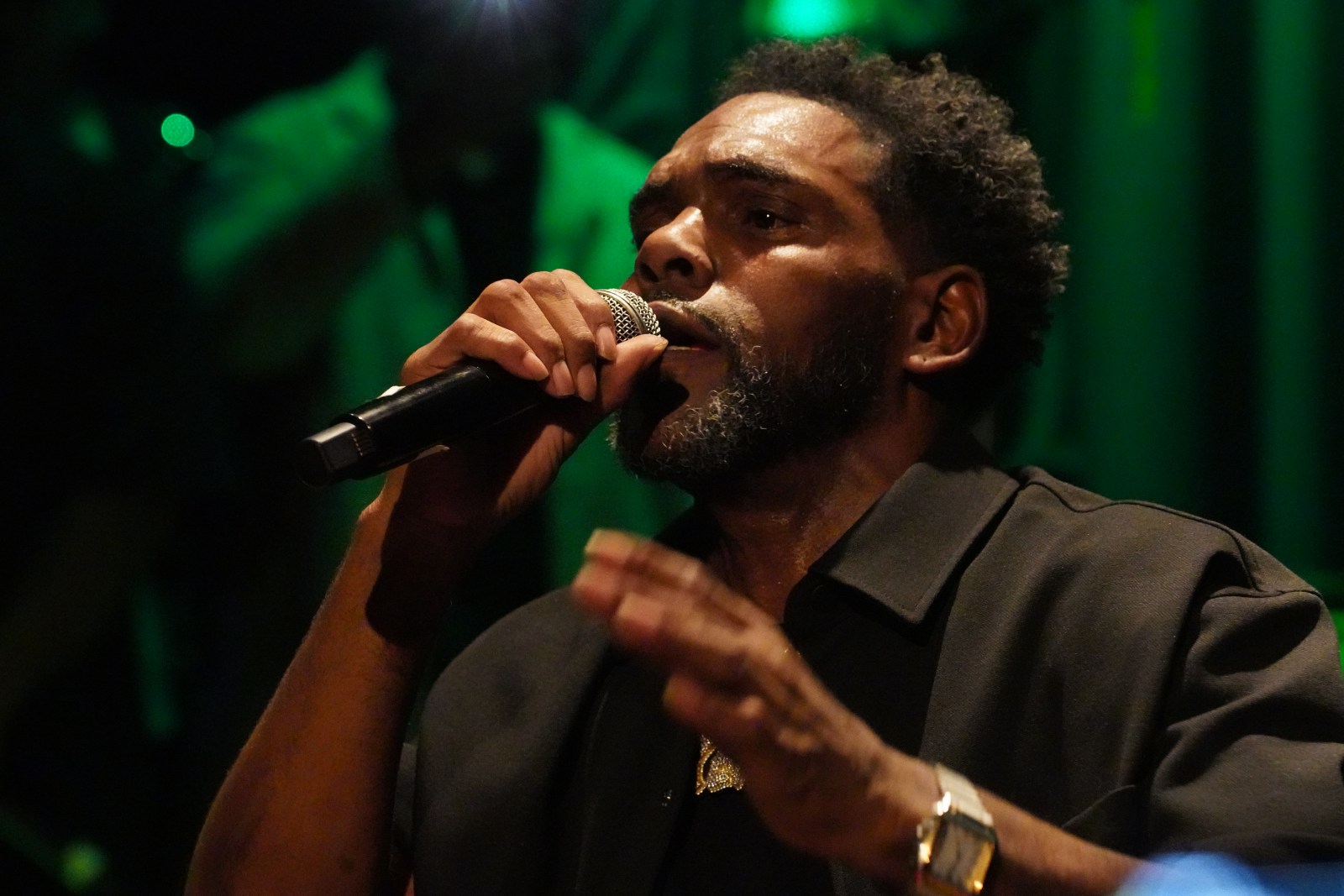 Keak Da Sneak performs at Yoshi’s, July 9, 2026. Credit: Eric K. Arnold for The Oaklandside
Keak Da Sneak owns a large portion of hyphy’s mystique, as the originator of the term and one of its most diehard adherents. But he’s never discussed his accumulated trauma publicly, like F.A.B. and Harshaw. Instead he’s doggedly soldiered on, living by the turf code, an unwritten law of inner city do’s and don’ts.
The consequences of that life caught up with the Walnut Street griot in 2017, when he was shot multiple times during a robbery, after leaving a casino. The shooting left him paralyzed from the waist down; since then, he’s used a wheelchair.
Keak embraced the street lifestyle as a youth, beginning his professional rap career guesting on Sacramento hardcore rapper C-Bo’s “The Autopsy.” As a member of 3xKrazy, he was prominent in the mobb music era before transitioning to hyphy in the early 2000s, never wavering from his raw and uncut approach.
His rap persona embodies aspects of both the badman and the trickster archetypes in African American folkloric tradition. The trickster is evident in his wordplay, rife with coded language, slippery syntax, and declarations that he has no idea what he’s talking about. And his gangsterish aesthetic represents a modern, urban take on the ambiguous morality of bluesmen of prior eras.
His lyrics frequently describe outlaw behavior — driving with expired tags, selling and consuming controlled substances, slapping rival rappers, engaging in sexual conduct with other people’s girlfriends, and generally acting like a badass — that’s not so different thematically from John Lee Hooker’s vengeful cuckold on 1966’s “I’m Bad Like Jesse James” or Sonny Boy Williamson II’s trapped philanderer on 1961’s “One Way Out.”
What’s changed, mostly, is the environment: post-Great Migration, the South’s rural shacks and backwoods roads have been replaced by concrete housing projects and Backwoods tobacco leaves used for rolling marijuana cigars.
The majority of Keak’s lyrics are about hustling, balling, riding and partying, delivered in a unique cadence that feels almost stream-of-consciousness. His raspy vocal tones, made-up words and random references perplex listeners — until the punchlines connect at the end of the line. Out of all of the hundreds of raps he’s recorded, only a handful have attempted anything resembling social awareness — a marked contrast to F.A.B.’s numerous “conscious” songs.
Yet Keak is beloved by his fans and considered an Oakland legend for just that reason — he’s always “kept it one hundred,” as the saying goes.
During a recent live performance at Yoshi’s, Keak delivered what amounted to a career retrospective in front of a sold-out audience. Though he never attained the mainstream success that seemed within reach in 2006, here he was, 20 years later, receiving his flowers at one of Oakland’s most distinguished music venues.
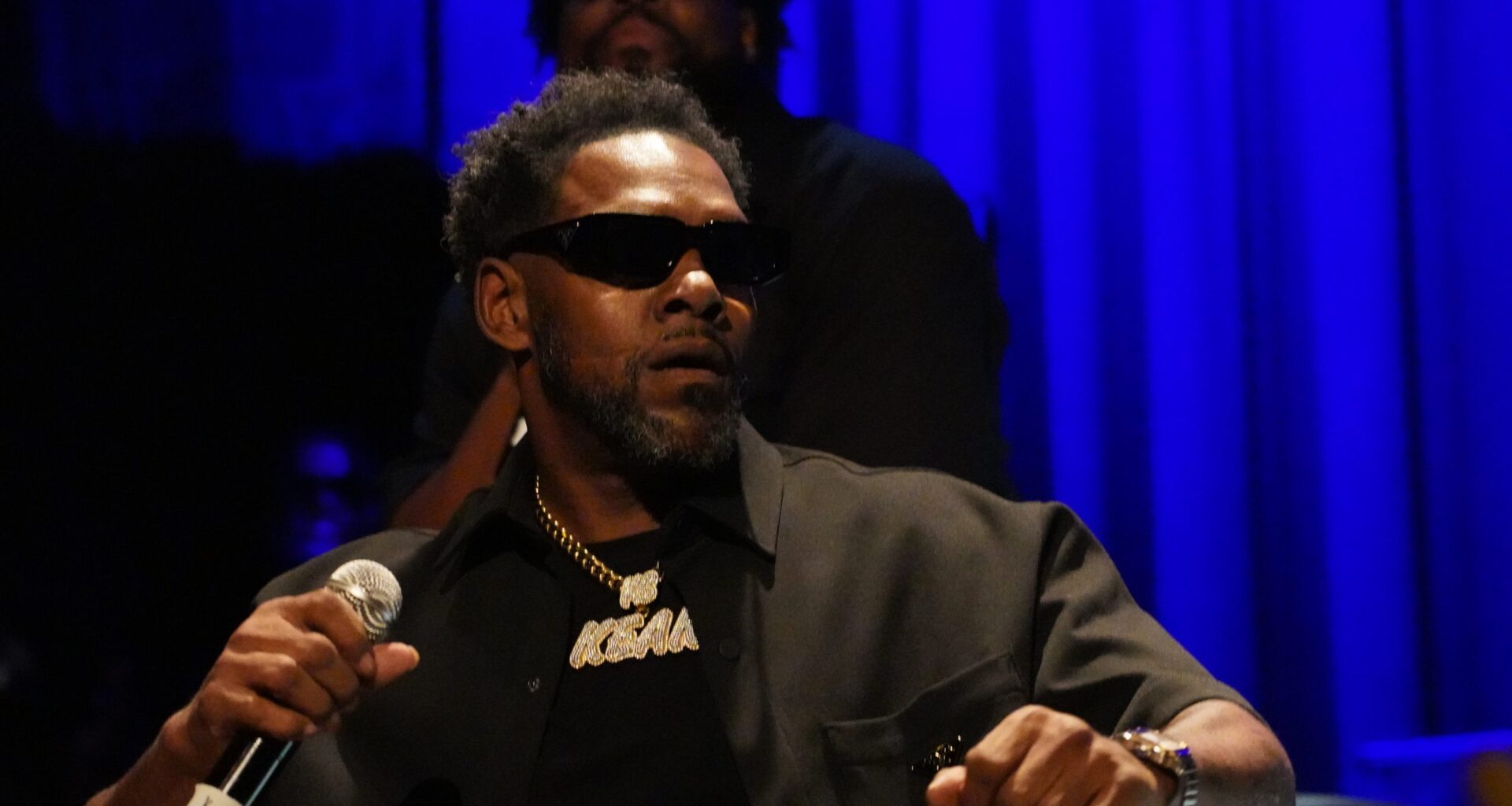
As F.A.B. and the Delinquents’ G-Stack watched from the audience, Keak took the stage in his wheelchair and gave a performance that seemed to animate and energize him. After a few songs, he took off his dark sunglasses, maybe to get a better look at all the people showing him love.
Backed by a live band, the “King of the Super Duper Hyphy” ran through crowd-pleasing favorites like “Alright Cool,” “Here Come Keak Da Sneak,” “Super Hyphy” and “On Citas.”
When his roaming hype man called out, “Can I get a yee!” the crowd roared back.
Keak himself occasionally addressed the crowd, telling a story at one point about the first time he heard the “Super Hyphy” beat and was smitten. He also announced a new album with Black C of RBL Posse, before bringing the Hunters Point rapper onstage.
The two performed a new song, “Get It Cracking,” before Keak took a breather and Black C ran through the mobb music classics “Bounce Ta This” and “Don’t Give Me No Bammer Weed” as people sang along and shouted out “HP!”
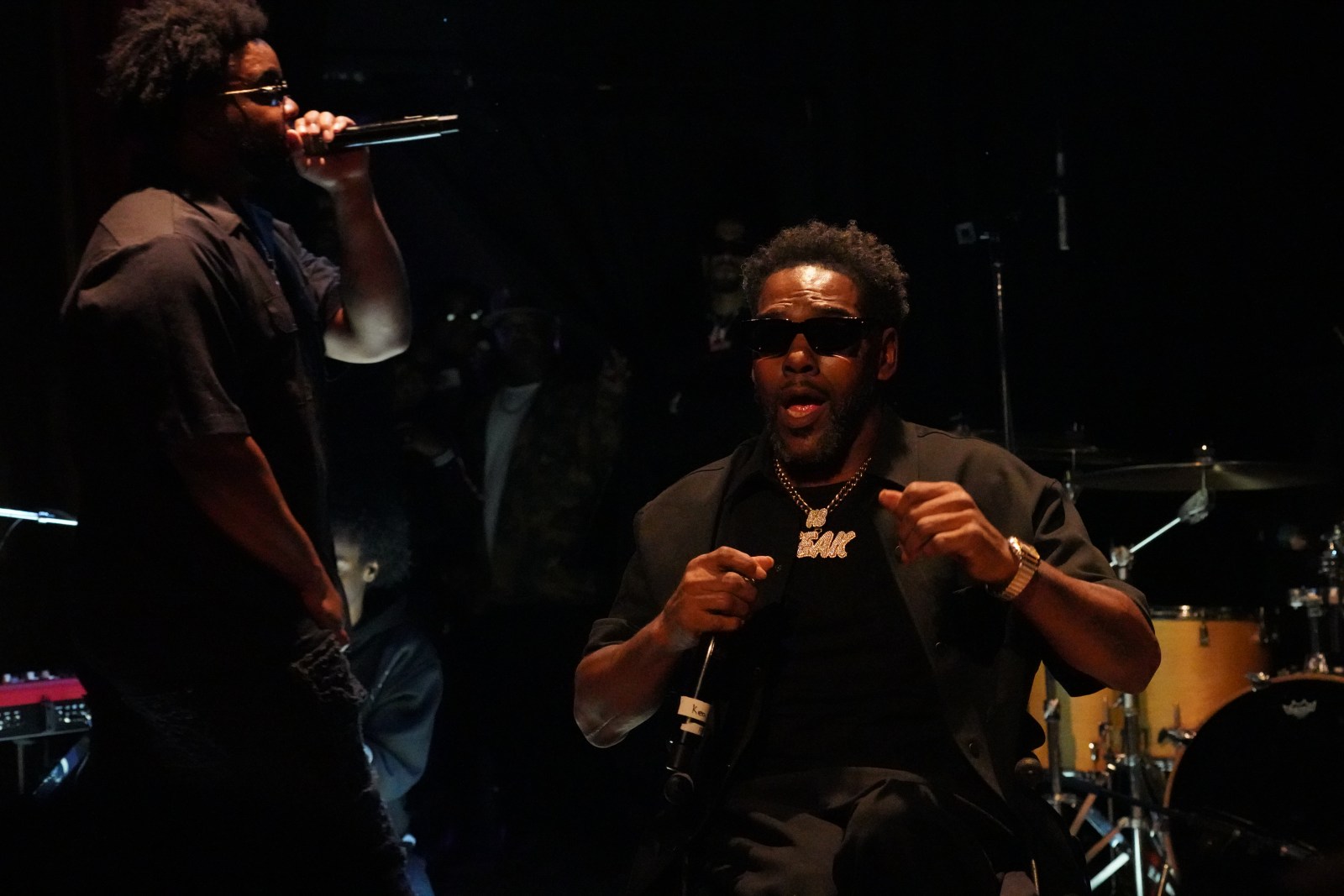 Keak Da Sneak on stage with his hype man at Yoshi’s, July 9, 2026. Credit: Eric K. Arnold for The Oaklandside
Keak returned to land his set with the hyphy anthem “White T-Shirt, Blue Jeans and Nikes” and his verse from “Tell Me When To Go.”
The show, however, wasn’t over. The house lights dimmed to near pitch-black and Agerman and Bart came out to celebrate the 30-year anniversary of 3xKrazy’s “Stackin’ Chips.” Their performance of the hit single “Keep It on the Real” drew the biggest audience response of the evening. The entire crowd, it seemed, was singing along, word-for-word, to both chorus and verse.
It be astoundin’, formatix around it, it paint drank down it
Off the sound then you poundin’, laugh and loungin’
Tryin’ to get lit, I’m sposed ta meet my folks at the club
A cutie I tryin’ get that sneaky hit this bud
It was gratifying to see an entire audience of grown folks revert back to their days of cruising through Oakland boulevards and avenues on their way to the club on a Friday night. Hyphy’s energetic vibe took parking lot pimps inside the clubs, opening up a world beyond the streets. Now it’s been reincarnated as a sonic reference point and cultural lodestone for the present generation of East Bay rappers.
In Bay Area hip-hop circles, 2006 now holds the kind of reverence 1988 does on the East Coast — a legendary year identified with an incredibly fertile period for new and innovative music. Go ahead and put that on something.
“*” indicates required fields