
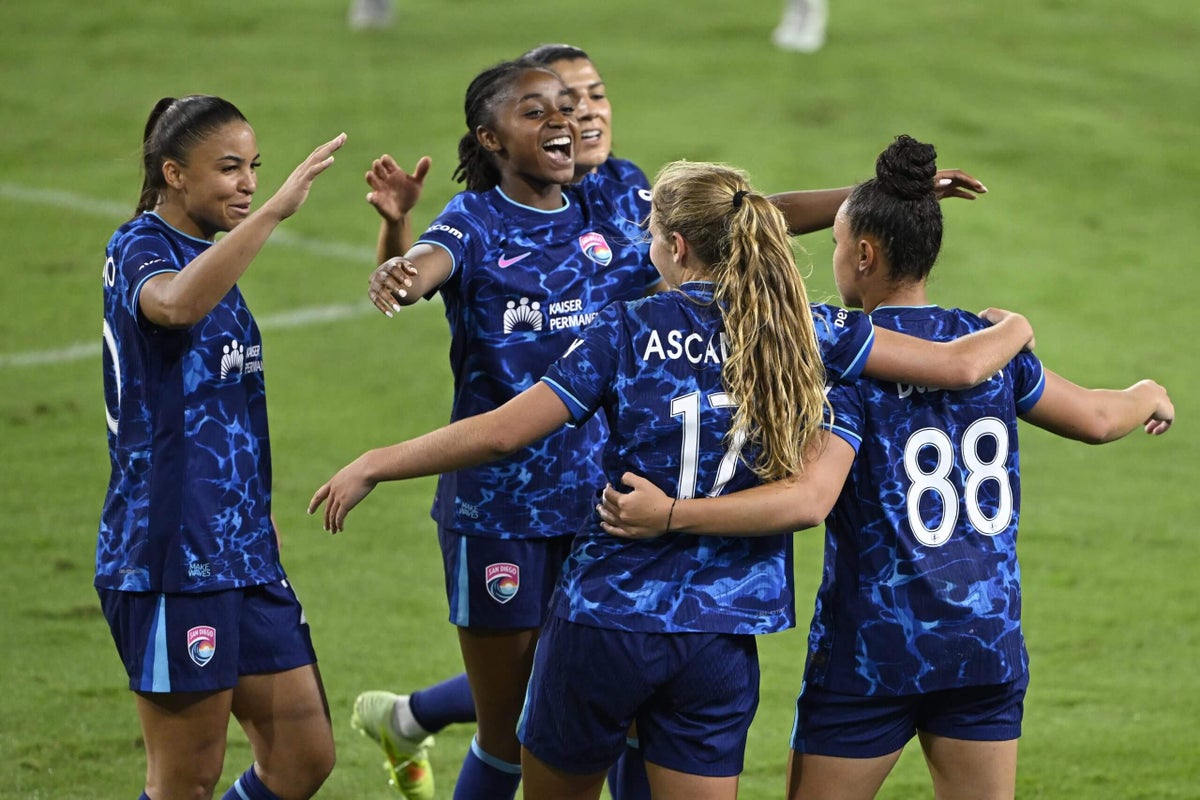
San Diego Wave midfielder Kenza Dali likes to swim in the ocean on Thursdays.
One day after training in July, the 34-year-old France international waded out into the Pacific, as she normally does, but this time was different. A rip current carried her away, and not even Dali’s elite athlete-level strength could steady her. Before panic took hold, Dali remembered something her Wave teammate, defender Quincy McMahon, had told her once: when a rip current strikes, angle your body parallel to the shore and let go.
So she did. And eventually, her feet grazed the sand.
Dali was grieving when the Wave called late last year, feeling herself pulled away from the sport she loved and unsure if she wanted to continue playing. She was living in Birmingham, England, and playing for local Women’s Super League club Aston Villa at the time, and her home was filled with nothing but memories of the person she’d lost. (Dali was not comfortable naming the person, out of her desire for privacy.)
Wave head coach Jonas Eidevall was familiar with Dali from their time as rivals in the WSL: she was first with Everton and then Villa when he was Arsenal manager from 2021 to 2024. Dale had been planning to sign with a different NWSL team, one closer to France than Southern California is, but the more she thought about it, the more the distance between home to that particular shore appealed to her.
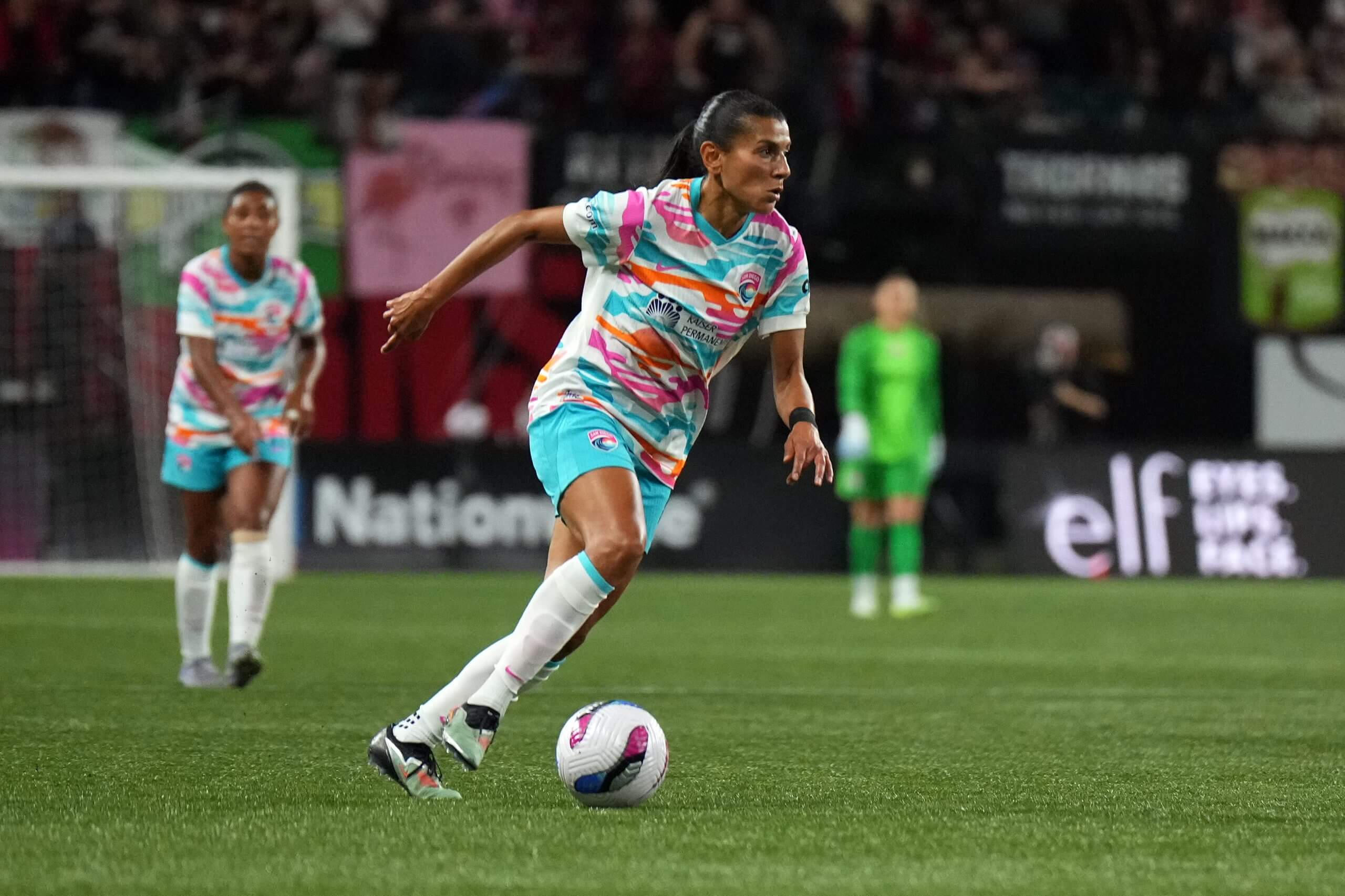
Kenza Dali joined the San Diego Wave this year after more than a decade playing for clubs in Europe. (Soobum Im / NWSL via Getty Images)
“It was really like my last bit of, like, it’s all or nothing, clearing my head and having a different environment,” Dali told The Athletic from the club’s training ground in July.
Such has been the way of the Wave this season in many ways: riding the crests and the troughs, figuring out when to surrender to the rip currents.
They entered what was their fourth season in the NWSL desperate to bounce back from a 10th-place finish in the 14-team league the year prior, a position which might have been understandable for what was still a fairly new club had it not been for the impact they made their first two seasons. As an expansion side in 2022, San Diego made history by reaching the playoffs before falling to the Portland Thorns in the semifinals (They play Portland again later on Sunday in this season’s quarterfinals).
Back then, the roster glistened with U.S. women’s national team stars Alex Morgan (who won the Golden Boot that year with 15 goals), center back Naomi Girma (who was named both Rookie of the Year and Defender of the Year) and midfielder Jaedyn Shaw, who signed with the club when she was 17 years old. All three would later depart the Wave in a span of six months around the start of 2025.
Former England national team player and Manchester United manager Casey Stoney led the team at the time. Her staunch defensive philosophy was compelling the first two seasons; in 2023, the Wave finished top of the table and secured the NWSL Shield, given to the club with the most wins in the regular season, and made the semis again.
But the trough came in 2024.
Despite beating league champions Gotham FC to win the NWSL Challenge Cup to kick off the season, the inspiration that once drove the team’s style of soccer puttered out, and suddenly, they were face-to-face with a seven-game winless streak. In June, Stoney was fired, a move that was still widely considered abrupt despite the team’s form at the time. A perplexing duo of interim managers replaced her: Paul Buckle, once an interim assistant coach for the Wave in 2022, and former USMNT forward Landon Donovan, for whom the Wave marked his foray into managing a women’s side.
“Things were s**t,” Kailen Sheridan, the Canadian goalkeeper who is one of three players on the current roster who have been with the club since its inception, said of that season. Speaking to The Athletic one August afternoon after training, the 30-year-old 2021 Olympic gold medalist was candid about the highs and lows of the Wave’s short history.
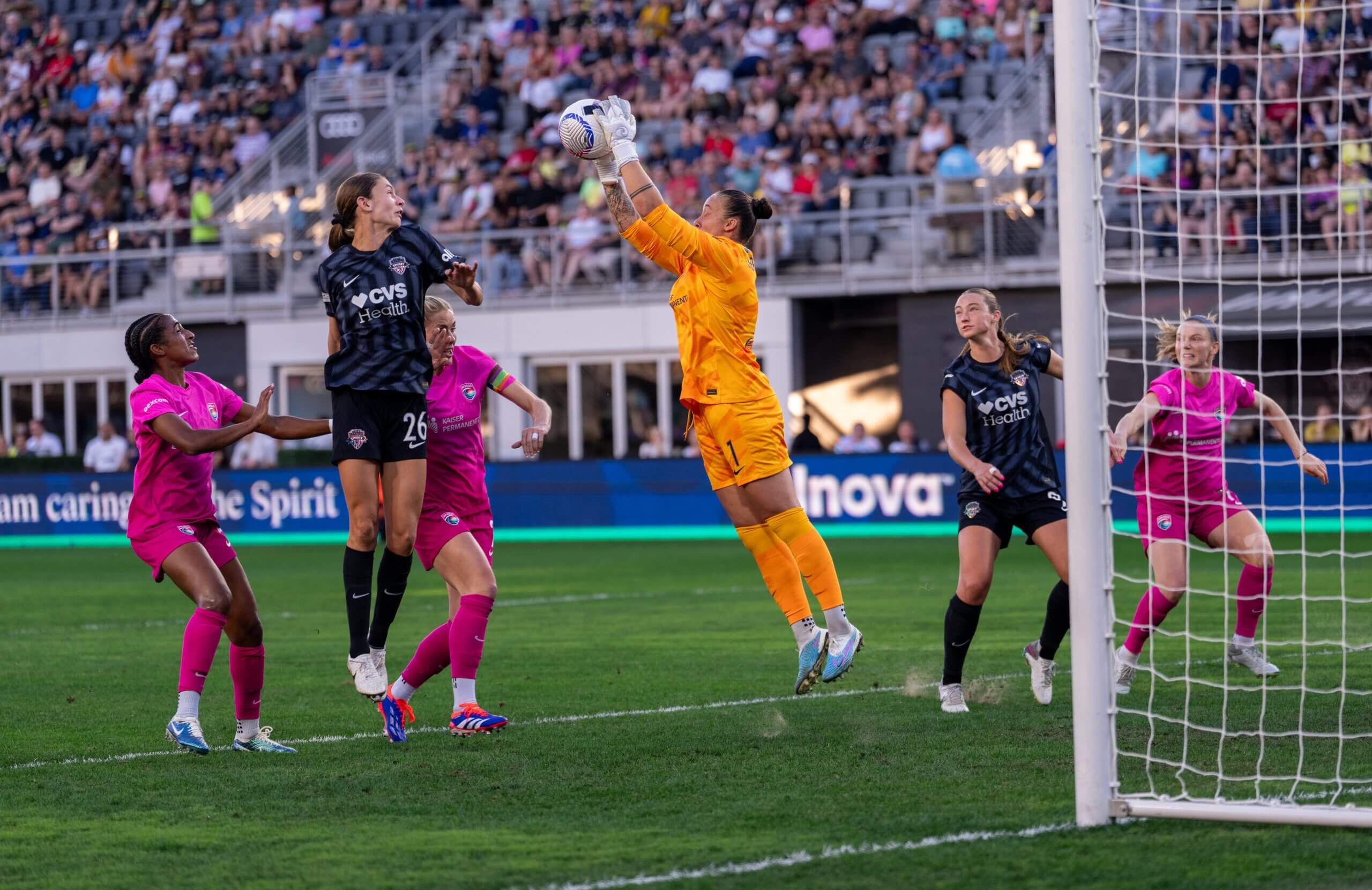
San Diego goalkeeper Kailen Sheridan is one of three players who have been with the team since the 2022 launch. (Brad Smith / Getty Images).
The high turnover in personnel wasn’t limited to the coaching staff. Morgan announced her retirement and pregnancy with her second child on Sept. 5, and played her final game three days later. She became a minority investor in the club in May this year.
In October, the Wave came under new ownership as the Levine Leichtman family completed their purchase from Ron Burkle for a then-record valuation of $120 million. By then, the club had already found and hired a new sporting director/general manager in Cami Ashton, who had last been with fellow NWSL team Kansas City Current in a similar role. Having previously played in the league, Ashton was charged with reconstructing the club’s culture amid the turbulence and laying the groundwork for sustainability.
There was much to be done on the culture front.
Also last October, five former Wave employees filed a lawsuit against the club over multiple allegations of discrimination, retaliation, wrongful termination and sexual harassment. The claims in their case followed allegations first raised by one of the named complainants, Brittany Alvarado, against Jill Ellis, the Wave club president who would then step down in December. Alvarado accused Ellis of creating a hostile work environment, and Ellis later filed a defamation lawsuit against her.
“Nothing is ever constantly up,” Sheridan said. “There was a lot of internal reflection and player reflection and challenging the ownership, challenging the club itself to (ask), ‘What do you want to be? Do you want to just be here, be present, or do you want to be a competitive winning team?’”
Ashton was central to those reflections, drawing from her own experience as a professional player to inform her approach to the club’s rebuild.
The club hired former Germany international striker Anja Mittag as an individual development coach to ensure the growth of the younger players and acclimate others who are new to the NWSL.
On Mondays now, the Wave train with a boys’ team. Ashton also facilitated a renovation of the training facility, which they lease from the San Diego Surf, a youth club. They hired a full-time chef, improving the catered food they once relied on, and added dedicated rooms for meetings and hanging out. Hot tubs are coming soon.
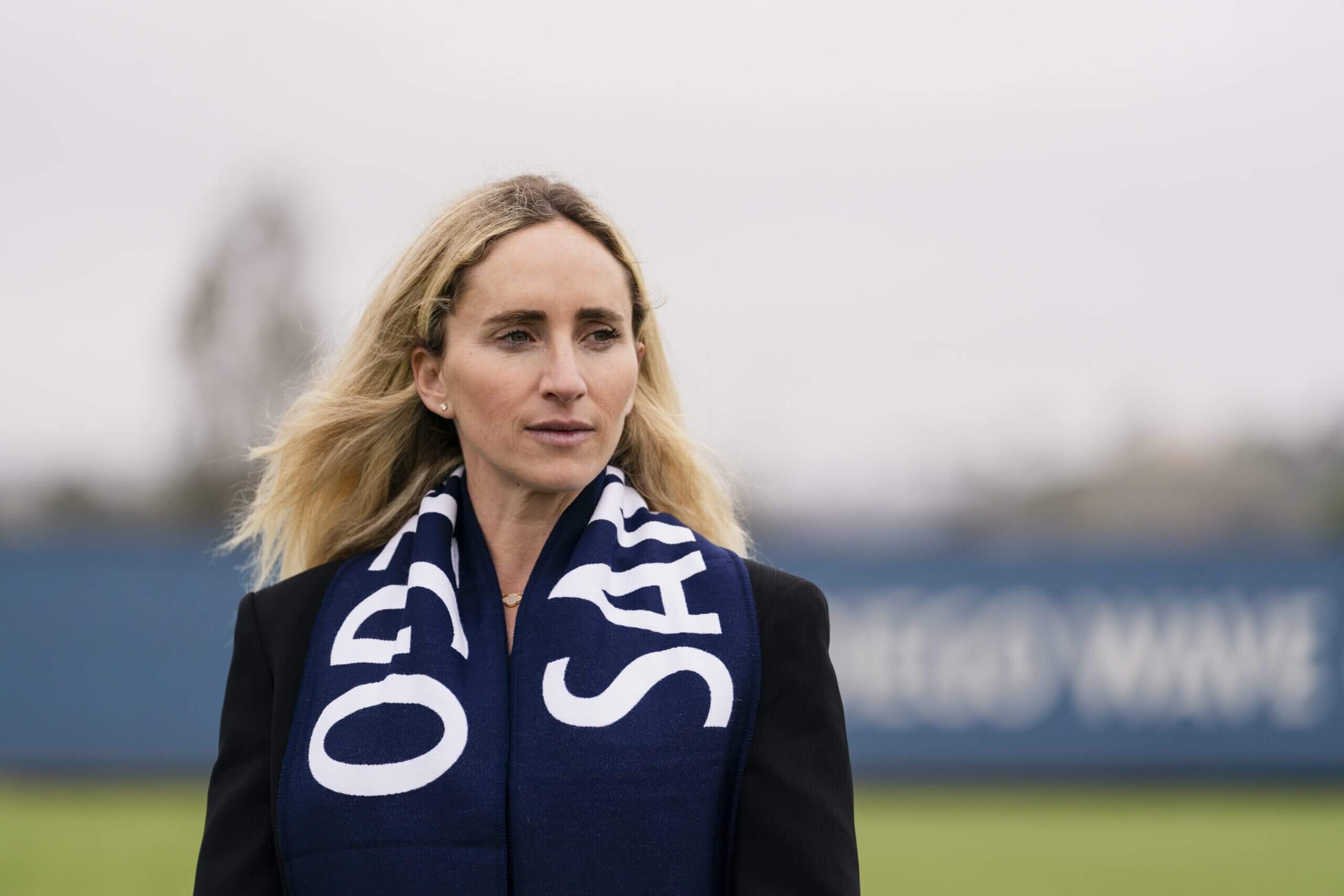
General manager Cami Ashton joined the Wave from the KC Current. (San Diego Wave)
Before pivoting to NWSL front offices, Ashton worked in wrestling’s WWE as a talent manager, where she was exposed to the scale of a mature professional sporting environment. Knowing that neither the Wave nor the NWSL could just catapult themselves to that level, Ashton approached the club’s new roster with a bifocal vision that aimed to deliver immediate impact while building toward the future.
Enter the trio known as the French connection: Dali, fullback Perle Morroni and winger Delphine Cascarino. They became a quartet in this summer’s transfer window when the Wave signed Laurina Fazer.
All four have represented France at senior level; Dali and Fazer competed in the 2023 World Cup, Cascarino featured on the roster for the European Championship this summer. No NWSL team has had as many French players on the roster at once, and their familiarity with each other has proven lethal. Cascarino leads the league in assists with six, and she, Dali, and Morroni have collectively made 24 goal contributions to the Wave’s 38-goal tally in the regular season. Fazer arrived on July 29 and has played just over 500 minutes.
The first half of the season for the Wave was, by many metrics, an outperformance of expectation.
After an early dip in the fourth week, they began a steady climb up the table, reaching as high as second place for the ninth and 10th weeks. Their 10th match, against the North Carolina Courage, brought a 5-2 win — and a new club record for most goals in a game. By then, 13 different players had scored a combined 21 times for the club this season. The cautious optimism was justified, but as Sheridan and other Wave veterans know, an NWSL season is long, and a team’s run can change on a dime.
After the summer break, San Diego began to unravel. Once a possession-oriented team, they began coughing up balls. They struggled to convert chances in front of goal and deny opponents’ scoring opportunities. Of their final 14 regular-season games, they won only three, all against teams near the bottom of the table. Eventually they finished sixth, two points clear of the ninth-placed Courage. Had it not been for their strong start and the insulation of those points won early on, they might not have reached the postseason.
It’s possible Sheridan anticipated that dip in August when she described the next step in this team’s development as one that synthesized the strengths of prior Wave rosters.
“We had some talented players, but we had more workhorses, and that was what created that success. Nobody was going to outwork this team,” she said. “Now we have talent on top of that, so we need to hold to the standard of that work ethic of the people who were here before and really ingrain that into a group who have more talent.
“This team has more talent, but that (prior) group was just gonna run through a brick wall. So if we can put those two together, it’ll be unstoppable.”
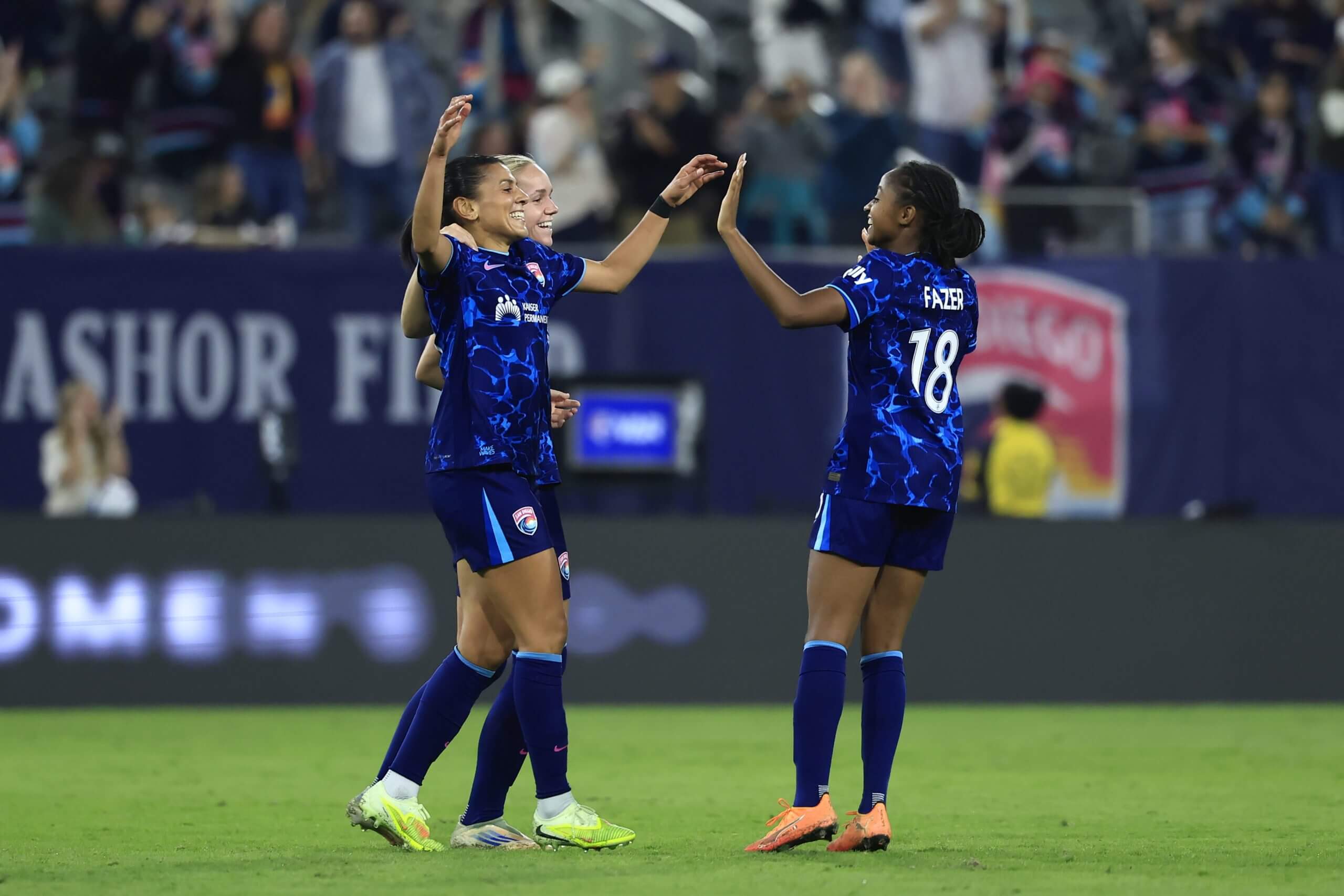
A quartet of French international players have boosted San Diego’s attack this season. (Francisco Vega / NWSL via Getty Images)
Work ethic takes time to develop, and the Wave are one of the younger teams in the league with an average age of 26. The experience on the team is diverse: Sheridan with her eight years in the NWSL, Dali with her 16 years across the French and English leagues, as well as forward Melanie Barcenas, 18, who’s been with the club since she was 14 years old.
“Despite having the nerves and having maybe a little bit of pressure, because I do have high expectations for myself, I feel like definitely the past years have set me up for success this season,” Barcenas, who is currently out with a foot injury, told The Athletic in August. “I’m finding myself off the field, talking more… I think just from being in the environment the past year has definitely helped, and having people that can make me feel confident in myself.”
It also takes time for intergenerational dynamics to gel. Dali can still recall moments from her career when she was the young renegade, figuring herself out with each game, and the importance of growing through that. She sees a lot of herself in her Wave teammate Gia Corley, a 23-year-old midfielder signed in January from German club Hoffenheim and eligible to represent either Germany or the United States.
“She’s so talented, but it’s risky,” Dali said of Corley. “She plays with fire, but it’s her quality, and she’s young. You can’t take that. So I’m like, ‘Do your thing’.”
Corley will often apologize to Dali when she loses the ball, but has said part of the reason she gambles in possession is because she trusts the French veteran to clean up after her.
“I played crazy in PSG (Paris Saint-Germain) because I had (two-time Olympic silver medalist with Sweden) Caroline Seger behind me: ‘I can lose the ball anywhere on the pitch and she’s gonna cover me’, and this is how I expressed myself.” Now it’s her job to do the same for Corley and other young players at the Wave, while also trusting them in turn.
Though their record didn’t improve significantly in the final weeks of the regular season, the Wave started to look more like themselves.
It helped that 20-year-old Brazilian forward Dudinha, whom the club signed in July, arrived from São Paulo FC and was activated. She’s played 10 games, seven of which she’s started, and already has five goals — equal to Dali and Cascarino as the team’s leading scorers this season.
The Wave’s highs and lows this year make it difficult to know which version of the team will show up at Providence Park in Portland later today. But they are rebuilding momentum — a very different kind of trajectory from their origin story as an NWSL team, but one that could take them just as far in the long run.