
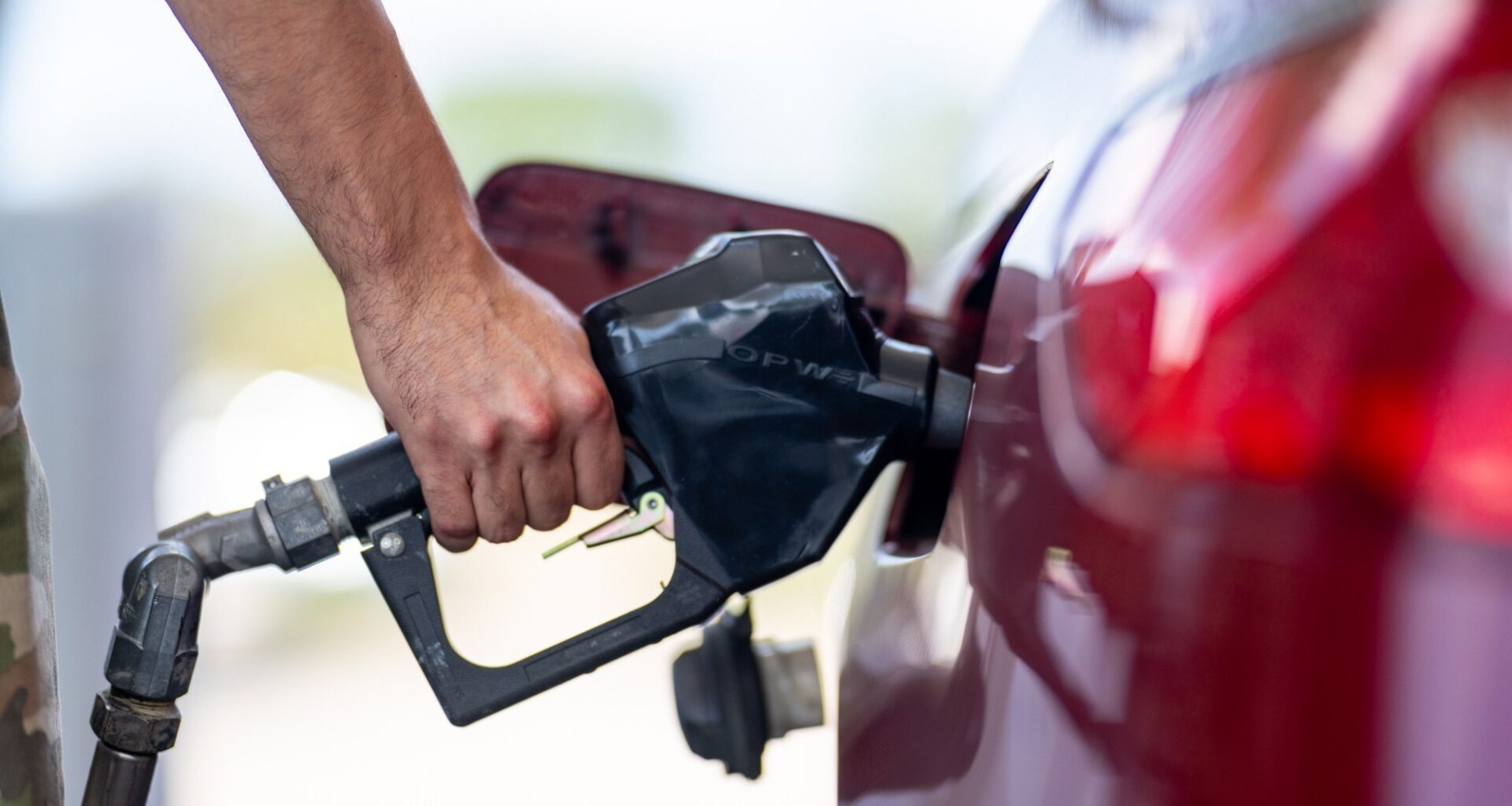
Prices at the pump across the San Diego area are surging as the Labor Day weekend approaches.
The average price for a gallon of regular on Thursday rose to $5.90, an increase of 15 cents in the past week, according to AAA of Southern California. The acceleration has been even more dramatic for diesel fuel, with the price rising 37 cents in the past seven days to hit $7.56 per gallon on Thursday.
“The price of oil has gone into overdrive and the price of gasoline and diesel has gone into overdrive the last few days,” said Patrick DeHaan, head of petroleum analysis at GasBuddy. “We’ve got some new escalations between the U.S. and Iran and continued Ukrainian attacks on Russian oil refineries. So it’s kind of back to the races here.”
In the most recent escalation in the Middle East, U.S. airstrikes hit Iran on Tuesday, with Iranian forces responding with attacks on American assets in Bahrain, Jordan and Iraq. On Thursday, Iran fired another round of missiles and drones on Kuwait.
Now into its sixth month, the war has sent prices soaring because of clogged traffic in the the Strait of Hormuz, where 20% of the world’s oil exports normally pass through.
Before President Donald Trump initiated airstrikes accompanied by forces from Israel on Feb. 28, the average price for a gallon of regular in San Diego was $4.69, or $1.21 less than Thursday. The price for diesel just prior to hostilities was $5.03, or $2.53 cheaper than Thursday’s per-gallon average.
The all-time high for gas prices in San Diego came on Oct. 5, 2022, when the average for regular soared to $6.43 per gallon. The record price for diesel occurred earlier this year, on April 8, when it reached $7.72.
While most drivers focus on gas prices, the cost of diesel has a crucial impact on the financial system.
Fuel analysts often say, “The economy runs on diesel,” because because trucks and ships that deliver goods to markets and food to grocery stores run on diesel fuel. When transportation costs increase, they are passed on to consumers and contribute to inflation. Agricultural machinery also relies on diesel.
According to GasBuddy data, the nationwide average for diesel hit a record high of $5.82 per gallon on Thursday.
“Geopolitical tensions are just too much for us to expect prices to come down anytime soon,” DeHaan said.
Supplies have been further stretched as fighting between Russia and Ukraine intensifies.
Russia used to export as much as 1 million barrels per day of diesel and other petroleum products but a series of drone attacks on Russian refineries led the Kremlin to ban international sales through January, and the two sides ramped up attacks this week.
Crude oil futures surpassed $90 a barrel this week — for Brent, the international benchmark price, as well as West Texas Intermediate, the domestic benchmark. Those increases have put greater upward pressure on diesel and gasoline prices at the pump, with U.S. refineries already running at almost 100% capacity.
“Even though gasoline demand decreases this time of year, typically bringing down gas prices, this year is different due to the high cost of crude oil,” AAA’s national headquarters said Thursday. The organization predicts travelers across the country will face the highest-ever Labor Day weekend prices.
The national average for regular came to $4.14 on Thursday, up 5 cents per gallon compared to one week ago.
Among individual states, California had the highest average price of $5.78 per gallon, followed by Washington ($5.47) and Hawaii ($5.41).
“Unfortunately, drivers are going to pay more for gas this year compared to last year,” said Anlleyn Venegas, public affairs specialist for AAA of Southern California.
The Auto Club estimates drivers in the area can expect to spend about $18 to $24 more to fill up their tanks this weekend, compared to Labor Day of 2025.
“Even with higher gas prices, it’s just cheaper to drive than to fly at this point,” Venegas said.
To soften some of the financial pain at the pump, Venegas recommends drivers properly inflate their tires, avoid jackrabbit starts and resist driving too fast to maximize fuel efficiency. Taking advantage of membership cards from grocery stores and outlets such as Vons and Costco that offer discounts at gas stations can help, too.
“We’re also encouraging drivers to have cash in their wallets,” Venegas said. “Many gas stations charge a lower cash price because they avoid credit card processing fees. The differences can range from 5 to 20 cents per gallon, sometimes more.”
Perhaps the single biggest strategy is simply shopping for the least expensive gas, given that typically there’s a wide range in prices from one station to another in California.
Earlier this week, the Trump administration announced an agreement with Venezuela to secure U.S. majority control of billions of barrels of proven oil reserves in Venezuela, with an eye on boosting domestic oil supplies. But even if that volume comes to fruition, it will not have a short-term effect on prices.
U.S. Energy Secretary Chris Wright said oil production from Venezuela is currently at 1.2 million barrels a day. “I think we’ll be well over a million and a half barrels a day by the first half of next year,” Wright told CNBC. “And Venezuelan production will be over 2 million barrels a day by the end of this decade.”