
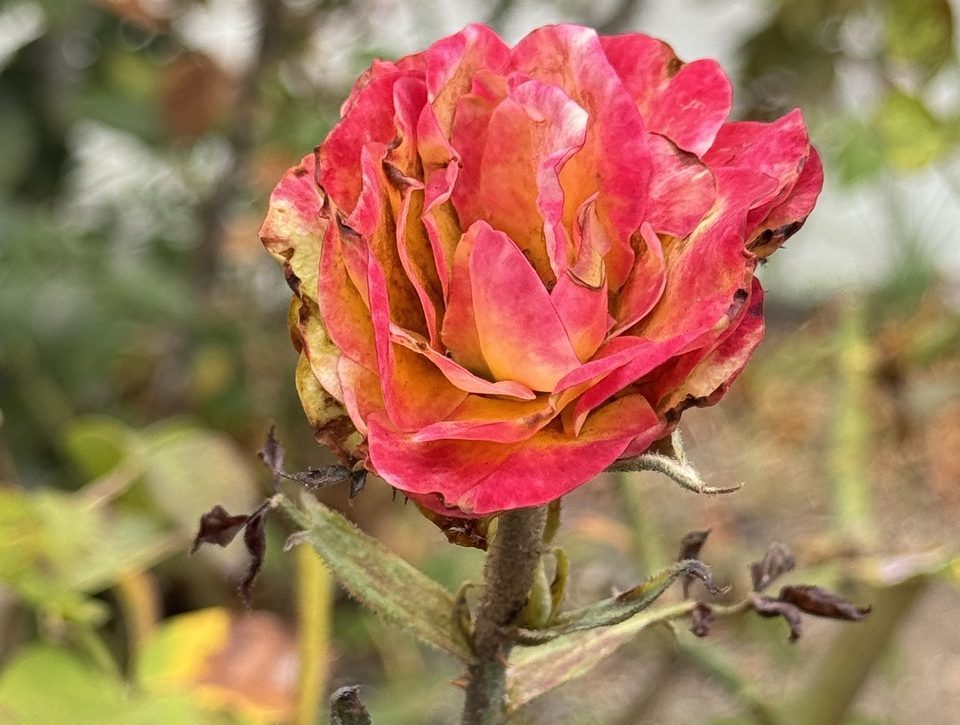
For The Union-Tribune
Gardeners love a seasonal to-do calendar; it keeps us on track and gives us the satisfaction of checking tasks off our list. However, in a changing climate, some long-standing garden routines deserve a fresh look.
For California rosarians, one such routine is traditional Labor Day pruning and fertilizing. While often referred to as fall pruning, September in California usually feels like peak summer — so I will refer to this practice simply as “summer pruning” throughout this article.
California gardeners should consider three key questions before picking up the pruners:
• Is September still too hot for summer pruning?
• Will hot days and dry Santa Ana winds increase chilli thrips pressure?
• Will tender new growth from pruning and fertilizing draw chilli thrips to my garden?
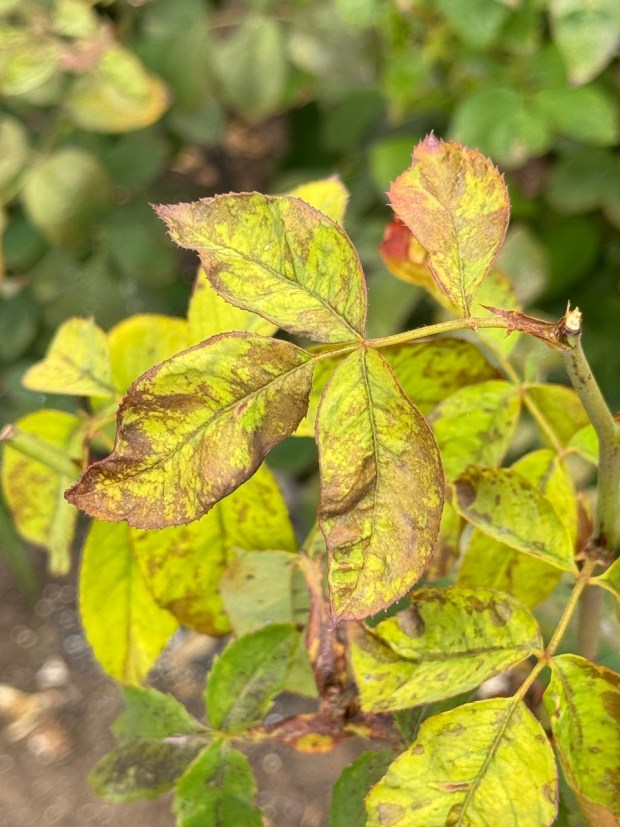 Chilli thrips are invisible to the naked eye, but you know they are present when you see puckered, twisted, deformed and bronzed foliage. (Rita Perwich)
Why rosarians traditionally prune and fertilize in late summer
We Californians like to boast that we can grace our dining tables with home-grown roses on Thanksgiving and Christmas. While rosarians in colder climates focus on winterizing their plants, California rosarians traditionally aim to prompt one or two more spectacular bloom cycles by pruning in late summer.
Deadheading, pruning and fertilizing all stimulate fresh growth. Summer pruning involves cutting thin, leggy stems back to thicker, more substantial wood while removing twiggy growth and “doglegs.” Unlike winter pruning, leaves are left intact and far less height is removed. The pruning is followed with an application of fertilizer — taking care to apply the final seasonal feeding no later than mid-October. This routine can yield a magical, bloom-filled garden in October.
Reasons to bypass late summer pruning
September temperatures remain high: During cooler weather, we typically deadhead established, healthy roses at an outward-facing bud eye above the second or third five-leaflet set. However, temperatures exceeding 85 degrees disrupt core biological processes like photosynthesis, respiration and transpiration. As summer heats up, deadheading should become far more conservative. Retaining more foliage allows leaves to cool the plant through transpiration, protect tender canes from sunburn, and shade the soil to minimize water loss.
By September, this conservative deadheading often results in lanky, twiggy growth, with fewer and smaller blooms. While summer pruning can help roses shed their “summer languor” and rebound, the catch is that September in San Diego County is hot, and there is often still a forecast of prolonged heat with hot, dry Santa Ana winds into October. To prevent plant stress and cane sunburn during these extreme conditions, gardeners should refrain from heavy foliage removal.
New growth attracts severe chilli thrips infestations: Hot days and dry winds create ideal conditions for chilli thrips — currently among the most destructive pests in Southern California rose gardens. Their primary targets are tender new foliage, developing buds, open blooms, and fresh basal breaks. If growth is fresh and tender, chilli thrips will feed on it and disfigure it. In hot weather, their life cycle from egg to egg can repeat in as few as 11 days, during which a single female can lay between 60 and 200 eggs.
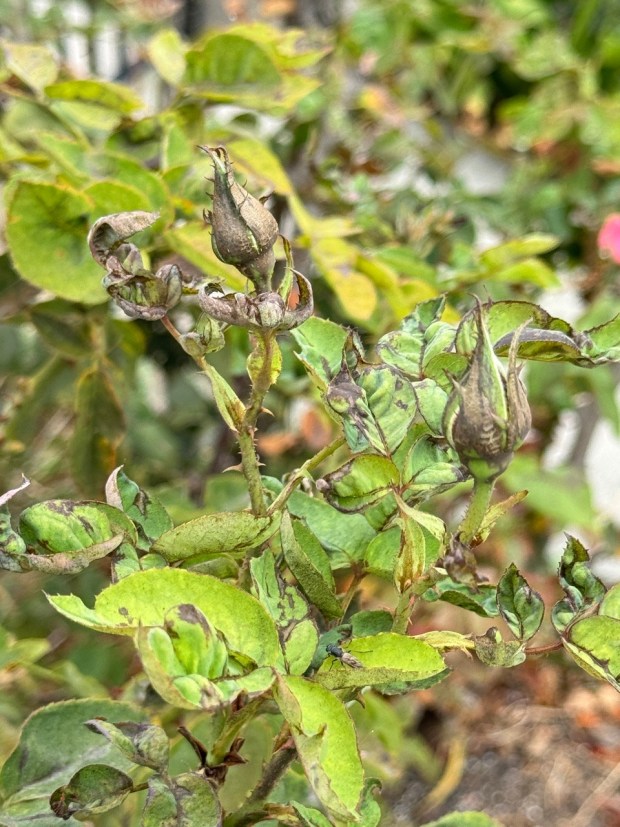 Scorched and deformed blooms also are signs of chilli thrips. (Rita Perwich)
Recognizing chilli thrips damage
Battling a pest you cannot see is difficult, and chilli thrips are invisible to the naked eye at all stages of their life cycle. By the time visible symptoms appear, an infestation is usually well established, and damage progresses rapidly. Both larvae and adults pierce and suck sap from soft growth and tender buds, causing foliage to pucker and deform. Within days, buds and leaf undersides develop brown or bronze streaks. Blooms are left deformed and scorched — the unmistakable signature of chilli thrips. A severe chilli thrips infestation can defoliate a plant.
Giving up wonderful fall blooms and breaking with ingrained tradition is never easy. However, rosarians who have struggled — or who are currently struggling — with chilli thrips should carefully consider the wisdom of summer pruning. Encouraging roses to push out flush after flush of tender foliage creates ideal feeding grounds for these destructive pests.
Avoid fertilizing in temperatures above 85 degrees
Avoid applying fertilizer during extreme heat. If you choose to fertilize in September, remember that high temperatures cause plants to draw up liquids rapidly. To avoid leaf burn, water your plants thoroughly both before and after applying fertilizer and dilute the fertilizer solution significantly. Diluted fertilizer also helps avoid the rapid new growth that is so attractive to chilli thrips and other pests. In fact, research indicates that elevated nitrogen and phosphorus levels in leaf tissue correlate directly with higher chilli thrips populations.
How I combated chilli thrips in my garden
My first experience with chilli thrips was very disheartening, particularly because experts insisted that pesticides were the only viable solution. Opting against pesticides, both chemical and organic, I spent several years manually removing all visible damage — cutting it out, bagging it and removing it from the garden. Commencing usually in mid-July, as soon as I noticed chilli thrips damage on neighboring roses, I began inspecting my plants daily for any suspicious growth. I also chose to forgo summer pruning and fertilizing to avoid initiating new growth. Adhering to this regimen has helped me manage and control chilli thrips.
While I stay vigilant each summer, especially when neighboring gardens show signs of infestation, my personal motto (and one that I advocate to others) with this pest remains “If in doubt, cut it out.” To reinforce my garden’s natural defenses, I grow companion plants like sweet alyssum to attract minute pirate bugs, an invaluable biological predator of chilli thrips.
Alternatives to summer pruning
Maintain plant health: Keep your plants healthy by cutting out damaged and diseased canes and thinning dense interior clusters of leaves. This increases air circulation and reduces conditions favored by fungal diseases and “undercover” pests.
Prevent wind damage: Shorten long, lanky canes that whip around during hot Santa Ana winds. This prevents thorn-inflicted wounds that leave canes susceptible to disease.
Practice garden hygiene: Regularly clear away fallen leaves and petals to reduce hiding and nesting sites for chilli thrips, spider mites, caterpillars and other pests.
Gardening successfully in California means adapting as our environment changes. Feel free to pencil summer pruning into your calendar, but always allow the weather, your roses and current pest populations to dictate your final decision and actions. When heat lingers into September and October, and chilli thrips are present, holding off on prompting tender new growth is the single best gift you can give your rose garden. Let us retire the idea that Labor Day weekend is a mandatory calendar event to summer prune. The true health and resiliency of our gardens depend on our powers of observation and flexible decision-making.
Perwich is a Consulting Rosarian, UCCE Master Gardener and author of “Natural Rose Gardening: An Organic Guide to Amazing Blooms” (Chelsea Green Publishing). Available for pre-order now at penguinrandomhouse.com/books/827874/natural-rose-gardening-by-rita-perwich. For more information and advice, visit rose-harmony.com.