
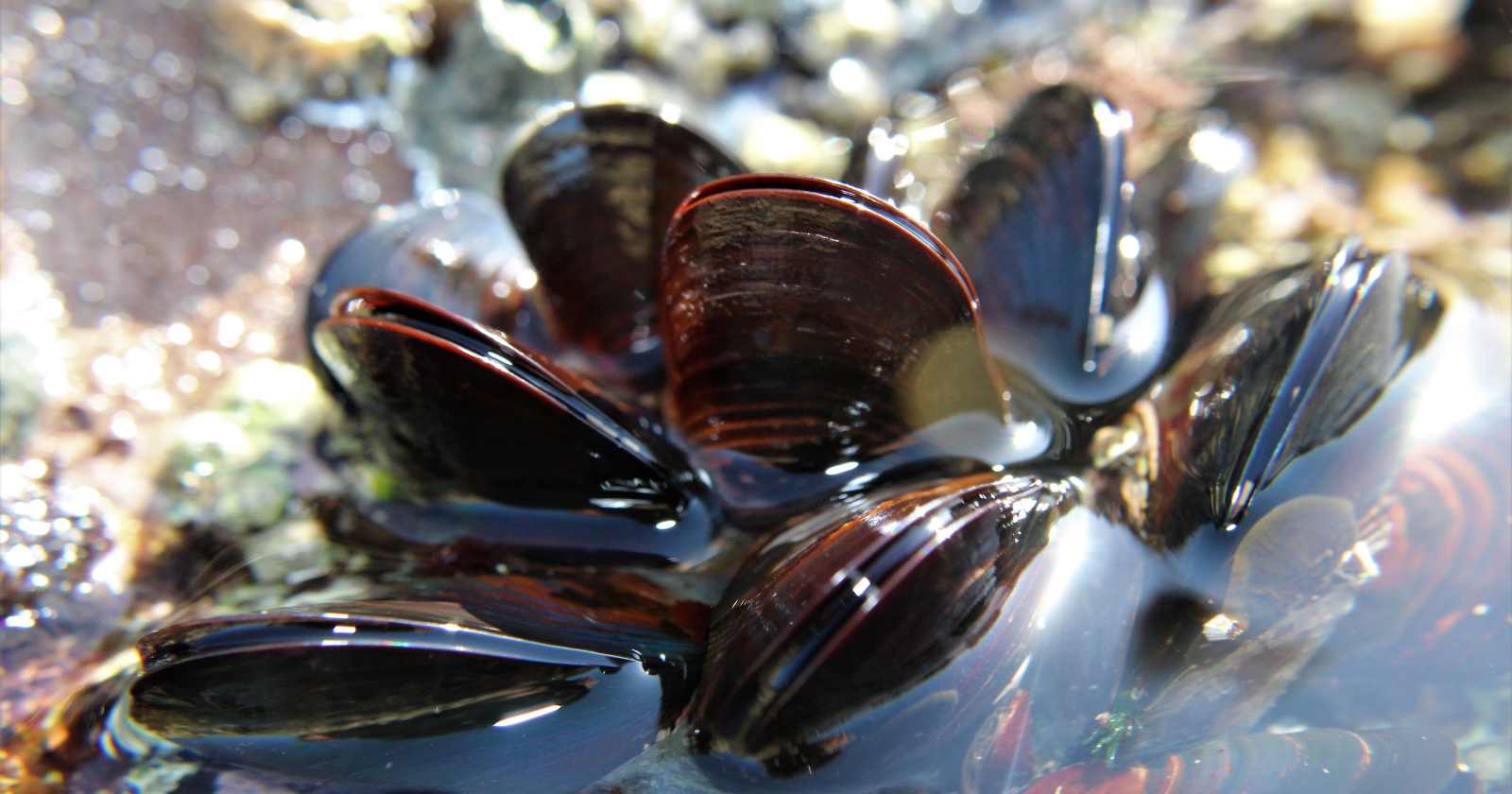
The golden mussel arrived in California without warning. The first confirmed North American detection of Limnoperna fortunei came in October 2024, when specimens were found in the Sacramento-San Joaquin Delta near Stockton and at O’Neill Forebay.
Within a year, reporting said the species had spread throughout the entire distribution system of the Arvin-Edison Water Storage District in Kern County. The response was a 30-day chemical treatment costing about $3 million.
That is the compressed version of the story. The longer version is a case study in how quickly a freshwater bivalve the size of a fingernail can alter the operating budget of a water utility.
What the mussel is, and what it does
The golden mussel is a small freshwater mollusk native to Asia. It reproduces rapidly, tolerates a wider range of temperatures and salinity than zebra and quagga mussels, and attaches itself with byssal threads to submerged hard surfaces.
Those surfaces include concrete, steel, plastic, fiberglass, boat hulls, intake screens, pumps, gates, and the insides of pipes. As colonies accumulate, they can restrict water flow, interfere with equipment, and increase inspection, cleaning, and treatment costs.
For a water district, that is not simply an ecological concern. It is an operating problem that can affect water delivery, energy facilities, flood-control infrastructure, agriculture, and maintenance budgets.
From Stockton to a whole distribution system
California confirmed the mussel in October 2024. By late December 2025, Arvin-Edison had notified its water users that golden mussels were present throughout its distribution system.
The district’s official March 2026 notice said its board approved a two-phase copper-treatment plan. The first phase began on March 9 and involved treating the entire system with Natrix CA at one part per million of copper for up to 28 days. The second phase called for long-term treatment of incoming larvae, continued management of surviving adults, and frequent monitoring.
Later reporting described the initial treatment as a 30-day operation. Arvin-Edison resource manager Samuel Blue said monitored test cages in treated areas yielded dead mussels, while mussels upstream of the treatment remained alive. He cautioned that the district could not claim complete mortality in areas it could not inspect.
The first treatment cost about $3 million. The district expected a subsequent treatment to cost roughly $1.3 million and anticipated needing two or three treatments each year.
Why the speed is the story
Invasive freshwater bivalves are not new to North America. Zebra and quagga mussels have affected infrastructure in the Great Lakes and Colorado River systems for decades. What makes the California outbreak notable is how quickly the golden mussel moved through interconnected waterways and water-delivery infrastructure.
By June 2026, detections had extended into the Sacramento River and the Port of West Sacramento. Sacramento County says its earliest confirmation came at the southern end of Andrus Island on December 9, 2024. A detection downstream of the Freeport Regional Water Authority intake followed on July 1, 2025, and mussels found around the Port of West Sacramento were confirmed in June 2026.
On June 16, 2026, the Sacramento County Board of Supervisors declared a local emergency, citing threats to public infrastructure, environmental health, and economic stability.
Watercraft and equipment remain important routes between water bodies. California wildlife officials describe hitchhiking on boats and equipment as the most common way invasive mussels are unintentionally moved from one water body to another.
Lake Tahoe strengthened its mandatory inspection program in 2025 by requiring decontamination for boats arriving from outside the region. On May 31, 2026, inspectors at Meyers stopped a vessel arriving from the Sacramento area after finding four possibly live golden mussels attached to it. Program managers said the interception showed that stronger protections introduced after the California discovery were working.
The pattern is older than the mussel
Introduced species can move faster than the institutions trying to contain them. A small founding population reaches a suitable environment, reproduces, and then uses boats, equipment, canals, rivers, and aqueducts as routes into new territory.
Bivalves are especially effective at exploiting hard surfaces built underwater. The same biological machinery that lets a mussel attach to rock also lets it settle inside a pump housing, along an intake screen, or against the wall of a distribution pipe.
Early detection can limit some costs, but control becomes much harder once larvae are already moving through a connected water system. The Arvin-Edison figure shows how quickly that biological problem can become a recurring infrastructure expense.
What the treatment actually involved
Arvin-Edison did not describe the operation as a month-long shutdown of water deliveries. Instead, the district introduced a copper-based product across its system and used test cages and inspections to measure mortality while seeking to avoid disruptions for farmers.
The district reported extensive mortality in the locations it could monitor. It also saw large numbers of dead shells moving through the system after treatment. Those observations support the conclusion that the treatment worked in monitored areas, but they do not prove that every mussel in the district was killed.
Nor was the operation a permanent fix. Golden mussel larvae, known as veligers, can continue entering through contaminated source water. That makes repeated treatment and monitoring part of the district’s expected operating future rather than a one-time cleanup.
What the sources do and do not tell us
The $3 million figure is the district’s reported cost for its first treatment, not an independently audited total and not an estimate of statewide damage. The claim that the mussel spread through the district’s entire distribution system within a year comes from reporting based on accounts provided by water officials.
The state has not published a comprehensive damage estimate covering every affected utility. Costs will vary depending on the size of a system, the extent of colonization, the treatment selected, and how often that treatment must be repeated.
The available evidence nevertheless establishes the essential sequence: California confirmed the species in October 2024, Arvin-Edison reported mussels throughout its system by late 2025, and the district began a system-wide copper treatment in March 2026 that it later said cost approximately $3 million.
Where this goes next
California’s Department of Water Resources is combining inspections, environmental DNA monitoring, copper treatments, physical cleaning, equipment replacement, ultraviolet systems, coatings, and laboratory research. Its published strategy includes immediate, midterm, and long-term measures to protect the State Water Project.
The Department of Fish and Wildlife continues to update its detection map and asks people moving watercraft between water bodies to clean, drain, and dry their boats and equipment. Sacramento County is monitoring water near the Freeport intake, while Lake Tahoe continues mandatory inspections and decontaminations.
Arvin-Edison’s first treatment produced encouraging results, but the district expects incoming larvae to make further treatments necessary. The first operation cost about $3 million. The next was projected at roughly $1.3 million, with two or three treatments potentially required each year.
The mussel’s arrival was a biological event. Its spread through California’s connected water system has turned it into a recurring infrastructure bill.