
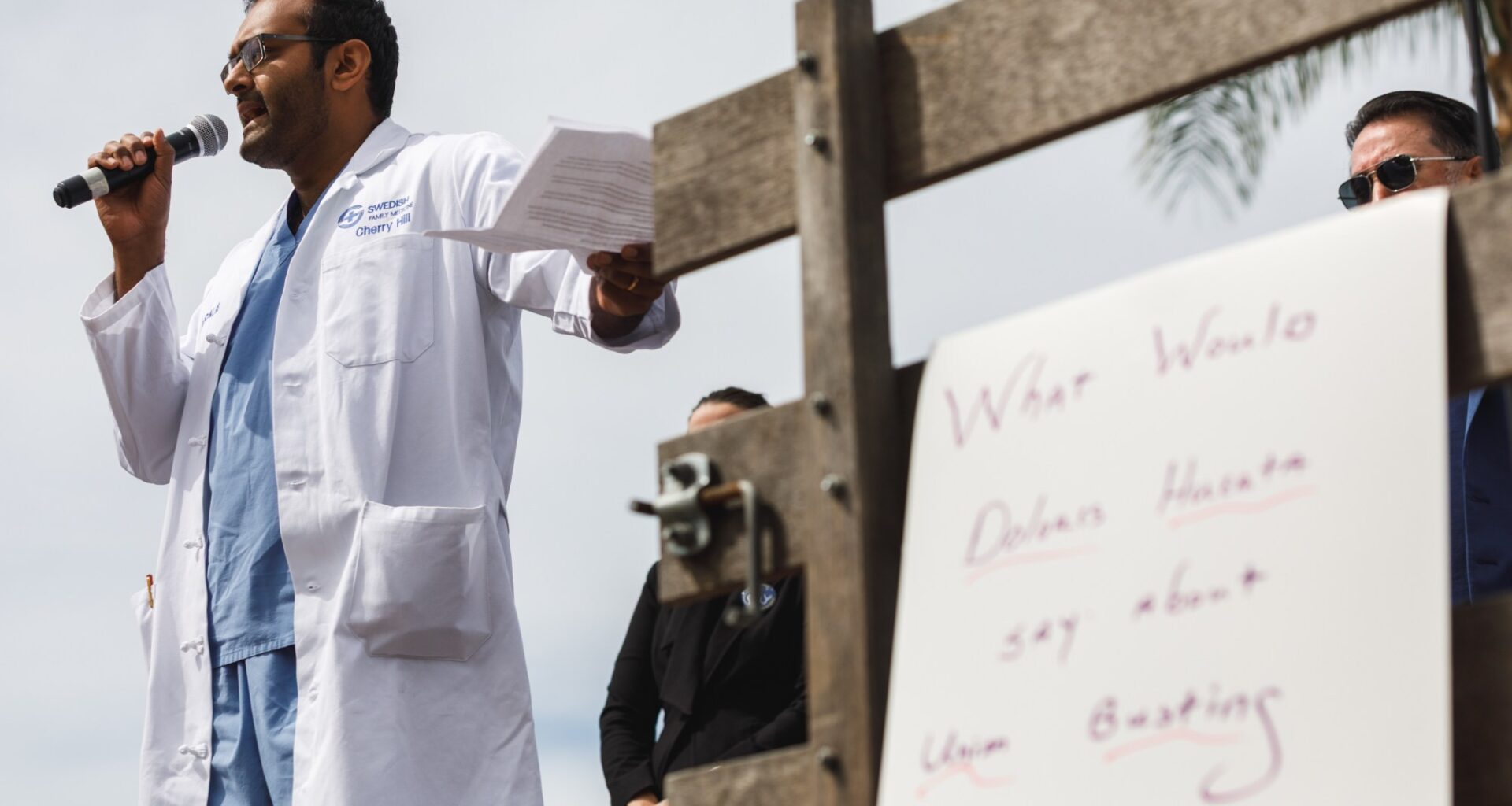
A growing number of doctors and other staff at a sprawling San Diego County health clinic network for underserved patients are saying their patients’ care may be compromised by understaffing and other network practices — and that clinic leaders are retaliating against them for saying so.
The former employees of Family Health Centers of San Diego have made retaliation claims in at least a dozen lawsuits, including one just weeks ago, as well as in federal labor complaints, with the latest filed Friday.
The nonprofit is one of the county’s largest networks of federally qualified health centers, which get federal funding to provide health services to underserved populations and cannot turn away patients who can’t pay. The nonprofit says it serves more than 227,000 patients each year in over 90 locations with more than 3,300 staff.
At least 12 former employees have sued in the last three years, many of them making similar allegations. Five of those lawsuits have settled, while seven are still pending.
Family Health Centers has generally denied the allegations and said it outperforms other health systems in promptly seeing patients while it has won accolades for its quality of care.
Meanwhile, employees’ complaints about nonprofit leadership have helped fuel an ongoing effort by the Union of American Physicians and Dentists to organize doctors at Family Health Centers.
The union has filed two unfair labor practice charges with the National Labor Relations Board against the nonprofit.
The latest one, filed Friday, concerns a family physician, Dr. Raquel Cornejo Piña, who says the nonprofit fired her from the Chula Vista clinic for retaliatory reasons.
In April, Family Health Centers sued Cornejo Piña for breach of contract, accusing her of forwarding work emails with hundreds of patients’ information to her personal email account and of failing to delete them all after being told to. The nonprofit says it fired her in March after she declined to sign a document confirming she deleted all the emails.
She counter-sued in July, denying that she had committed any misconduct. She alleged the nonprofit retaliated against her for filing complaints that men on staff got preferential treatment over women and that workplace protocols were causing delays in patient care.
“The common theme here is that Family Health Centers, they don’t take kindly to criticism, they don’t take kindly to opposition to their bottom line,” said Aaron Mannis, Cornejo Piña’s attorney. “They’ll get rid of any squeaky wheel.”
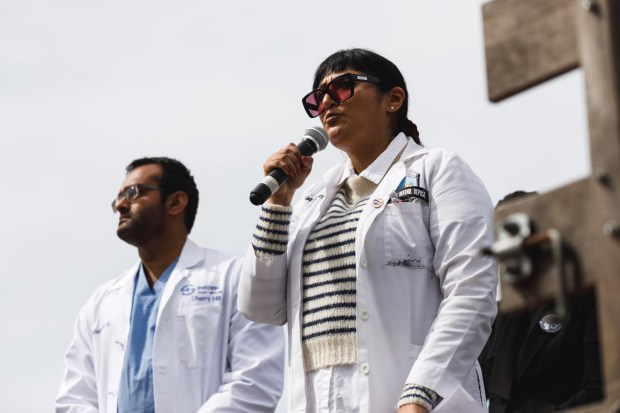 Dr. Raquel Cornejo Piña, seen speaking at the press conference on Thursday, April 16, 2026, worked for Family Health Center for seven years and was fired in March. (Kristian Carreon / The San Diego Union-Tribune)
An earlier unfair labor practice charge filed in December accused the nonprofit of firing a different doctor, Dr. Devesh Vashishtha, for his union organizing efforts.
Cases have been opened for both complaints, but the board has not yet published any actions on the charges.
“When healthcare organizations retaliate against clinicians who speak up and advocate for their patients, it threatens not only workers’ rights, but the professional judgment that allows clinicians to make decisions based on what is best for their patients,” the union said in a statement Friday.
Family Health Centers did not immediately respond to the latest allegations.
But in a statement earlier this year, the nonprofit said it had hired a workplace investigator to look into former employees’ claims and determined they were unsubstantiated, finding no evidence of any harassment, discrimination or retaliation. It declined to share the investigation report, saying it’s confidential.
The nonprofit suggested that employees who allege retaliation were trying to escape responsibility for their actions.
“Claiming these types of action resulted in retaliatory conduct is an attempt to obfuscate one’s personal responsibility,” it said in a statement.
The nonprofit says it doesn’t retaliate against employees who raise concerns. It says that it fires employees for misconduct and practicing below the standard of care.
Nationwide shortage
Understaffing concerns among healthcare employees are far from unique to Family Health Centers.
Similar issues have spurred employees to unionize at other local health systems in the past three years, including Rady Children’s Hospital and Sharp HealthCare. Nurses at Kaiser Permanente are planning their second strike in less than four months over concerns of understaffing and growing workloads.
Some doctors and staff at Family Health Centers said in lawsuits and interviews that they are concerned that visit times are too short to provide quality care and that appointment backlogs have delayed care for some patients.
The nonprofit says that its turnover is lower than typical and that there are no staffing shortages putting patients at risk. It says same-day or next-day primary care appointments are available at almost all of its sites, and almost all meet state standards for appointment-scheduling wait times.
It says its medical provider turnover is less than 8%, below average for community health centers, and that none of the dozens of audits it undergoes each year has found problems with the quality of its care.
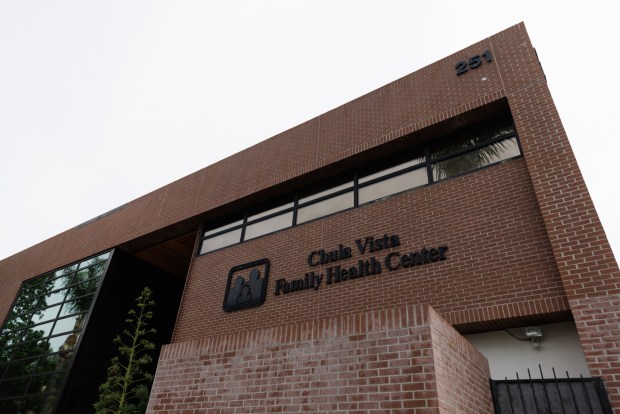 The Chula Vista Family Health Center, as seen on Thursday, April 16, 2026. (Kristian Carreon / The San Diego Union-Tribune)
Despite this, some former employees wonder why the nonprofit isn’t spending more of its revenue on staff and patient services as it sits on a growing pile of cash. Among those former employees is Vashishtha, whose firing was the subject of the union’s December NLRB charge.
Family Health Centers’ net assets have grown every year for more than a decade, and the nonprofit regularly takes in more revenue than it spends. It has recorded net incomes of $58 million to $80 million in every year since 2020, according to its tax filings. Last year it took in $488 million in revenue and spent $409 million.
Meanwhile, its cash stores have ballooned from $177 million in 2021 to $269 million last year, its audits show. Last year its unrestricted cash was equivalent to roughly two-thirds of the nonprofit’s spending.
San Diego County’s other federally qualified health systems have smaller reserves as a percentage of expenditures. At San Ysidro Health, which has a larger budget than Family Health Centers, that percentage is about 7%, and Neighborhood Healthcare’s is 8%.
Family Health Centers said a cash reserve is necessary to safeguard against potential funding cuts, emergencies and changes in healthcare policy amid an “ever-changing political environment.”
Vashishtha, formerly a family physician at the nonprofit, criticized its use of its cash. He said he had asked his employer to provide more services that would be helpful especially for its most vulnerable patients, such as free transportation, in-person translation and more care coordinators.
“It was inappropriate for a community health center funded with Medicaid dollars to be withholding so much money when they could be improving patient care or supporting the workers,” he said.
Family Health Centers fired Vashishtha last year. He says higher-ups told him it was because he was trying to organize a union and for performance reasons.
The nonprofit said it is “simply not true” that he was fired for organizing and that it’s confident it will prevail before the NLRB on the labor practice charge.
Claims of retaliation
In lawsuits, former employees accuse the nonprofit of retaliation, discrimination in the workplace and labor law violations.
Family Health Centers has denied both their allegations generally in court filings, saying among other things it had “legitimate, non-discriminatory and non-retaliatory business reasons” for its actions, blaming the plaintiffs for their firings and calling their lawsuits frivolous.
Kelly Tran, a nurse practitioner in OB-GYN, said in a July lawsuit that she had been given only positive performance feedback for her first four years there.
She said that changed last year, about one month after she raised concerns that a recent increase in workload was compromising patient care. She said she was forced to see 14 to 16 patients every four hours, up from 10 to 12 patients.
Thereafter, she said, Family Health Centers began disciplining her for tardiness, eventually firing her in December. Her lawsuit is pending.
Dr. Roberto Rodriguez Jerez, an obstetrician-gynecologist hired in 2017, said in a November 2024 lawsuit that he was fired for complaining to his superiors about racial discrimination. He said the firing came after he complained that discriminatory incident reports had been filed against him and that Latino and Black doctors were being discriminated against in contract negotiations.
After he raised concerns in a department meeting, he said HR told him in an email that his complaints were handled “inappropriately and unprofessionally” and that such “disruptive behavior” would not be tolerated. In his lawsuit, he says higher-ups told him by email that he was being fired because “the domestic OB/GYN market is strong and sponsoring the immigration legal work on (his) behalf is no longer a business necessity.”
Rodriguez and Family Health Centers settled earlier this year. The terms were not disclosed.
Ciarra McLean, who was hired as a referrals specialist in July 2024 for a federally funded program that serves seniors, said in her lawsuit that she raised concerns about a backlog of hundreds of appointments that she said made the program noncompliant with federal laws and regulations.
Two days after she raised her concerns to superiors, she says she was fired, even though she said she had no prior disciplinary issues.
McLean and Family Health Centers settled her lawsuit last year, court records show.