
A new report, which was coauthored by labor research institutions across almost every University of California campus, has found that California labor unions grew by more than 100,000 members in 2025 — outpacing labor union growth nationally.
The report, titled “State of the Unions,” analyzed data across California to examine trends in union membership, growth and bargaining in 2025. It also presented multiple case studies to demonstrate significant changes in labor unions and organizing.
The report was a collaborative effort organized by UCLA’s Institute for Research on Labor and Employment, or IRLE, and included research from the UC Berkeley Labor Center. Nine out of 10 UCs either authored or contributed to the report, representing every campus except UC San Francisco.
California union density, membership and representation grew in 2025, according to the report’s first chapter, which was written by the UC Berkeley Labor Center. In 2o25, 16.7% of Californians reported having a union — a 0.4% increase from 2024’s 16.3%. California’s union density is higher than the national rate, although the national rate has also increased, according to the report.
The report also found that even after a union has formed, it remains difficult for unions to ink a contract. From a pool of bargaining units formed in California in 2024, half of them had not secured a contract by spring 2026.
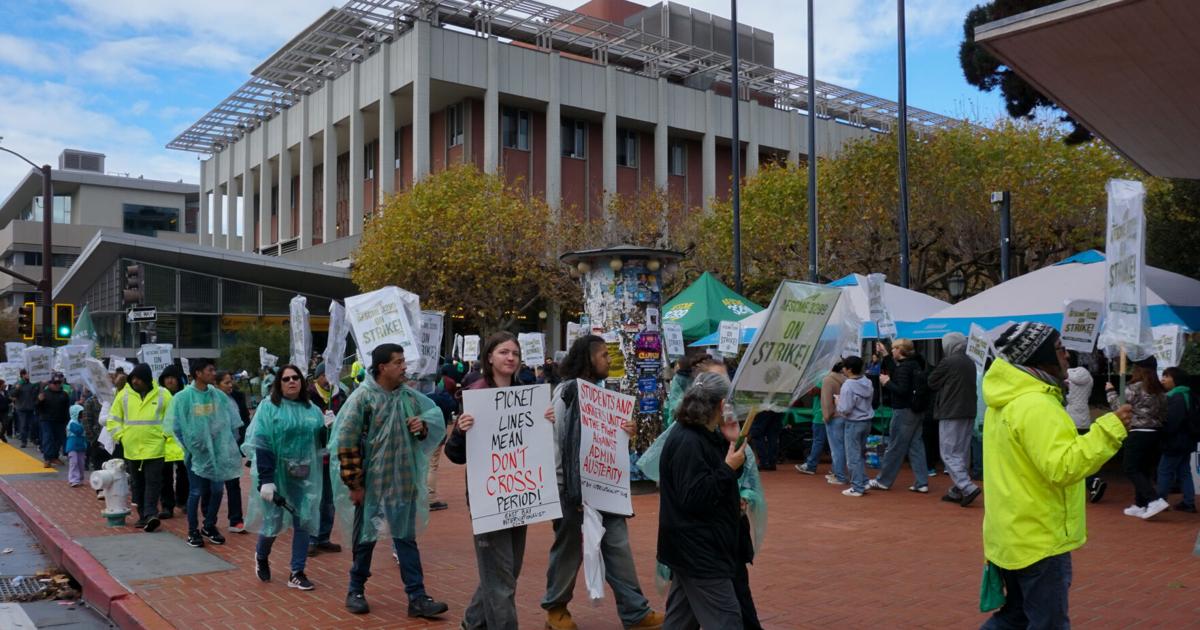
“One of the findings that surprised me was that union protest activity increased in 2025 a lot,” said UCLA IRLE program director Justin McBride. “Workers have been willing to go out into the streets and protest more last year than in the previous year, and I think that’s a positive sign of a healthy labor movement despite some of the challenges.”
The report claims that California is a “national hub of strikes and worker protests.” While Californian unions engaged in fewer strikes in 2025 than in 2024, they engaged in more protests that targeted federal policies and gained media attention, according to the report.
The UC Berkeley Labor Center also wrote chapter 11, which focuses on a case study involving rideshare drivers who faced difficulties bargaining because of their status as independent contractors and lack of a defined workspace. However, an October 2025 state bill granted rideshare drivers the right to unionize, offering a new collective bargaining framework.
“Our rideshare chapter highlights a different but related development that I think is especially significant: workers who have traditionally been excluded from conventional collective bargaining structures are developing new pathways to worker voice,” said a program director at the UC Berkeley Labor Center, Enrique Lopezlira, in an email.
The report’s authors plan to publish a similar report again next year.
“For people from out of state, I think it’s a good repository of different strategies that workers are using instate, where we do have fortunately a very strong and relatively successful labor movement,” McBride said.