
California’s insurance system is in crisis. Carriers have been leaving the state: As of 2025, seven of the top 12 insurance companies, representing 85% of the homeowners insurance market, had paused or restricted new business in California (opens in new tab). Homeowners insurance premiums have almost doubled (opens in new tab) since 2020. Half of California home sellers last year report (opens in new tab) that at least one offer fell through due to unavailability of insurance.
Fixing this is the job of California’s elected insurance commissioner.
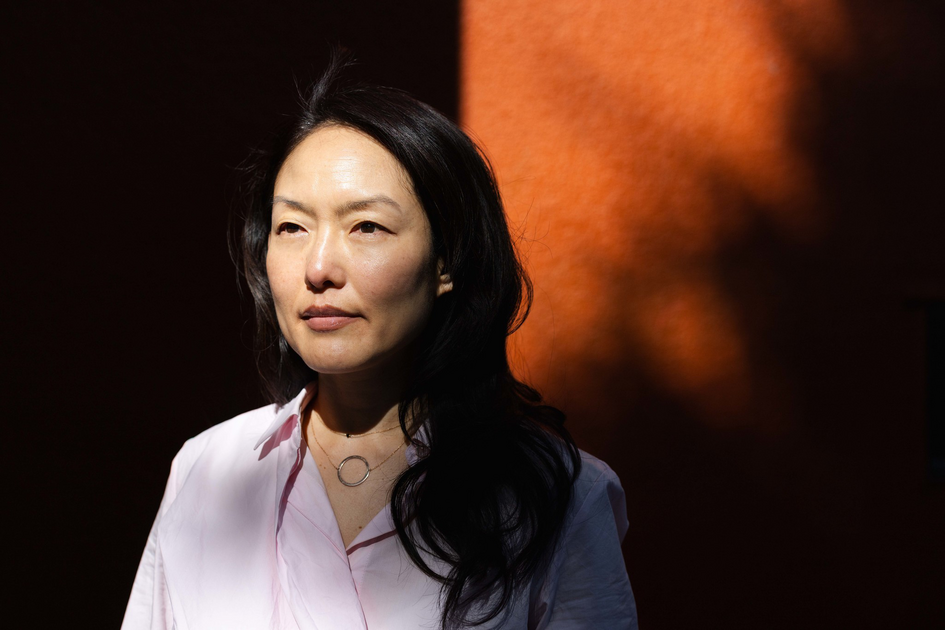
This context alone should make you sit up and pay attention, but two other factors make insurance commissioner the most important statewide race this November. First, it is the only meaningfully contested statewide race, featuring two strong Democrat competitors: State Sen. Ben Allen and former San Francisco Supervisor Jane Kim. And second, Allen is running a campaign that honestly addresses the key issues, while Kim is not.
I was a candidate for California insurance commissioner in the 2026 primary. To develop my policy platform (opens in new tab), I spent months studying California’s complicated regulatory system, talking with experts, and meeting with people affected by and involved in insurance at all levels. I even took the time to study for and pass the state licensing exam (opens in new tab).
I also studied my opponents carefully. I closely read their policy proposals. I watched every candidate interview I could find. And I listened attentively when we participated in dozens of candidate forums and events.
Most of the candidates seriously addressed the important issues facing California. While of course we had many areas of disagreement, I always respected their intellectual honesty and earnestness.
Kim, by contrast, has campaigned on a platform of smoke and mirrors: big talk, little respect for the facts, and at times outright falsehoods.
Kim was a San Francisco supervisor from 2011 to 2019 and spent four years on the Board of Education before that. She ran for state senate in 2016 and for mayor in 2018. She has spent several years organizing for the Working Families Party throughout California. Kim’s disingenuous campaign gained her the most votes in a low-attention primary where her political networks were a winning advantage. But voters will be the loser if she skates by without scrutiny in November.
Journalists have noted (opens in new tab) Kim’s lack of qualifications to be insurance commissioner. While true, this need not be disqualifying. She could have developed a substantive policy platform and then campaigned on her political and leadership skills — a legitimate way to make the case for a candidate with no insurance background.
But that is not how Kim is running. Instead, she is running a campaign of profound intellectual dishonesty.
Kim’s signature policy proposal is what she calls “natural disaster insurance for all (opens in new tab),” where a single state fund, rather than competing private insurers, would cover disaster losses for everyone. She cites a few other countries as having what she calls “single-payer universal disaster insurance” to argue that California could do the same. The country she cites most often (opens in new tab) is New Zealand, and sometimes France and Spain.
Since California’s insurance crisis is driven by wildfire, these countries must run a comprehensive government insurance program that includes fire risk, right?
Nope. None of these countries’ state-run insurance systems cover fire.
Consider New Zealand. Its government-run disaster insurance program (opens in new tab) covers very rare disasters like earthquakes, landslides, and volcano eruptions. But fire, whether a house fire or a wildfire, is covered by private homeowners insurance.
Furthermore, New Zealand’s program does not try to provide comprehensive insurance for the disasters it covers. Its purpose is to solve the specific, narrow problem that “voluntary purchase of insurance cover for infrequent natural disaster events tends to be low (opens in new tab).” It provides a “first cover” insurance, capped at a low level (around U.S. $175,000) and bundled with private homeowners insurance. Think of it less as insurance and more as a tax to fund a minimum guaranteed government payout for rare disasters. Coverage above the minimum is provided by private home insurance.
Kim’s idea of replacing private wildfire insurance with the state would put California taxpayers on the hook for untold billions. One would therefore like to see some validation for its feasibility. All she can say is that other countries do something similar. But that’s untrue: Her only real example is a program in New Zealand that is not at all like what she proposes and doesn’t even cover fire.
Kim claims (opens in new tab) that “the private insurance business model is to avoid losses, not to reduce risk.” This is just false. Collectively, the insurance industry works to reduce risk by its support for the Insurance Institute for Business & Home Safety (opens in new tab). And a healthy market pushes individual companies to compete by finding ways to reduce risk so they can offer savings to customers (opens in new tab) and win market share. But getting the benefits of competition requires an insurance commissioner who is committed to smart regulation rather than wild fantasy.
Kim proposes to solve California’s insurance crisis through a radical reimagining of the system, yet she provides no details — no white paper, no price tag, not even “concepts of a plan (opens in new tab).” She justifies it by saying a few other countries do something similar, when they don’t. She claims benefits to her program that make no sense. She does all this expecting most people won’t have enough context in a low-attention election to see her flimflam for what it is. This is shameful.
Meanwhile, Kim avoids other key issues that will face the next insurance commissioner.
The California Department of Insurance is addressing the crisis through a major regulatory reform called the “Sustainable Insurance Strategy (opens in new tab)).” While these reforms show promising progress, there are problems (opens in new tab) in how rates are approved, and the approval process is unacceptably slow (opens in new tab). Allen addresses (opens in new tab) these issues (opens in new tab), as any serious candidate must. Does Kim? Nope. Her website ignores the SIS, and in a recent interview with the L.A. Times (opens in new tab), she avoided the topic when asked.
The CDI program Safer from Wildfires (opens in new tab) tries to align incentives between insurance companies and customers to mitigate wildfire risk. More needs to be done. Allen discusses this (opens in new tab) on his website. Does Kim? Nope. She just waves her hands at her imaginary public disaster insurance program with no details.
Some of Kim’s wafer-thin policy proposals show total disregard for how California’s insurance regulations work.
For example, she proposes (opens in new tab) that auto and homeowners insurance should have “minimum loss ratios,” which is a way of capping insurers’ allowable profits. But California’s insurance regulations (opens in new tab) already cap allowable profits.
Kim’s primary ballot candidate statement (opens in new tab) said she would “stop insurers from using credit scores to deny coverage.” Good to know, since insurance companies are already prohibited from using credit scores in California (opens in new tab).
Insurance commissioner is the most important statewide election on the ballot this November. We got into our insurance crisis by ignoring this role in past elections. Resolving this crisis is within our grasp if we pay attention and choose wisely. Ben Allen is by far the better candidate, and he deserves your vote (opens in new tab).