
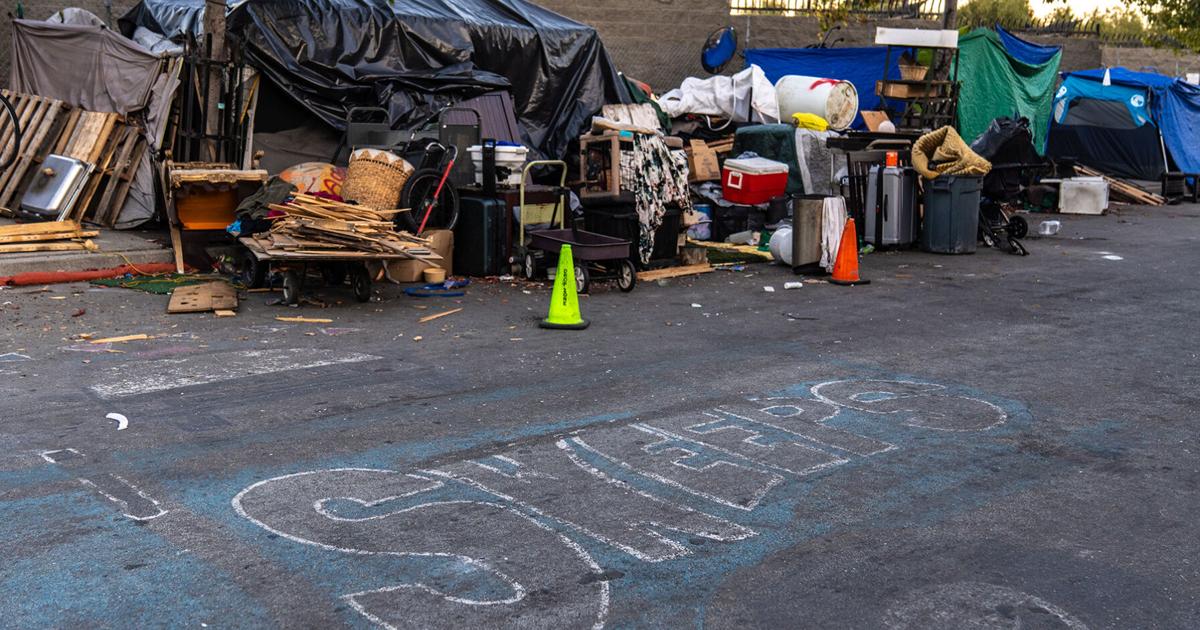
A federal judge extended protections Tuesday for seven homeless residents of the Eighth and Harrison streets encampment against removal from the site while the city and the Berkeley Homeless Union continue to negotiate proper accommodations under the Americans with Disabilities Act.
The city had previously announced its intent to sweep the encampment the same day, but ultimately did not follow through.
That ruling leaves another 22 residents who have requested ADA accommodations unprotected against removal by the city and follows a court-ordered effort by the city and the Berkeley Homeless Union to find spots for disabled residents to relocate to.
Federal Judge for the United States District Court for the Northern District of California Edward Chen denied exemption from abatements for individuals who had only requested to camp at vacant city-owned lots, stating that this was “not a reasonable request.”
Chen also ordered the city and the BHU to rapidly resolve an ongoing argument over permitted tent sizes for residents at a proposed encampment site at Fourth and Camelia streets. City staff previously determined that residents at that site could only occupy a 4 ½-foot-wide space on the city’s sidewalks.
In the meantime, the two residents impacted by this dispute are among the seven protected from sweeps of the encampment.
Chen further stated that disabled residents who have not identified potential relocation sites for themselves will no longer be protected from removal from the encampment.
However, homeless residents, including the 22 Chen denied protections for, may continue to seek further accommodations at any point in the future.
Chen sided with the BHU as it challenged the city’s nonlodging zone designations, agreeing that a “blanket nonlodging label” was insufficient to prohibit residents from relocating to these spots.
“Simply saying a rule is a rule is a rule does not help,” Chen said. “I got to know what the reason for the rule is.”
Sara Stephens, an attorney for the city of Berkeley, argued that the city has long had the discretion to enforce nonlodging and camping zones, but was not prepared to brief on specific locations since the city believes that issues surrounding these zones were not covered in Chen’s prior orders.
During the hearing, attorney for the BHU Anthony Prince, alleged the city was attempting to institute a broader no-camping policy by targeting locations with current encampments and where encampments might pop up in the future.
“Nonlodging zones have been put up where there were homeless encampments and in areas where the city anticipates there to be ones,” Prince said. “The city is systematically creating a citywide camping ban by degrees, in a step-by-step process. They can say that’s the city’s policy, but the whole point of the ADA is to make exceptions and exemptions from what would normally be part of the city policy.”
Chen also denied a request made by several disabled residents to be granted additional storage space outside of their vehicles.
While the city and the BHU must work to finalize accommodations for the protected seven individuals, Chen made clear that the city may move forward with plans to sweep the rest of the encampment.
Early Tuesday morning before the court hearing, as residents prepared for a possible sweep, the encampment sat largely quiet.
One Eighth and Harrison resident, J. Ross Patten, said he was preparing for a sweep of the encampment but he was concerned about what that dispersal of people might look like.
“It is scary,” Patten said. “Being in an encampment, a place where there’s quite a few people — going without that would be unnerving.”
He said he was currently seeking assistance from Social Security as well as from various Bay Area support groups. He added that when the city eventually sweeps the encampment, he may relocate toward the “wilderness.”
Ali Barnard and Jackson Woodward contributed to this report.