
A campus international student majoring in data science was getting ready to fill out his work authorization paperwork for a part-time, two-semester internship with a startup.
The student, who was granted anonymity, then got an email announcing that campus was suspending the program that allowed students like him to work in paid off-campus internships.
“I (had) to just tell (my employers) that I literally just can’t work for them,” he said. “We actually spent some time trying to brainstorm ways I could still work for them, but it just seems very risky to even try doing that.”
UC Berkeley temporarily suspended its Course Credit Curricular Practical Training, or Course Credit CPT, program a day after U.S. Immigration and Customs Enforcement threatened to restrict work authorizations for international students at universities across the nation.
Students whose Course Credit CPT applications had already been processed and approved by Aug. 12, the day before the suspension was issued, are allowed to proceed with their internships.
“The pause on certain forms of work authorization, particularly course-credit CPT, puts students who are hoping to gain this type of experience at a disadvantage compared to their American counterparts, who do not face the same restrictions,” said a French international student, who requested anonymity, in a text message. “This can mean having less practice experience on their resumes despite having (had) access to the same opportunities academically.”
The Course Credit CPT pause also limits international student participation in the University of California Washington Program, or UCDC.
Further, it makes international students ineligible to participate in Undergraduate Research Apprenticeship Program projects at UCSF and Lawrence Berkeley National Laboratory.
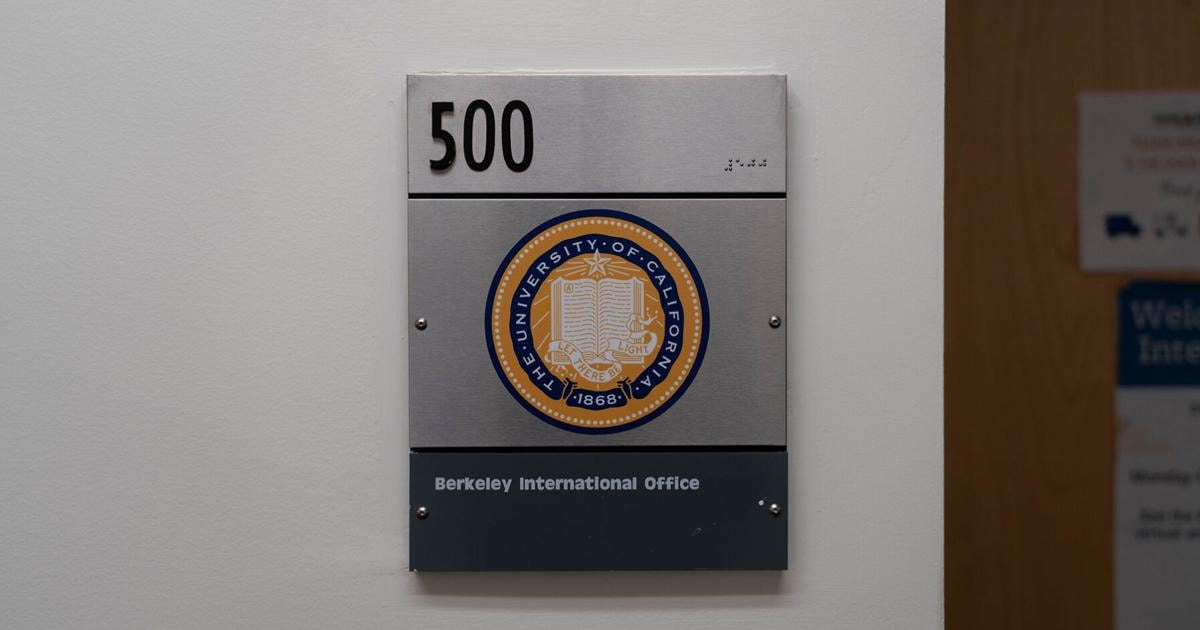
Berkeley International Office Director Ivor Emmanuel stated in an email that international students might no longer be able to participate in internships organized by campus career centers, campus programs that involve industry partnerships or in the College of Computing, Data Science, and Society Data Discovery research and mentorship program.
“I have internalized the fact that this genuinely might be my last year in the West, at least living here, and I might have to cut my time much shorter than I expected to,” the data science senior said.
Course Credit CPT is still available to students in degree programs that require “employment or practical training to graduate.” According to the Berkeley International Office website, the Educational Sciences major is the only undergraduate program that qualifies for Degree Requirement CPT.
ASUC Senator and international student Sandra Ding said her team is pushing to create new degree requirements for work experience within majors — such as data science, economics and computer science — that contain the most international students, to circumvent the CPT suspension.
“Because I’m international and also I’m East Asian, I’m standing in this intersection of both identities. I feel like it’s very important to try to stand in the ASUC Senate, being an active part and active voice for both communities,” Ding said. “It’s meaningful personally to me, and also very meaningful to the international students’ community, especially during this period of time.”
Ding criticized campus administration’s alleged indifference to international students, claiming that campus was “avoiding their own responsibilities” by having BIO handle all communications. Ding alleged campus “defunded” BIO. The annual $705,000 allocation to the Berkeley International Office, in effect since 2020, expires at the end of this fiscal year.
“We see not a single line of recognition or not a single letter of reaffirmation from the central campus or the campus administration, which is extremely depressing and disappointing,” Ding said.
As an alternative to Course Credit CPT, Ding mentioned that some international students are applying for Optional Practical Training — specifically pre-completion OPT — a work authorization program that allows international students to work off-campus before and after graduation.
Although campus’s CPT suspension is technically temporary, BIO said it is unclear when the issue will be resolved.
The larger uncertainty around international student visa statuses is playing a role in decreasing applications from international students, according to Lisa García Bedolla, vice provost for graduate studies and chancellor’s professor of education.
“Coming to the U.S. to study is a significant investment in time and resources,” Bedolla said in an email. “To not be certain about whether they will be able to stay and complete their degree (changes to duration of status), and whether they will be able to participate in internships (CPT) or employment after graduation (OPT) is likely to change the calculus.”