
The creation of this content included the use of AI based on templates created, reviewed and edited by journalists in the newsroom. Read more on our AI policy here.
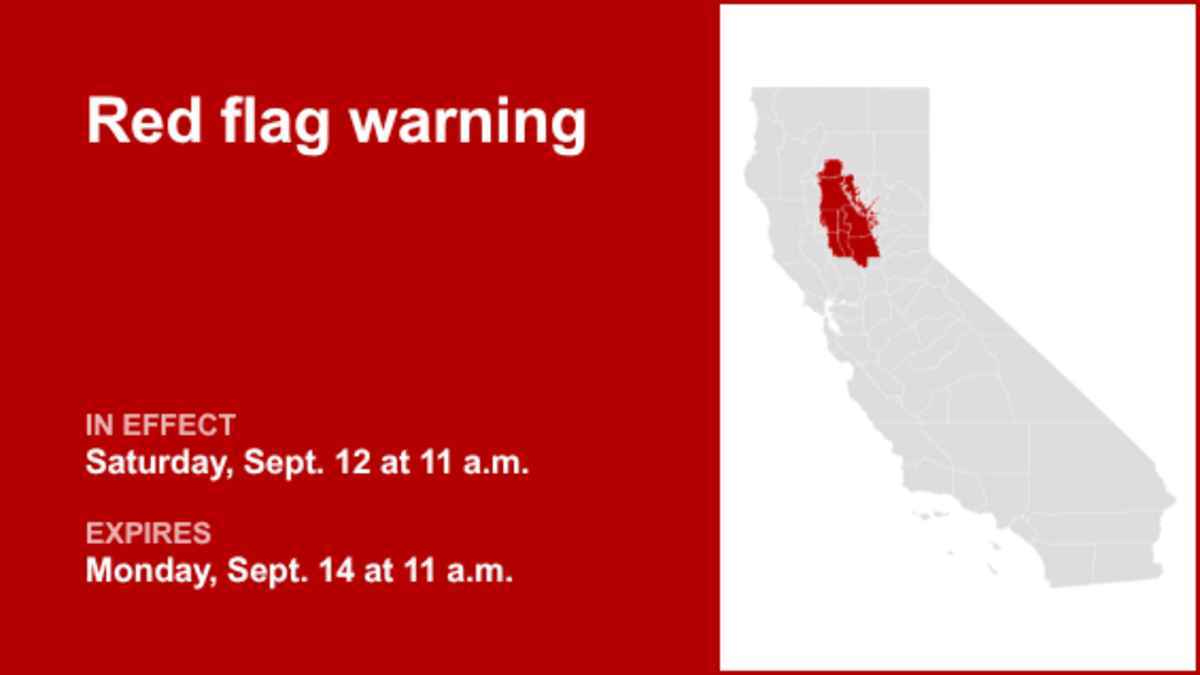
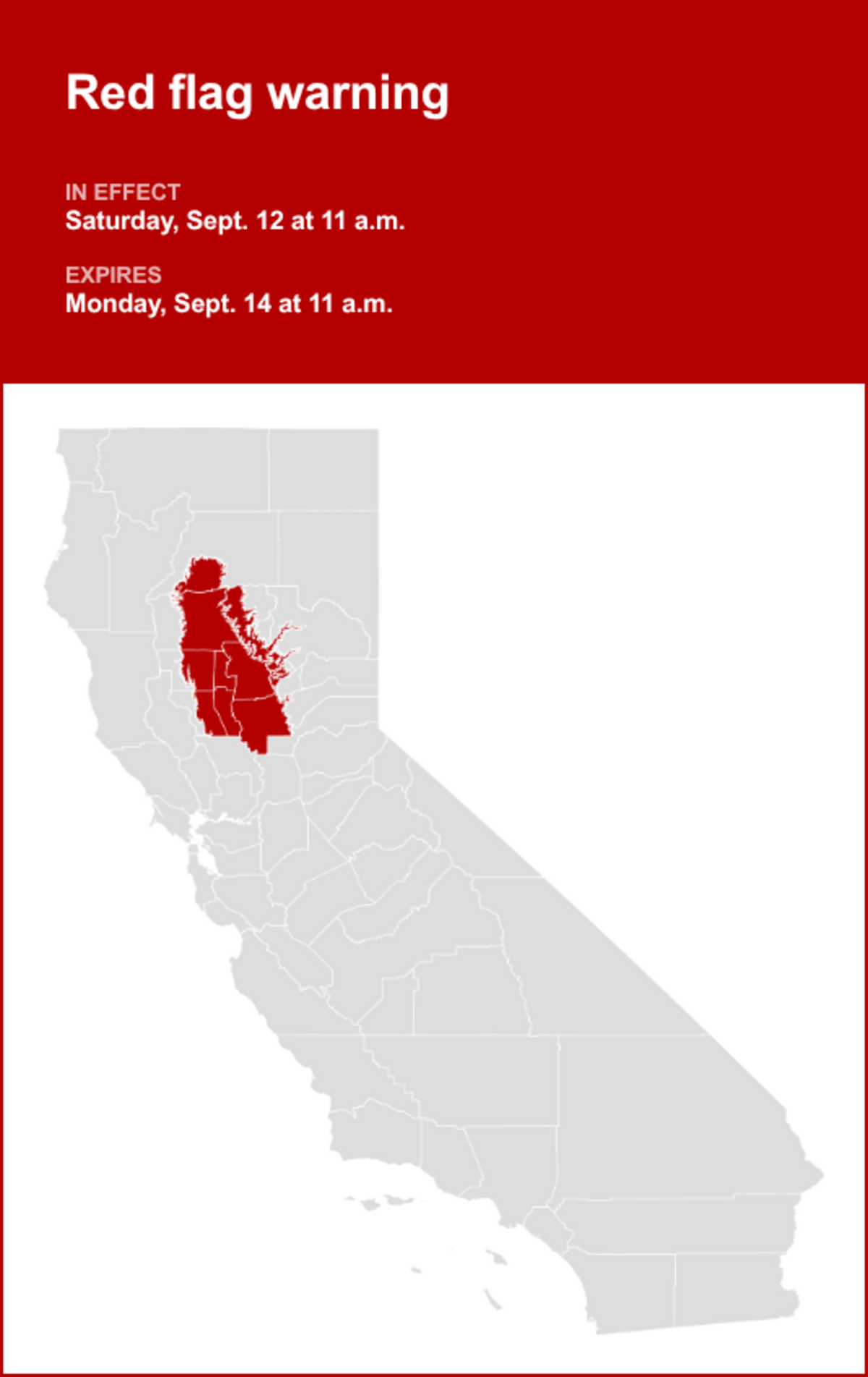
On Friday at 10:02 a.m. the NWS Sacramento CA released a red flag warning valid from Saturday 11 a.m. until Monday 11 a.m. The warning is for South-Central Shasta County Including Redding Metro, Sierra Nevada of Tehama-Butte-Plumas counties Between 1000-3000 ft, Northern Sacramento Valley in Tehama County, Central Glenn County Including Interstate 5, Eastern Glenn County, Butte County Below 1000 ft, Central Colusa County Including Interstate 5, Eastern Colusa County and Sutter and Yuba counties Below 1000 ft.
Winds are expected to be gusts 20 to 35 mph. south to southwest winds Saturday morning and afternoon, becoming north to northeast Saturday evening through Monday. Strongest winds in the afternoon and evenings over the weekend and relative humidity relative Humidity between 10 to 25%.
“Any fires that develop will spread rapidly. Outdoor burning is not recommended,” says the NWS.
This warning is in effect until Monday at 11 a.m.
 What does a red flag warning mean?
A red flag warning signifies that either extreme fire weather conditions are currently in effect or will be shortly, as stated by the NWS. Warm temperatures, very low humidities, and stronger winds are expected to combine to produce an increased risk of fire to spread rapidly.
What actions are necessary during a red flag warning?
During a red flag warning, it is crucial to exercise extreme caution and be prepared to take immediate action in case a fire starts. The NWS offers these steps you can take to lower the risk of fires igniting and ensure your safety:
1. Secure burn barrels:
In areas where controlled burning is sanctioned, make certain that burn barrels sport a weighty metal cover, equipped with holes no larger than 3/4 of an inch.
2. Mindful disposal of smoking materials:
Prudently discard cigarette butts and avoid flinging cigarettes or matches from a moving vehicle. These seemingly innocuous actions can kindle dry grass, potentially triggering a wildfire.
3. Prudent fire extinguishing practices:
To safeguard against accidental fires, diligently extinguish all outdoor fires. Drown them with an ample amount of water and stir to confirm that everything is cold to the touch. Submerge charcoal in water until it’s thoroughly cooled. Never dispose of live charcoal on the ground.
4. Never leave fires unattended:
Avoid abandoning any fire without supervision. Even minor sparks or drifting embers can incite nearby foliage or grass, setting off a rapidly spreading fire.
Understanding the gravity of a red flag warning and adhering to these precautions is pivotal in reducing the risk of wildfires during these hazardous conditions. Prioritize safety, stay informed, and act responsibly to protect lives and property.
Source: The National Weather Service
United Robots California
This story was originally published September 11, 2026 at 10:05 AM.