
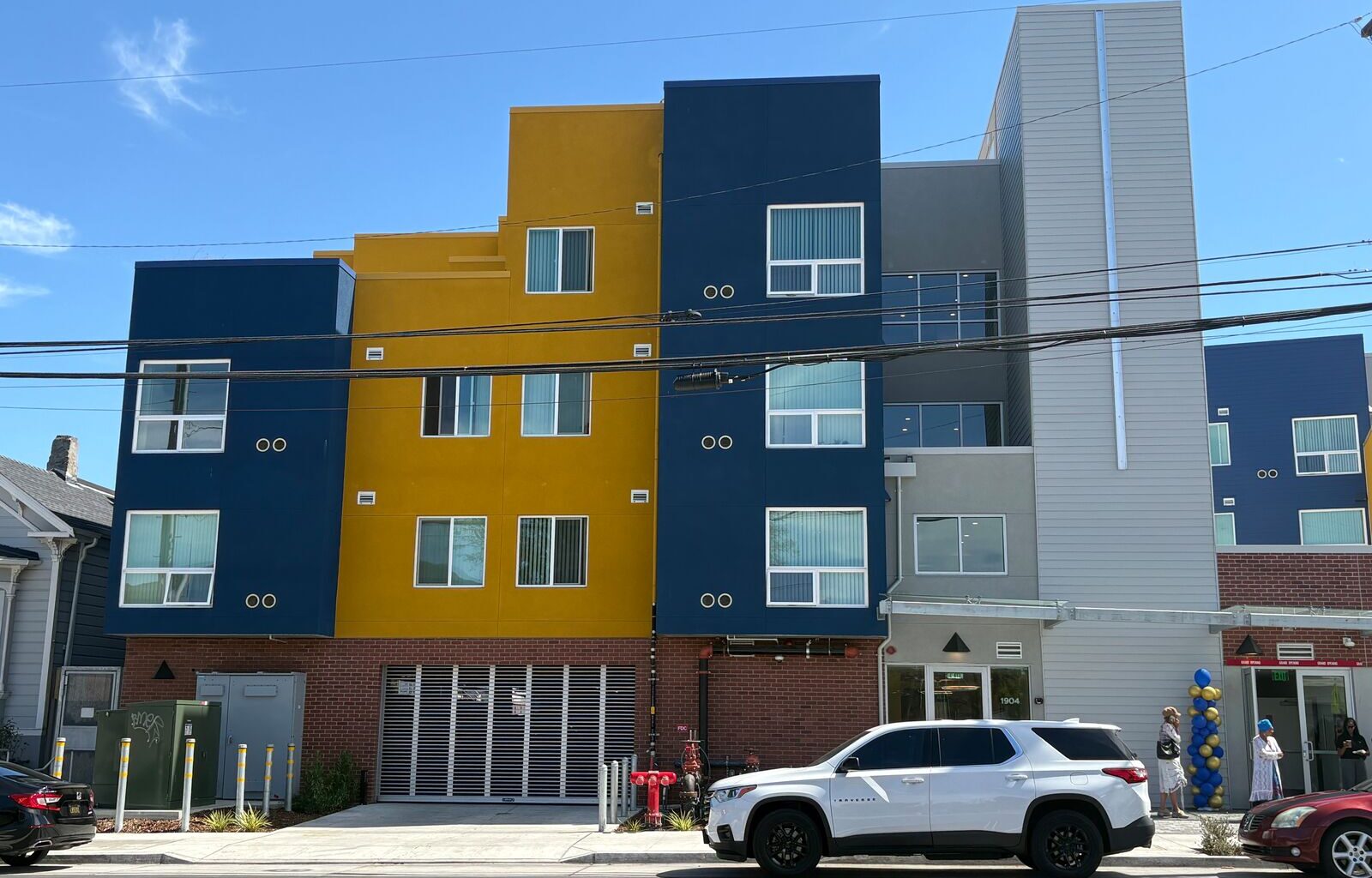
Oakland’s decade-plus displacement crisis is visible in many corners of the city, and its religious institutions are no exception. At Pastor Gerald Agee’s Friendship Christian Center in West Oakland, the congregation began to shrink a bit in recent years as rents and home prices soared.
“Some of my members were moving to Pittsburg, Modesto, Sacramento,” Agee said in an interview earlier this week. “They would try to come for two, three, four months, but then that became not sustainable.” Meanwhile, the homelessness crisis became much more visible around the West Oakland church.
“What really broke my heart was to see the seniors living in encampments. Some days it’d be so cold and so wet outside,” Agee said.
Older adults, age 50 and up, are the fastest-growing homeless population in the state.
In the early 2010s, Agee and other local religious leaders began considering how they might use their increasingly precious land and buildings in response to the housing emergency.
On Thursday, 15 years after the idea first cropped up, Agee, a developer his church teamed up with, and dozens of residents and civic leaders gathered to celebrate the grand opening of Friendship Senior Housing, a 50-unit building located where his church once stood. Most of the apartments are for seniors who make no more than 50% of the median income in the area, and 10 of the units house formerly homeless residents, who receive supportive services. The John Stewart Company is the property manager.
Thursday’s event, at times, felt more like a passionate sermon — with prayers, Amens, and a musical interlude — than a bureaucratic grand opening.
Larry Taylor, who’s a board member for developer Community Housing Development Corporation, told a crowd of around 100 that he grew up in a West Oakland that was “alive with neighbors who knew your name, watched over your children, and understood that survival was something we practiced together.”
Local Black churches served as meeting spaces where the community organized and learned to defend itself, he said, especially later in the face of the “urban renewal” that razed neighborhoods and replaced homes and businesses with the I-980 freeway, BART tracks and station, and post office.
“This building is not charity; it is justice made visible,” Taylor said about Friendship Senior. “It is a response to displacement, a defense of elders, and a declaration that the people who carried West Oakland through hard times deserve to live here with dignity in their later years.”
Religious orgs are well-placed to develop housing. But it’s not easy
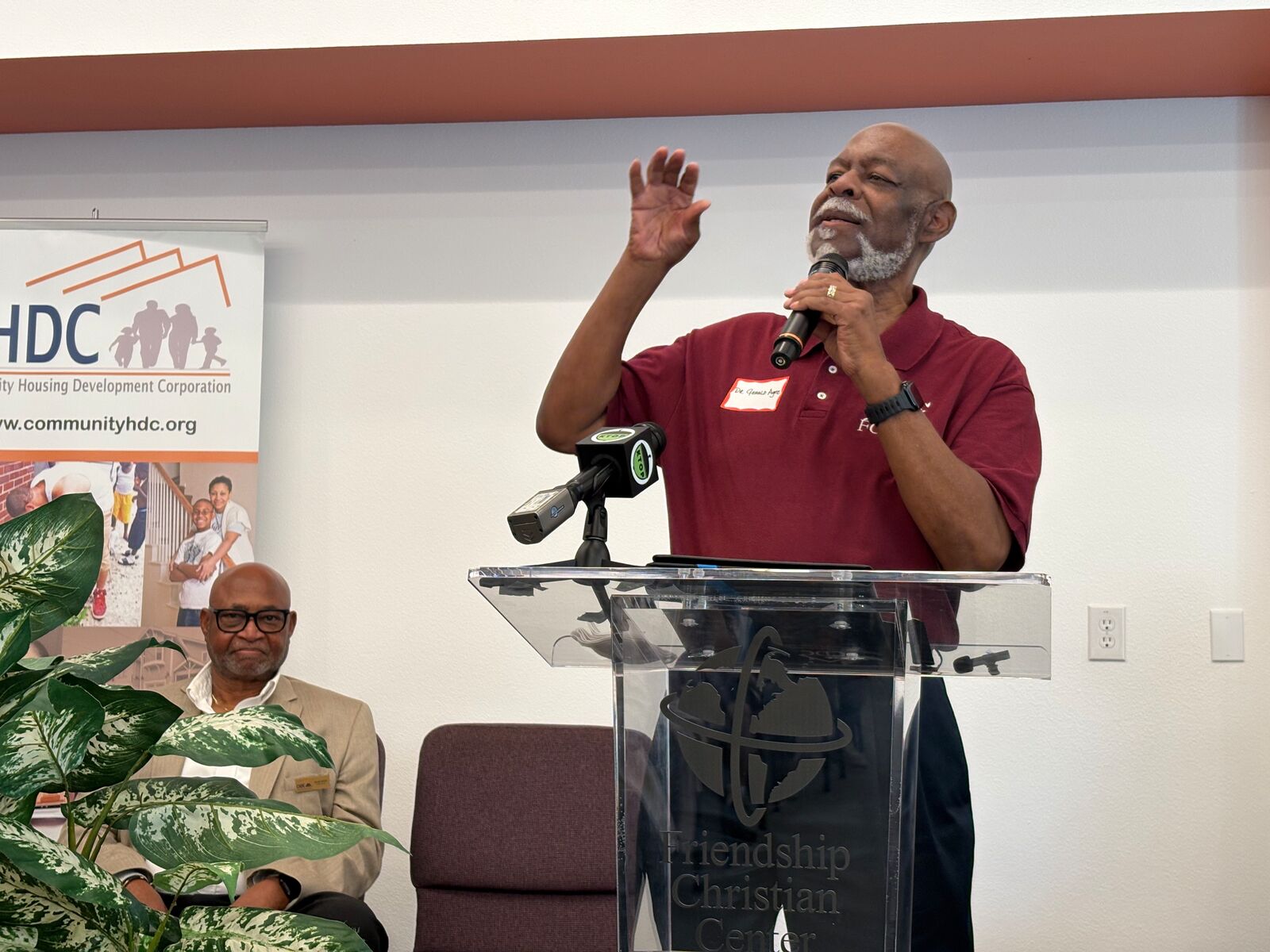 Pastor Gerald Agee (speaking) and developer Don Gilmore at the grand opening ceremony for Friendship Senior. Credit: Natalie Orenstein/The Oaklandside
Churches and other faith organizations own a lot of land in California. According to a Terner Center analysis in 2020, there are 1,066 acres of developable religious land in Alameda County alone, across 713 properties.
Agee’s Adeline Street church — originally a 1970s funeral parlor, according to the pastor — began deteriorating in the early 2000s. There were technical and financial barriers to renovating or expanding the cinder-block building, and Agee pondered the right next move. As early as 2010, a close friend who’s a real estate appraiser suggested developing senior housing. The nearby De Fremery Park, senior center, and library could serve that population well.
The idea resurfaced in 2013, when Supervisor Nate Miley convened a group of religious leaders to advocate for a county affordable housing bond. He told them they were uniquely positioned to help with the housing crisis. “I was inspired,” Agee said.
By 2017, he’d signed an agreement with Don Gilmore, executive director of Richmond-based CHDC.
During construction, the congregation met in nearby churches. Now they have weekly services on the ground floor of the apartment building.
Agee already had experience in the housing world. When he and his wife established their congregation in Oakland in the early 1990s, he said they met a community devastated by the crack epidemic. They started a drug rehab program that placed some 200 people in housing, according to Agee. The pastor is also the director of Friendship Community Development Corporation, which he created in 2006 to help people find housing.
But demolishing a building and developing a whole new one in its place is a different beast than connecting community members with existing apartments.
Agee participated in LISC Bay Area’s Faith and Housing initiative, a year-long program supporting and training religious leaders who are interested in building housing.
“That was so incredibly helpful and important because the mystery of development is just so massive and so great,” Agee said.
“There’s a lot of hunger for this type of program,” said Evita Chavez, who leads the cohorts. Faith and Housing began in 2019 through a contract with Alameda County, and it’s expanded throughout the region since.
Faith leaders face unique development challenges, she said in an interview. Often the congregations are small, and often they’re in historically redlined areas with zoning rules that make it hard to build housing or get public funds. Laws around church and state separation — put in place to ensure equal opportunity — can make it tricky to rebuild religious space within the larger housing project, which many congregations want to do.
And they run up against the severe financial constraints that any affordable housing project faces today.
Friendship Senior cost around $50 million, Agee said, including $12 million from the city of Oakland. About $3 million of that came from Measure U, the affordable housing bond approved by voters in 2022. The development also received state tax credits, federal housing vouchers from the Oakland Housing Authority, a $30 million construction loan from Citibank, and more.
The project hit plenty of snags, Agee said, including COVID delays and a city building inspection that resulted in lots more pricey requirements.
Chavez said that despite the common difficulties, religious institutions are well-poised to do this work. Their congregants need housing, the churches need money, and their land is often sitting unused. They also have the rare trust and buy-in of their communities. The main goal of LISC’s program, she said, is not necessarily to turn pastors into developers, but to make sure they’re not taken advantage of throughout the development process.
The program has worked with 50 participants, who collectively have 1,300 housing units in the pipeline in the Bay Area, Chavez said. Most participants have been Christian churches, but the program is open to any faith- or community-based organization.
Agee’s advice to peers who might consider the same path: “This is not a small type of project. When you talk about development, it’s so many different moving parts and entities. So first, you need to know beyond a shadow of a doubt, through your prayer, that God is saying this is for you.”
In 2023, Gov. Gavin Newsom signed into law SB4, the Affordable Housing on Faith and Higher Education Lands Act, more catchily called the “Yes in God’s Backyard” bill. The law overrides local zoning rules to make it easier for churches and nonprofit colleges to develop housing.
The law has helped make faith organizations more aware of the opportunity to build, said Chavez, but some provisions have reduced its impact, like a prohibition on demolishing housing units where anyone has lived in the past five years.
Preparing local seniors to apply for affordable housing
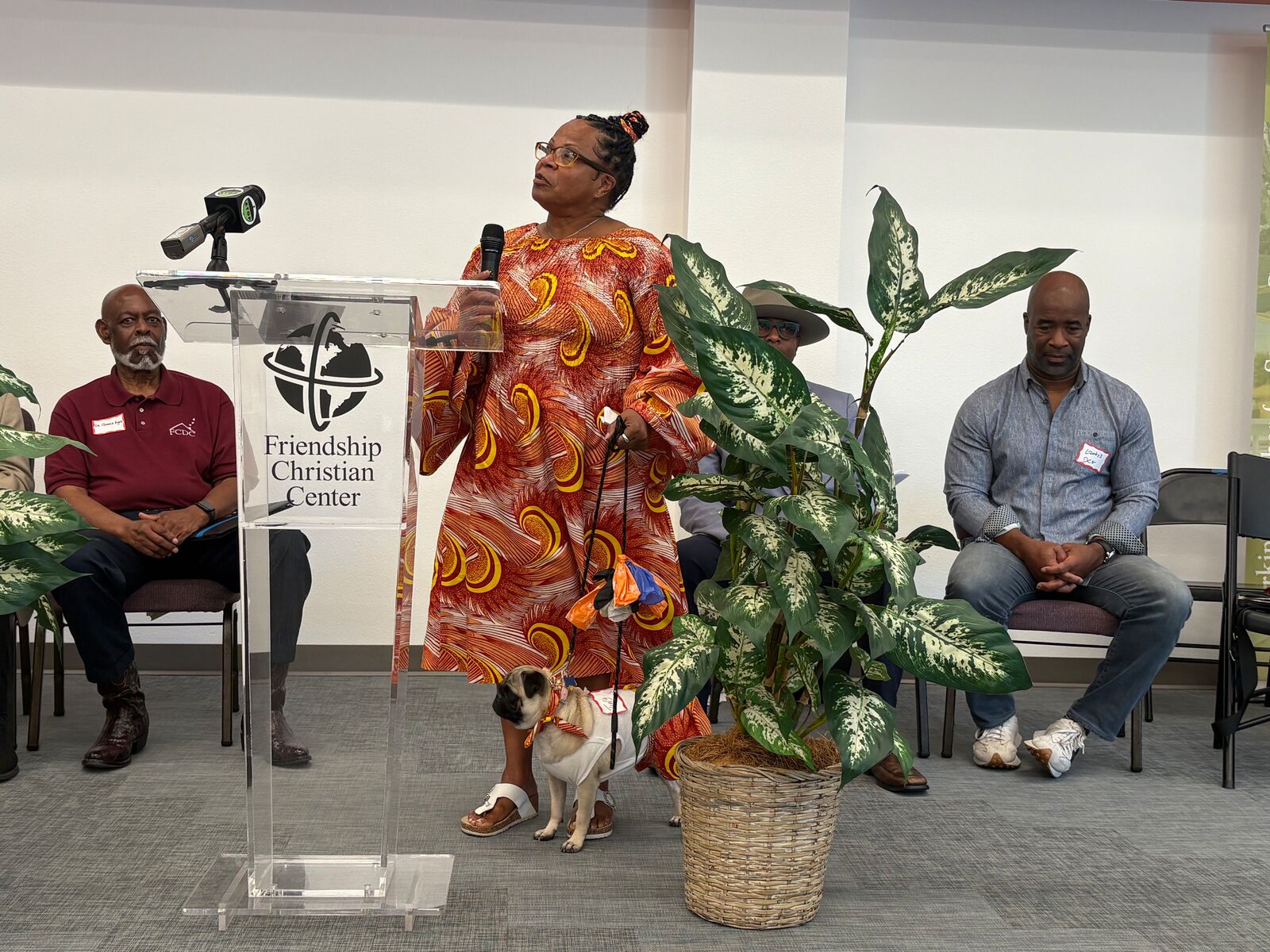 Resident Connie Orr shared that she and her dog, Tiny, secured a spot at Friendship Senior after living in their car and shelters following a family tragedy. Credit: Natalie Orenstein/The Oaklandside
When a project receives public funding, fair housing laws prevent the owner from discriminating against prospective tenants or buyers based on protected characteristics like race, gender, or religion. A church leader can’t reserve affordable apartments for people who are part of their congregation.
Waitlists for affordable housing are notoriously long, and residents are typically selected through lotteries. (Read our affordable housing guide.)
To make sure people in the broader community got a shot at living at Friendship Senior, Agee and his partners held information sessions at Oakland’s senior centers and at nearby churches. They taught attendees how to get their documents in order so they were ready to apply when spots opened up. Agee said they’re creating a how-to guide and want to help other churches do the same.
At the reception Thursday, Friendship Senior resident Alfred Razo beamed as he perused a barbecue buffet.
For months, he’d desperately tried to move out of a downtown affordable building where drug deals and mental health crises were common occurrences. He’d applied for a voucher from the Oakland Housing Authority and called the office frequently to make sure he wasn’t passed over.
When Razo got the call saying he’d been selected for a voucher for Friendship Senior through a lottery, he couldn’t believe it. For a Christian, it was a pleasant surprise to end up living where a church once stood.
As an 18-year resident of Oakland, Razo’s happy with the neighborhood, where he’s found friendly people and that elusive feeling of “home.” The upgrade from a studio apartment to a one-bedroom has been more overwhelming than he expected. But he’s giving himself time to set up his space and settle in.
“*” indicates required fields