
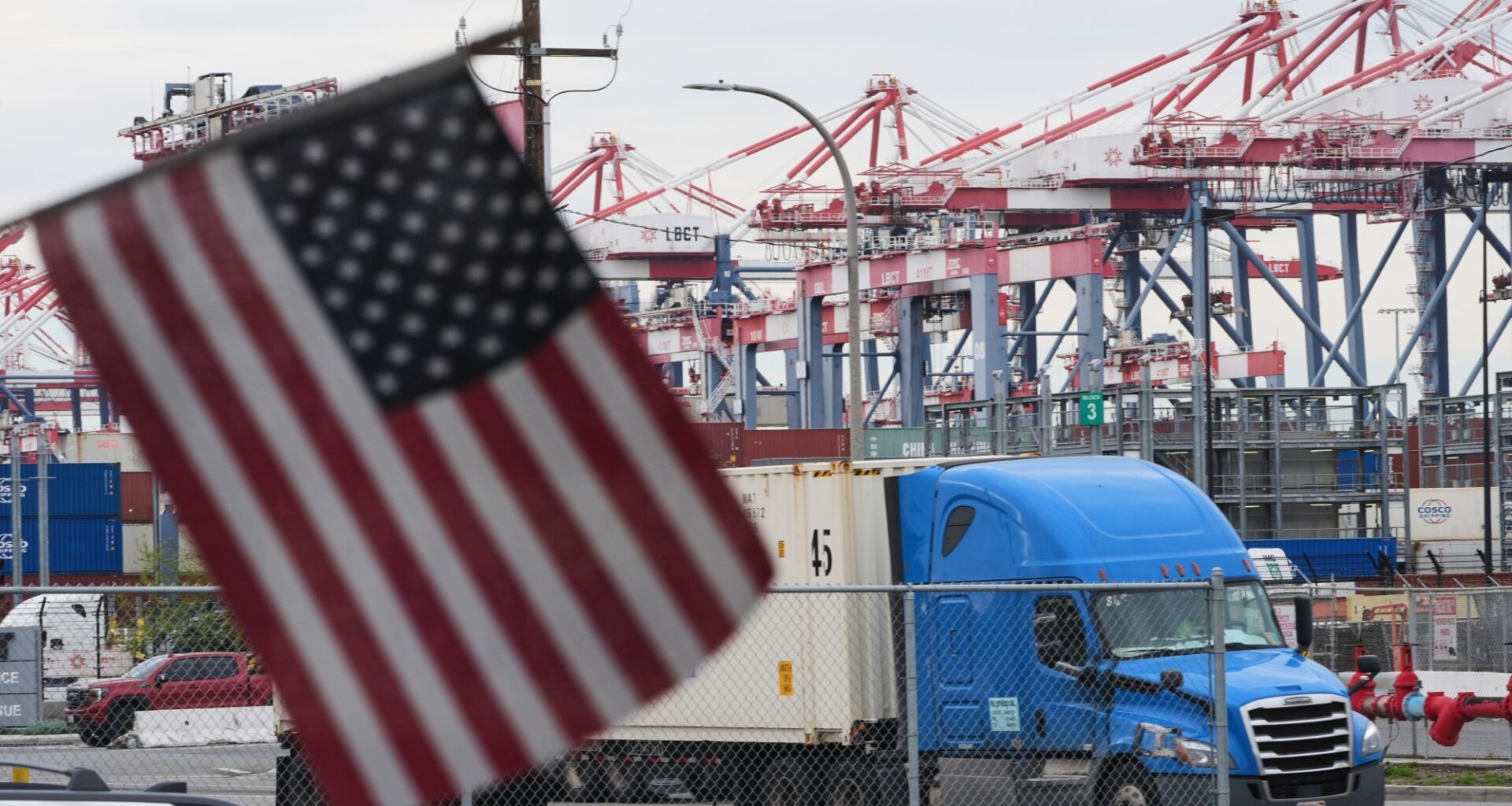
Last month was the best August in Port of Long Beach history, officials announced on Thursday, Sept. 10.
The port moved 919,992 twenty-foot-equivalent units in August, up 2% from the same month in 2025.
Year-to-date, the Port of Long Beach has moved 6,678,078 TEUs through the first eight months of 2026, up 1.3% compared to the same period last year.
“Our August numbers,” said port CEO Noel Hacegaba, “tell us that shippers continue to adapt to tariffs and geopolitical uncertainty and are confident in the Port of Long Beach’s ability to deliver.”
It was the port’s best August on record — and the fifth best month on record.
“We continue to see an influx of goods from shippers who sent their cargo ahead of a July 24 tariff expiration date,” Hacegaba said in a recorded statement posted online. “They hedged their bets in case the new round of tariffs were more costly.”
Imports rose 3.6% to 456,100 TEUs, exports were up 4% to 99,754 TEUs and empty containers dipped 0.39% to 364,138 TEUs.
Year-to-date, the Port of Long Beach has moved 6,678,078 TEUs through the first eight months of 2026, up 1.3% compared to the same period last year.
Hacegaba is expected to provide additional comments at his monthly virtual news briefing on Wednesday, Sept. 16. That will air on the port’s YouTube channel.
The trend of continuing cargo flow matches that being seen in the neighboring Port of Los Angeles.
While the port didn’t set a record, volume last month was 6% above POLA’s five-year average for the month and on par with August 2025 numbers.
The high numbers are being attributed to continued consumer spending and also to the industry’s ability to adapt to a challenging atmosphere, port officials said, with shipper often choosing to move cargo early to dodge anticipated tariffs while also watching the situation in the Middle East, and how that and other global instability is impacting traditional cargo routes and the rising costs of fuel.
With consumers still buying — and a flexible supply chain that anticipates possible route and timeline changes — larger cargo flows are expected to also continue into September, Port of L.A. officials said this week.
“We’ve had an incredibly resilient consumer over the course of the last several years through a variety of different disruptions,” said Brian Dodge, president and CEO of the Retail Industry Leaders Association, speaking at a Port of L.A. news briefing, “and the same seems to be the case right now as we head into the holiday shopping season.”
The National Retail Federation, meanwhile, said in a Wednesday, Sept. 9, news release that this year’s extended peak season — the period when suppliers typically rush goods to destinations in anticipation of the fall and winter holidays — is continuing, with a final bump expected this month that could push September over the line to be the busiest month of the year for import volume at the nation’s major container ports. The information was gathered from the Global Port Tracker report released this week by the National Retail Federation and Hackett Associates.
“We thought the peak season would be mostly behind us by now, but that’s not the case,” Jonathan Gold, NRF’s vice president for supply chain and customs policy, said in the news release. “Some of the shift from earlier in the summer to now is because of vessel delays due to bad weather in China and some rerouting away from the Panama Canal amid potential drought conditions there. But consumers keep buying despite tariffs, inflation and high fuel prices, and retailers keep bringing in merchandise to meet demand.”
Earlier in the summer, both ports each reported their second-busiest July on record in the more than 100 years since they were established.
The Port of Los Angeles processed 960,464 TEUs in that month, making it the second-busiest July in that port’s 118-year history.
The Port of Long Beach, meanwhile, moved 928,508 TEUs, down 1.7% from July 2025. But it was still that port’s second-busiest July on record — and the fourth-strongest month in its 115-year history.
July cargo at Los Angeles was 6% lower than last year’s all-time record for the month. In 2025, businesses surged cargo ahead of anticipated trade policy changes.