
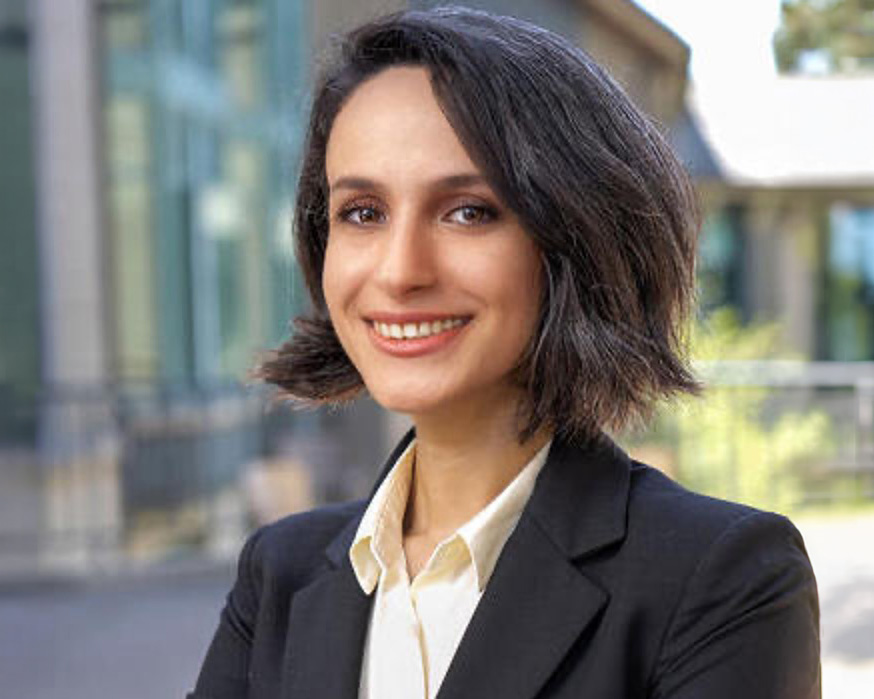
A paper by UC Berkeley Haas doctoral student Dr. Farnam Mohebi, exploring how delegating routine tasks to AI can erode professional expertise, has won Texas A&M’s Mays Business School AI Dissertation Proposal Competition in the management category.
The paper was selected from 50 submissions across six award categories.
Where to draw the line
Dr. Mohebi’s dissertation, “Where to Draw the Line: How Delegating Peripheral Work to AI Undermines Core Professional Judgment,” draws on her 18 months of ethnographic fieldwork with radiation oncologists. She found that the tasks doctors treat as peripheral, and hand off to AI, are often central to how they come to know and treat a case.
Delegation, she concluded, can erode the very judgment it was meant to protect. And that tension isn’t unique to medicine: Every profession adopting AI now faces the question of where to draw the line on delegating tasks.
“Before my PhD, I was a family physician, and I kept watching the people around me—my colleagues, my friends, my family—get AI tools that promised to lighten their work. Yet they were as overworked as ever, and many were not feeling any better,” she said. “That gap drove my curiosity: I wanted to understand what these tools actually change for the professionals who use them.”
Mohebi, PhD 27 (Management of Organizations, Macro), studies what technology reveals about professionals—their expertise, status, identity, and judgment. She said she is grateful to her Haas faculty mentors, professors Ambar La Forgia, Toby Stuart, and Solène Delecourt. Haas professors Abhishek Nagaraj, Aruna Ranganatan and Sameer Srivastava also provided guidance, along with professors Eliza Brown of UC Berkeley Sociology and Dr. Julian Hong at UC San Francisco.
The competition
Now in its second year, the Mays Business School AI Dissertation Proposal Competition dissertation competition spans six disciplines: accounting, finance, information systems, management, marketing, and supply chain management. A panel of expert faculty judges evaluated submissions based on theoretical and methodological rigor, potential contribution to the field, and innovativeness of the research. Each winner receives a $10,000 prize.