
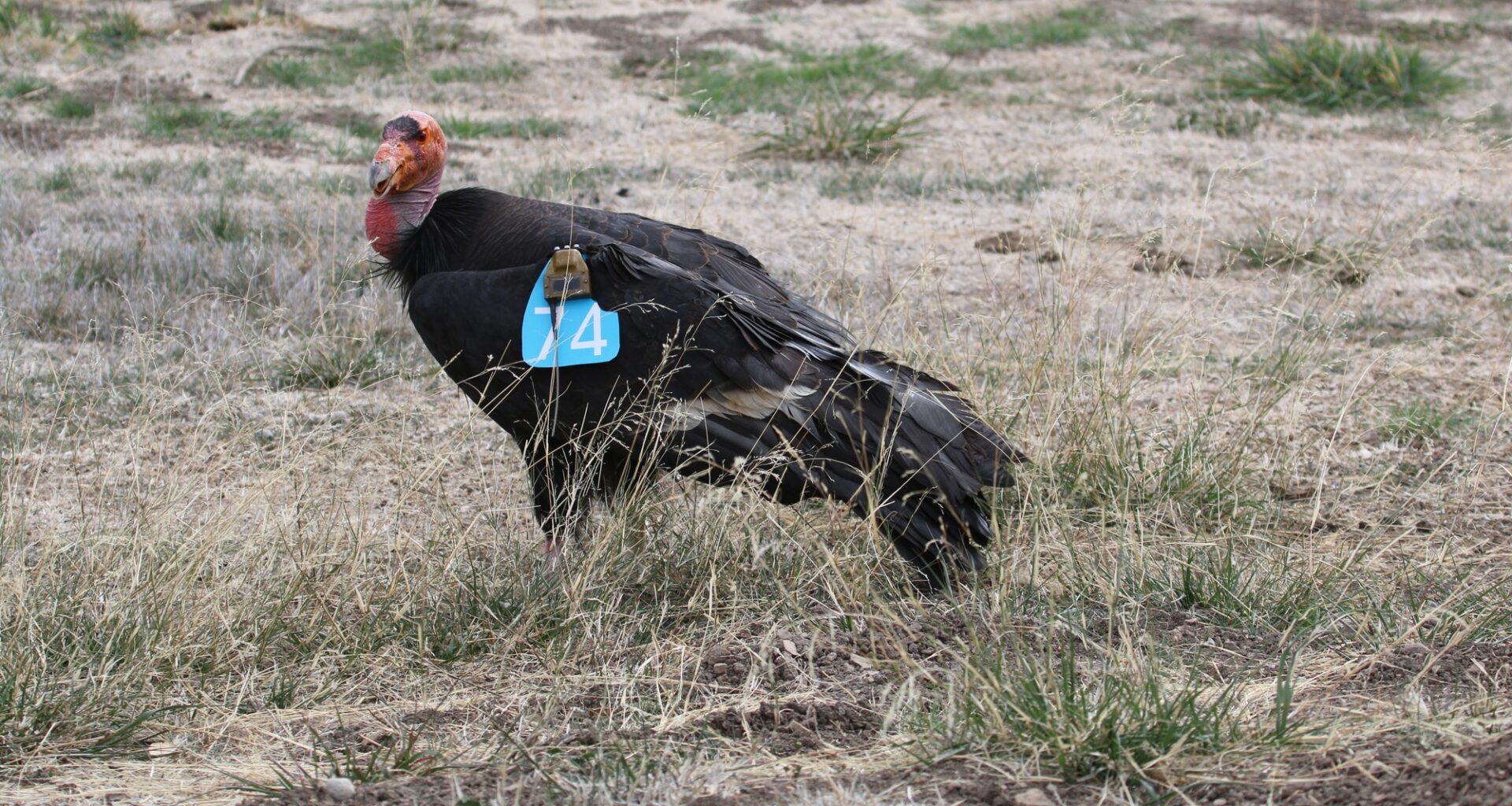
On 19 April 1987, biologists closed a trap on a single adult condor at Bitter Creek National Wildlife Refuge in Kern County, California. The bird, known to the recovery program as AC-9, was the last California condor flying free anywhere on Earth. With his capture, the entire species, all 27 individuals, lived behind fences at the San Diego Wild Animal Park and the Los Angeles Zoo, as the California Department of Fish and Wildlife recounts. The skies over the southern Coast Ranges, which had held condors since the Pleistocene, held none.
Thirty eight years later, the arithmetic reads differently. According to the U.S. Fish and Wildlife Service’s 2025 California Condor Recovery Program annual population status, the world population stood at 607 birds as of 31 December 2025. Of those, 392 were flying wild and 215 were in captivity. A species that once fit inside two zoo facilities now has more free-flying members than it had total members in 1987, by a factor of more than fourteen.
The decision to empty the sky
Taking the last wild condor into captivity was not a popular act. Through the mid 1980s the wild population collapsed with a speed that left little room for incrementalism, and the recovery program faced a choice between letting the remaining free-flying birds die where they flew or gathering them into a breeding pool that might, eventually, produce replacements. The bet was that a bird which raises one chick at a time, in cliff caves and burned-out cavities in giant sequoias, could be persuaded to produce more of them under managed conditions.
The protections were already on paper. CDFW notes the California condor has been federally protected since 1967 and protected under California law since 1971. Protection alone, though, could not address what was killing the birds in the field, and by 1987 the population had been reduced to a number small enough to name individually.
What made the bottleneck survivable was that 27 birds still carried enough genetic variation to work with, and that the species turned out to be a cooperative captive breeder. The first chick hatched in captivity in 1988, according to CDFW, one year after AC-9 came in from Bitter Creek. It was the first evidence that the gamble had a second half.
From 27 birds to 392 in the wild
Releases began in 1992, with birds returned to central and southern California, then Arizona, then Baja California in Mexico. The program’s structure since then has been a slow conveyor: captive pairs produce chicks, chicks are reared and conditioned, and cohorts go out to release sites where they are tracked, tested, and often recaptured for health checks. In 2025 alone, the USFWS status sheet records 46 captive-reared condors released to the wild.
The geography of those 392 wild birds, as tallied on 31 December 2025, spreads across four regions. California holds 216, split between 99 in southern California and 117 in the central California flock. Arizona and Utah together hold 98. Baja California holds 53. The Pacific Northwest experimental population, the newest of the release areas, holds 25. The remaining 215 birds are the captive population, which is not a leftover but the engine: it is the source of every release cohort, including the 46 that went out last year.
That split, 392 wild against 215 captive, marks a structural change from the 1987 position, when the ratio was zero to 27. A condor with a wingspan of more than nine feet, riding thermals and scanning for carrion, is doing something no member of the species did between April 1987 and the first releases of 1992. Nearly two thirds of all living California condors are now doing it.
What still kills them, and what 607 does not settle
The population figure is not a declaration of recovery, and the USFWS status sheet is explicit about why. Lead remains the dominant identified killer of free-flying condors. From 1992 through 2025, the Service documents 161 confirmed lead-poisoning deaths in the wild population. Where a cause of death could be determined at all, lead accounted for 50 percent of those 324 cases. Measured against all 569 recorded wild deaths in that period, including the many where no cause could be established, lead accounts for 28 percent.
The mechanism is not mysterious. Condors are obligate scavengers, which means they eat what has already died, including carcasses and gut piles containing fragments of lead ammunition. A bird that finds a contaminated meal can ingest a dose sufficient to shut down its digestive tract. This is why the recovery program’s field work involves so much blood testing and chelation treatment, and why the wild population is monitored rather than simply released and counted.
So the 607 figure settles one question and leaves another open. It settles whether a species reduced to 27 captive individuals can be rebuilt into a breeding, flying, multi-regional population across two countries. The answer, as of 31 December 2025, is that it can, and that the rebuilding has produced 392 free-flying birds in California, Arizona, Utah, the Pacific Northwest, and Baja California. What it does not settle is whether those birds can sustain themselves without the conveyor: without the captive flock, the annual release cohorts, the trapping and testing, and the treatment of poisoned individuals.
AC-9 was carried out of Bitter Creek on 19 April 1987 as the last of his kind in open air. The count that closed 2025 was 607 condors alive, 392 of them wild. That is persistence measured from zero, and it is still being managed one bird at a time.
Follow Science Blog on Google
Add us as a preferred source to see more Science Blog reporting in Google.