
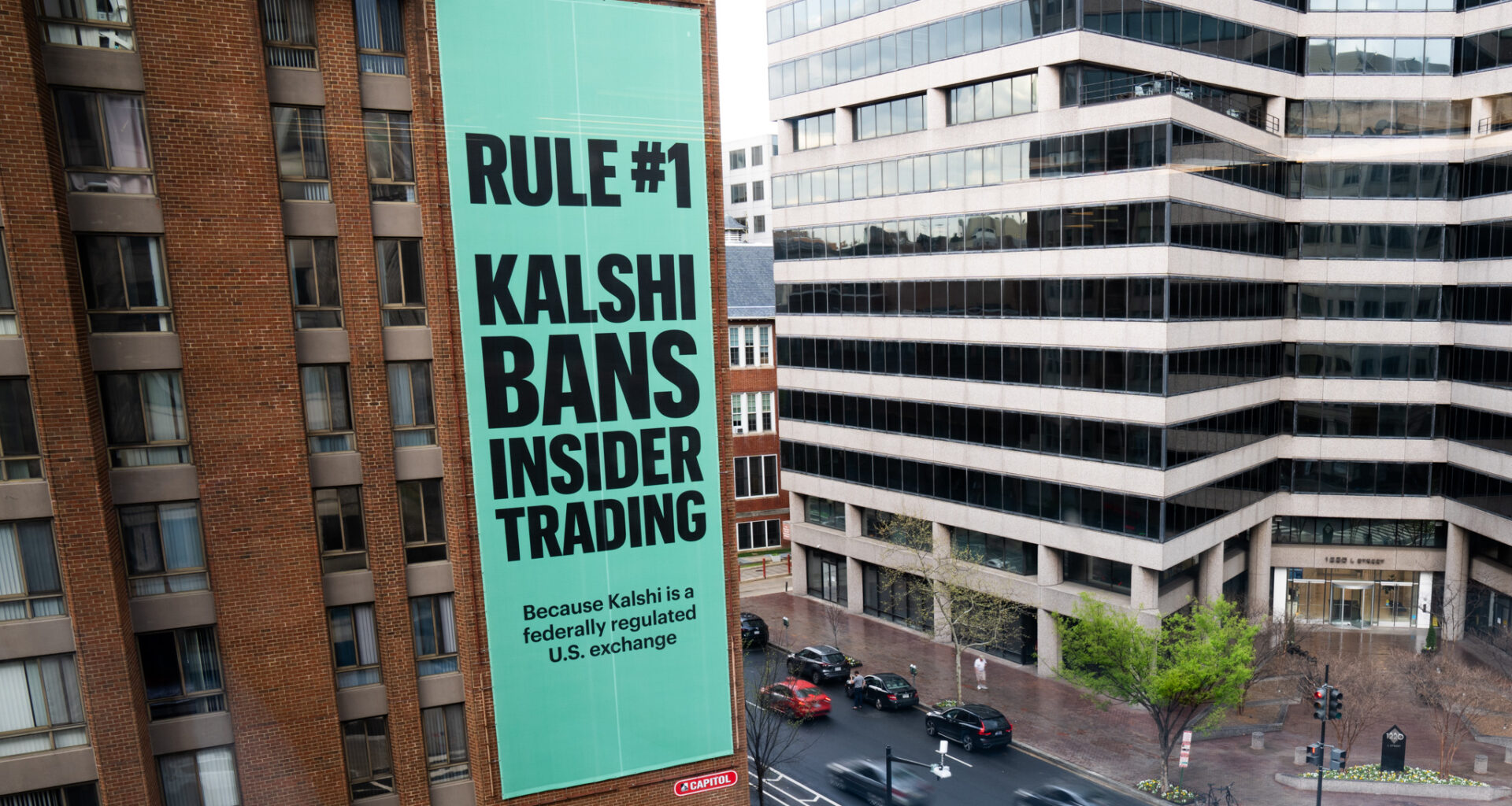
Online prediction markets let people put real money on political outcomes and they’re rapidly growing in popularity. Now, bettors are even putting money on Sacramento’s closely watched 7th Congressional District race.
Sites like Kalshi and Polymarket allow users to buy and sell contracts tied to real-world outcomes. Sports are among the most popular markets, but people can also bet on elections, economic events and the results of your favorite reality TV show.
Sacramento’s congressional race is an example of how prediction markets are influencing campaign messaging. The contest pits longtime incumbent Rep. Doris Matsui against first-time congressional candidate and Sacramento City Councilmember Mai Vang. Vang finished ahead of Matsui in the June primary. Both are Democrats and they each advanced to the November general election.
Ahead of a recent debate, Matsui’s campaign shared a social media post highlighting Kalshi’s odds that favored her. The odds have since fluctuated. During the primary, the prediction market had largely favored Matsui to finish first, but Vang ultimately scored a narrow victory.
As of this week, about $24,000 had been traded on Kalshi on the District 7 race. That is a relatively small amount compared with larger political markets on the platform, where tens of millions of dollars are being traded. Kalshi users, for example, have wagered over $150 million dollars on who will be the Democratic presidential nominee and on predicting the 2028 presidential race.
Prediction market supporters say the platforms are different from traditional gambling because users trade with each other rather than betting against the “house,” as they would at a casino. Critics argue that people are still risking money on uncertain outcomes just like gambling.
Robert Jacobson is the executive director of the California Council on Problem Gambling. He said the markets affect people the same way gambling does, with users risking money on an undecided outcome.
“Prediction markets represent gambling. They’re functionally gambling,” Jacobson added. “They may be structured in a way to mirror commodities markets. And that creates a lot of legal difficulty in terms of how you regulate them.”
Professor Glenn Wichinsky teaches gaming law and regulation at McGeorge School of Law in Sacramento. He said he agrees with Jacobson that these sites are in a legal grey area.
“The way I look at it, it’s just my opinion, is these prediction markets technically meet the legal definition of gambling,” Wichinsky noted.
Wichinsky said users must put up something of value on an outcome involving chance to win a prize.
“So if it looks like it’s gambling and it meets the definition, then it’s gambling,” Wichinsky continued.
But Kalshi rejects that argument. It maintains that it operates more like the stock market than a sportsbook. Robert DeNault, Kalshi’s head of enforcement, said users trade against one another while the company charges a fee.
“So we don’t profit from whether your trading position is successful or it’s unsuccessful,” DeNault said. “We’re neutral on that question. You just pay a small fee to be able to come and access this marketplace that we operate at the federal level.”
The disagreement over whether it should be considered gambling or not is especially relevant in California, where online sports betting is illegal. Four years ago, California voters rejected ballot measures that would have legalized sports betting and, more specifically, online gambling.
Prediction markets, however, remain accessible for Californians. Kalshi is governed as a federally regulated exchange rather than a state-regulated gambling entity. Wichinsky said that’s led to a larger dispute over which level of government should control the platforms.
“The battle right now is between the federal and the state interpretation,” Wichinsky said.
Political prediction markets themselves are not new. Jacobson said they date back decades and were initially developed, in part, as another way to forecast elections.
“The basic concept was that rather than calling people up and asking them, ‘Who do you think’s going to win the next election?’ You would say, ‘OK, you can effectively bet on who’s going to win the next election, and that should be more accurate,’” Jacobson said.
The idea was that people might think more carefully about a prediction if they had money tied to their choice. What has changed is how easily people can access the markets. Users can now trade from their phones or computers, and political markets can draw more interest during election season.
DeNault with Kalshi acknowledged that a large trade can move a prediction market’s price.
“When an individual takes a position in a prediction market, particularly either a very large position or, you know, a number of positions over time, of course it moves price,” DeNault said. “That’s how markets work.”
Kalshi says other traders can take the opposite position if they believe the price is wrong, causing the market to correct. Matsui and Vang have expressed different opinions on the role prediction markets should play in elections.
Matsui’s campaign said statistics, polls and prediction markets provide data points of “varying value,” but that ultimately the only statistics that matter are the votes on Election Day.
Vang said she was not following the markets and questioned whether election outcomes should be available for people to trade on at all.
“Betting on the people’s seat should be illegal,” Vang said. “It only opens the door to more corruption.”
She also said prediction markets are not representative of voters in the district and criticized Matsui for highlighting favorable odds. No evidence shows Matsui or her campaign traded on the District 7 market or manipulated its odds.
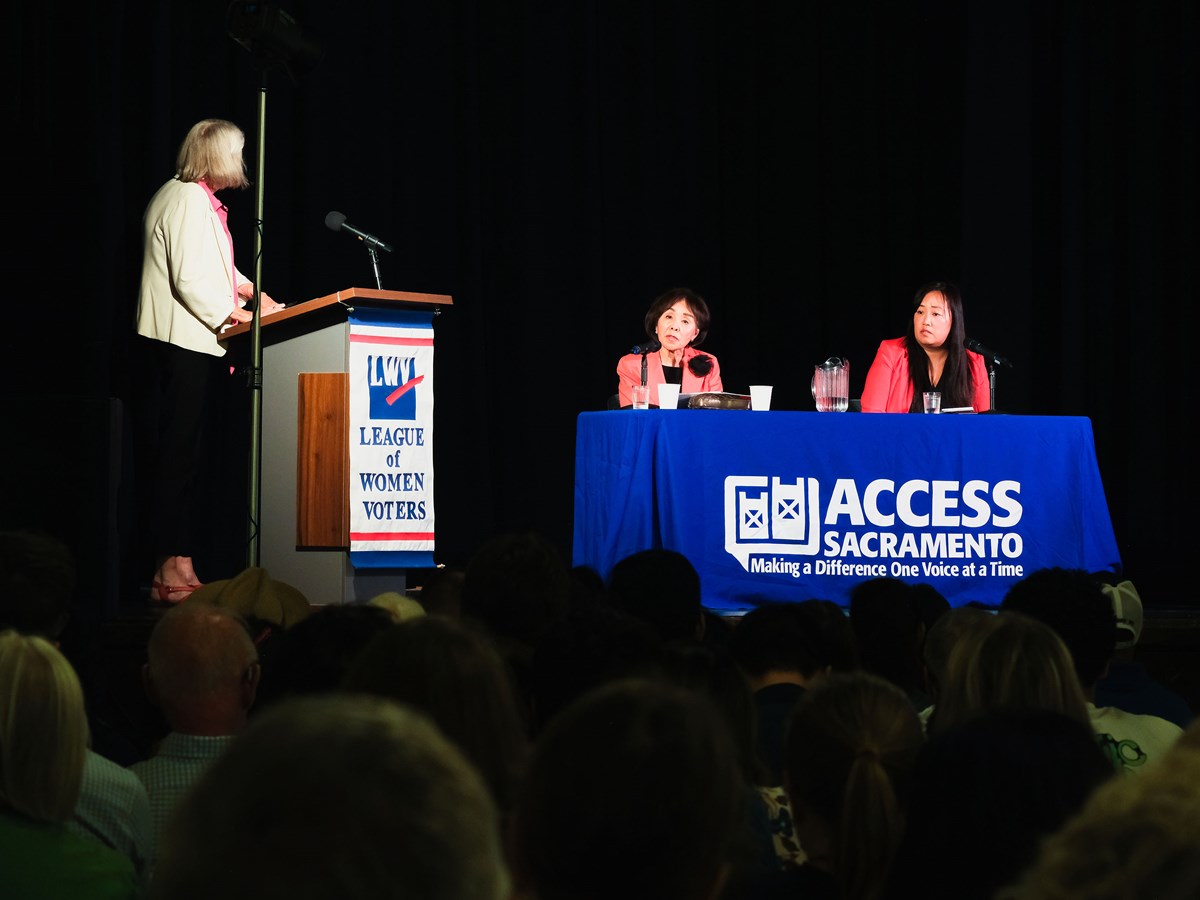 Mai Vang and Doris Matsui took part in a candidate forum at the Coloma Community Center in East Sacramento on August 27, 2026.Ruth Finch/CapRadio
Kalshi, meanwhile, says candidates are free to cite its numbers and encourages them to do so.
“We’re an agnostic marketplace and we’re an information source,” DeNault said. “I think candidates are entitled to treat it the same way,” he said. “I think candidates are fair to cite it.”
Kim Nalder, who directs Sacramento State’s Project for an Informed Electorate, said one of her biggest concerns is that people may mistake these odds for a good measure of voter opinion.
The political science professor said traditional scientific polls attempt to create a sample that resembles an actual electorate. She added that prediction-market users choose whether to participate for varying reasons. They also decide how much money to put in, she added, and don’t necessarily live in the district they are trading on.
Kalshi argues people with money at stake may be more motivated to research a race carefully. Nalder said she’s skeptical that this makes the market representative of actual voters.
“People do their homework on stock market investment all the time and lose,” Nalder said. “Regardless of how much homework you do, you can be wrong.”
For Nalder, the distinction between polling and prediction markets comes down to why users participate. She also raised concerns about whether prediction markets could eventually influence the outcome of the elections they are trying to predict.
“It’s the difference between measuring what people predict will happen in an election and what people intend to do when they vote in an election,” she said. “And those are two completely different things.”
Follow us for more stories like this
CapRadio provides a trusted source of news because of you. As a nonprofit organization, donations from people like you sustain the journalism that allows us to discover stories that are important to our audience. If you believe in what we do and support our mission, please donate today.