
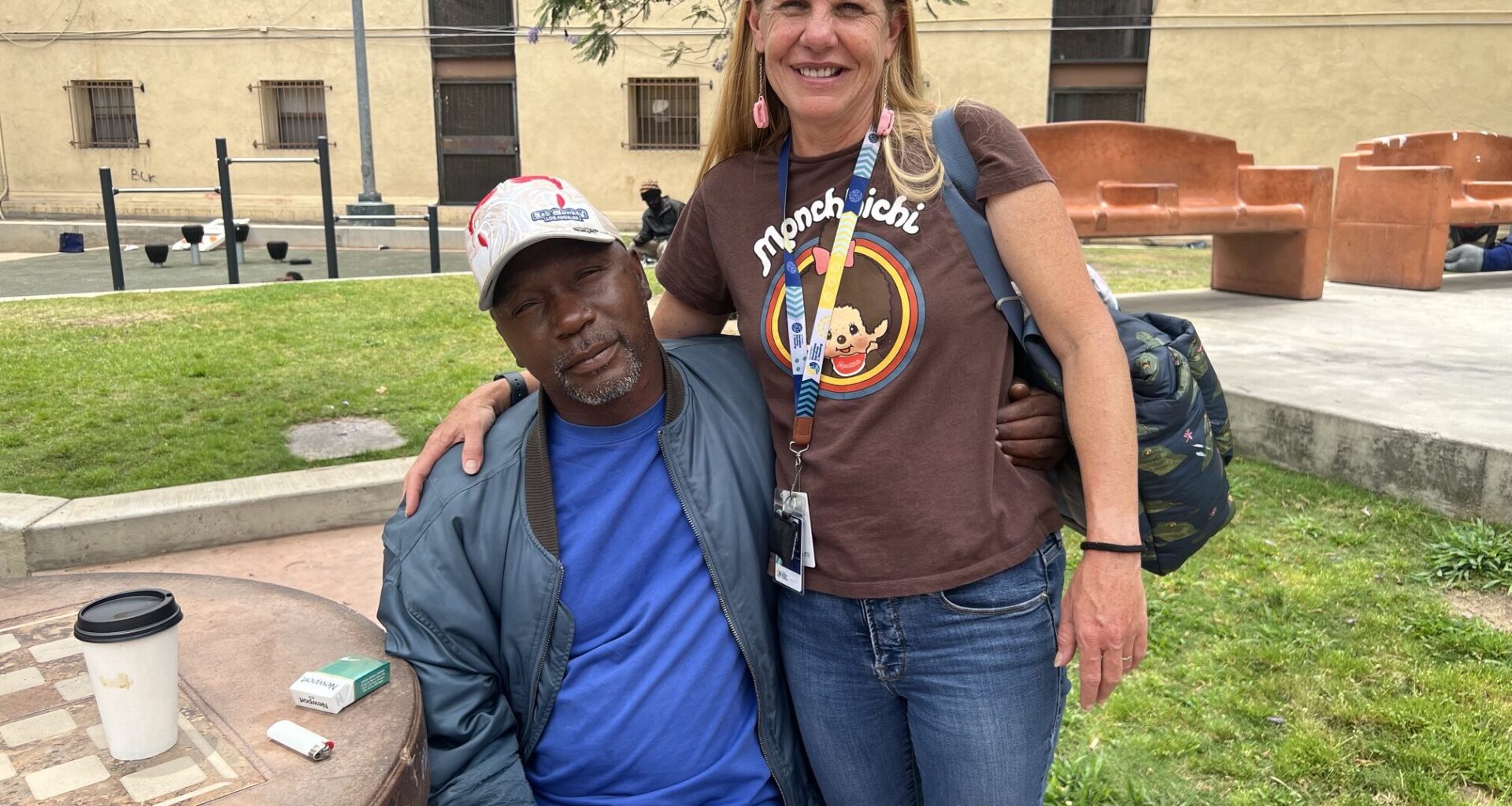
“I try to spend a couple of hours a day here,” she says, “just because I love the community. I want to talk to people and make sure they are getting linked to the resources they need. If they’re supposed to have a case manager come see them, is the case manager doing that?”
Groups of people sitting in rows of chairs on a sidewalk greet passers-by—as if this slice of sidewalk were an array of front porches in a neighborhood. “Hi, Sieglinde!” calls one woman in a wicker chair.
“Has anyone been by to check on you?” Sieglinde asks her. No, the woman replies. “I’m worried about your health,” Sieglinde tells her, saying she will find someone to check on her.
On another block, a young woman stops Sieglinde. “I’m ready for housing,” she says. “I want to get my kids back. I have four kids.”
“Go to the Care Campus and ask for a case worker,” Sieglinde instructs her. “If you have had mental health issues—”
“I haven’t,” interrupts the woman, “but I wouldn’t mind some therapy.”
A woman with vivid purple hair smiles and stops to talk to Sieglinde. “I love the purple,” says Sieglinde. The woman, who had been living outside, now lives in interim housing in a single-room occupancy building with supportive services for homeless and low-income individuals.
“She has her own room,” says Sieglinde. “She’s done well.”