
Hoops Rumors is checking in on the 2026 offseason for all 30 NBA teams, recapping the summer’s free agent signings, trades, draft picks, departures, and more. We’ll take a look at each team’s offseason moves and consider what might still be coming before the regular season begins. Today, we’re focusing on the Sacramento Kings.
Free agent signings
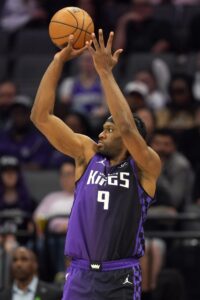 Precious Achiuwa: Two years, $11,227,850. Fully guaranteed. Re-signed using bi-annual exception.
Daeqwon Plowden: Two years, minimum salary. Second year non-guaranteed. Re-signed using minimum salary exception.
Ben Simmons: One year, minimum salary. Non-guaranteed. Signed using minimum salary exception.
Trades
Acquired the draft rights to Alex Karaban (No. 29 pick) from the Cavaliers in exchange for the No. 34 pick in the 2026 draft and the Kings’ 2032 second-round pick.
Acquired the draft rights to Alpha Kaba from the Hawks in exchange for Devin Carter and the Kings’ 2033 second-round pick.
Draft picks
1-7: Darius Acuff Jr.
Signed to rookie scale contract (four years, $36,474,132). First two years guaranteed. Third- and fourth-year team options.
1-29: Alex Karaban
Signed to rookie scale contract (four years, $15,140,872). First two years guaranteed. Third- and fourth-year team options.
2-45: Emanuel Sharp
Signed to three-year, $6,346,496 contract using second-round pick exception. First two years guaranteed. Third-year team option.
Two-way signings
Two years, $91,000 partial guarantee (will increase to $339,441 at start of regular season).
Second year guaranteed for maximum two-way protection amount (will increase to 50% at start of regular season).
Two years, $91,000 partial guarantee (will increase to $339,441 at start of regular season).
Second year guaranteed for maximum two-way protection amount (will increase to 50% at start of regular season).
Departed/unsigned free agents
Other roster moves
Salary cap situation
Note: Figures are rounded to one decimal place.
Operating over the cap ($165MM) and below the first tax apron ($209MM).
Hard-capped at first apron.
Team salary: $197.5MM (tax); $201.4MM (apron).
Below luxury tax line by $2.9MM; below hard cap by $7.6MM.
Full non-taxpayer mid-level exception ($15MM) available.
Two traded player exceptions available (largest worth $5.4MM).
The offseason so far
Coming off a 22-win season in 2025/26, the Kings are absolutely in rebuilding mode as the ’26/27 season approaches, but that wasn’t necessarily the case a year ago.
New general manager Scott Perry didn’t seem eager to overhaul the roster during his first offseason on the job – his biggest move last summer was signing free agent point guard Dennis Schröder to a multiyear mid-level contract – and Sacramento entered the fall of 2025 hoping that highly paid veterans like Zach LaVine, Domantas Sabonis, DeMar DeRozan, and Malik Monk could lead the team back to playoff (or at least play-in) contention.
However, those hopes were dashed early in the season. The Kings lost 13 of their first 16 games en route to an 8-30 start, and key contributors like LaVine (39 appearances), Sabonis (19), and Keegan Murray (23) were available for fewer than half the team’s 82 games due to injuries.
As a result, Perry seemed more committed entering the 2026 offseason to rebuilding around Sacramento’s younger core, which includes Murray, Nique Clifford, Maxime Raynaud, Dylan Cardwell, and this year’s lottery pick. But the front office was unable to find trade partners for the likes of LaVine and Sabonis, whose sizable cap hits were deemed by rival teams to be unpalatable due to a combination of their health issues and defensive limitations.
Without the ability to move off of guys like LaVine, Sabonis, or Monk, the Kings were forced to make cost-cutting moves elsewhere on the roster simply to avoid having to pay luxury tax penalties for a 22-win roster. That meant waiving DeRozan, whose $25.7MM salary was only partially guaranteed for $10MM, then stretching his partial guarantee across three seasons. It also meant attaching a future second-round pick to move off of Devin Carter, a lottery pick in 2024 who was ineffective and hampered by injuries during his first two NBA seasons.
Sacrificing future draft picks and future cap flexibility to save money in the short term isn’t a position that any rebuilding team wants to be in, and having to make those moves put a damper on the Kings’ summer as a whole. Still, it wasn’t all bad news in Sacramento.
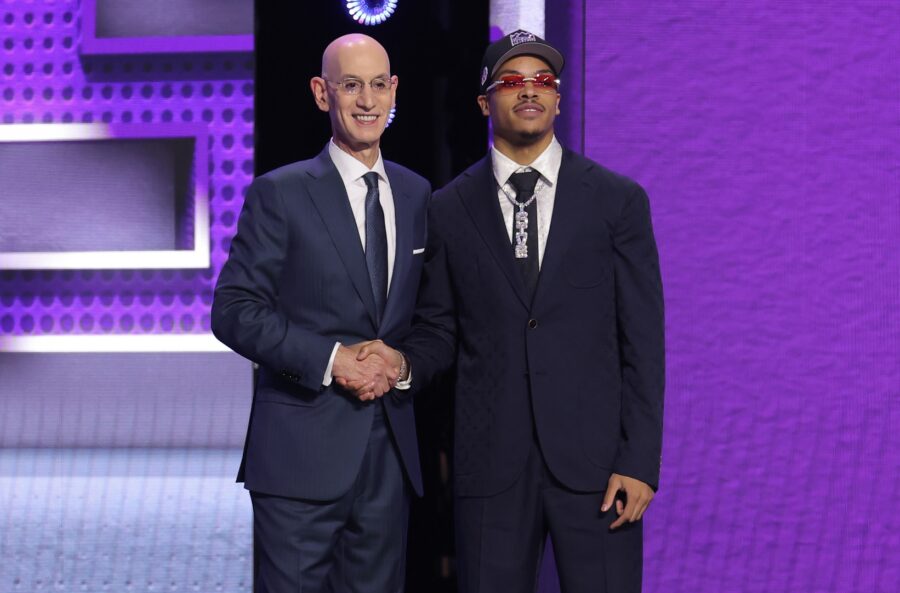
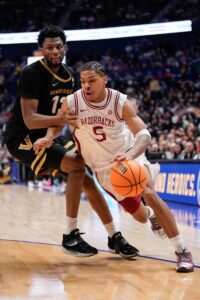 Although the Kings were disappointed to drop to seventh in the 2026 draft order after tying for the league’s fourth-worst record last season, reports began surfacing almost immediately in the wake of the lottery suggesting that the team had its eye on Darius Acuff Jr. and were hoping the former Arkansas guard would drop to them. That type of reporting about a team’s interest in a specific player often turns out to be a smoke screen, but that wasn’t the case this time — Sacramento was ultimately able to draft Acuff at No. 7 in June and seemed thrilled about it.
While there are questions about how the 6’2″ Acuff will hold up defensively, his offensive upside is as high as any player in this year’s draft class. In his first and only season as a Razorback, he racked up 23.5 points and 6.4 assists per game on .484/.440/.809 shooting. Having traded away both Tyrese Haliburton and De’Aaron Fox since 2022, the Kings desperately needed to find their new point guard of the future and they’re optimistic that Acuff will fit the bill.
Focused on adding more young, cost-controlled talent to their roster, the Kings went out and acquired a second first-round pick just hours after selecting Acuff, taking advantage of the Cavaliers’ desire to move out of the first round for cap reasons. It only cost Sacramento a single future second-round pick to move up from No. 34 to No. 29 in order to nab UConn’s Alex Karaban, a savvy, floor-spacing forward who won a pair of national championships during his college career.
Only eight second-round picks from the 2026 draft have signed standard contracts, but one of those eight is the Kings’ second-rounder, Emanuel Sharp. While virtually everyone drafted around him got a two-way deal, the former Houston guard, selected at No. 45, signed a three-year contract that includes two guaranteed seasons. A talented scorer and outside shooter, Sharp will try to emulate Raynaud and Cardwell by carving out a rotation role as a rookie.
Due to their cap-related restrictions and their inability to extract positive value for their biggest potential trade chips, the Kings weren’t overly active outside of the draft this offseason. Of their three free agent signings, two – Daeqwon Plowden and Ben Simmons – received minimum-salary contracts, while the third – Precious Achiuwa – was re-signed using the bi-annual exception, which allowed Sacramento give him a higher salary than would’ve been possible with his Non-Bird rights.
All three of those players may no longer be Kings by the time the team returns to the playoffs, but I liked the decision to take a shot on Simmons, a three-time All-Star and former Defensive Player of the Year runner-up who is said to be recovered from the back issues that required multiple surgeries, derailing his career. Simmons’ game certainly has holes, and counting on him to play 70-plus games would probably be misguided, but bringing him in on a veteran’s minimum deal is the sort of low-risk, high-upside swing that makes sense for a club like Sacramento that has the freedom to take that sort of flier.
Up next
Assuming Simmons sticks around, the Kings currently have 14 players penciled in for the regular season roster and are operating $2.9MM below the luxury tax line. That gives them enough room to bring in a 15th man on a minimum-salary contract if they so choose, but it’s not a necessity.
If there are any concerns about Simmons in training camp and the preseason, Sacramento may ink another free agent point guard to a non-guaranteed contract to compete for a roster spot. The club was linked to several veteran options before signing Simmons, and many of those players remain unsigned, including Victor Oladipo, Cameron Payne, Gabe Vincent, and Elfrid Payton.
Several Kings are eligible for veteran extensions, but Sabonis and Monk are more likely to be traded than extended, while a buyout may eventually be in the cards for LaVine if Sacramento can’t figure out a way to include his $49MM expiring contract in a deal.
The one potential extension candidate I’d keep an eye on is De’Andre Hunter, whom the Kings acquired in a trade-deadline deal with Cleveland in February. The terms of that deal – and the comments that Perry made in the aftermath – suggested that Sacramento values Hunter and likes him as an option on the wing alongside Murray going forward.
Hunter underwent season-ending eye surgery just two games into his Kings tenure, so the team may want to take a longer look at him this fall and winter before making a decision on an extension. He’ll remain eligible right up until June 30, 2027. On the other hand, the injury ideally shouldn’t be the type of health issue that becomes a recurring problem, so if Sacramento feels good about Hunter’s recovery and what to expect from him, the club could pursue a new deal sooner rather than later.