
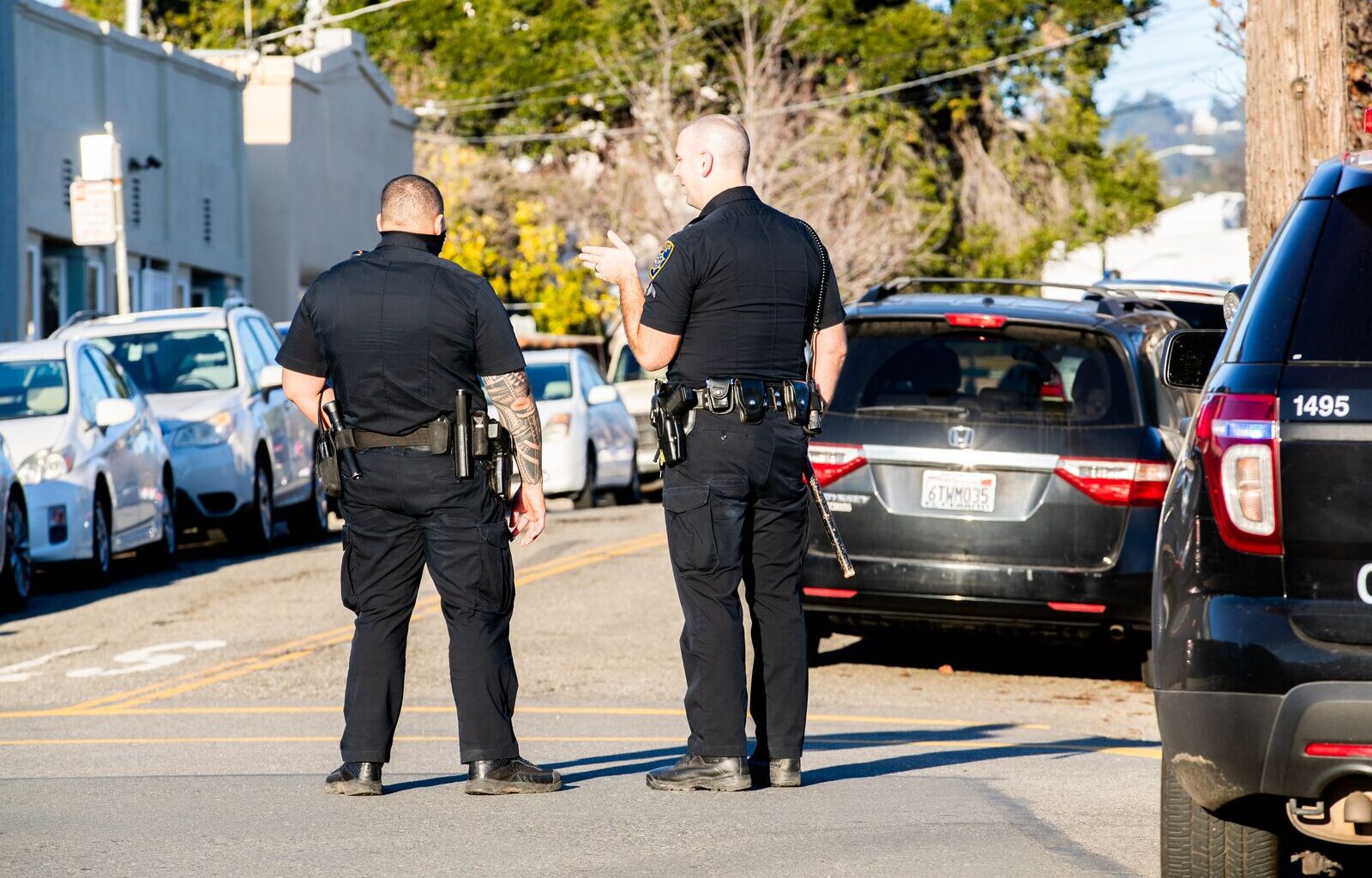
Tonight, Oakland city leaders will decide on one of the biggest issues affecting the city’s finances: the Oakland police union’s new contract.
Employee pay and benefits make up just over half of Oakland’s total annual budget of $2.2 billion. And the police department’s $338 million spent on salaries, healthcare, and pensions — most of this for sworn officers — is the single largest category of employee compensation for the city. That means any changes to police pay and benefits can have big ramifications for how easy or difficult it is for city leaders to balance the budget.
Last month, the Oakland Police Officers’ Association and the city announced they had reached a tentative agreement on a new contract, covering July 2026 through June 2031. The contract outlines officers’ pay, including raises, bonuses, and overtime; health insurance; pensions; and other terms. The previous contract expired on June 30.
Details about the proposed labor agreement were sparse until earlier this month, when a draft of the new deal was published on the city’s website.
The proposed contract is scheduled to go before the City Council Tuesday afternoon. It’s on the non-consent calendar, meaning councilmembers will consider the issue separately from routine matters, with an opportunity for discussion, debate, public comment, and a separate vote.
The Oaklandside took a closer look at the tentative contract and identified several noteworthy terms that were not included in OPOA’s or the city’s initial announcement:
The contract includes nine scheduled base-pay increases that add up to 14%. Because each raise is applied to the previous salary, rather than the original salary, the increases would result in a 14.88% compounded increase by June 2031.
Officers who have worked for OPD for at least five years would receive larger longevity bonuses, ranging from 3% to 15% of their base pay depending on years of service. This appears to be an attempt to better retain veteran officers.
A “me too” clause could give OPOA additional compensation if other city unions negotiate better terms.
Employees would pay a larger share of their health insurance and pension costs over the life of the contract, potentially reducing some financial pressures on Oakland.
The agreement doesn’t make any changes to overtime rules. It changes how officers can bank overtime as compensatory time, or comp time, rather than receiving overtime pay.
14%? It’s actually 14.88%
When OPOA and the city announced the tentative agreement, they said union members would receive a net 14% raise over the five-year contract.
The actual effect on an officer’s salary is a little more complicated.
The contract outlines nine scheduled base-pay increases that add up to 14%. But the raises are applied sequentially, meaning each increase is calculated using the officer’s newly increased salary.
The scheduled increases are:
January 2027: 2%
January 2028: 1%
June 2028: 1%
January 2029: 1.25%
June 2029: 1.75%
January 2030: 1.25%
June 2030: 1.75%
January 2031: 3%
June 2031: 1%
When compounded, those increases result in a 14.88% increase in base pay over the life of the contract.
For example, a police officer earning $100,000 before the raises would earn about $114,880 after all nine increases, assuming no other changes to their pay. That’s roughly $880 more than if their base salary were simply increased by 14%.
Longevity bonuses
Officer retention has been a major concern for OPD and the city, with officers leaving OPD in recent years to work for other Bay Area police departments. (Former Chief Floyd Mitchell, for instance, left OPD last October to lead Fremont’s police department.)
Under the proposed deal, OPOA members who have worked for OPD for at least five years would receive even larger payments, called “longevity premiums,” based on their years of service. These bonuses appear to be an attempt to incentivize veteran officers to stay at OPD.
Starting July 2027, the longevity premium would be:
5-6 years of service: 2% of base salary
7-9 years: 4%
10-14 years: 6%
15-19 years: 8%
20+ years: 10%
In July 2028, those percentages would increase again to:
5-6 years of service: 3% of base salary
7-9 years: 6%
10-14 years: 9%
15-19 years: 12%
20+ years: 15%
The longevity premium is separate from an officer’s base salary and is paid out every two weeks. It begins with the first full pay period after an employee reaches a new longevity tier.
The contract includes different longevity bonuses for police managers. Starting July 2027, based on how long they’ve worked for OPD, managers would receive:
5-6 years of service: 1.5% of base salary
7-9 years: 3%
10-14 years: 4.5%
15-19 years: 6%
20+ years: 7.5%
Beginning in July 2028, managers would receive:
5-6 years of service: 3% of base salary
7-9 years: 6%
10-14 years: 9%
15-19 years: 12%
20+ years: 15%
The contract also doubles bilingual pay from $25 to $50 per pay period for employees who speak another language, including American Sign Language, and whose assignments involve non-English-speaking populations.
A “me too” clause could give OPOA additional raises
The proposed contract includes a “me too” clause that could give OPOA members additional compensation if other city unions negotiate more favorable compensation during the five-year contract.
The provision applies to agreements with unions including IFPTE Local 21, IAFF Local 55, IBEW Local 1245, CMEA, and SEIU Local 1021.
In other words, if one of those unions negotiates compensation that exceeds OPOA’s baseline compensation, OPOA could receive additional compensation to account for the difference. The other city unions are all still in negotiations with Oakland, according to the most recent closed-session City Council agenda.
The provision was not included in OPOA’s previous contract.
The clause does not mean OPOA would automatically receive every raise negotiated by another union. The contract lays out specific calculations and offsets for determining whether additional compensation is owed.
Officers would pay more for health insurance and pensions
The city currently pays 100% of the Bay Area Kaiser plan premium for OPOA members. Under the proposed contract, the city’s share would decrease over the next four years:
97.5% starting January 2027
95% starting January 2028
92.5% starting January 2029
90% starting January 2030
OPOA members would pay the remaining share of their health plan premiums. Employees who waive city health coverage would receive $160 a month, but they would need to provide proof of other health insurance.
Officers would also contribute more toward their pensions.
For employees hired before January 2013, pension contributions would increase from the current 12% to:
13.5% in July 2027
14% in July 2028
14.5% in July 2029
15% in July 2030
Employees hired after January 2013, who currently pay half of normal pension costs, would make an additional 1.5% contribution in 2027, followed by additional 0.5% contributions each year through 2030, for a total additional contribution of 3%.
Overtime and comp time rules
The tentative agreement does not reduce the number of overtime hours officers are entitled to, an issue that sparked outrage following an Oaklandside investigation earlier this year and news that an OPD officer has been criminally charged for allegedly defrauding the department in overtime. But it would change how officers can bank overtime as time off, known as compensatory time or “comp time,” instead of receiving overtime pay.
Under the proposed contract, officers would need written approval from the police chief or a designated representative to choose comp time instead of overtime pay.
Officers could accumulate up to 200 hours of comp time. If an officer has more than that, the city could pay out some of those hours to bring the balance back down to 200. The city could also cash out enough of an officer’s comp time before a promotion to leave the officer with no more than 100 hours.
If Oakland reaches the 700-officer staffing level required by Measure NN — the property tax passed by voters in 2024 to fund police, fire, and violence prevention services — the city and OPOA could reopen the contract to negotiate when officers qualify for overtime. Any change would require mutual agreement between the city and OPOA.
“*” indicates required fields