
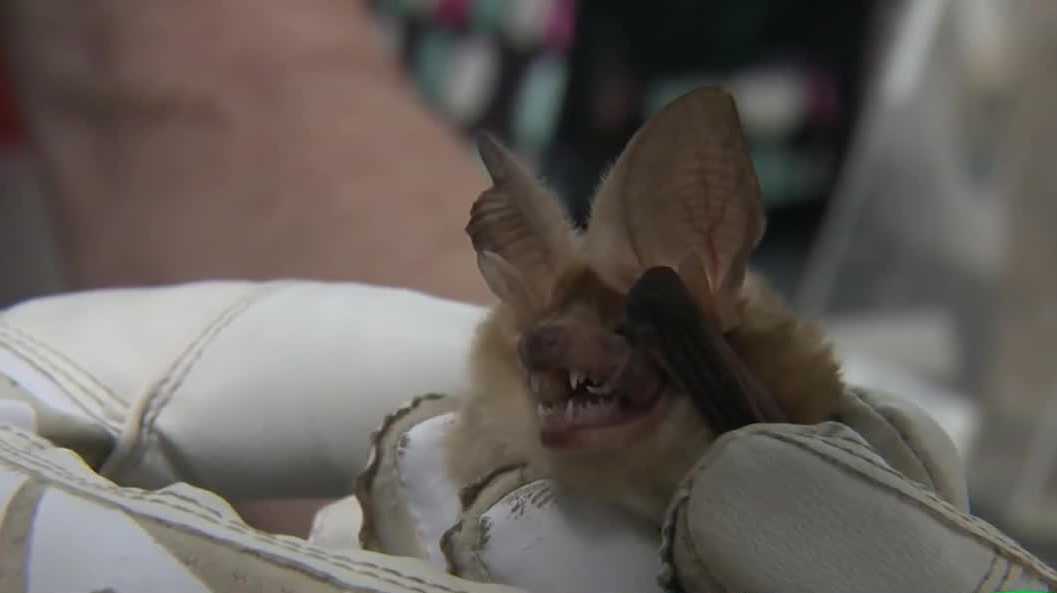
CDC issues rabies advisory as bat concerns hit close to home in Northern California
Bats account for more than 9 in 10 rabid animals reported in California this year; most recent Sutter County case was found Sept. 8
 , Calif. —
The Centers for Disease Control and Prevention has issued a new health advisory after multiple jurisdictions across the United States reported increases in people exposed to rabid or potentially rabid animals.
The CDC issued the advisory Sept. 10 in response to reports of increased human rabies exposures since July, as well as concerns about errors in administering rabies post-exposure prophylaxis, or PEP.
Rabies is a viral disease that affects the central nervous system and is nearly always fatal once symptoms develop, according to the CDC. However, the disease is preventable when post-exposure treatment is appropriately administered before symptoms begin.
Dr. Dean Blumberg, professor and chief of pediatric infectious diseases at UC Davis Health, described rabies as one of the most serious infections a person can contract.
“Out of any disease in the whole world, any infection, this is like the worst one to get,” Blumberg said. “It’s almost uniformly fatal, and there’s no specific treatments for it.”
Bats account for most reported rabid animals in California
California Department of Public Health data shows bats account for the vast majority of animals reported with rabies in the state this year.
From Jan. 1 through Aug. 31, California reported 252 rabid animals, including 232 bats, 19 skunks and one dog, according to provisional CDPH data. That means bats accounted for about 92% of the state’s reported rabid animals during that period.
Blumberg said bat exposures can be particularly concerning because their bites may be difficult to detect.
“The bat can bite them, they may not even know it because the teeth are so small and you may not even see the bite marks,” Blumberg said.
The concern can be greater with young children who may not be able to tell an adult whether they had contact with or were bitten by a bat.
“Maybe it’s a baby and so they can’t tell you that they were bit or not,” Blumberg said. “And so in that case, since it’s an almost uniformly fatal disease, we of course would want to provide treatment prophylaxis.”
Three rabid bats reported in Sutter County since late July
Sutter Animal Services Authority has reported three rabies-positive bats in Sutter County since late July.
On July 26, a bat found in a swimming pool in Sutter tested positive for rabies. A second bat, captured inside a Yuba City home on Aug. 20, also tested positive.
The most recent case involved a dead bat found outside a Sutter home on Sept. 8. Officials said a child may have had contact with the animal. The bat later tested positive for rabies.
The state’s current 2026 rabies table is provisional through Aug. 31 and does not yet reflect the more recent Sutter County cases.
CDC reports increase in rabies-related inquiries
The CDC said rabies-related inquiries increased 17% from July through August compared with the same period last year. The agency also reported that use of rabies vaccines increased an estimated 33%, according to weekly pharmacy data.
Nationwide, the CDC estimates about 1.4 million people seek medical care each year after animal contact, with roughly 100,000 receiving rabies post-exposure treatment.
What to do after a possible rabies exposure
For someone who has not previously been vaccinated against rabies, post-exposure prophylaxis generally includes both rabies vaccine and human rabies immune globulin, according to the CDC.
Blumberg said that treatment is highly effective when administered soon after an exposure.
“The prophylaxis is giving the vaccine and rabies immune globulin,” Blumberg said. “And it’s very effective if it’s given very soon after the exposure.”
The CDC recommends people keep their distance from wildlife and never approach an animal that appears injured, sick or dead. People should be particularly cautious around animals seen during the day that are normally active at night, including bats.
If a person is bitten or scratched or otherwise has potential contact with a rabid animal, the CDC recommends immediately washing any wound with soap and water for 15 minutes and contacting a clinician or public health professional to determine whether additional treatment is needed.
Blumberg said people should seek medical guidance immediately if there is concern about a possible bat exposure, particularly involving a child.
“If there’s a bat in your child’s room, don’t take a chance with it,” Blumberg said. “Make sure you don’t handle the bat.”
See more coverage of top California stories here | Download our app | Subscribe to our morning newsletter | Find us on YouTube here and subscribe to our channel.