
Last week’s heat wave led to San Diego Gas & Electric setting an all-time single-day high for energy demand.
SDG&E reached a peak net system load of 5,209 megawatts on Sept. 9, blowing past the previous record of 4,890 megawatts set in September 2014.
The sustained hot and humid weather that blanketed the region for days caused utility customers to crank up their air conditioners and fans for extended amounts of time — often well into the evening hours — which increased electricity demand for homes and businesses.
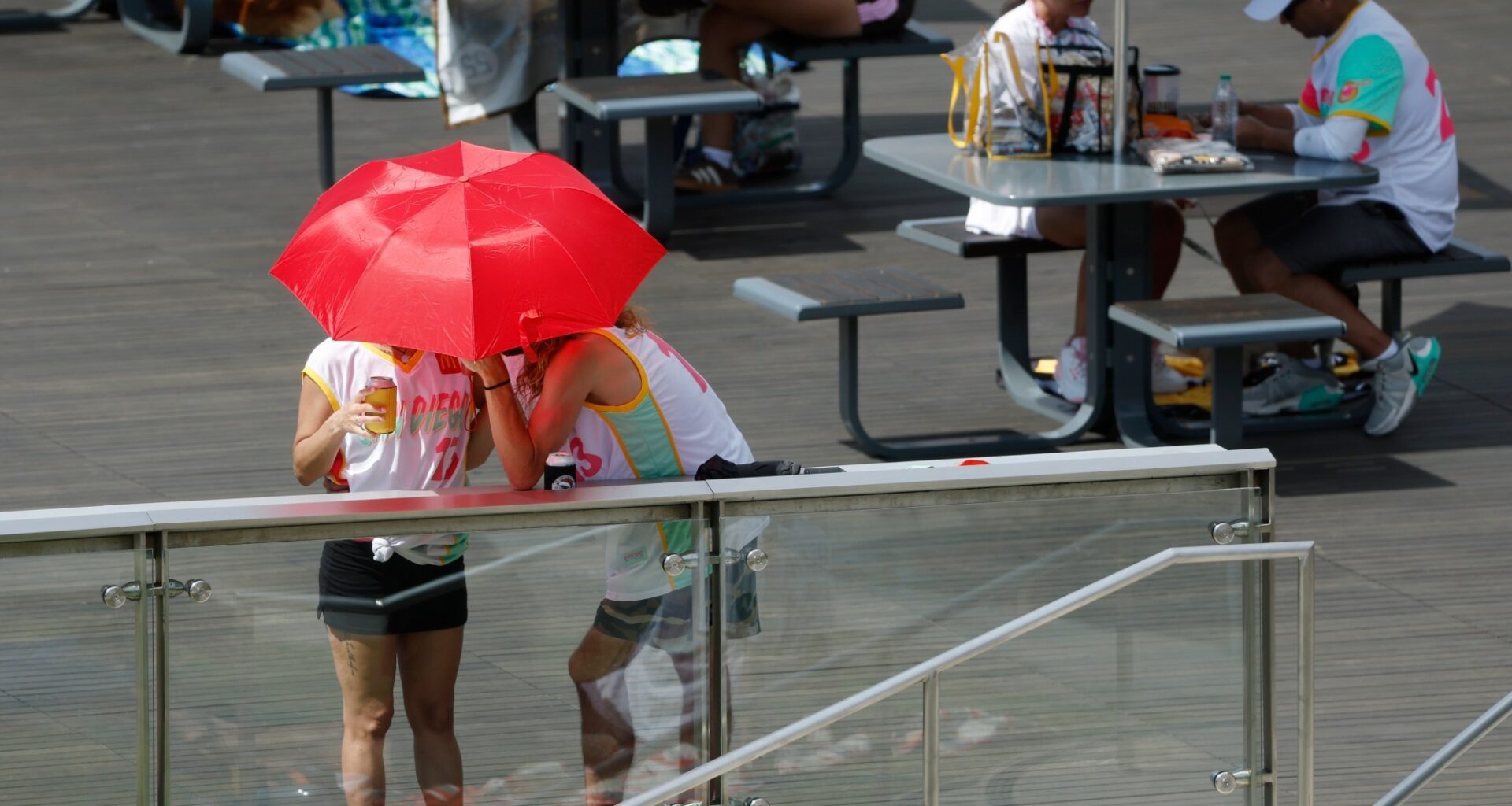
Sept. 9 was also the day the Padres played the hottest game in Petco Park history, with a first-pitch temperature of 95 degrees during the team’s 1:10 p.m. matchup against the Washington Nationals.
While no widespread blackouts occurred, the searing heat led to localized power outages.
Over a 24-hour period from midnight on Sept. 8 through midnight on Sept. 9, SDG&E reported 29 unplanned outages that resulted in nearly 15,000 customers losing electricity before crews restored power.
SDG&E’s electric grid covers a service territory of 1.3 million customers.
One big outage involving circuit lines knocked out electricity to nearly 8,700 customers in the Rancho Bernardo/Poway area around 1:30 p.m. on Sept. 9, which was largely resolved by 3 p.m.
One day earlier, customers in a neighborhood in Lemon Grove complained to 10 News of being without power for hours.
“While localized SDG&E outages occurred, our teams remained focused on restoring service safely and maintaining reliability across the broader electric system,” SDG&E chief operating and safety officer Kevin Geraghty said in a statement. “We are grateful for the patience of our customers and proud of the crews who worked in extreme conditions to serve our communities.”
Electricity demand also soared across the statewide electric grid.
The California Independent System Operator, which manages the high-voltage and long-distance transmission system for about 80% of the state and a small part of Nevada, reached a peak load on Sept. 9 of 50,042 megawatts. That was the highest level of demand for one day so far this year.
For perspective, the record is 52,061 megawatts, set on Sept. 6, 2022.
The system operator, also known as the CAISO, last week issued a pair of “restricted maintenance operations” directives calling on utilities and other entities that participate in energy markets around California to avoid conducting any work on their systems so that all available generation and transmission lines stay in service.
But the CAISO did not call a Flex Alert — a request to consumers across the state to voluntarily conserve electricity when there is a predicted shortage of energy supply.
That’s largely because the state’s power system has added about 31,000 megawatts of capacity in the past six years, providing a much-needed cushion for grid managers. Of that total, about 17,000 megawatts have come from installations of battery energy storage systems since 2020.
In the San Diego area, SDG&E reports that 2,466 megawatts of new energy capacity have been added in the past six years.
A contributing factor to last week’s heat wave: temperatures barely dropped during the evening hours.
SDG&E spokesperson Alex Welling said the overnight low at Montgomery-Gibbs Executive Airport in Kearny Mesa during the evening of Sept.8 and early hours of Sept. 9 was a stifling 79 degrees — just three degrees lower than the typical high temperature of 82 for that time of year.
“When we have those warm temperatures overnight, and people are running their ACs, it doesn’t allow the system to cool down,” he said. “So it puts that excess strain on the system, which can cause unplanned outages.”
Extended periods of unrelenting heat can take a toll on utility infrastructure, reducing the performance and efficiency of equipment like transformers, substations, power plants and even power lines when they don’t have a chance to cool down.
As for customers, they are encouraged to close blinds and use fans wisely during bouts of hot weather. SDG&E advises pre-cooling your home before the 4 to 9 p.m. hours, when electricity rates across the state are at their highest.