
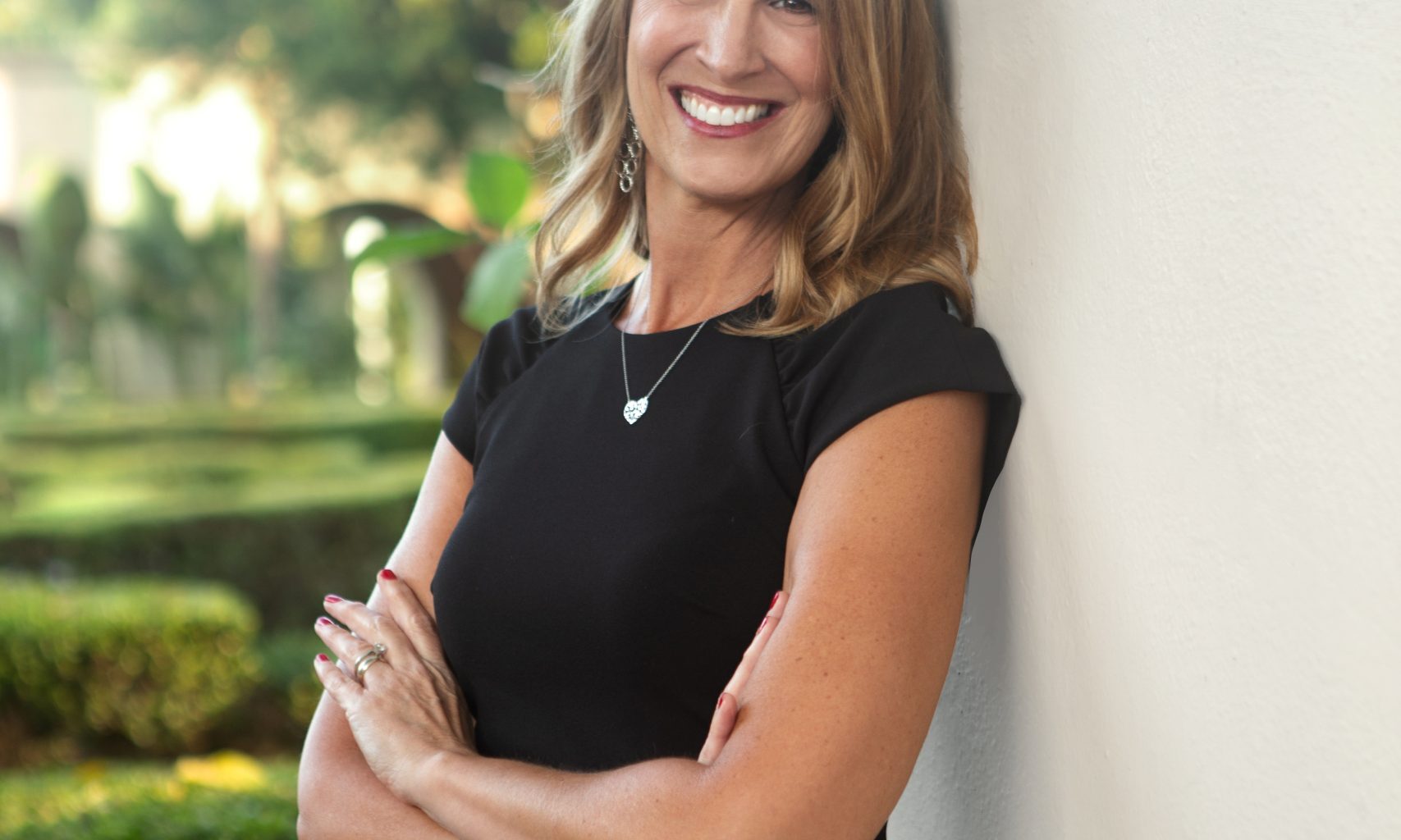
The top administrator at the National School District is stepping down.
Last month, Superintendent Leighangela Brady announced to the board she intends to retire at the end of the school year. Brady said there’s a possibility she may return to education, but right now she wants to focus on family.
“As you get older, you start to see how important family time is,” she said.
Brady started her career about 30 years ago as a teacher at Cajon Valley Union. She later became the vice principal of a Santee school before taking a more senior role at Encinitas Union. There she rose from principal to assistant superintendent of educational services.
And in 2016, Brady made history as the first female superintendent at the National School District. It was the only school district she applied for out of over a dozen in San Diego County with a superintendent vacancy that summer.
Brady said wanted to “remove barriers” and bring to National City the same resources she saw students accessing in Encinitas.
Trustees at the National School District are now looking for a consultant to help search for a new superintendent, though it could bring an additional cost as officials already are deficit spending.
Brady is set to retire in June. Officials are aiming to fill the position by July ahead of the 2025-26 school year.
inewsource interviewed Brady ahead of her departure.
What got you into education?
When I was a little girl, I wanted to be a dentist. I wore braces for nine years as a child and again as an adult. When I got to high school, I took my first science class. It was freshman biology. That was the only “C” I had gotten and it was traumatizing. My mother, who was an accountant, told me, “Maybe science isn’t your thing.” She noticed I was good at math and told me to focus on that instead. I started college as an accounting major and I stayed in it until my senior year. I started looking around, and everybody in my major was an introvert and I am an extreme extrovert — like all the way to the other end. And I thought, maybe my mom was encouraging me to pursue a career that I could be good at but that didn’t necessarily match my personality. So I went home junior year and I told my mother I was going to switch my major to teaching. And she said, “No, you’re, too far. You can finish getting your accounting degree and become a math teacher or something like that.” But I told her no, that I was going to be an elementary school teacher. And if I needed to, I would take a break from college to save up to go. She said, “No, I will help you but you’ll have to get your master’s degree.”
She really helped support that change to the classroom. I eventually became the superintendent at the National School District because I wanted to remove barriers so that students here could have the same experiences that I was seeing those in North County get.
What’s been the most significant improvement that you’ve managed to accomplish at the National School District?
Sixth grade camp is an opportunity for kids to get outside, go camping and get a science education. But the price goes up every year. Our team was able to prioritize funds for that experience so that all of our kids could go at no cost. Before I came to this district, students and their families would fundraise all year to be able to afford sixth grade camp. But our job is to educate kids, and our families going to camp should not be on the backs of our families. Now it’s become a rite of passage for students at the district.
Also, when I came to the district we were among the first to provide an iPad for all students but I noticed some of our families didn’t have internet. So we decided to heatmap all of National City and asked every single one of our parents if they had Wi-Fi. This was before the COVID-19 pandemic. We then partnered with T-Mobile to provide hotspots. And when COVID hit, we were ready.
What’s the most challenging thing you’ve faced as a superintendent?
A lot of great things came out of the pandemic but I would be lying if I didn’t say it was the most challenging time for me. I remember that week vividly. That Monday we had done an LCAP (Local Control and Accountability Plan) meeting after school to get input from our community. I went home and later that night my husband suffered a cardiac arrest. I was at the hospital while my schools were getting the call from the county, and I had to make a decision to shut down my schools. I feel blessed that I had a super strong team of assistant superintendents and I had a retired superintendent from Santee, Liz Johnson, who stepped in.
What did the state of education look like when you first started? How do you see things now and moving forward?
When I became a teacher, they gave me the keys to the classroom and I didn’t even know what I should be teaching. I relied on the training I had and guidance from other teachers. No Child Left Behind was one of those challenges. Because it did a lot of damage in terms of becoming too myopic on assessments and high-stakes testing, but it also provided a focus on standards, and there were some blessings that came out of it. The administration would walk through classrooms expecting students to be finishing each other’s sentences, and there were some overgeneralizations. But that really wasn’t the spirit. The spirit was collaboration between teachers and making sure that it didn’t matter whether a student lived in La Jolla or El Cajon or National City, because they all should be getting the same quality education and the same standards. It was very teacher-centric. We were looking at what the teachers were doing and not necessarily what the kids were learning. And the resources were still very rudimentary, if they were digital at all. But I later wrote a book about how the focus was really on changing the culture of the schools to be more student-centric. It’s really about what the students are learning and how the district can leverage technology for our students to learn — and not only rely on high-stakes testing, but other assessments where students can demonstrate their learning and their understanding.
I’d say in this decade, the changes that I’ve seen have really been exponential. We’re shifting from differentiated to truly personalized pathways for kids. And there’s a real need to have another culture shift in education, because our kids are starting to tell us that they want to use technology more as a tool and get more time to interact with their peers. They don’t see the need to be spending so much time, because now we have artificial intelligence. As it develops, some of these laborious tasks that we still teach, students are feeling less connected to and they’re going to go home and they’re going to be involved in technology in the way they want to be. So when they’re at school, they want to put it aside sometimes and just be with their friends. And so we have to balance those things. I think one of the things I see in the next decade is a need for outdoor learning spaces for our kids — that bridge to nature — because technology has become such a focal point that we also can’t forget that they need to be outside. Maybe we’ll have some immersive experiences where you put on those goggles that will transport you from the classroom to another space and time. For example, kids could take a trip to another country and learn from that culture in real-time.
Which initiative of yours do you hope continues after you retire?
When I came here, I was doing my listening tours and one of the things that came up was recycling. Everybody said we used to recycle, but everything gets commingled and now nobody does it. That was 10 years ago. But we started on our sustainability journey. We have a sustainability committee and each year we try to improve on our sustainability efforts. Two years ago, we applied for California Green Ribbon status, and we earned the silver level recognition. And then last year, we were the only school district in San Diego County to be recognized at the gold level. And this year, we are applying for green achiever. And I know that is going to continue.
What advice would you give to the next superintendent?
The National School District is a very special place. Many people went to school here and some chose to come back and work in our district. Take time to really invest in those relationships. Get to know the stories of your students, your families, and your staff. And stay for the right reasons because they’re here for the right reasons and want a partner. They want somebody that’s going to love the district as much as they do.
What message would you like to leave for your district community?
Thank you for 10 amazing years. I’ve spent a lot of time with their families and now I’m gonna take some time with my family. Help the new superintendent learn the ways of the district and be successful because their success is the success of the kids. I thank my team, the community, the governing board, the students, obviously and the teachers for an amazing journey. I really, truly, feel blessed.
This interview has been edited for length and clarity.
Type of Content
News: Based on facts, either observed and verified directly by the reporter, or reported and verified from knowledgeable sources.