
The Berkeley City Council, after hearing dozens of in-person public commenters, delayed its Tuesday vote on the repeal of the city’s tear gas ban due to technical difficulties preventing online viewers from hearing the meeting.
A special meeting has been scheduled for Sept. 29 at 4 p.m. for the vote to occur.
Before this delay, students, community members and City Council candidates alike lined up to discourage the lifting of the 2020 tear gas ban. Public commenters cited concerns about the use of tear gas for crowd control despite language in the policy stating that such use is prohibited.
“When you give the police the opportunity to use a weapon, they are going to be using that weapon,” alleged Audrey Kramer, a campus junior and representative of Cal Berkeley Democrats. “They are not going to be checking the bylaws.”
According to Berkeley Police Department representatives present at the meeting, there have been three instances since the ban when tear gas use would have been used. These all included times when suspects refused to cooperate with police instruction; officers said tear gas could have been considered for use in these instances. All of these were resolved by officers utilizing other methods.
The City Council originally enacted the ban during the COVID-19 pandemic. It officially banned tear gas in June 0f 2020.
“They don’t listen to the community even though we’re here, but it’s important to show up to make them know that the room is against what they’re trying to do,” said former District 2 Councilmember Cheryl Davila. “We have to speak up. We have to speak loud.”
An alternative policy submitted by the city’s Peace and Justice Commission was also due for a vote by the council at Tuesday’s meeting. This vote was similarly pushed back to the Sept. 29 special meeting.
If approved, it would direct the City Manager to engage an academic institution, such as UC Berkeley, to study the health effects of tear gas and other chemical weapons, as well as to look into alternative options for ensuring the safety of all parties involved when these weapons — including tear gas — are used.
“Students are oftentimes at the frontline of these protests,” said Syrak Micael, a candidate for Berkeley’s 7th district. “Students come to Berkeley because of the free speech, because of the activism that we’ve always seen on campus, and by enabling our police to be more militarized and have access to more weapons, it puts students in more danger.”
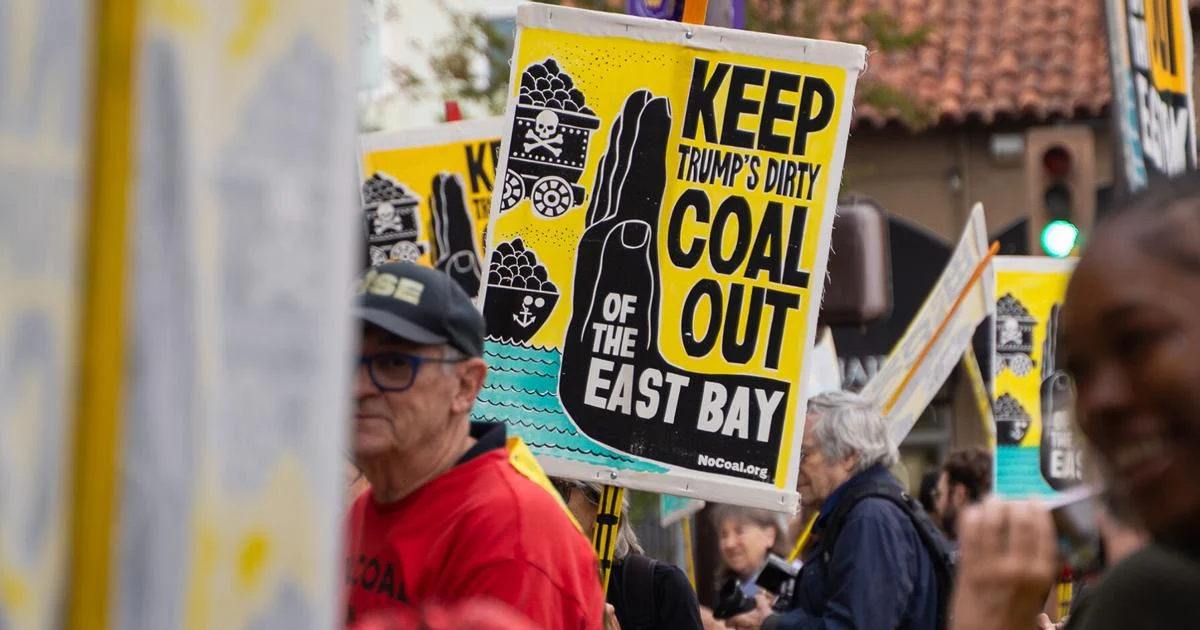
More than 50 protesters gathered outside the Berkeley City Council’s meeting this Tuesday in support of a resolution that opposes the handling and transportation of coal in the San Francisco Bay Area. More specifically, the resolution provides as its context President Donald Trump’s $75 million grant to developers for the construction of a coal train terminal throughout the East Bay. This grant, opponents allege, would put communities such as those in West Oakland at risk.
Following the rally and public comment for the consent calendar, the resolution passed.
The resolution also supports California Assembly Bill 40, which requires an environmental impact report for any potential coal terminal in the state. AB 40 is currently awaiting Gov. Gavin Newsom’s approval.
“We want them to pass a resolution saying we want healthy communities, we want healthy air, we want healthy water,” said Sara Leon Guerrero, who called herself an organizer for East Bay Democratic Socialists of America.
Ted Franklin, a founding member for No Coal in Oakland, also expressed concerns that the train would carry coal in open gondolas, which could cause coal dust to spread throughout nearby communities. Franklin noted that coal dust exacerbates asthma, and is connected to cardiopulmonary disease and cancer.
“It’s a threat to people locally, and it’s a threat to people everywhere,” Franklin alleged.
Steve Masover of No Coal in Oakland pointed out that Trump recently announced a $700 million investment in the coal industry; the $75 million comes from said investment. However, Masover said it is not entirely clear how much money developers need for the specific project that the resolution is in opposition to.
“Send your letter to Gavin Newsom telling him you want him to sign Assembly Bill (40) into law,” Leon Guerrero said. “Showing investors and showing the developers and the federal government that this is a bad investment here in the East Bay, as well as worldwide — that is what’s going to turn this back.”